Get in Touch with GUANGQI


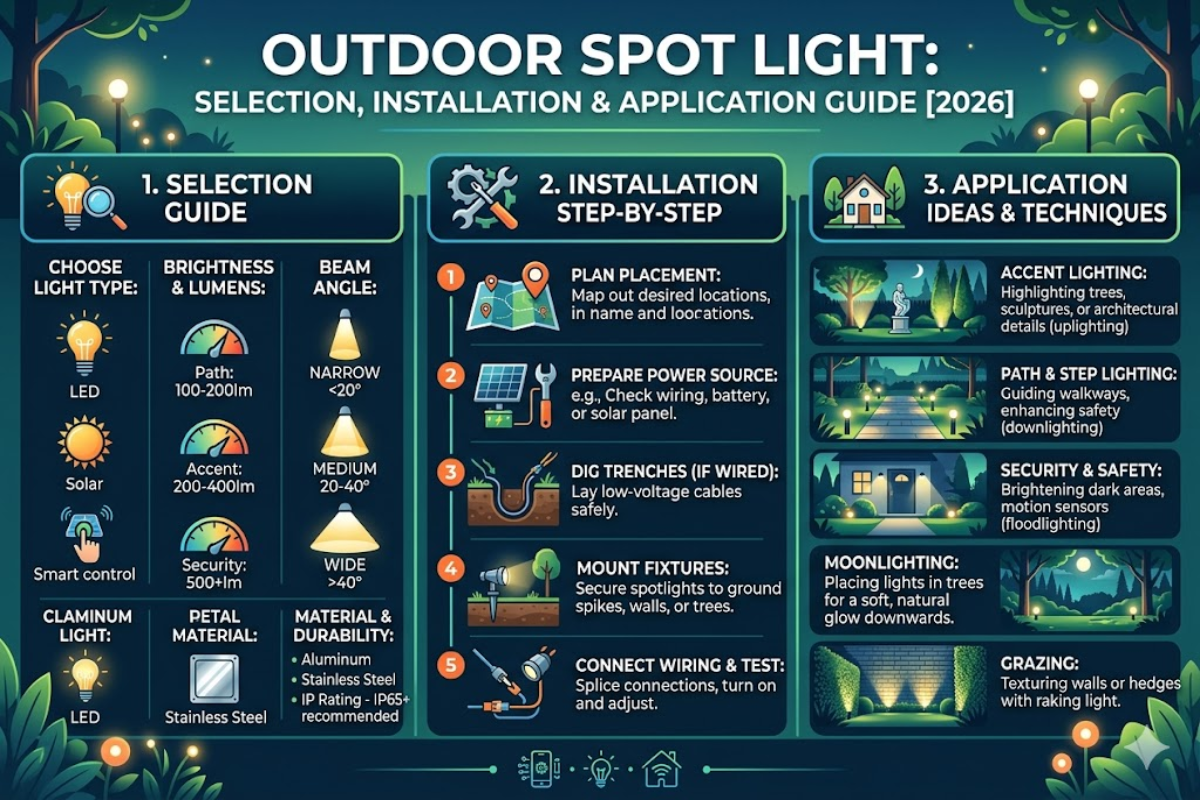
How to Choose and Install Outdoor Spot Lights: A Practical Field Guide
Choosing the correct outdoor spot light could be what distinguishes between disappearing at night when you leave a property or because the property has the decorative effect you were aiming for. The problem is most listings bombard you with figures for beam angles, lumens, IP codes without details of how they affect your yard, building or pathway.
Consider this your how-to manual. Here we break down the details that are relevant, weigh LED hardwired against solar and low voltage by cost data, link fixture types to outdoor areas, and highlight the common errors seen by installers.
What Is an Outdoor Spot Light — and How Is It Different from a Flood Light?
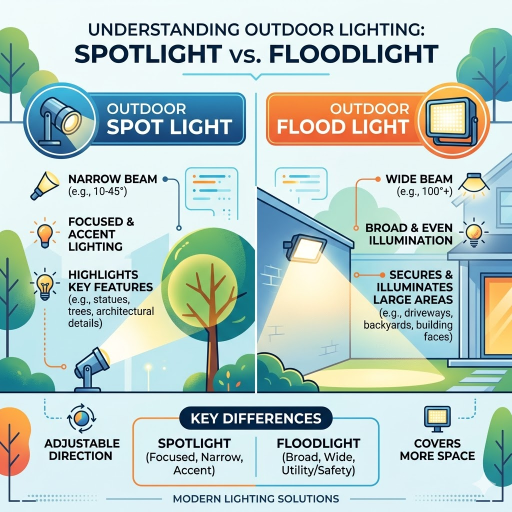
The main difference between a spotlight and a floodlight is the style of beam produced. An outdoor spotlight uses a long focused narrow beam to emphasize one feature for example, a tree, statue, pillar of a building or sign. A floodlight throws out a wide wash of light over a larger area the difference between floodlight and spotlight beam angles is mostly an arbitrary one, with 45 being the usual cut-off point. 45: or below we call the fixture a spotlight; it is above 45: and the fixture is called a floodlight.
That 45° rule gives us a helpful shortcut, but in practice the industry standard is more specific. The National Electrical Manufacturers Association (NEMA) has defined outdoor luminaire beam distributions from Type I through Type VII, meaning 10-20 (Type I, very narrow), to 130+ (Type VII, very wide). Landscape architects and lighting designers use NEMA types when they specify the pattern of the distribution wanted on a site, not the general “flood or spot” description.
| Feature | Spot Light | Flood Light |
|---|---|---|
| Beam Angle | 10°–45° (narrow to medium) | 45°–120°+ (wide to very wide) |
| NEMA Types | Type I–III | Type IV–VII |
| Typical Lumen Range | 300–3,000 lm | 1,500–50,000+ lm |
| Coverage Area | Focused — single object or zone | Broad — driveway, yard, facade |
| Primary Use | Accent, uplighting, feature highlighting | Security, area illumination, sports |
| Wattage (LED) | 3W–50W | 20W–500W+ |
Most effective lighting schemes incorporate a mix of both types. For example, spot lights are used to highlight focal points. Flood lights establish the baseline brightness that allows an area to be traversed safely.
An effective facade lighting scheme will incorporate two or three narrow-beam spot lights for every wide-beam flood light.
💡 Key Takeaway
Beam angle – Is arguably the most important element in differentiating between a spot light and flood light. For accent and uplighting use a beam angle below 25 for a tighter throw; 25-45 is perfect for medium width feature highlighting.
Key Technical Specs Every Buyer Should Understand
Selecting the correct LED spotlight requires the underlying knowledge of six key specifications. All of which influence real world performance and anything overlooked means money wasted or a poor outcome on site:
Lumens, Not Watts
Brightness—measured in lumens, not watts,—indicates the brightness of your outdoor spotlight. A 10W LED spotlight can produce between 800 and 1,200 lumens, comparable to a 75W halogen. The U.S Department of Energy estimates that LEDs consume at least 75% less energy than incandescent electric lights, and have a lifespan 20 to 30 times longer.
When used outside, the DOE’s Federal Energy Management Program sets a minimum efficiency benchmark of 118 lm/W for floodlight luminaires in federal buildings — a useful reference point when evaluating any outdoor LED fixture’s efficacy (DOE FEMP Exterior Lighting Requirements).
IP Rating Explained
The IP code (Ingress Protection), defined in international standard IEC 60529, gives you a precise indication of how dust-tight and wet the fixture is. Protection from solid particles is represented by the first digit (0-6), while moisture protection is indicated by the second digit (0-9). Out of all the ratings, these three are the most relevant for outdoor spotlights:
| IP Rating | Water Protection Level | Best For |
|---|---|---|
| IP65 | Protected against water jets from any direction | Most outdoor installations — gardens, facades, pathways |
| IP66 | Protected against powerful water jets | Coastal zones, heavy rain regions, power-wash areas |
| IP67 | Protected against temporary immersion (up to 1m, 30 min) | Ground-level fixtures, flood-prone areas, in-ground LED lights |
Quick Specs Reference
| Spec | Residential Range | Commercial Range |
|---|---|---|
| Lumens | 300–1,500 lm | 1,500–10,000+ lm |
| Wattage (LED) | 3W–20W | 20W–150W |
| Beam Angle | 15°–30° | 10°–60° |
| IP Rating | IP65 minimum | IP66–IP67 |
| Color Temperature | 2700K–3000K (warm white) | 3000K–5000K |
| Voltage | 12V/24V DC (low voltage) | 120V/220V AC or 24V DC |
⚠️ Engineering Note
The illumination time from an outdoor LED spotlight is dependent on how well the fixture manages heat. Compared to a sealed plastic enclosure, dielectric aluminum housing and finned heat sinks disperse heat far more effectively. During testing conducted by Guangqi Lighting, we’ve measured lumen depreciation (L70) to occur within 15,000 hours without integral fans and heat sinks, less than 1/2 of the 50,000 hours claimed by a well-designed LED light.
💡 Key Takeaway
First make sure you start with a good LED spotlight: maximize lumen output, check the IP rating, and know the beam angle. Everything else is background noise.
LED vs Solar vs Low Voltage — Which Power Source Fits Your Project?

Your outdoor spotlight’s power source directly affects initial purchase price, installation complexity, long-term reliability and operational issues. In certain conditions, certain setups work better than others. Here is a comparison of available fixtures powered by different systems, based on load requirements, initial costs and efficiency.
| Factor | LED Hardwired (120V/220V) | Solar Powered | Low Voltage (12V/24V) |
|---|---|---|---|
| Fixture Cost | $40–$200/unit | $20–$80/unit | $30–$150/unit |
| Installation | Licensed electrician required; conduit + wiring | DIY; ground stake + sunlight positioning | DIY-friendly; transformer + landscape wire |
| Lumen Output | 800–10,000+ lm (consistent) | 100–600 lm (weather-dependent) | 300–3,000 lm (consistent) |
| Annual Operating Cost | $40–$80 for 15–20 fixtures | $0 electricity | $30–$60 for 15–20 fixtures |
| LED Lifespan | 30,000–50,000 hrs (L70) | 15,000–25,000 hrs | 30,000–50,000 hrs (L70) |
| Best For | New construction, commercial facades, high-lumen needs | Pathways, decorative accents, remote areas | Residential landscape lighting, retrofits |
Low Voltage Outdoor Spotlights — Why Landscape Pros Prefer 12V
When selecting a power system for your outdoor LED floodlights, consider below performance issues as well as cost of purchase and installation.
1. Ease of installation. Low voltage systems do not have to be installed in a conduit, running directly into fixtures. You can run them in wire channels or bury directly in shallow trenches between transformer and fixtures.
2. Long-term failure. Overtime power supplies wear out, poor wiring connections loosen and failure becomes inevitable. Quality LED drivers will last longer than other plastic encased power supplies, which are more prone to premature failure.
3. Lamp to lamp consistency. How well each fixture maintains consistent lumen output over time.
4. Maintenance issues. How often do you replace the fixtures and power sources, how difficult is it to reset or repair the entire series of fixtures.
There is no single best low voltage system for projects, only the best use case. Here is a comparison of directly measured operating costs, efficiencies and performance issues associated with various options.
1. Low voltage is by far the most popular choice for existing residential outdoor lighting installations. It can operate at much lower voltages than line voltage, meaning fixtures can be installed in the planting bed itself instead of on tall posts or pedestals.
2. A quality transformer converts household 120V AC power into 12V DC, and the entire length of wire from transformer to last fixture should be dropping no more than 10.5V to ensure fixtures do not appear dim.
⚠️ Common Mistake
The biggest technical consideration with low voltage LED spotlight systems is voltage drop. When long runs are used, the resistance in the wire causes the voltage at the farthest fixtures to fall below their rated operating range, causing inefficient performance and poor lumen output.
3. Electricians equipped for residential work can easily install low voltage wiring and fixtures in shallow trenches or in surface mounted conduit without requiring a licensed electrician.
When Solar Spotlights Make Sense — and When They Don’t
One of the most common mistakes in low voltage LED outdoor spot lighting is under-dimensioning transformer capacity. If the total wattage draw for all fixtures connected exceeds 80% of the rated capacity of the power supply, fixtures will flicker, appear dim or eventually cause the power supply to fail. A 300 Watt transformer should only be used to serve 240W (80%) of fixtures.
Solar powered outdoor spotlights are a logical choice where your desired brightness is 100-400 lumens and the fixtures are primarily decorative, such as along pathways or in garden beds. As security lights or in displays requiring dozens of lights with high lumen output, they are not the right choice due to their limitations. If your project requires reliable year-round illumination in outdoor areas with limited sun exposure, low voltage LED systems or higher-capacity solar flood lights with separate oversized panels are better alternatives.
💡 Key Takeaway
Low voltage (12V) circuits are best for many residential outdoor spot lighting projects because they deliver the best combination of lumen output, safe operation, and ease of installation. Use hardwired 120V/220V in commercial applications where higher lumen levels are necessary, and solar when the stakes are low.
Application Scenarios — Matching Spot Lights to Outdoor Spaces
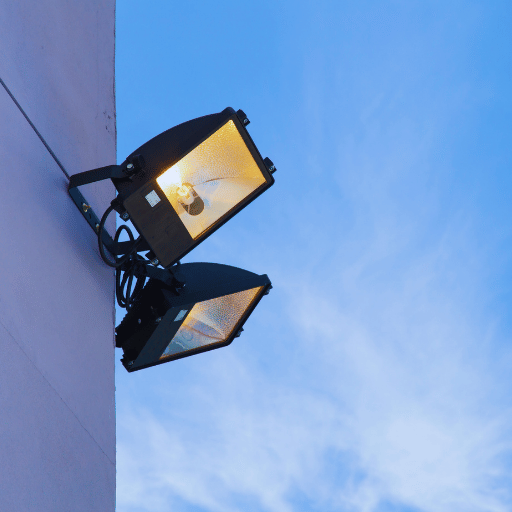
Choosing an outdoor outdoor spot light becomes less about the fixture and more about the scope of your project. Different distances, surfaces, and aesthetic goals for your outdoor area require varying beam widths, lumen levels, color temperatures, and mounting techniques.
Facade and Architectural Uplighting
Use a standard approach when uplighting building facades: run outdoor spot light fixtures along the ground 12-18 inches from the bottom edge of the wall and aim them up at an angle of 60-75 from horizontal. Narrow beam 10-15 works on tall columns or other narrow architectural details; broad 25-35 beam works on two-story building facades. Match the color temperature of the fixture to the nature of the building material: 2700-3000K suits warm stone, brick, or wood; 4000K is appropriate for concrete, glass, or modern metal panels.
Tree and Garden Accent Lighting
The 30 rule for tree uplighting states that the downward-aimed light should be positioned so that it is within 30 degrees of vertical at the base of the tree (aim it 30 away from the trunk). The beam should skim the trunk and then form a smooth ballet of light climbing up the canopy. Large canopy trees (oaks, maples) should be brightened with two to three fixtures spaced 120 apart at 800-1,200 lumens. Small ornamental trees under 15 feet tall only require one fixture with 300-600 lumens and a 25 beam width. A tree uplighting calculator is a useful tool to determine the exact lumens needed according to the size of the tree.
Color temperature consistency is key when brightening different objects within an outdoor landscape bed, path, or fixture group. Avoid mixing 2700K spotlights with 4000K path lights because it looks accidental rather than intentional.
Security and Perimeter Lighting
A high lumen output (1,500-5,000) is necessary in certain security applications to improve facial recognition on cameras. Use wider beam angles (30-60) for security fixtures to light broad horizontal areas at entry points. Position your security fixtures 8-12 off the ground and aim them downward at a 30-45 degree angle to illuminate areas and not your neighbors. Pair security spot lighting with outdoor motion sensors whenever possible for added savings and longer LED bulb life.
Flag and Signage Lighting
Flag lighting calls for focused 8-15 spot light beam aimed up from a ground-mount fixture below a flag pole. Residential flag poles of 25 feet require only one 1,000-1,500 lumen fixture with a tight 10 beam. Flag poles used by commercial entities up to 40 feet tall may need three to five 3,000-5,000 lumen fixtures with a 15 beam.
💡 Key Takeaway
Target the beam angle to the subject, not the size of the space. Use narrow 10-15 beam widths for tall, narrow subjects; medium 25-35 for flat extended surfaces like bluffs or hills; wide 45+ only when you want a floodlit effect.
Installation Essentials — Wiring, Placement, and Common Mistakes
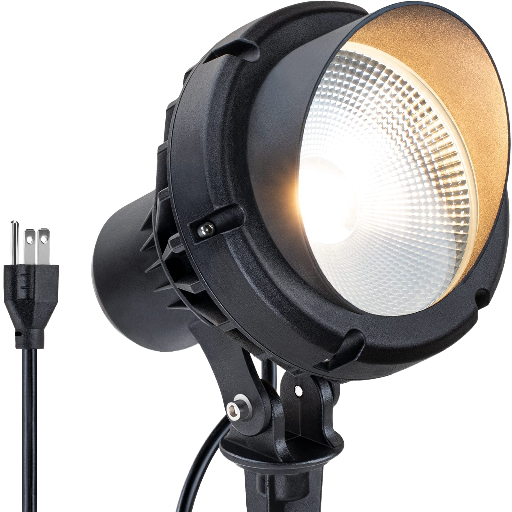
If you choose a quality outdoor spot light and install it backwards, it will underperform or burn out early. The fixture selection is only half of the equation – the electrical infrastructure matters just as much.
Pre-Installation Checklist
- ✔
Check transformer size: total wattage load expressed as LED power consumption cannot go higher than 80 percent of transformer power capacity - ✔
Consider measures wire run – use 10AWG for over 100ft runs, 12AWG otherwise - ✔
Design a hub-and-spoke wiring design, rather than daisy chain, to reduce voltage drop - ✔
Verify all splice connections use outdoor-rated waterproof connectors and not electrical tape - ✔
Measure voltage at end of each run – 10.5V (12V system) or 21V (24V system) - ✔
Landscape wiring should be installed 6in deep or deeper. Use conduit under driveways and walkways
Five Mistakes That Waste Money and Shorten Fixture Life
Here are the callback problems landscape contractors run into most often:
- Not burying wire the required depth. If a wire is buried at 2-3 inches it will be cut by edgers and aerators in the first year. There is a reason we suggest 6 inches.
- Mowing fixtures that are set at ground level. The mower blades will hit the fixtures. Instead, set the spotlight fixtures in planting beds and mulched areas, or set in a block or stone pavement edge. Do not set into turf areas where mowers will hit it.
- Not installing glare shields. I installed a spotlight in a tree last week that I realized I was looking through to get to the next fixture. Use fixtures with built-in shields or adjustable cowls.
- Daisy chain a long run. Every splice adds enough resistance for the last fixture to get under 9V at the LED driver – too low for the fixture to run.
- Ignoring multi-tap transformers. If you want to run a long space on a 12V transformer, buy a multi-tap with 12V/13V/14V/15V taps so you can add voltage at fixture time to compensate for drops.
💡 Key Takeaway
Wire first, fixtures second. About 85-90% of the performance problems you will experience with new fixtures in the field are caused by the electrical infrastructure, not the fixture design.
Durability, Maintenance, and Total Cost of Ownership
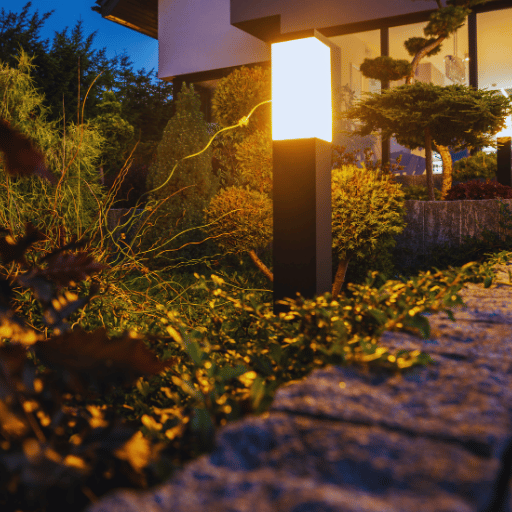
Purchase price is only part of the story: over its expected lifespan, the real cost of a fixture is determined by the choice of materials, the quality of LED modules, and the cleanup and maintenance frequency. Cheap fixtures have many more replacements over 10-15 years than professional fixtures.
Housing Material Comparison
| Material | Brass | Die-Cast Aluminium | Composite/Plastic |
|---|---|---|---|
| Expected Lifespan | 15–25 years | 8–15 years (with powder coat) | 3–5 years |
| Corrosion Resistance | Excellent — develops protective patina | Good when coated; exposed aluminum corrodes in salt air | No corrosion, but UV degradation and cracking |
| Fixture Cost | $80–$300 | $30–$120 | $10–$40 |
| Thermal Performance | Good heat dissipation | Excellent heat dissipation (industry standard) | Poor — traps heat, accelerates LED decay |
| Coastal Use | Safe without additional treatment | Requires marine-grade coating | UV damage within 2–3 years |
The cited range of life-span info in the manufacturers ‘Material Data Sheet’ is industry-accepted from many manufacturers. there is no published independent lab testing of corrosion performance as showing the “life-span” of a material in comparable outdoor conditions; therefore, the range has to be considered as “client experience data”.
Total Cost of Ownership — A 10-Year Example
If a specific residential landscape has 12 fixtures all on a low-voltage system, check out the cost:
10-Year TCO Comparison (12 Fixtures)
- Basic composite fixtures ($25 each): $300, plus 2 replacements ($600), plus electricity costs ($500) = $1,400 total
- Premium aluminium fixtures ($80 each): $960, plus 0-1 replacements ($480), plus electricity costs ($500) = $1,940 total
- Cost of the top range brass fixtures ($180): $2,160 total, plus 0 replacements, plus electricity costs ($500) = $2,660 total
Although the brass fixtures “cost” 90% more than the composite, the owner will only spend 30% more over the next decade, and the fixtures need no replacements.
Maintenance Schedule
While LED fixtures require less servicing than halogen or HID, “no servicing” is a myth. Typical service for an outdoor spotlight system every year:
- Clean lens covers (quarterly in dusty or coastal environments)
- Check and re-aim fixtures displaced by frost heave, landscaping, or foot traffic
- Inspect wire splice points for moisture intrusion
- Test voltage at end-of-run fixtures to catch transformer degradation early
- Replace failed LED modules. Never replace the entire fixture; modular fixtures will save you money.
A professionally serviced 15-20 fixture system costs $100-$300 per year. Guangqi Lighting has engineered our outdoor spot light range with modular LED boards and swappable drivers so that field technicians can replace failed components without swapping the entire fixture – a detail that makes a big difference when you are servicing a hundred fixtures on a commercial property.
💡 Key Takeaway
Adopt the highest cost-performance fixture material that your project exposure and budget will allow. Aluminium is most often the best choice for residential applications – brass makes sense for coastal and commercial applications with 10+ year life.
Frequently Asked Questions
Q: How many lumens do I need for an outdoor spot light?
View Answer
It depends on the application. For accenting small trees or feature plantings, you will need 300-600 lumens per fixture. For uplights on a 2-story facade, 1,000-2,000 lumens per fixture. For perimeter security flood lighting you will need 1,500-5,000 lumens. As a broad rule of thumb, take the distance from the fixture to the target (in feet), and multiply by 50 – that should get you in the right lumen range. Adjust downward depending on the reflectivity of the illuminated surface (bright white wall v. dark brick).
Q: What is the difference between a spot light and a flood light?
View Answer
A spot light creates a narrowly focused beam (usually 10-45 degrees) to highlight a specific object. A flood light casts its beam wide (45-120+ degrees) for general illumination. Most projects use both.
Q: Are solar spotlights bright enough for security lighting?
View Answer
The lumen output on most consumer solar spot lights is about 100-600 lumens, which falls well below the 1,500+ lumen level security professionals agree on as necessary for perimeter illumination. The power drops even further in cloudy, winter and shaded conditions. For real perimeter security, low voltage LED or hardwired spotlights are your best options. Solar spotlights are fine for visual accents, but are not a viable security solution.
Q: What IP rating should outdoor spot lights have?
View Answer
IP65 is the minimum — it blocks dust and water jets from all directions. Step up to IP66 for coastal installs, heavy rain zones, or areas near sprinklers. For ground-level or flood-prone placements, use IP67, which handles submersion to 1m for 30 minutes. All ratings follow the IEC 60529 standard. When in doubt, go one level higher than you think you need — the price difference between IP65 and IP66 is usually under $10 per fixture, but a water-damaged spotlight costs $80+ to replace. Also keep in mind that IP ratings test clean water, not salt spray or chlorinated pool water, so coastal and poolside installs should factor in material corrosion resistance separately from the IP number.
Q: Can I install low voltage spot lights myself?
View Answer
Yes. 12V/24V low voltage landscape spot light systems are strongly intended for do-it-yourself installations. You’ll need a transformer (installed at GFCI protected outlet), landscape rated wire (12AWG or 10AWG), waterproof connectors and the fixtures. Pay close attention to transformer wattage (add up LED wattages & make sure you are not exceeding 80%), wire gauge & length calculations and waterproofing of wire connections. Hardwired 120V/220V are typically not DIY-friendly.
Q: How much do outdoor spot lights cost to run per month?
View Answer
Reflecting current savings amongst existing residential lighting systems, a standard 12-15 LED spotlight system operated for 6 hours daily may cost roughly $3-$7/month using average local utility prices and lamp wattages. Exact costs vary depending on the location and utility provider. LED spotlights save a minimum of 75% in energy consumption compared to the equivalent halogen fixture (United States Department of Energy).
A 10W LED spotlight operating 6 hours daily at $0.12/kWh costs roughly $0.26/month — under $3.20 per year per fixture.
Need Help Selecting the Right Outdoor Spot Light for Your Project?
Guangqi Lighting manufactures outdoor spotlights from 3W to 250W, with beam angles from 3° to 120° and IP65/IP66 ratings. Tell us your project specs — we will recommend the right model and provide a quote within 24 hours.
Compare Our Spotlight Models · Calculate Your Energy Savings
About This Guide
This outdoor spot light guide was put together by the technical team at Guangqi Lighting, based in Guzhen — China’s largest LED lighting manufacturing cluster, responsible for over 60% of the country’s fixture production. We have spent 10+ years designing and manufacturing outdoor spotlight fixtures for commercial and residential projects worldwide. The specifications, installation guidance, and cost data in this article draw from IEC, DOE, and NEMA standards combined with feedback from our distributor and contractor partners across North America, Europe, and Southeast Asia.
References & Sources
- LED Lighting — U.S. Department of Energy, Office of Energy Efficiency & Renewable Energy
- Purchasing Energy-Efficient Exterior Lighting — U.S. Department of Energy, Federal Energy Management Program
- NEMA Beam Angle Classification Standards — National Electrical Manufacturers Association
- IEC 60529: Degrees of Protection Provided by Enclosures (IP Code) — International Electrotechnical Commission