Get in Touch with GUANGQI


This table clarifies the primary distinctions along six axes: operation, actual light delivered, installation + initial cost, long term savings, performance in different weather, and applicability to different use cases. All cost figures and efficiency metrics are sourced from U.S. government publications in 2024-2025.
—
At a Glance — Key Differences Between Solar and LED Flood Lights
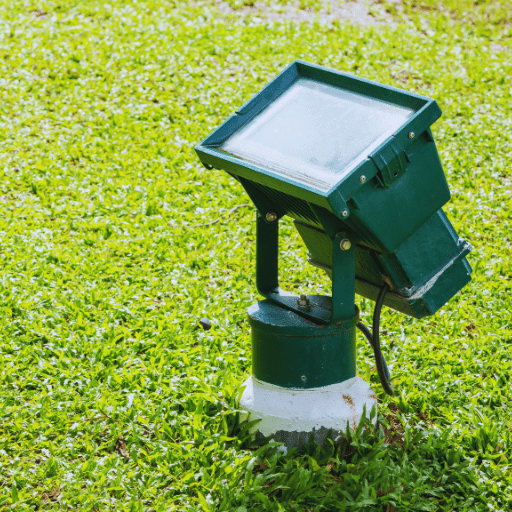
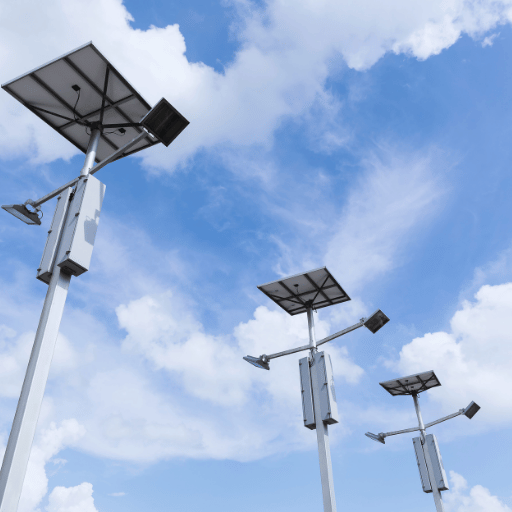
Both solar flood lights and typical led flood lights use LED chip tech at the fixture level. Its a matter of power. If you take a typical LED flood and connect it to the electricity via the power grid and figure out how to guide the electricity through the driver and wiring, you will have a typical LED flood.
With a solar led flood you will have an all-in-one: a solar panel charges a battery and that batteries powers the LED chip.
Six decision-relevant distinctions appear in the table below illustrating between the two systems:
| Feature | LED Flood Light (Grid) | Solar LED Flood Light |
|---|---|---|
| Power Source | AC mains (power grid) | Solar panel + battery |
| Grid Dependency | Required | None — off-grid capable |
| Installation | Wiring + electrician required | DIY mount, no trenching |
| Upfront Cost | Lower fixture cost; higher install cost | Higher fixture cost; near-zero install |
| Brightness Consistency | Constant, reliable output | Varies with battery charge level |
| Best For | Commercial, security, permanent installs | Remote areas, garden, temporary setups |
💡 Key Takeaway
For grid-connected outdoor spaces where the same lumen output is desired, the typical led flood lights is the more reliable lighting solution. solar flood lights sacrifice that consistency for independence from the power grid.
How They Work — Power Source, Energy Efficiency, and Off-Grid Capability
Understanding why these two lighting systems perform differently starts with how each one converts energy into light.
Standard led flood lights take AC power from the power grid that goes through an integrated driver that converts it internally to the low voltage DC current needed by the LED chips. This direct conversion is very efficient. According to the U.S. Department of Energy’s 2024 efficiency standards update, high performance LED products now produce 140-180 lumens/watt, over 2 x more lumens than incandescent floodlights. New federal standards require 120 lm/W for most LED general service lamps by 2028.
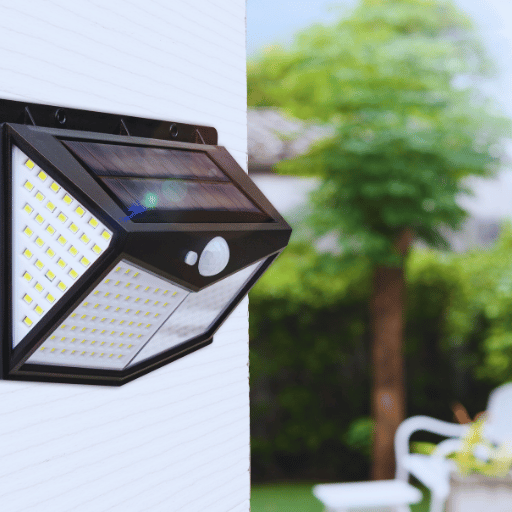
Solar LED flood lights add two more conversion stages before the led light receives power. After the solar panel converts sunlight to solar power – 20-22% efficiency for mono-crystalline PV – the electricity charges a lithium iron phosphate (LiFePO4) or lithium-ion battery. Then during the night, the stored energy is used to power the LED array through a charge controller.
This led solar architecture – panel, battery, controller, LED – introduces additional conversion steps that grid-tied systems do not have, which is why the effective lumen output is lower than the rated wattage suggests. The same principle applies whether the fixture is a floodlight or a solar-powered street light unit.
140–180
lm/W — Grid LED Efficacy
20–22%
Solar Panel Conversion Rate
3–4 stages
Solar Energy Conversions
One of the benefits of a solar led flood light is complete independence of the power grid. This makes them the ideal selection for areas where it is not cost effective to run cable – cheap country properties, border fences, temporary projects, or parks with no mains power available. Installed, they run eternally free of any electricity charge.
💡 Key Takeaway
Grid-powered led floodlights only convert energy once, in the most efficient way possible. Solar LED systems pass energy through two additional conversion steps (sun → panel → battery → LED), which reduces effective output but eliminates grid dependency entirely.
Brightness, Lumen Output, and Coverage — Which Actually Lights Up More?
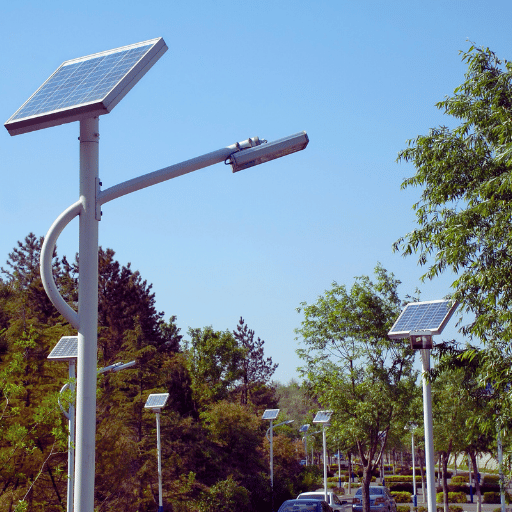
Lumens is the only reliable indication of how much light a fixture is actually putting out. Watts measure how much power a fixture uses, not how brightly it shines—and this distinction is critical when considering solar flood lights versus outdoor spaces.
A quality 50W led flood light connected to mains power delivers 5,000-7,000 lm at a steady output throughout its stated life span. A solar led flood light marketed as “50W equivalent” operates very differently. A solar panel and battery can realistically support an LED load of 10-20 watts for 6-8 hours per night. Tests published by independent lighting analysts found fixtures marketed at 24,000 lm really put out closer to 4,500 lm in actual operation—a difference driven by battery capacity limitations and inflated wattage labels.
| Spec | 50W LED Flood Light (Grid) | 50W-Rated Solar Flood Light |
|---|---|---|
| Actual Lumen Output | 5,000–7,000 lm | 1,500–4,500 lm (varies by battery) |
| Beam Angle | 90°–120° (adjustable) | 90°–120° (fixed or adjustable) |
| Coverage Area | Up to 500–800 m² | Up to 100–250 m² (realistic) |
| Output Consistency | Constant (grid-dependent) | Dims as battery depletes |
| Color Temperature | 2700K–6500K (selectable) | Typically 4000K–6500K |
| Runtime | Unlimited (grid power) | 6–12 hours per charge |
For outdoor use of led flood lights—parking lots, building exteriors, athletic fields, or security perimeters—the consistent lumen output of a grid-powered LED flood light or led street light is non-negotiable. A solar led flood light dropping 30-40% of its output by sunset is a real problem for security lighting.
💡 Key Takeaway
When lumens and coverage area are the critical factors, grid-connected led floodlights provide more usable light per dollar. solar flood lights work best for lower-lumen garden and perimeter applications where 1,500-3,000 lm does the trick.
Upfront Cost, Installation, and Long-Term Savings
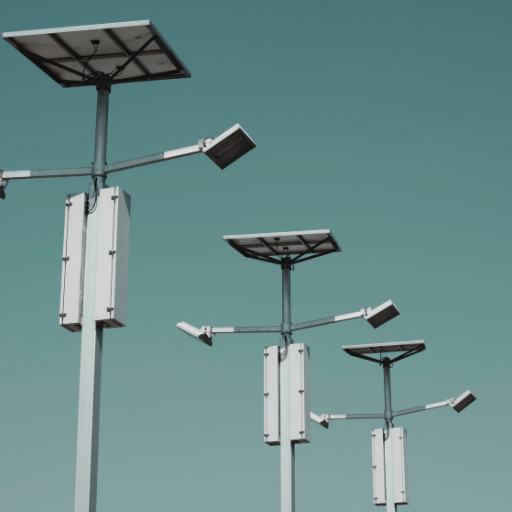
The cost comparison of solar flood lights to led flood lights is more complex because the two systems have opposite economic models: solar has higher upfront fixture costs but near-zero operating electricity costs, while grid LED has lower fixture costs but persistent electricity costs.
| Cost Item | LED Flood Light (Grid) | Solar LED Flood Light |
|---|---|---|
| Fixture Cost (50W class) | $25–$120 | $50–$200 |
| Installation Cost | $150–$400 (wiring + electrician) | $0–$30 (DIY mount) |
| Annual Electricity Cost* | ~$29/year (50W × 10hrs × 365 × $0.1648) | $0 |
| Battery Replacement (5–7yr) | None | $20–$60 |
| 5-Year TCO (1 fixture) | ~$320–$665 | ~$70–$260 |
* Electricity cost based on U.S. average residential rate of $0.1648/kWh as reported by the U.S. Energy Information Administration (EIA), 2024. Based on 10 hours of operation per night.
Over five years, total cost of ownership tilts toward solar when encompassing installation wiring costs. However, this advantage diminishes in situations with multiple fixtures sharing a single circuit run, and when solar battery replacements and decreased lumen output are calculated as operating costs.
For commercial facilities with broad spatial requirements—parking decks, warehouse yards, sport complexes—the economics change. Several high-wattage led floodlights on a shared circuit can lower reduce energy costs per fixture, and the steady output compensates for the grid hook-up expense. solar flood lights, however, do not scale as well: each one needs its own panel and battery regardless of how many are installed in close proximity.
💡 Key Takeaway
For standalone fixture installs in locations where no wiring currently exists, over five years solar generally comes in cheaper once installation costs are included. For multi-fixture commercial projects, the per-fixture economics of grid LED become significantly more attractive. Always figure on the total installed cost, not fixture cost alone.
Reliability in All Weather Conditions — A Practical Performance Check
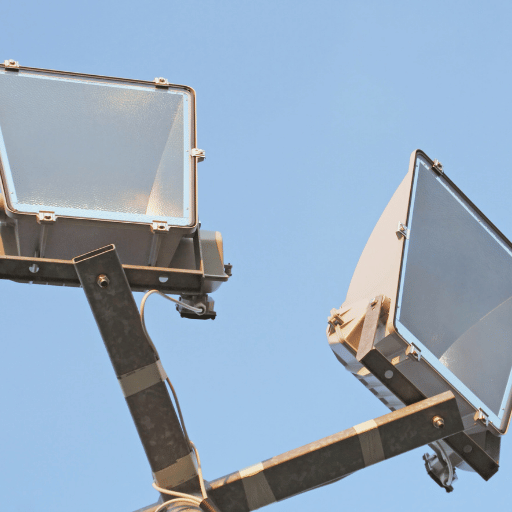
Grid-connected led flood lights perform just as well through different seasons or weather conditions. They operate off the power grid, so overcast days, winter months, and power outages—none of these affect them, and the last impact applies to solar flood lights similarly.
Off-grid systems do not work without the power grid but rely solely on the Sun. That reliance has well-documented seasonal ramifications. According to solar resource data from the National Solar Radiation Database (NREL), locations at approximately 42 North latitude (including Chicago, Philadelphia, and Seattle) receive roughly 3x the solar radiation in summer they get in winter. During the winter months of December and January solar panel are only capable of producing 40-60% of their summer peak. On a heavily overcast day, they may only achieve 10-25% of their rated capacity.
| Condition | LED Flood Light (Grid) | Solar LED Flood Light |
|---|---|---|
| Overcast / Rainy Days | No impact | 10–25% charge rate; shorter runtime |
| Northern Winter (42°N+) | No impact | 40–60% less daily energy vs summer |
| Power Outage | Light goes off | Continues on battery charge |
| Remote / Off-Grid Site | Requires grid connection | Works without grid |
| 24/7 Security Lighting | Reliable, constant output | Risk of dimming or shutdown overnight |
⚠️ Common Mistake
Assuming solar flood lights perform equally across all climates and seasons. Property owners in Seattle, Boston, or Minneapolis often find their solar flood lights with motion sensor fail to charge adequately from October through March. In these regions, battery reserves can be exhausted before midnight during multi-day overcast periods, leaving areas dark precisely when security lighting matters most. In northern climates, solar is better suited to summer-only applications or supplemental lighting — not primary security coverage.
Which Should You Choose? — A Decision Framework
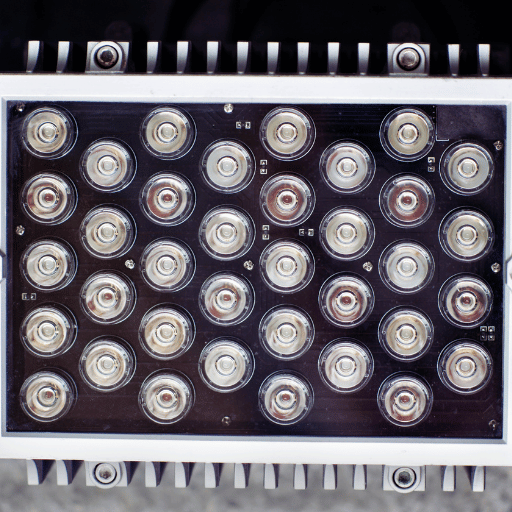
Picking between solar and LED flood lights comes down to five variables: grid access, required lumen output, climate zone, project scale, and maintenance capacity. Here is a straightforward framework for that decision:
- ✔
Choose solar flood lights if: the location has no existing electrical wiring, running conduit is prohibitively expensive, lumen output needs are moderate (under 3,000 lm), and the installation is in a sunny climate south of 40°N latitude. - ✔
Choose solar flood lights if: the application is a garden, driveway accent, or low-security perimeter where 6–10 hours of moderate brightness is adequate and the priority is reducing energy costs to zero. - ✔
For projects demanding consistent, high-lumen output — security lighting, sports facilities, commercial parking, or building facades — a grid-connected LED flood light is the correct choice, especially in northern regions with long winters. - ✔
Multiple fixtures on a shared circuit also favor grid LED — a single wiring run offsets the per-unit installation cost and makes the whole system more cost-efficient than installing individual led solar units. - ✔
Consider both: hybrid setups (grid LED for primary security coverage, solar for accent or perimeter lighting) work well when wiring is available in some areas but not others on the same property.
At Guangqi Lighting, our project evaluation process weighs five parameters in order: grid availability, required lumen output, climate zone, project scale, and long-term maintenance budget. For most commercial and industrial outdoor lighting needs, we recommend LED flood lights as the primary solution — with solar serving supplemental or off-grid roles where the use case justifies it.
5-Parameter Decision Checklist
- Grid access: Is an AC power source within 30 meters of the fixture location?
- Does the application need more than 3,000 consistent lumens per fixture? (Lumen requirement)
- Climate zone: Is the installation site north of 40°N latitude, or in a region with frequent overcast weather?
- Are more than three fixtures needed in a concentrated area? (Project scale)
- Maintenance budget: Is there budget and capacity for battery replacement every 5–7 years?
If you answered Yes to items 1, 2, 3, or 4 — LED flood lights connected to the grid are likely the better fit. If you answered No to most of these, solar is worth serious consideration.
Frequently Asked Questions
What are the disadvantages of solar flood lights?
View Answer
Solar flood lights have four main disadvantages. First, actual lumen output is far lower than advertised wattage ratings suggest — a “100W” solar flood light may realistically deliver the output of a 10–20W grid fixture. Second, performance drops sharply in winter and cloudy climates, where solar panels generate 40–60% less energy than in summer months. Third, lithium battery packs need replacement every 5–7 years, adding a recurring maintenance cost. Fourth, they are not suitable for high-security or commercial applications that require consistent, high-lumen output throughout the entire night.
Which are better — LED or solar lights, and for what applications?
View Answer
Neither is inherently better—It depends on the application. Grid-connected led flood lights are superior for commercial security lighting, parking lots, sports facilities, or any other installation that requires sustained high lumen output over large areas. solar led flood lights are better for off-grid locations, garden or driveway accent lighting, or low-lumen perimeter lighting in sunny climates. For projects in the higher latitudes, or with significant security concerns, standard led floodlights are the more reliable lighting solution.
How long does a solar flood light last?
View Answer
The LED chip itself in a solar flood light lasts approximately 30,000-50,000 hours, comparable in lifespan to a grid-connected led floodlight. The limiting factor is the battery. Premium LiFePO4 batteries that are rated for over 2000 charge cycles will last for 5-8 years in normal usage. Cheaper standard lithium-ion batteries in budget solar flood lights are often only good for 2-4 years before the capacity drops to below 80%. solar panels, by comparison, will often last 20-25 years. Expect to swap out the battery once during the practical life of a quality solar flood light device.
Can solar flood lights work effectively during cloudy days?
View Answer
A sunless day can reduce solar flood light output by as much as 90%. A good quality solar flood light with a sizable battery bank can still provide a few hours of good-quality light after a single overcast day. Multiple days of overcast will drain the battery bank, leading to dimmed output or shutdown. Without a battery bank large enough to handle a cloudy spell, solar flood lights will be useless for outdoor lighting during overcast days in cold or cloudy climates.
Are solar LED flood lights cost-effective in the long run?
View Answer
In a single-fixture project with no existing wiring, a solar led flood light can be competitive with grid power if the costs for a new fuse-box and the electrician’s time are taken into account over a five to seven year time span. At the U.S. average residential rate of $0.1648 per Kwh (EIA, 2024), an installed 50W floodlight that runs 10 hours a night costs at about $29 a year—savings that accumulate over time. For larger multi-fixture projects, or in colder climates where battery size needs to be increased, solar’s advantage diminishes.
Need Help Choosing the Right Outdoor Flood Lighting?
Guangqi Lighting has been designing and building successful outdoor led flood lights for commercial and industrial applications all over Asia, Europe, and the United States since 2010. We take into consideration existing grid infrastructure, lumen needs, the local climate, and the size of the project to provide the right lighting solution—not the most expensive.
Our Perspective on This Comparison
Guangqi Lighting manufactures both grid-connected LED flood lights and solar-compatible outdoor lighting systems. This comparison is written to help buyers make the decision that fits their actual project conditions — not to favor one product category. The cost figures and efficiency data come from U.S. government sources (DOE, EIA, NREL), and the performance limitations of solar flood lights described here reflect real-world conditions we see in project specifications from clients in northern European and North American markets.
References & Sources
- DOE Finalizes Efficiency Standards for Lightbulbs — U.S. Department of Energy
- Electric Sales, Revenue, and Average Price (2024) — U.S. Energy Information Administration (EIA)
- National Solar Radiation Database (NSRDB) — National Renewable Energy Laboratory (NREL)