Get in Touch with GUANGQI


LED Flood Lights for Commercial and Outdoor Lighting
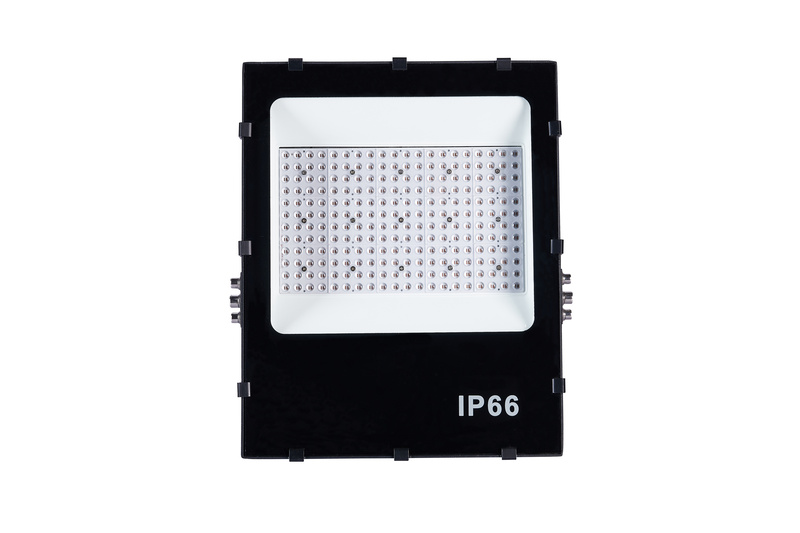
Commercial-grade LED flood lighting for parking lots, building exteriors, sports fields, and industrial yards. Guangqi Lighting provides IP65/IP66 rated waterproof LED floodlights from 50W to 500W—designed for projects requiring high output and sustainable energy efficiency.
130–160
lm/W Efficacy
50,000+
Hour Lifespan
IP65/66
Waterproof Rating
50–500W
Wattage Range
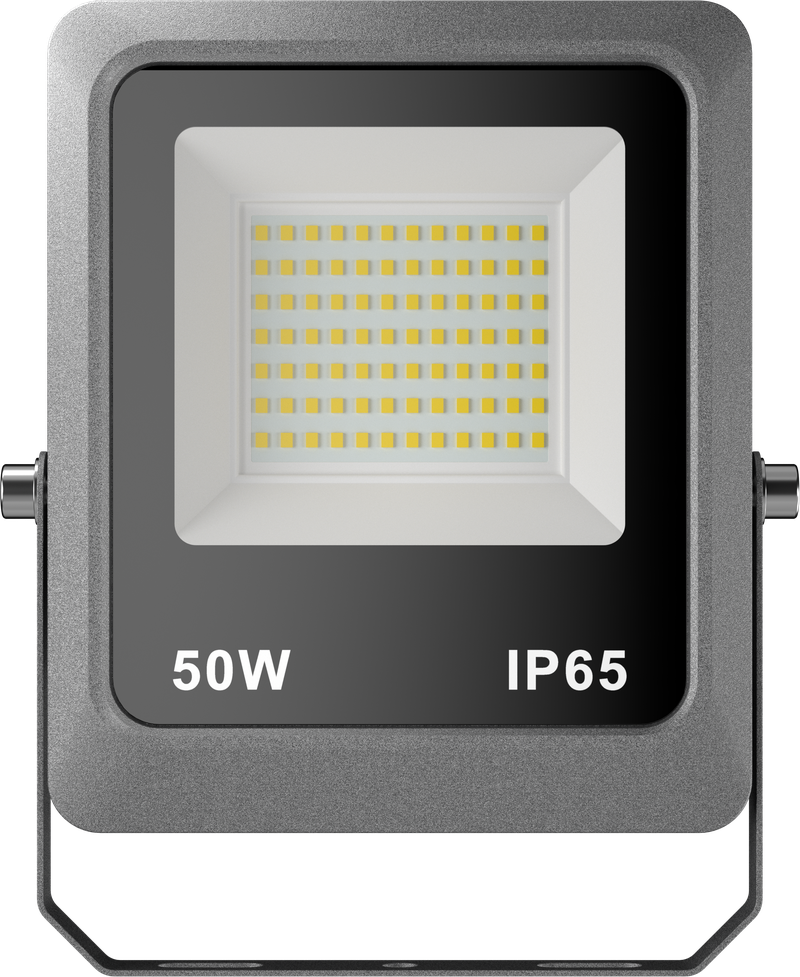
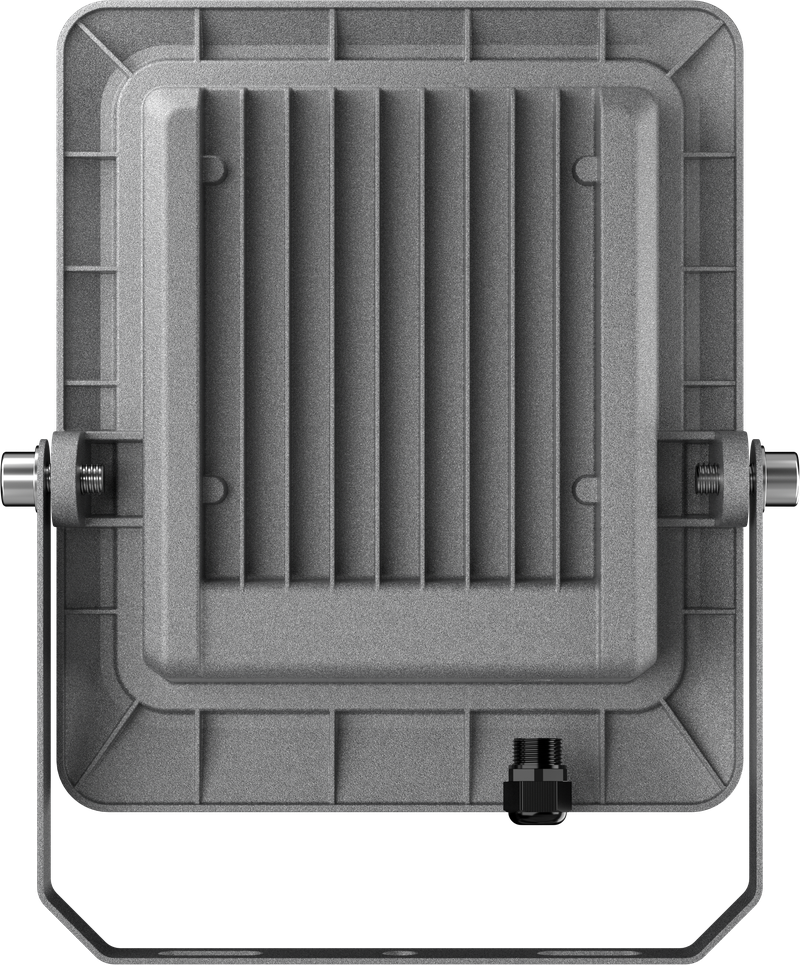
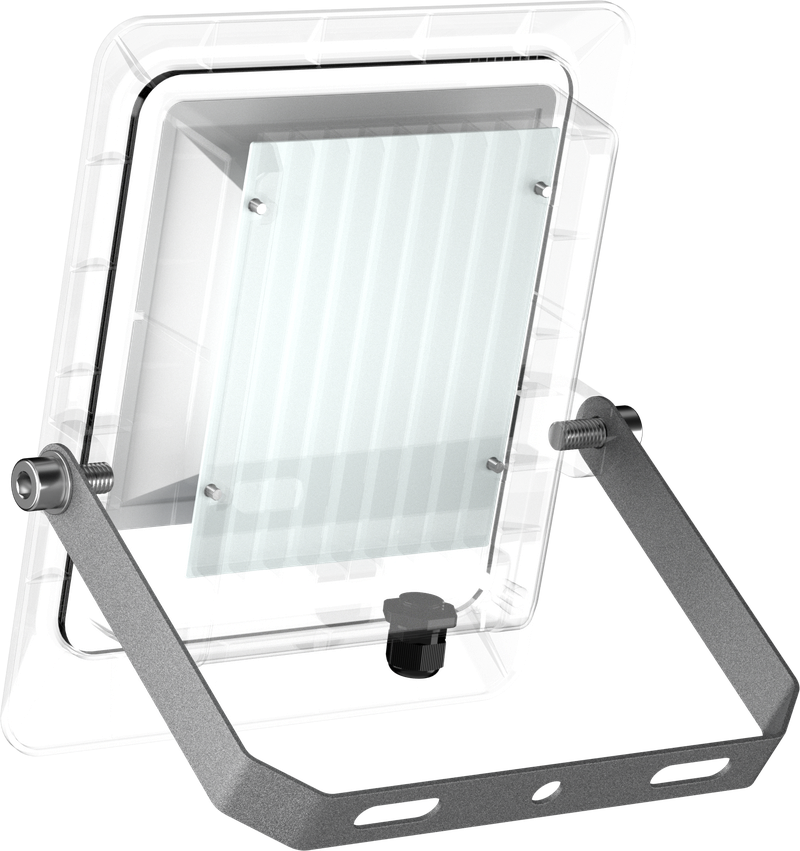
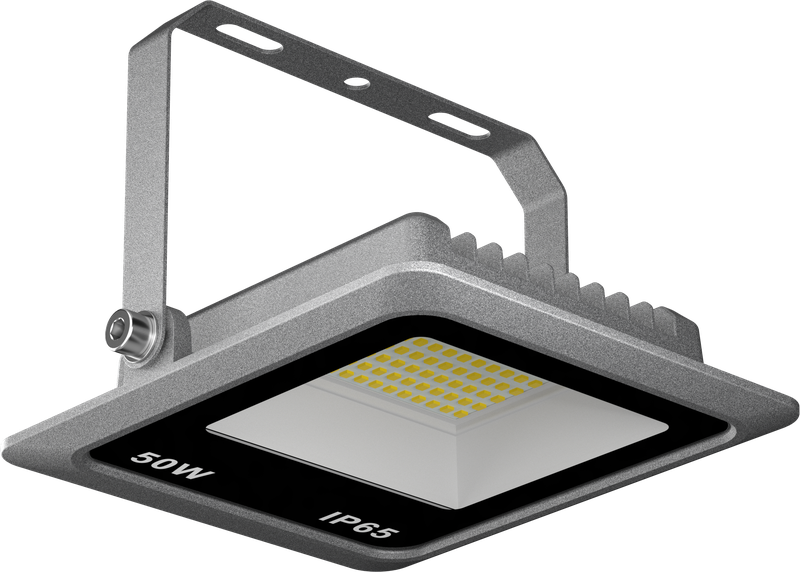
What Are LED Flood Lights and How Do They Work?
01
Illumination Concept
An LED flood is a broad-beam, high-intensity lighting fixture used to light large outdoor areas with a wide, uniform wash of light. This is in contrast to a spotlight, which directs a narrow spotlight beam (under 25; on the order of Olympic sprinters) on the target. By comparison, flood fixtures spread light across a wide beam angle—usually 60 to 120—to evenly cover large areas such as parking lots, building facades, loading docks, or landscapes.
02
Core Components
The key component is an array of LED chips mounted on a thermally conductive aluminum substrate that also acts as a heat sink. These semi-conductors output the visible light, converting electrical power—generally 130 to 160 lumens/watt, roughly 5-7 times as efficient as incandescent flood lamps and 2-3 times as efficient as metal halides—into useful illumination at a high rate. Integral LED drivers regulate the incoming AC power (typically 120-277V universal input) into steady DC current at the specific rate needed by each chip.
03
Key Features
A key feature for commercial, industrial, or area lighting is LED floodlights are responsive instant-on, maintain an identical color quality for 50,000+ hours of use, and work with photocell and motion control systems which formerly were impractical with concession-grades of HID lamps which required warm-up, restrike, and restrike.
Types of LED Flood Lights: From 50W to 500W
Application-based selection of an LED flood light starts by matching the wattage and lumen output levels to your specific use case. Here is how the most common categories break down:
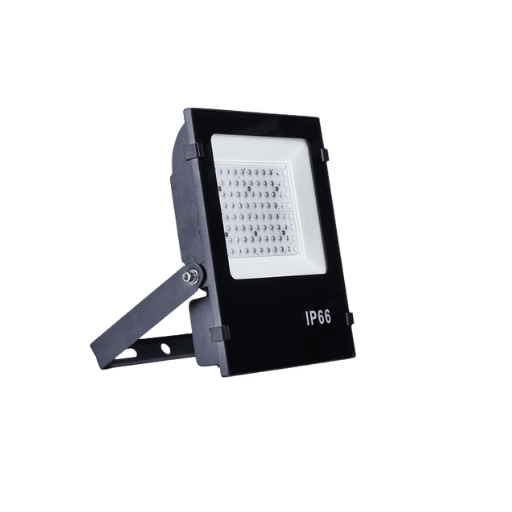
50W–100W
Compact Flood Lights
Light 6,500-16,000. Suitable for residential security, small commercial storefronts, signage, and landscapes. Replaces 150W-250W MH. Suitable mounting options: yoke or knuckle mount on walls and soffits.
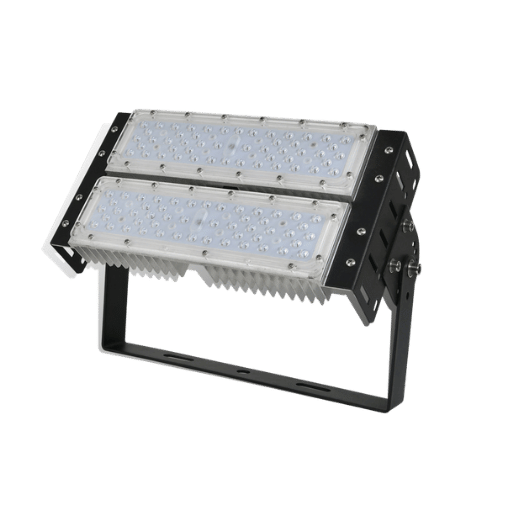
150W–200W
Mid-Range Commercial
Light 19,500-32,000. The workhorse for commercial parking lots, building perimeter security, loading docks, and walkway illumination. Replaces 400W-500W. Recommends mounting: yoke, knuckle mount, or trunnion mount on terminal cantilever arms, or pole-top yoke mount.
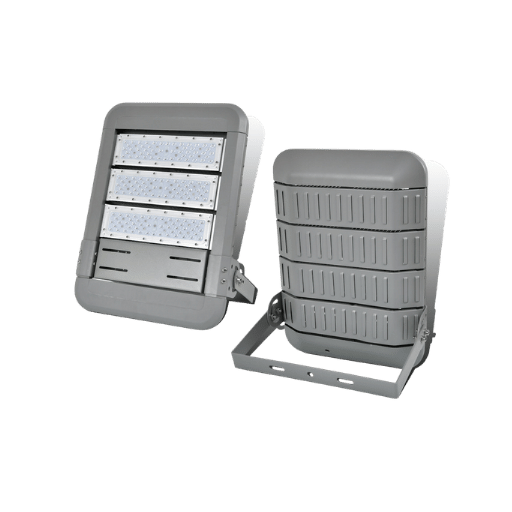
300W–500W
High-Power Stadium & Industrial
Light 39,000-80,000. Built for stadium flood lighting, sports fields, large industrial yards, airport aprons, and high mast applications. Aluminum die-cast housing with enhanced thermal management for continuous high-output operation. Recommends mounting: trunnion or yoke mount for pole-top application.
In addition to wattage levels, LED flood lamps are also classified according to their control features. Selectable fixtures permit field-adjustable wattages and color temperatures (most often 3000K/4000K/5000K) to minimize product inventory requirements in the field. Fixtures with built-in photocell sensors turn on at dusk and off at dawn while motion detectors allow reduced power operation until Active detection occurs, which lends to improved security, reduced operation costs, and compatibility with existing building management systems.
Commercial & Industrial LED Flood Light Applications
Commercial flood lighting has fundamentally different specifications than its residential cousin. It must be able to operate continuously, tolerate severe weather while achieving high IES standards.
01
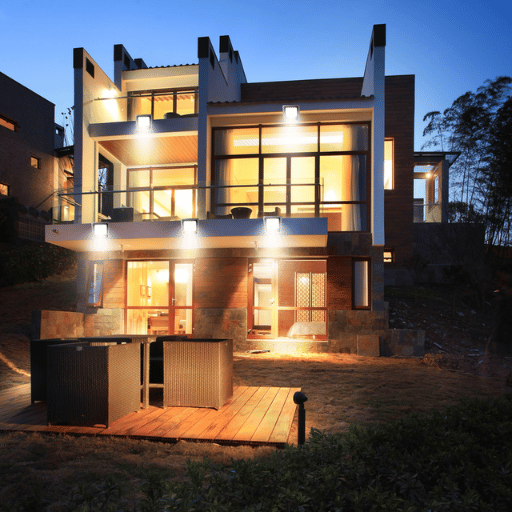 PARKING
PARKING
Parking Lots & Structures
LED flood light fixtures can range from 10,000-30,000 lumens and be mounted to 15-30 foot poles using 120 beam angles. LED parking lot lights reduce energy use by more than 60% compared to metal halide fixtures, achieving CRIs of 80+.
02
 EXTERIOR
EXTERIOR
Building Exteriors & Perimeter Security
Outdoor security flood lights mounted on facades or fences provide safe access. Commercial LED security flood lights on adjustable yoke mounts provide high lumen output, aimed to eliminate dark spots without causing neighbor glare.
03
 DOCKS
DOCKS
DOCKS
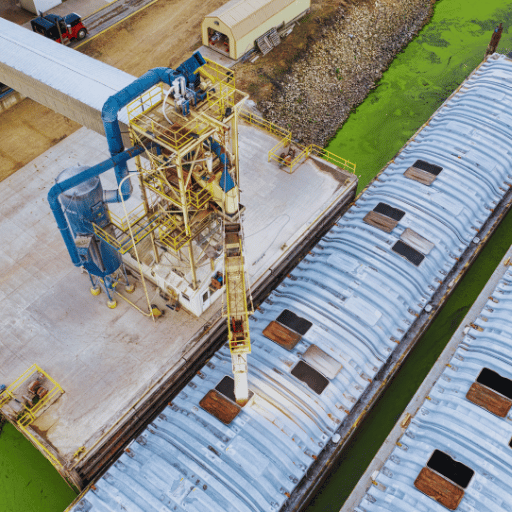
Loading Docks & Industrial Yards
Loading docks require instant-on lighting—an advantage over MH systems. IP66 rated waterproof fixtures allow for wash-downs in food processing and chemical facilities, ensuring long-term reliability.
04
 SPORTS
SPORTS
Sports Fields & Stadium Flood Lighting
Stadium LED fixtures (300W-1500W) provide necessary flux for large venues. Professional venues choose 5000K-5700K CCT for precise color rendering and zero-flicker performance on slow-motion cameras.
Technical Specifications: Lumens, CCT & Beam Angle
These standards allow you to understand critical specifications that affect your LED flood light fixture purchase:
| Model | Wattage | Lumens | Efficacy | CCT Options | Beam Angle | IP Rating | Input Voltage |
|---|---|---|---|---|---|---|---|
| GQ-FL50 | 50W | 6,500 lm | 130 lm/W | 3000K / 4000K / 5000K | 120° | IP65 | 100–277V AC |
| GQ-FL100 | 100W | 14,500 lm | 145 lm/W | 3000K / 4000K / 5000K | 60° / 90° / 120° | IP66 | 100–277V AC |
| GQ-FL200 | 200W | 30,000 lm | 150 lm/W | CCT Selectable | 60° / 90° / 120° | IP66 | 100–277V AC |
| GQ-FL300 | 300W | 45,000 lm | 150 lm/W | 4000K / 5000K / 6500K | 30° / 60° / 90° | IP66 | 200–480V AC |
| GQ-FL500 | 500W | 75,000 lm | 150 lm/W | 4000K / 5000K / 5700K | 15° / 30° / 60° | IP66 | 200–480V AC |
Color Temperature (CCT) Selection Guide
Color temperature determines the color of the LED flood light illumination. In general, 5000K is the best choice for most commercial outdoor lighting applications because it is wide enough to provide a broad field of illumination while not being too cold colored, which can cause glare. Kitchens and residences favor warmer temperatures such as 3000K. Hybrid luminaires providing selectable 3000K-5000K using switches are popular because they are easily changed between applications.
CCT selectable fixtures – where the installer can select 3000K, 4000K, and 5000K at the time of install – are gaining favor because they compress your inventory needs into one SKU, as opposed to a different fixture for each.
Beam Angle & Light Distribution
A narrow beam angle (15-30) concentrates LED flood light fixtures beam onto intended objects for Mission critical long shot lighting. Flood light fixtures with medium beam angles (60-90) work well in many applications. Wide beam angles (120 or higher) work best to spread illumination evenly and brightly, at when fixtures are mounted between 15-30 feet using high mounting heights.
IP65/IP66 Waterproof Ratings & Quality Certifications
IP (Ingress Protection) Code specified by IEC 60529
specifies the extent of dust and water protection providing by a fixture.
| IP Rating | Dust Protection | Water Protection | Suitable For |
|---|---|---|---|
| IP65 | Dust-tight (6) | Low-pressure water jets (5) | Standard outdoor flood lighting, building exteriors, parking lots |
| IP66 | Dust-tight (6) | High-pressure water jets (6) | Industrial environments, food processing areas, coastal locations |
| IP67 | Dust-tight (6) | Temporary immersion (7) | Ground-recessed flood lights, areas prone to temporary flooding |
For most commercially related exterior flood lighting uses, IP65 is enough. For installations requiring pressure wash down or in coastal/humid areas should specify IP66. All of our Guangqi Lighting LED flood lights are rated IP65 or better whereas our commercial and industrial line are IP66 standard.
Certifications & Compliance Standards
The best LED flood light fixtures should have appropriately obtained safety and performance certifications. For example, should have the following certifications:
CE Marking
A precondition for access to the European market, confirms compliance with directives set out by the EU in regard to safety, health and environmental constrains such as the LVD (2014/35/EU) or the EMC (2014/30/EU).
RoHS Compliant
Restriction of Hazardous Substances (Directive 2011/65/EU), the parts are free of lead, mercury, cadmium and other banned substances.
IEC 60598-1
International safety standard, specifying electrical, thermal and mechanical requirements for luminaires.
IEC 62471
One proper standard is IEC 62471- Photobiological safety: This standard defines the eye and skin photobiological safety of lamps, LED light sources and luminaires before they are marketed.
DLC
(DesignLights Consortium) – North American energy efficiency qualification required for utility rebate programs.
UL/ETL Listed
Third party safety certification relevant to North American markets.
LED Flood Lights vs. Metal Halide & HID: Why Upgrade?
The shift from metal halide and high-intensity discharge (HID) lighting systems to LED floodlights is among the most straightforward energy efficiency improvements a commercial property can make. These two light sources can be assessed based on the following important points of comparison:
Direct Performance Comparison
| Parameter | LED Flood Light | Metal Halide | HPS (High-Pressure Sodium) |
|---|---|---|---|
| Efficacy | 130–160 lm/W | 75–100 lm/W | 100–140 lm/W |
| Rated Lifespan | 50,000–100,000 hrs | 10,000–20,000 hrs | 24,000 hrs |
| Warm-Up Time | Instant (<1 sec) | 5–15 min | 3–10 min |
| Restrike Time | Instant | 10–20 min | 1–3 min |
| CRI | 80–90+ | 60–70 | 22–25 |
| Dimmable | Yes (0–10V, DALI) | Limited | Limited |
| Contains Mercury | No | Yes | Yes |
| Lumen Depreciation at 50% | L70 at 50K+ hrs | 40% loss by 10K hrs | 30% loss by 15K hrs |
Significant Energy Savings
The energy savings is significant as well. A 400W Metal halide replacement by a 150W LED flood light gives the savings of 250W. If a commercial facility has fifty fixtures operating at 12 hours a day, then it can save roughly 54,750 kWh of energy per year, which is nearly $6,570 per year at the U.S. commercial electricity rate of $0.12/kWh according to U.S. Energy Information Administration figures.
Zero Maintenance Costs
In addition to the savings on your energy bill, there is no cost for the lamp replacement that has to be done every 10,000-15,000 hours for a metal halide system. Taking into account lift equipment rental, electrician manpower, and disposal of mercury-laden (mercury is a hazardous waste) HID lamp costs—maintenance of a 50-fixture system can run close to $3,000-$5,000 per year—a whole cost that go away when installing LED.
Superior Illumination Quality
In addition to: more energy-efficient, easier to maintain, long life and won’t blow, the contemporary LED fittings are also a better quality of illumination than conventional floodlighting, which is reflected in: increased color rendering index (CRI 80+), improved cameras and security footage, better color tracking for workers, visually more attractive and safer streets and parks
LED Flood Light Mounting Options: Yoke, Knuckle & Trunnion
The mounting system affects the installation flexibility, aiming accuracy, and the surfaces on which the fixture can be installed.
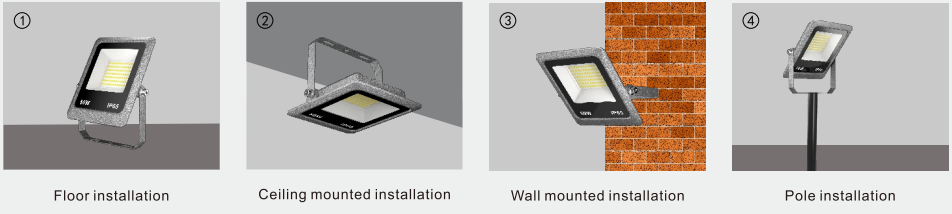
Yoke Mount (U-Bracket)
Most adjustable bracket. U-bracket permits 180 of vertical adjustment and can attach directly to poles, walls, or crossarms. used mainly for parking lot pole-top install bracket and building mounted flood lighting where accurate direction is important. Most adjustable swivel mechanism for field adjust without fixture removal.
Knuckle Mount
A convenient low-projection mounting option for wall or soffit mounting. Equipped with a knuckle allowing tilt adjustment (usually 0-90) and rotation, it is suitable for building exterior security lighting and small area flood lighting. Keeps the fixture close to the mounting surface for a clean architectural appearance.
Trunnion Mount
A direct-mount angle adjustable bracket. Used for ground level or surface mounting, such as landscape flood lighting, illuminated signage and low section wall-mounted. Large base area provides stability in wind loading.
Note: Mounting hardware height and wind load are important; poles in the open with fixtures mounted over 25′ are subject to wind loads and fixture EPA (Effective Projected Area) determines the fixture EPA rating contribution to the wind load on the pole. Compact, aerodynamic LED flood light fixtures with lower EPA ratings can significantly lessen pole structural requirements.
Autoclave Engineering Tools
Precision calculators designed for industrial LED sizing, cost optimization, and model selection. Click to launch the interactive tools.
SIZING
Wattage Calculator
Accurately determine the exact LED wattage needed to replace your existing Metal Halide or HPS fixtures.
Calculate Wattage →
COST ANALYSIS
Savings Calculator
Compare annual energy consumption and maintenance costs to calculate your long-term return on investment.
Compare Costs →
COMPARISON
Product Selector
Select your application area and mounting preferences to instantly find the best LED flood light match.
Compare Models →Loading Tool…
LED Flood Light Project Case Studies
LOGISTICS
Warehouse Distribution Center — Parking Lot Retrofit
Location:
Distribution facility, Southeastern United States
Challenge:
72 aging 400W metal halide pole-mounted fixtures with frequent lamp failures and complaints about dim, yellow-tinted light from the night shift loading crew.
Solution:
Replaced all 72 fixtures with 150W LED flood lights (GQ-FL200 equivalent) with integrated photocell for dusk to dawn operation. Yoke mount on existing 25-foot poles. 5000K CCT for improved visibility and security camera clarity.
Results:
Energy consumption dropped from 28,800W to 10,800W — a 62.5% reduction. Annual energy savings of approximately $9,460.
“The brightness improvement was noticeable immediately. Our security team reported better camera footage quality.” — Facilities Director
SPORTS & RECREATION
Municipal Sports Complex — Field Lighting Upgrade
Location:
Community sports complex, Midwest region
Challenge:
Four fields with 1000W metal halide flood lights requiring 15-minute warm-up periods. Games delayed when power interruptions triggered restrike cycles.
Solution:
Installed 500W LED stadium flood lights with precision optics on existing poles. Instant-on capability with 0–10V dimming.
Results:
Light levels increased from 30 to 50+ foot-candles. Energy consumption per field cut by approximately 50%.
“We went from spending $4,200 per year per field to essentially zero maintenance cost.” — Parks & Recreation Manager
INDUSTRIAL
Food Processing Facility — Exterior & Loading Area
Location:
Food manufacturing plant, Pacific Northwest
Challenge:
Existing HPS fixtures provided poor color rendering (CRI 22). IP65-rated fixtures were failing prematurely due to daily pressure washing.
Solution:
24 units of 200W LED flood lights rated IP66, mounted with stainless steel knuckle brackets to resist corrosion. 4000K CCT selected.
Results:
Color rendering improved to CRI 85. Zero fixture failures in 24 months of operation despite high-pressure washdowns.
The Engineering Behind This Guide
This technical guide reflects Guangqi Lighting’s 15 years of experience designing and manufacturing LED flood lighting systems for commercial, industrial, and sports venue applications on four continents. Specification data provided from our present production models evaluated under IEC 60598-1 conditions. Energy saving calculations use U.S. EIA published commercial electricity rates. In the case where industry-wide data is cited – such as MH lamp life ranges, CRI values etc. – we cite the relevant standards and published manufacturer specifications rather than conduct our own tests.
Frequently Asked Questions About LED Flood Lights
What are the disadvantages of LED flood lights?
The biggest disadvantage is the higher initial purchase price in comparison to low voltage halogen or HID flood lights. A good high-quality 200W LED flood light will cost approximately between 2-3 times the cost of a like for like metal halide floodlight. As the LED flood light uses between 60-70% less power and has 3-5 times the life span of existing MH luminaires the cost of ownership over 5 years is drastically reduced. A factor to consider is the cheaper LED flood lights with cheaper components often have poor thermal management and can suffer from lumen depreciation at an increased rate.
How long do outdoor LED flood lights last?
Most good outdoor LED flood lights are rated for 50,000- 100,000 hours of use. At 12 hours a day, that is about 11-23 years before the LED’s have reached L70 (70% of original brightness). How long the LEDs will last entirely depends on the thermal management used, as die-cast aluminum enclosures with adequate heat sink fins will outlast stamped steel enclosures by a major margin.
Why do LED flood lights fail so quickly?
Premature LED flood light failure can almost be narrowed down to two problems: poor driver quality, and poor thermal design. The most common point of failure of a lamp is the LED driver, the electronic that controls the power going into the lamp. Budget fixtures typically use a capacitor based driver that degrade in high temperature conditions. The other issue is heat; LEDs never usually fail, but if heat cannot escape the driver components and cause the phosphor coating on the LED chips to degrade.
How many lumens should a flood light have?
It varies by application. For residential lighting, 1,500-3,000 lumens (roughly a 50W LED flood light) will illuminate a backyard or driveway. Commercial parking lot fixtures frequently require 10,000-30,000 lumens, depending on mounting height and spacing. Sports fields and stadium flood lighting calls for 50,000 to well over 150,000 lumens per fixture. A rule of thumb set forth in IES recommendations: 1-2 lumens per sq. foot for security, 20-50 lumens per sq. foot for sports venues.
Are LED flood lights worth it?
In the commercial and industrial sectors, LED flood lights offer compelling payback potential. Our review of thousands of parking lot, warehouse, and security applications revealed that 150W equivalent LED fixtures typically pay for themselves within 18-24 months through energy and maintenance savings alone. Energy costs of $0.12 per KWh over a 12 hour daily burn rate results in savings of about $110 annual per fixture. Accurate comparison to legacy fixtures should be based on lumen equivalence, not wattage.
How do LED flood lights compare to Metal Halide?
LED wins over metal halide on nearly every count. LED’s turn on full brightness instantly; metal halides can take 5-15 minutes to warm up before reaching full level; require a rest time of 10-20 minutes following a power outage. LED’s maintain constant color temperature throughout life while metal halide shift toward pink or green as they age. Dimming, photocell and motion sensor control function difficult with HID’s but trivial with LED.
Can I replace outdoor flood lights with LED?
Yes. Most LED flood lights are simple retrofit replacements for existing 1000 watt, 400 watt or 150 watt metal halide fixtures. Verify Voltages (standard 120V, 208V, 240V, or 277V) – your fixture should accept “universal” 120-277 volt input. Choose then based on the lumen output / foot-candle you need, not the watts. In general the following replacements hold: 100W LED fixture for 250W-300W Metal Halide; 200W LED for 400W-500W MH fixtures.
Do LED flood lights get hot?
Far less than MH or halogen. A well-built 200W LED flood light typically reaches 60–80°C at the heat sink, versus 200–300°C for a comparable metal halide fixture. Die-cast aluminum housings with integrated fins handle the dissipation.
What is the brightest outdoor LED flood light?
Stadium-grade fixtures at 1000W–1500W can push past 150,000 lumens. For most commercial projects, 500W models at 65,000–80,000 lumens are the practical ceiling.