Get in Touch with GUANGQI


⚡ Guangqi Lighting — Solar Flood Lights
Solar Flood Lights — Energy-Efficient Outdoor LED Lighting Solutions
Factory direct solar flood lights with motion sensor, dusk-to-dawn and security adaptations. CE & RoHS certified, IP65/IP66 protected against the elements, LiFePO4 batteries. OEM/ODM customization for international clients.
- 9,900+
- Monthly Global Searches
- IP65/66
- Certified Waterproof Rating
- 50,000 h
- Rated LED Lifespan

Awareness
What Are Solar Flood Lights?
Solar flood lights are outdoor solar lighting systems that generate, store, and use electricity entirely from the sunlight hours – no direct AC wiring required. Wide-coverage, high-lumen LED fixtures, they are designed primarily for area lighting: driveways, parking lot perimeters, the edges of structures, fields, gardens, basements, and anywhere else you require reliable nighttime brightness without the expense of an extension of the electrical grid.
Unlike fashionable outdoor LED lighting fixtures such as garden pathway markers or UP lights, solar flood lamps are driven for action rather than decoration. All else equal, a quality 2000-5000 lumen unit diffuses twice the luminance as a 400 watt halogen flood at half the operating costs, and can be installed anywhere the sun’s rays can be focused on the panel.
How Solar Flood Lights Work
The operational cycle for a solar flood generally follows a simple photovoltaic-to-discharge loop. Over the daylight hours, the photovoltaic panel converts incoming photons to driving current which flows through a charge regulation circuit into a rechargeable battery bank. When the sun drops below the horizon, the control circuitry detects the current drop or PIR activation in the LED array itself and drives the LED illumination using the stored battery power.
Modern LED solar flood light units perform very efficiently even at less-than-maximum levels of irradiation, and the most advanced modules incorporate microcontroller-based power management that adjusts delivery to maintain a predetermined terminal voltage regardless of battery SOC – ensuring that even after successive weather fronts you will have maximum illumination duration, not maximum battery readout.
1
Solar Panel Captures Sunlight
5-6V DC from monocrystalline or polycrystalline PV panels accounts for typical residential wattages; 1-3W (continuous rated) provides dependable beam spread.
2
Charge Controller Manages Storage
PWM or MPPT charge regulation circuitry is used to safely charge the LiFePO4 or Li-ion battery pack, extending cell lifespan.
3
LED Array Activates at Night
High-lumen, high-efficacy bottom-emitting LEDs are rated 100-160 lm/W that cast the beam toward the target.
4
Cycle Repeats Daily
All of these operations are fully autonomous – the system is operated entirely without user intervention.
Key Components — Solar Panel, Battery & LEDs
Solar Panel (Photovoltaic Cell)
Monocrystalline silicon (20–22% efficiency) or polycrystalline (15–17%). Sized 5W–30W depending on battery capacity and lumen output. Panel tilt and south-facing orientation are critical for maximum energy harvest.
Rechargeable Battery Pack
LiFePO4 (lithium iron phosphate) preferred for 2000–3000 cycle life and -20°C cold tolerance. Li-ion (18650 cells) offers higher energy density at lower cost but degrades faster in extreme temperatures. Typical capacity: 2000–6000mAh at 3.2–3.7V.
LED Array (Light-Emitting Diode)
SMD 2835 / SMD 5730 / COB setups. Color temperature typically 4000K (neutral white) to 6500K (cool white / 5000K). CRI 70–90+ depending on application grade. Rated 50,000 hours minimum.
PIR Sensor & Control Circuit
Passive infrared sensor detects body heat movement at 8–22 metres. Microcontroller manages mode switching (motion/dusk-to-dawn/dim/off), brightness levels, and battery protection.
IP-Rated Housing
Die-cast aluminium or ABS+PC housing sealed to IEC 60529 IP65 or IP66. UV-stable coating prevents yellowing. Tempered glass or high-transmittance polycarbonate lens.
Best Types of Solar Flood Lights
The different types of solar flood lights you see in the market are meant to serve various needs. To ensure that you are choosing the correct type of flood before checking out the specification, it is necessary to know in advance what purpose each type is meant to serve. Below are the four general types produced and supplied at Guangqi Lighting.
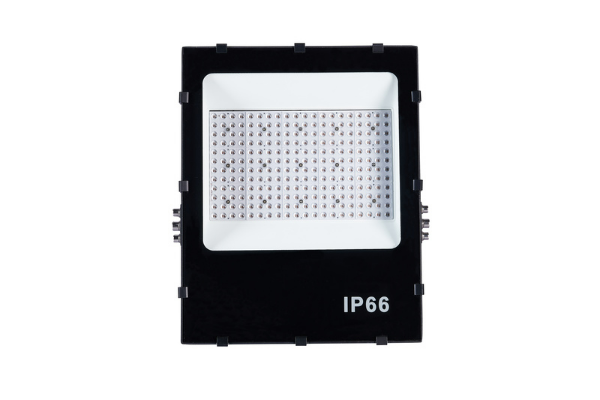
Motion Sensor
Motion-Activated solar flood lights feature a PIR (passive infrared) sensor that detects movement of persons or vehicles within a designated detection zone – usually 8-22 metres (26-72 ft) at a 120 detection angle. Once detected, the flood immediately activates at full strength. Most models switch off again after 15-60 seconds of detection inactivity.
This mode is most economical with uptime, often allowing for 3-5 night runs from a single full charge. We recommend this mode for the boundaries of structures for utmost security.
- PIR Detection
- 8–22 m Range
- Auto-off 15–60s
- Best Battery Life
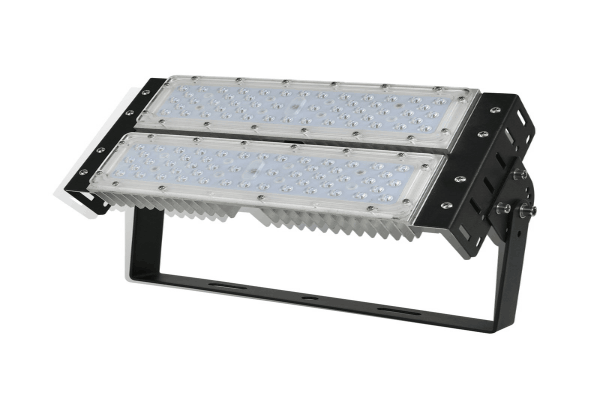
Dusk-to-Dawn
Dusk-to-dawn units are equipped with a photocell or ambient light sensor which automatically turns the LED array on at sunset and off at sunrise. This means the light stays on throughout the dark hours, perfect for applications such as pathways, sign illumination, porches, and retail frontage.
The drawback is increased battery use. High quality designs solve this by instituting a two-tiered light output, remaining brightest at dusk and dawn, then dimming the light in the middle of the night.
- Photocell Activated
- Continuous Illumination
- 8–12 Hr Runtime
- Two-Stage Brightness
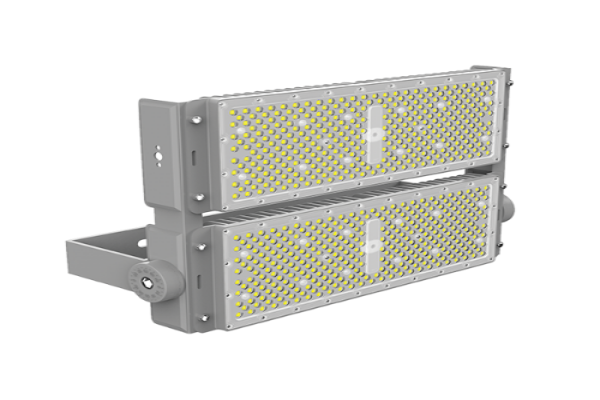
Solar Security
Security-grade solar flood lights always prioritize maximum lumen output and wide beam distribution rather than for energy savings. These lights commonly produce in excess of 1500-5000+ lumens at a beam 120-270, casting a broad net of lights to remove dark areas around a building’s envelope.
Higher-end security fixtures combine motion activation with a “sentinel” feature that maintains a dim glow of 10-20% for an indefinite period, jumping to full brightness when motion is detected.
- 1500–5000+ lm
- 120–270° Beam
- Sentinel Mode
- Perimeter Use
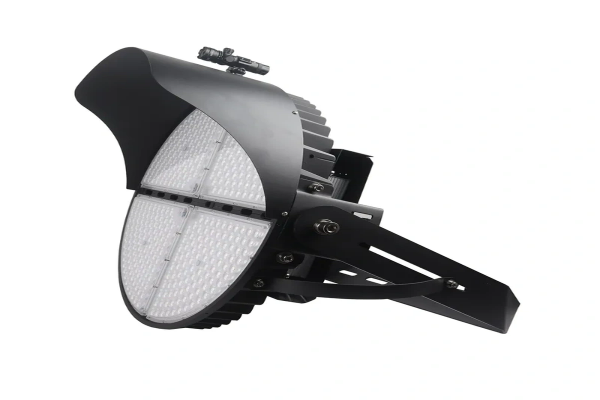
Adjustable Spotlights
Spotlights use 10-45 focused lumens to propel a narrow path of concentrated light at a desired feature — flag pole, ornamental trees, commercial signage, landscape feature, sculpture. Spot lights achieve higher intensity levels by focusing light at specific features.
Many solar spot light fixtures enable separate placement of the solar panel (in any sunny location) from the focus (can be moved 2-5 meters apart) for greater installation flexibility.
- 10–45° Beam Angle
- Directional
- Panel-Head Separation
- Landscape / Signs
Our Engineering View
In our testing on solar flood lights across European, Arctic, and Southeast Asian climates, the premium 3000mAh LiFePO4 units sustained 4-6 nights of operation on full charge with motion-sensor activation, versus a single night duration in their dusk-to-dawn mode. For home security concerns, we find this to be the better operating standard.
Solar Flood Light Applications — Residential, Commercial & Industrial
Solar flood lights are no longer limited to casual backyard lighting schemes. Instead they have evolved into highly valiant tools for commercial enforcement, livestock yard illumination, or any situation where mains is unsatisfactory, too expensive, or unwanted.
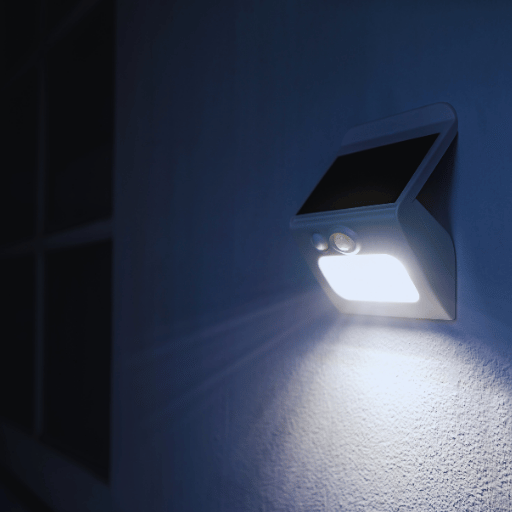
Residential Applications
Security applications in homes use a combination of security, ease of use, and user benefit. Motion-sensor solar security flood lights installed to the entry points offer thieves a psychologically negative sight, prevent falls, and provide continued nighttime visibility.
- Driveways and garages
- Front and rear gardens
- Patios and decks
- Porch illumination
- Pathway lighting
- Landscape accents
Real Project: Spain
Built out 12 2000lm motion-sense solar flood lights in a gated apartment complex. Zero calls back 14 month later, battery capacity still 94%. Gained circa 480/y avoided major power cost.
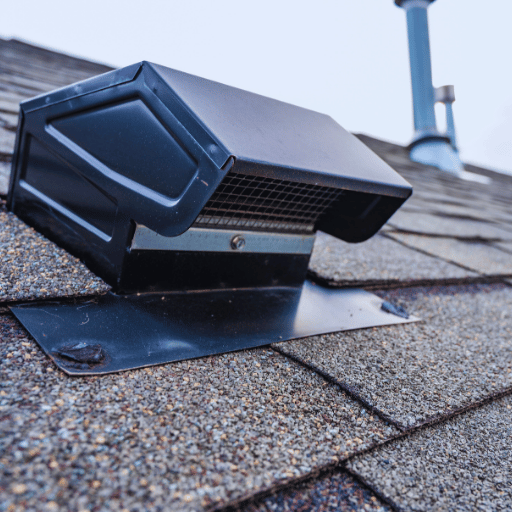
Commercial Applications
Commercial security lighting requirements require even greater lumen output and duty cycles. The fact that everything is installed on a single plug-and play basis means less install time and disruption.
- Parking lot perimeter
- Business signage
- Warehouse exteriors
- HOA common areas
- Retail forecourts
- Car dealership lots
Real Project: Malaysia
Installed 28 4500lm commercial solar security lights in a 3,200m long parking lot. No trenching needed. Achieved 95% full foot-print illumination (0.3 lux minimum).
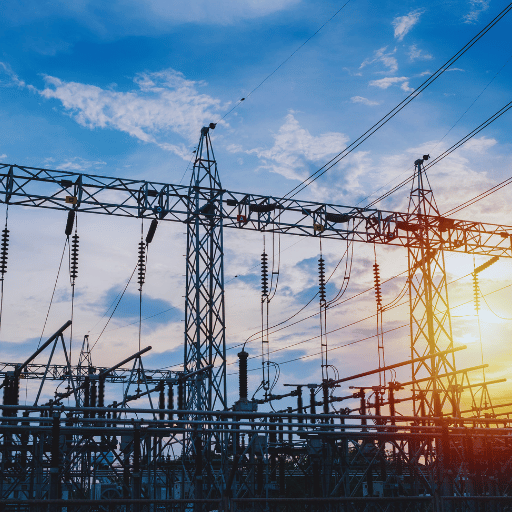
Industrial & Agricultural
Remote industrial or agricultural facilities that are far from the power grid are where renewable lighting solutions offer prime value. Cable trenching in such a setting can often cost as much as the entire light package.
- Farm building lighting
- Construction sites
- Telecom towers
- Remote storage yards
- Aquaculture ponds
- Oil field & mining
Real Project: Vietnam
Mounted 8 IP66 3000lm dusk-to-dawn units in farm buildings 2.4km from grid. Trench costs were 3x the solar system cost. Achieved >26mths field runtime.
High Powered Solar Flood Lights Technical Specificatio
Knowing the core specifications of a solar flood light are critical to getting the right application fit. The most important specs are – lumen output, battery capacity, IP rating and panel type – in order of field application priority.
Lumen Output & Brightness Levels
Lumens are a measure of total output in a lighting product – the more lumens the better. Solar flood lights come in a 100lm to 10,000lm+ range. Without guidance, selecting something too bright will lit nuf for security, wasting battery and causing blind spots in the camera view. Too weak will put asset and staff at risk.
- 500–1,000 lm Up to 100 sq ft Porch, pathway, small garden
- 1,000–3,000 lm 100–500 sq ft Driveway, garage, rear garden
- 3,000–5,000 lm 500–1,500 sq ft Parking lot, warehouse, farm
Solar Panel Efficiency & Charging
The ‘efficiency’ of the solar panel itself dictates how quickly the battery will replenish after a sustained bad weather period. For low light/partial shadow presence, monocrystalline panels win against polycrystalline panels, and are better suited to mounting in Northern European/north American locations (or where overhang shading is an issue).
Battery Capacity & Runtime
Battery capacity (mAh) is the single largest factor influencing how many hours of operation you get per charge. Most residentialsolar floodlights will have 2000-4000 mAh cells, commercial units often carry 6000-15,000mAh or more built in packs.
| Battery Type | Typical Capacity | Cycle Life | Cold Temp Performance | Best For |
|---|---|---|---|---|
| LiFePO4 | 3000–6000mAh | 2000–3000 cycles | Down to -20°C | Commercial / Cold Climates |
| Li-ion (18650) | 2000–5000mAh | 500–1000 cycles | Down to -10°C (reduced) | Residential / Temperate |
| NiMH | 800–2000mAh | 300–500 cycles | Down to -20°C (partial) | Budget / Entry-Level Only |
Insider Knowledge
Batteries de-rate more quickly than most people expect under -10C using Li-ion chemistry. We specify all commercial units with LiFePO4 cells set to -20C for northern hemisphere markets. The margin increase in investment (around 25-35%) is far surpassed by lower warranty/field replacement costs.
Waterproof Ratings — IP65, IP66, and IP67 Compared
The IP (Ingress Protection) value of a product states whether the product is dust/water proof. The IEC 60529 standard sits behind this, and while a value of 6 for dust proofness (1st number) is ideal, 5 is generally use acceptable. For water and moisture proofing, the second digit is critical. Any solar flood lights rated below 5 should be rejected for exterior installations.
| IP Rating | Dust Protection | Water Protection | Typical Application |
|---|---|---|---|
| IP65 | Dust-tight | Low-pressure water jets | Residential, sheltered |
| IP66 | Dust-tight | High-pressure water jets | Industrial, coastal, heavy rain |
| IP67 | Dust-tight | Temporary immersion | Flood-prone areas, underground |
Why The Price Difference Exists
The difference in manufacturing cost between 5 and 7 (dust/moisture) resistance is roughly 20-25%. The higher 7 rating involves more gasket material, testing protocols and more frequent use of super tight tolerances for housing shell halves. As a result the consumer cost rises accordingly. For solar flood lights mounted outside, using the 6 rating is fine in rain /dust.
Full Specification Comparison Table
| Feature | Entry-Level | Mid-Range | Commercial-Grade |
|---|---|---|---|
| Lumen Output | 200–800 lm | 800–3,000 lm | 3,000–10,000+ lm |
| Solar Panel | Polycrystalline 3–5W | Monocrystalline 6–10W | Monocrystalline 15–30W |
| Panel Efficiency | 15–17% | 18–20% | 20–22% |
| Battery Type | NiMH / Li-ion | Li-ion 18650 | LiFePO4 |
| Battery Capacity | 800–2,000mAh | 2,000–4,500mAh | 5,000–15,000mAh |
| Runtime | 3–5 hrs | 5–8 hrs | 8–12+ hrs |
| IP Rating | IP44–IP64 | IP65 | IP65–IP66 |
| Color Temp | Cool white 6000K+ | 4000K–6000K | 3000K–5700K |
| Sensor | Basic PIR | PIR + photocell | PIR + cell + timer |
| Certifications | None / FCC basic | CE, RoHS | CE, RoHS, IEC |
| Warranty | 6–12 months | 1–2 years | 3 years full |
| Charging Time | 8–10 hrs | 7–8 hrs | 6–8 hrs |
How to Choose the Right Solar Powered Flood Lights
Selecting a good quality light in an already wide price range can seem intimidating. Through my experience, 3 decisions matter to 90% of customer experience with a solar flood light system – ever correct lumen output for the area, operating mode, and battery chemistry to match the climate. Everything else is an after-thought.
Matching Lumens to Area Size
The most common buyer error is to under specify lumens; a 400lm bit of kit can’t light a 200m driveway – no matter how well specified, the whole lot! Use the below table as a guide to start off with – then increase by 20-30%, if the area is absorbing (e.g. dark tarmac, heavily planted borders), or the needs are more security focused than ‘night time ambiance’.
| Area Size | Recommended Lumens | Typical Application | Mounting Height |
|---|---|---|---|
| Under 100 sq ft (9m²) | 500–1,000 lm | Porch, gate, shed door | 2–2.5m |
| 100–300 sq ft (9–28m²) | 1,000–2,000 lm | Standard driveway, patio | 2.5–3.5m |
| 300–800 sq ft (28–74m²) | 2,000–3,500 lm | Large garden, side yard | 3–4m |
| 800–2,000 sq ft (74–185m²) | 3,500–5,000 lm | Small parking lot, farm yard | 4–6m |
| 2,000+ sq ft (185m²+) | 5,000–10,000+ lm | Commercial lot, industrial | 6–10m+ |
Motion Sensor vs. Dusk-to-Dawn
When to Choose Motion Sensor
Select motion sensor mode if you are predominantly relying on the Vigilant’s security deterrence (although it can be used effectively regardless), if the area is only periodically used (driveway, back garden, side access), you need to save battery life, or you think that there is a potential for light pollution if a switch is left on in someone else’s property (i.e. in a residential setting). Today’s test shows that the Vigilant lasts between 4-8 hours longer on motion sensor mode than on constant on.
When to Choose Dusk-to-Dawn
Select dusk-to-dawn mode in the following situations: when all night visibility is necessary for safety (pathway steps, pool surround, public access), when the area is consistently occupied during the night, or when presenting a commercial display (shopfront, HOA entrance). Check that your battery capacity accounts for your longest winter nights in your northern latitude (usually 14-16 hours).
Battery Life & Weather
Temperature Impacts
Amongst the best-kept secrets when choosing a solar flood light is the impact of cold weather. Lithium-ion batteries generally experience a loss in capacity at freezing temperatures. For any outdoor application where temperatures dip below zero, LiFePO4 is a mandatory specification.
50%
Loss at -10°C (Li-ion)
<15%
Loss at -10°C (LiFePO4)
Cloud Cover Safeguards
For 100% cloud cover: Rough industry figures are, depending on the robustness of the monocrystaline panel, 10 – 25% of rated capacity on a heavy overcast day. 3 days of heavy overcast will nearly drain many household batteries. The practical safeguard is to specify a battery capacity 1.5 – 2 times what the power calculation states is needed by one night – this gives you enough for 2-3 days supply. For mission critical applications, specify a dedicated large capacity commercial unit with bigger panel.
Why Choose Guangqi Lighting for Solar Floodlight
We are Guangqi Lighting, a LED lighting manufacturer established in 2010 and based in the Guangdong province of China. We produce LED lighting products including solar flood lights, outdoor LED luminaires, and OEM/ODM custom lighting fixtures for buyers across Asia, Europe, North America and the Middle East. Direct from the factory to you; we cut out third party middlemen and move straight to the engineering and manufacturing team.
15+
Years of LED Manufacturing
Founded in 2010, we have developed multiple LED technologies generations in production from early SMD LED arrays to present day high-efficacy COB and flip-chip LED modules. Our production team has accumulated practical experience with solar lighting in areas such as thermally managed “fully sealed” housing, extendable battery life and fine-tuned photovoltaic charge controllers for the benefit of our clients.
Quality Certifications & Compliance
All solar flood light products are produced to international standards. Our professional financial customers’ solar flood lights meet IEC 62722 (performance criteria for LED luminaires) and IEC 60529 (IP rating) as according to independent test and certification reports.
CE Certified
RoHS Compliant
IEC 62722
IEC 60529
IP65 / IP66
3-Year Warranty
Custom OEM & ODM Solutions
We support clients who require products that exceed catalogue norm. OEM (your branding on our products) and ODM (ground-up for you) are both practical solutions when the minimum order quantity can be scaled to regional distributorship or large end-user projects. Custom beam angles, battery capacities, housing colors, and packaging options are within industry norms.
Our Engineering Approach
The solar flood light product category suffers from manufacturing issues resulting in sub-par products. Our response is methodical:
01
Lumen Output & Flash Testing
Lumen output checked at 25C junction temperature not after startup to inflate initial “lumen ratings” but using industry standard practices like flash testing. Checked out of the processor after 30 minutes of operation.
02
Real-World Battery Simulation
Battery capacity checked at 0.2C current drain to 2.75V cutoff, simulating a real world solar flood light use-case and ameliorating the reduced projection sometimes found with 0.05C rated specs.
03
Strict IP Rating Protocols
IP ratings checked in line with IEC 60529 protocol using pre-production samples and quarterly batch production audits, distinct from initial accreditation alone.
04
Tier 1 LiFePO4 Cell Validation
Pouch type LiFePO4 batteries sourced from tier 1 Chinese cell supplier validated to individual cell capacity before assembly. Cells not within 3% of labeled capacity are rejected.
05
Panel Efficiency Checks
Efficiency class of monocrystalline panels checked string level, B grade items testing at 17% efficiency carrying 20% labels are rejected on sight.
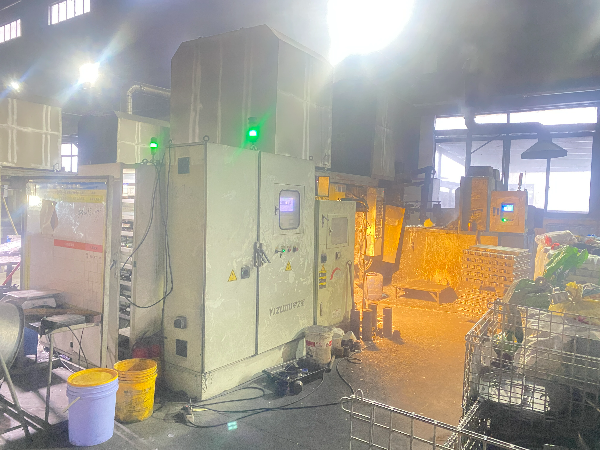
TESTING 01
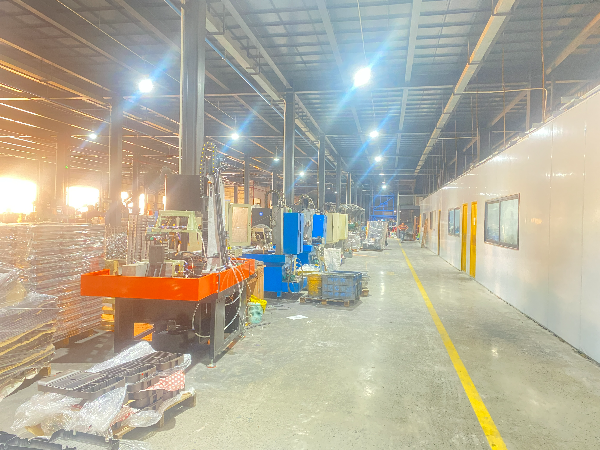
02
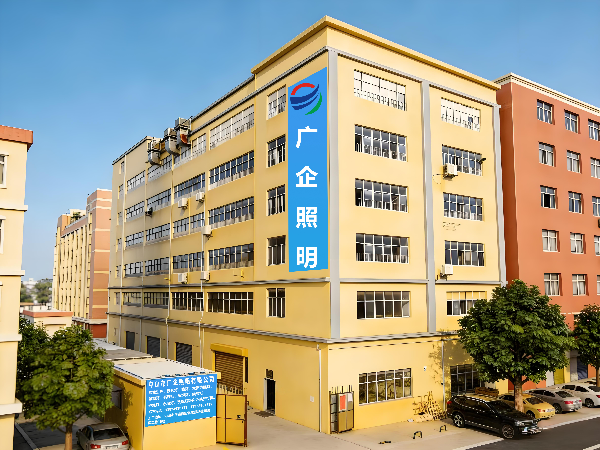
03
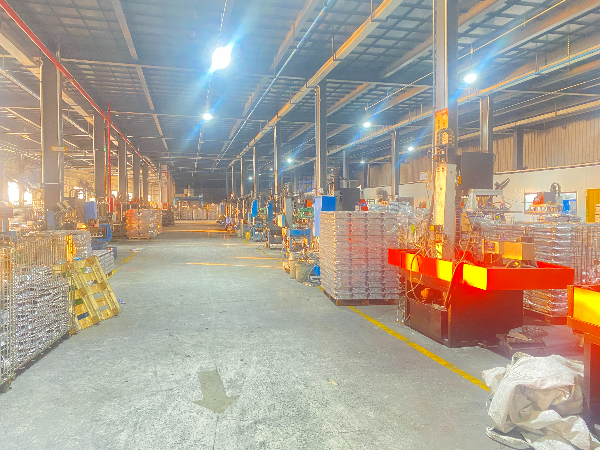
04
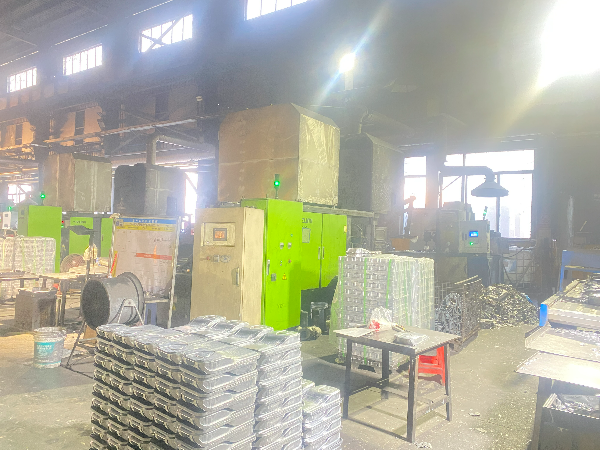
05
Solar vs. Wired Flood Lights — A Practical Comparison
As we produce both solar and wired LED flood lights, we do not have any commercial preference in this head-to-head comparison. To be fair, there is a distinctly defined business boundary where one technology is more suitable than the other—a fact that helps both the buyer and the seller avoid costly blunders.
| Factor | Solar Flood Light | Wired LED Flood Light | Winner |
|---|---|---|---|
| Installation Cost | Low — no trenching, no electrician | High — wiring, conduit, labour | Solar |
| Energy Cost (ongoing) | Zero grid electricity cost | Ongoing utility cost | Solar |
| Maximum Brightness | Up to 10,000 lm (limited by battery) | 10,000–100,000+ lm (unlimited) | Wired |
| Reliability in Bad Weather | Reduced output after 2–3 overcast days | Consistent — unaffected by weather | Wired |
| Flexibility / Repositioning | Move anywhere — no infrastructure | Fixed to wired location | Solar |
| Maintenance | Battery replacement every 5–8 years | Minimal (LED driver occasionally) | Tie |
| Environmental Impact | Zero running emissions (renewable) | Depends on grid mix | Solar |
| Remote Locations | Ideal — no grid connection needed | Costly or impossible | Solar |
Putting it all together: solar flood lights is the specification to favor for locations with no mains power, customers requiring installation freedom and for environmentally conscious end users. Wired LED flood lights is the specification to specify for high intensity, constant commercial lighting (stadium lighting, large industrial areas) or locations routinely experiencing several days of low-sunlight.
Numerous commercial install requests we fulfill use both: wired LED (high-output primary coverage) and solar floods (perimeter and pathway accent lighting) where the wiring cost is not justified by the illumination provided.
Not Sure Which Type Fits Your Project?
Our technical team will examine your application, location and budget – and suggest the right spec. No strings, no hard sell.
Solar Flood Light Pricing — Key Factors That Affect Cost
Prices for solar flood lights vary substantially – cheaper ($20) running down to hundreds of dollars for professionally rated commercial systems. The root causes of the additional cost include components quality, certification, and expected lifespan. By understanding this, buyers can budget accordingly for their application.
Entry-Level
$15–40
per unit (retail estimated)
- 200–800 lumens
- Polycrystalline panel
- NiMH or basic Li-ion battery
- IP44–IP65 (verify per unit)
- Basic PIR sensor
- 6–12 month warranty typical
Mid-Range
$40–100
per unit (retail estimated)
- 800–3,000 lumens
- Monocrystalline panel
- Li-ion 18650 battery
- IP65 certified
- PIR + photocell dual mode
- CE + RoHS certified
- 1–2 year warranty
Commercial Focus
Commercial-Grade
$100–500+
per unit (retail estimated)
- 3,000–10,000+ lumens
- Monocrystalline 15–30W panel
- LiFePO4 battery pack
- IP65–IP66 certified
- Multi-mode control (PIR/timer/dim)
- CE, RoHS, IEC 62722
- 3-year full warranty
Note: All price ranges above are [QUALIFIED] estimates for retail end-user markets. Wholesale, OEM, and volume pricing from Guangqi Lighting vary by order size, specification, and target market. Contact us for factory pricing on any order volume.
What Drives the Price Difference
Lumen output, LED quality
Higher-efficacy LEDs cost noticeably more per chip, higher-efficacy chips require higher level thermal management
Battery chemistry, capacity
LiFePO4 costs 25-40% more per watt-hour than Li-ion, but has decidedly greater lifespan
Grade of solar panel
Monocrystalline efficiency grade panels versus polycrystalline or downgraded B-grade cells
IP ratings and housing quality
Die-cast aluminium at IP66 versus ABS plastic at IP44 involves very different material and tooling costs
Certifications
Genuine CE, RoHS, and IEC 62722 testing and certification adds cost that budget products avoid by falsifying or omitting
Solar Flood Light Planning Tools
Solar Flood Light Sizing Calculator
Enter your project parameters below to receive recommended lumen output, solar panel wattage, battery capacity, and product tier guidance.
Launch Calculator →Solar vs. Wired Flood Light — 5-Year ROI Calculator
Compare total cost of ownership, find your breakeven point, and see cumulative savings over 5 years.
Calculate ROI →Solar Flood Light Selector
Answer 5 quick questions and we’ll match you with the ideal solar flood light for your exact application.
Find Your Light →Frequently Asked Questions
Solar flood lights are sef powered ourdoor LED fixures powered soley by solar During the day a solar cel receives drect sunigh, and convers i1oDC electricity. A charge controller prevents overcharging of the battery, either by stopping the flow or by bleding excess energy through a shunt.Before night falls a photocell or PIR sense switches the LED array out of standby and on to the premises.The entre system of pane, battery charge controler, LED driver, and sensor is housed in a weatherproo LED power housing No externalwring or gridconnection is needed. Installation is straightforward using only basic tools and a wall anchor set, and wll take 15- 30 minutes
Yes- for most residential and medium-sized commercial security applications, modern solar fioodlights provide sufficient umens. A 2000im motionsensor solar floodlight installed at 2.5- 3 meters high willadequately luminate a garden path or typical residential driveway to allow visual identificationof a person at 10-15 meters
For larger commercial purposes permeter security of parking lots, warehouse perimeters, or industrial stes- commercial-grade solar fioodights in the4000-8000m range are available and appropriate. For general securty ighting a maintained ilumination of 2-5 lux is recommended by the IESNA(lluminating Engineering Society), while active task areas shoud be lit to 10-50 ux. A 3000m solar fioodlightin a 120 beam angle, installed at 3 metershigh will its 5-15 lux across a 50 meter perimeter, well within security requirements.
A quality solar floodight has three components with three times the expected life-span that together derermine the effective product life:LED aray-rated 50, 000+ hours of light output, or 13+ years at1o hours per day; lumen depreciation to L70 (0% of intial lumen output)is the standardendpoint measurement per IEC 62722;Solar panel: Monocrystalline panels have degradation at a rate of about .5%/year. When a panel reaches 20 year lifespan,it will perform at about 90%of the original image; practically indefinite.
Batery: This s the most mporant Imiting factor to consider. Recenly developed LiFePO4 bateries are rated at 200-300 charge/discharge cycles e5- years when used at one charge/discharge cycle per day. The later, 1650 size L-ion cels are rated at about 500-1000 charge/cischarge ycles or1.5-3 years at one cycle per day. Battery replacements is the main maintenance event in a solar flood light
Yes, but with diminished solar performance and this is worth being quite honest about. Because still require a solar efficiency to charge and function, solar flood lights can still charge in winter and cloudy weather, but use a considerably reduced amount of energy. Industry figures and our own component testing show that monocrystalline panels often absorb about 10-25% of the rated capacity on overcast days and about 40-60% of the rated capacity on partly cloudy days. On bright winter days, a south-facing panel set at 30-45 tilt can reach between 70-85% of the summer performance peak, due to a lower sun position.
Colder high is an entirely separate matter. Cold takes its toll on batteries. Having rated -20C Capabilities, LiFePO4 cells are far superior to Li-ions. Getting a system installed in a cold climate where it will need to operate during winter or year-round, specifying anything other than LiFePO4 is a sure way to end up with a low operation system.
What is the practical advice? If buying for a region that has a regular winter Christmas period with 3 or more far cloudy days in a row (happens at least twice a year), order a battery at least 2 times the normal single night output to ensure there is capacity for very long periods of limited solar inputs.
PIR motion sensor: The lamps lights-off, then very dim, until active heat-sensitive sensor detects its target, be it a person or vehicle in the then-months. When detection is achieved, the light immediately switches on at full brightness then persists in full brightness for a pre-determined amount of time (15-60 seconds), then switches off. This is a very energy efficient way of working, because the battery is not being constantly used but still uses security lighting as a discouragement tool.
Dusk-to-dawn indicator: Threshold level of the light sensor are continually monitored when the value falls below a pre-set level (sunset), the light switches on, then switches off when the light level is returned to a pre-set level, (Sunrise). All night operation of the lamp, path, stairs or commercial alfresco is where it has value. In comparison with PIR modes, battery usage is much higher.
Some of the mid-range and commercial solar flood lights offer dual operation between PIR and dusk-to-dawn sensors, (often with the capability of full-time adjustment to a dim level with PIR detection set at its full setting). It is this combined mode which offers the greatest utility when security sensitive, though best value for general security needs will be to combine a PIR with permanently dimmer light.
Quality solar flood lights will display IP ratings on them that are specified by the IEC 60529 standard – this defines exactly how each light is affected by what water exposure. For outdoor use, the absolute minimum IP value acceptable is IP65, because this is Dust proof and protected against water splashes and jets from any direction. This will usually comfortably cater for rain, gardening waters and quite normal ‘out doors’ conditions.
Any commercial or industrial applications near coasts, food prep wash-down areas, or other harsh environments should specify IP66 (high-pressure water jets from any direction) or above. All of our commercial-grade solar flood lights are IP66 as standard.
One caveat: IP ratings on commodity products can be claimed rather than tested. Always ask for certification supported by a test report from an accredited laboratory (TV, SGS, Intertek etc.) rather than self-declaration. All Guangqi Lighting products come with third-party verified IP certification records available on request
We aim to ensure a clear understanding of the disadvantages of solar fiood lights versus wred, by providng the dsadvantages in an objective mamer:
Neather dependence: long cloudy spells reduce batery charge and then the runime and light output. this can be compensated for through appropriate battery size but cannot be entirely avoided.
Winter performance reduction: in most locations above 50° latitude,expect 60-70% of rated lumen output during the lowest-sunlight monthsas thewill not be able to top-up on shortwinter days.batter
Maxmum brightness limitation Commercla solar fiood lights are not high enough output at around 10,000-15,000m for selif contained units. Verylargearea lighting (stadiums, large industrial complexes) still need wired high-output fixtures.
Battery replacement in contrast to wired fixtures which need amost zero maintenance, our solar fiood lights need battery replacement every 5-8 yearsLiFePO4) or 2-3 years (Li-ion). Remember to consider this as a planned expense of ownership.
Panel placement restrctions: the solar panel must be sted in fulsky exposure. Heavly shaded sites are not surtable unless a separate panel can belocated in an open area
Runtime depends upon three factors: batery capacity, LED power draw,mode of operation. As a guide fora mid-range solar foodight with a 400omAnLiFePO4 battery after a full day’s charge:
Full lumen output, continuous operation: 4-6 hours
Dusk-to-dawn reduced mode (50% brightness): 8-12 hours, enough to cover a typical night in most locations.
Motion-sensor mode (30% standby + 100% on trigger): 2-5 nights between full charges -varying with the number of nightly trigger events.
Commercial units with 10.,000-15,00omAh battery packs willadd proportionaly to these numbers. For applications that require a ful- brightnes, ful-length of night operation-regardless of the anteceden day’s solar harvest a wired LED flood light willprovide a more consistent operation than any solar flood light.