Get in Touch with GUANGQI


LED Wall Washer Light — Architectural Facade & Outdoor Wash Lighting
LED wall washers used in New construction or renovations of facades, bridges, or landscape projects. OEM manufacture by Guangqi Lighting since 2010.
10–150W+
Power Range
IP65–IP67
Waterproof Rating
50,000h+
Rated Lifespan
More than 10
Model Series

[SYS.DOC] Application Concept
What Is an LED Wall Washer Light — and Why Architects Specify It
The Wash Effect & Layout
LED wall washer lights are long-bar or compact fixtures designed to cast a wide, uniform sheet of illumination on to a vertical plane. They are named after the effect-shared by strollers and through-hikers alike-each LED wall washer makes a wall “wash” across its face with an even gradient from full bloom to gentle fade at the top. What you get with a wall washer lighting layout is not a spotlight or flood light, but evenly distributed, finely beam-controlled wash.
Wall washing as an architectural lighting technique is straightforward: place the fixture at an appropriate offset-distance from the surface, rotate it at a suitable beam angle, and the reflector optics will evenly distribute the light across the wall plane. Wall washer lighting does away with harsh shadow, reveals surface textures, and lends a three-dimensional feel to animate what would be otherwise flat landscape, interior, and building facades.
Design & Engineering Efficiency
Designers and specifiers choose LED wall wash fixtures for very tangible reasons. Light emitting diode technology output is both impressively high-from 100-130 lm/W contingent on the LED chip generation-and very energy efficient, at one-fifth the power consumption of a comparable halogen fixture. The small form factor of an LED wall wash light makes it easy to hide behind a minimize ledge, inside a cove, or underneath a parapet, allowing one to light without compromising aesthetic intent.
Since 2010, manufacturers of LED wall washing have met purchase inquiries of “how do I achieve an even wall wash, avoiding hot spots” with their product line. The answer is straightforward: the light optics determine the beam shape and distribution; a high quality wall washer will make sure it is precisely engineered through a hardened PMMA lens or tempered glass diffuser to deliver consistent results.
Wall Washing vs. Wall Grazing — Choosing the Right Technique
Both lighting techniques start with the same fixture but create very different results. The difference comes down to mounting distance and beam angle — two variables that are straightforward to change on-site but difficult to correct once the facade cladding is sealed up.
Wall Washing
Here the fixture is mounted 60-90cm (24-36inch) away from the wall. A broader beam angle (consider 45-60degrees) cushions the light across the surface, filling shadows and hiding flaws. This technique is most effective on painted drywall, smooth rendered facades, and glass curtain walls where we want a clean, neutral glow without the flicker or shadows. In application, wall washing enlarges compact rooms by visually pushing the sleek, brightly illuminated walls away from the occupants.
Wall Grazing
The fixture is mounted 15-30cm (6-12inch) away from the wall. A narrow beam width (think 10-25degrees) directs angled raking light at the surface, creating a network of long shadows that animate each crack, crease, and crease. Brickwork, raw granite, fibrous concrete, and timber rainscreen all accept this level of daylight-precise definition, but every scour mark, handprint, and bit of paint splatter is suddenly relevant too.
A rental rule from our own design practice:
if the client is proud of the surface material, graze it; if the client wants the surface to disappear into the background, wash it. Many consultants will mock up both techniques on a sample wall panel before committing to the real thing in the field. Guangqi Lighting designs adjustable-bracket fixtures that let installers toggle between grazing and washing angles using the same hardware, which offers time and cost savings on site.
LED Wall Washer Light Types — Linear, Recessed & In-Ground Options
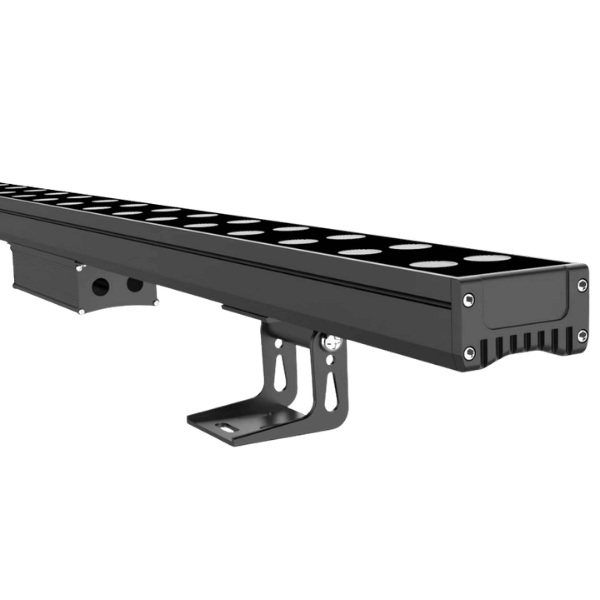
SURFACE MOUNT
Linear Wall Washer
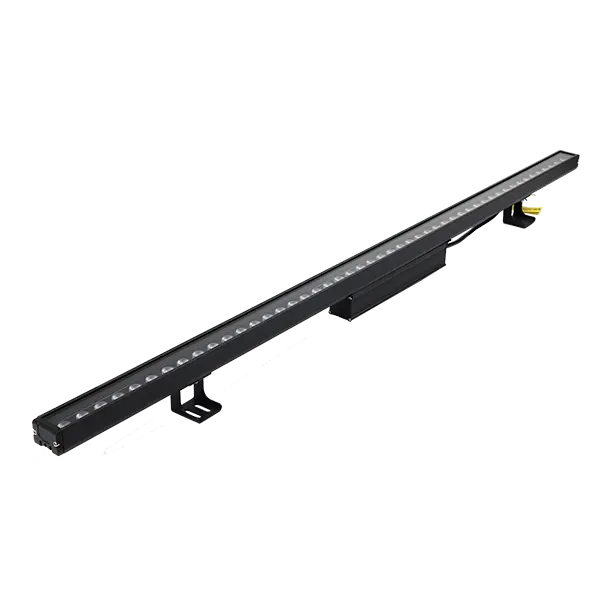
The most typical format in the Guangqi GQ-WS series. These bar-style light fixtures are 0.3 metre to 1.2 metre long, and run 10W to 150W+ power. Extruded aluminium housing dissipates heat passively, and waterproof end caps allow modular long runs along facades, bridges, or colonnade soffits. Linear LED wall washers provide the mainstay of most exterior architectural lighting schemes.
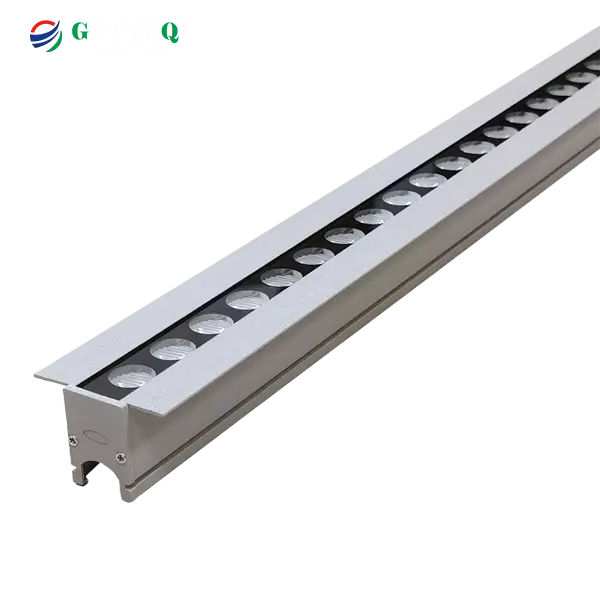
CONCEALED
Recessed Wall Washer
Recessed model sit flush in the ceiling, soffit, or wall niche. A trimless design eliminates the fixture from view, focusing attention on the lights glowing surface. Recessed wall wash fixtures work well in hotel lobbies, art galleries, and contemporary retail settings where a sleek formality is essential. Recessed units require a pre-cut housing pocket, so siting must be coordinated with the structural team during construction.
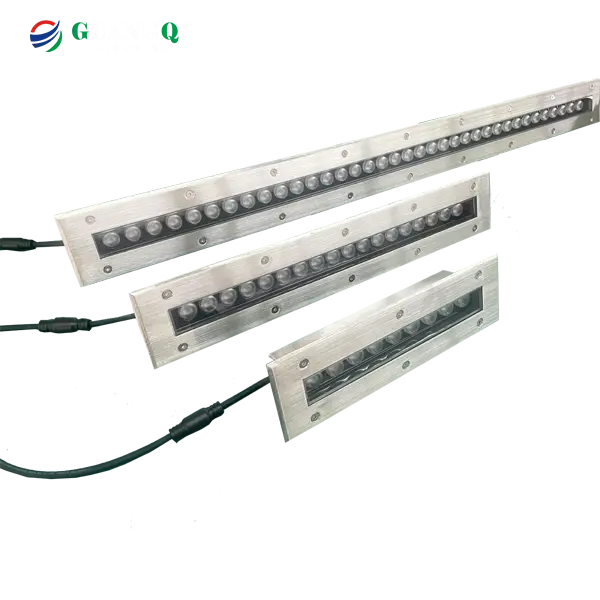
LANDSCAPE
In-Ground Wall Washer
In-ground fixtures are nested into the ground and aimed vertically at facades. Hardware is concealed from view on the wall, but the fixture itself is designed to be visible from external view, requiring the highest IP ratings (IP67+). Stainless steel components with marine-grade silicone gaskets are standard. In-ground units are often hidden in monument lighting, historic building preservation, and landscape wall wash schemes where a concealment detail is appropriate.
Guangqi Lighting offers wall washer solutions for each three mounting types. Project planners most often combine a series of linear surface-mount units on long runs of facade, then add integrator recessed and in-ground fixtures at entryways, feature walls, or sculptural focal points.
RGBW & Single-Color LED Technology for Facade Lighting
Single-Color (Monochromatic)
Single color LED wall washers operate at a constant color temperature – for example, warm white (2700 K-3000 K), neutral white (4000 K), or cool white (5700 K-6500 K). Since every LED in the strip is in the same CCT bin, single-color fixtures produce the most uniform illumination and highest efficacy (lumens per watt). Single color fixtures are the standard for static home facade lighting.
Great for projects that want a certain Kelvin point. Tunable-white models with 2 LED channels (warm + cool) allow the user to adjust the color temperature from 2700 K all the way up to 6500 K with a 0-10V or DALI. Useful for projects that want warm glow at night and a cooler look during the morning. (Also keep in mind wall washers are not the same things as LED strip lights – an LED strip light is a flexible PCB tape for cove or accent lighting and LED strip lights operate at low wattages. Wall washers are a rigid, high-output fixture that is meant to light a surface over a long space).
RGB & RGBW Color Mixing
RGB LED wall washers have all three colors (R,G & B) on the same PCB. Through the use of a DMX controller with control over the intensity of each channel the same display can generate thousands of color possibilities from vibrant primaries for festival displays to delicate pastel washes for corporate branding. This RGB color space is the basis of dynamic architectural lighting across the world.
RGBW introduces the addition of a white LED channel. Result: a pure white light with high-CRI that you can’t get with simple RGB mixing, and a full field of RGB colors the rest of the time. RGBW LED fixtures are the industry norm for nightclubs that need practical white light afterhours, then color-changing LED scenes once the club is closed. The Guangqi GQ-WS RGBW fixtures use 4-in-1 SMD5050 or CREE chips with independent channels control through DMX512.
Outdoor & Exterior Wall Wash Lighting Applications
You will find LED wall washers featured in nearly all of the outdoor, exterior architectural lighting project categories. Here are the top categories where Guangqi GQ-WS fixtures are most popularly used.
Building Facades
Main use. Outdoor wall wash lighting is used to light up office buildings, resort hotels and apartment buildings in the dark hours. Linear wall wash luminaires fixed on building parapets or landscape ground brackets beam a powerful light to project silhouetted on the night sky. For rough and bumpy hot-clad facades, such as natural stones, terracotta tiles, perforated metal screen, wall wash luminaires with flexible beam angles could be used to adjust between wash and graze term.
Bridges & Infrastructure
LED wall washers are supplied by towns and cities to paint bridge piers and abutments, or illuminated under bridge soffits. They are exposed to long periods of vibration, pollution, and frequent temperature fluctuations. The fixtures have aluminium housings with IP66 rated glass lenses. With RGB capability, bridges can be illuminated with in house colors, national flags, or event driven programming. This can be managed from a central Art-Net or DMX console.
Landscape & Garden Walls
In-garden surface-mounted wall wash fixtures provide outdoor wall wash illumination to retaining walls, outdoor walls, garden terraces, and perimeter fences. Warm white LED at 2700 K-3000 K offer a welcoming glow without disturbing neighbors or plants with glaring light. Low voltage (DC 24V) fixtures found in landscaping wall wash applications are simpler to wire, safer in damp gardens.
Stadiums & Sports Venues
Stadium exteriors benefit from powerful wall wash fixtures that can shoot directly at the facade or across the field to create tension and narrative in the venue atmosphere. Fixture wattages run upwards of 72W-108W+, with LED chips that give intense, vivid color to any light show projected across the venue exterior. Higher wattage fixtures with heavy-duty IP ratings designed for freestanding pole mounting can be retrofitted for any venue configuration.
Other common application sites include exterior museum and gallery architecture, religious buildings, monuments and heritage structures, and tribute markers. Commercial signage backlighting calls for consistent lumen output and selectable color options, while hotel lobby feature walls may require specific thermal isolation ratings.
[SYS.VIS] Product Gallery
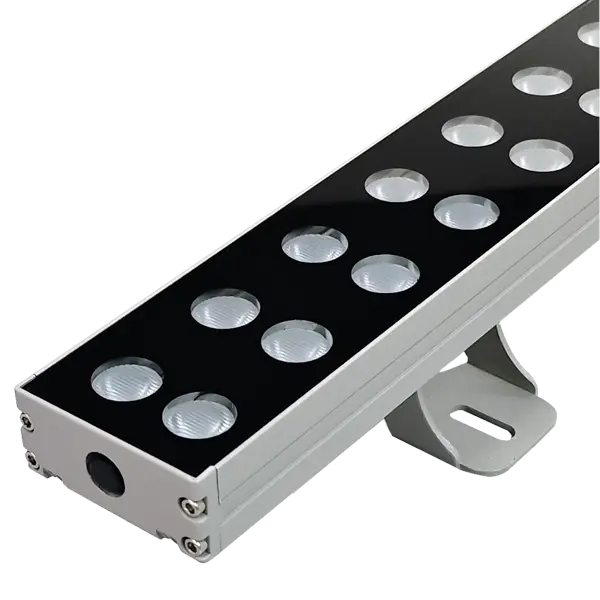
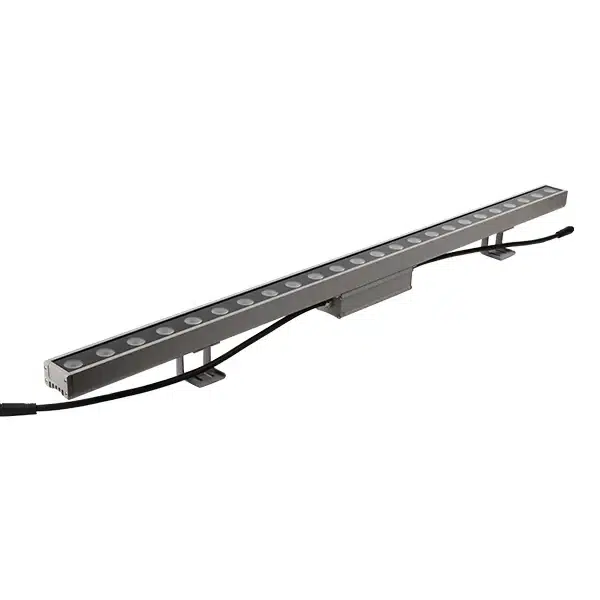
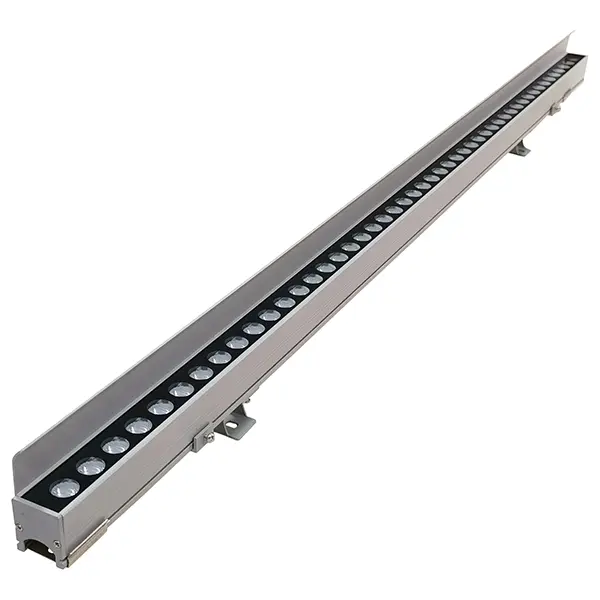
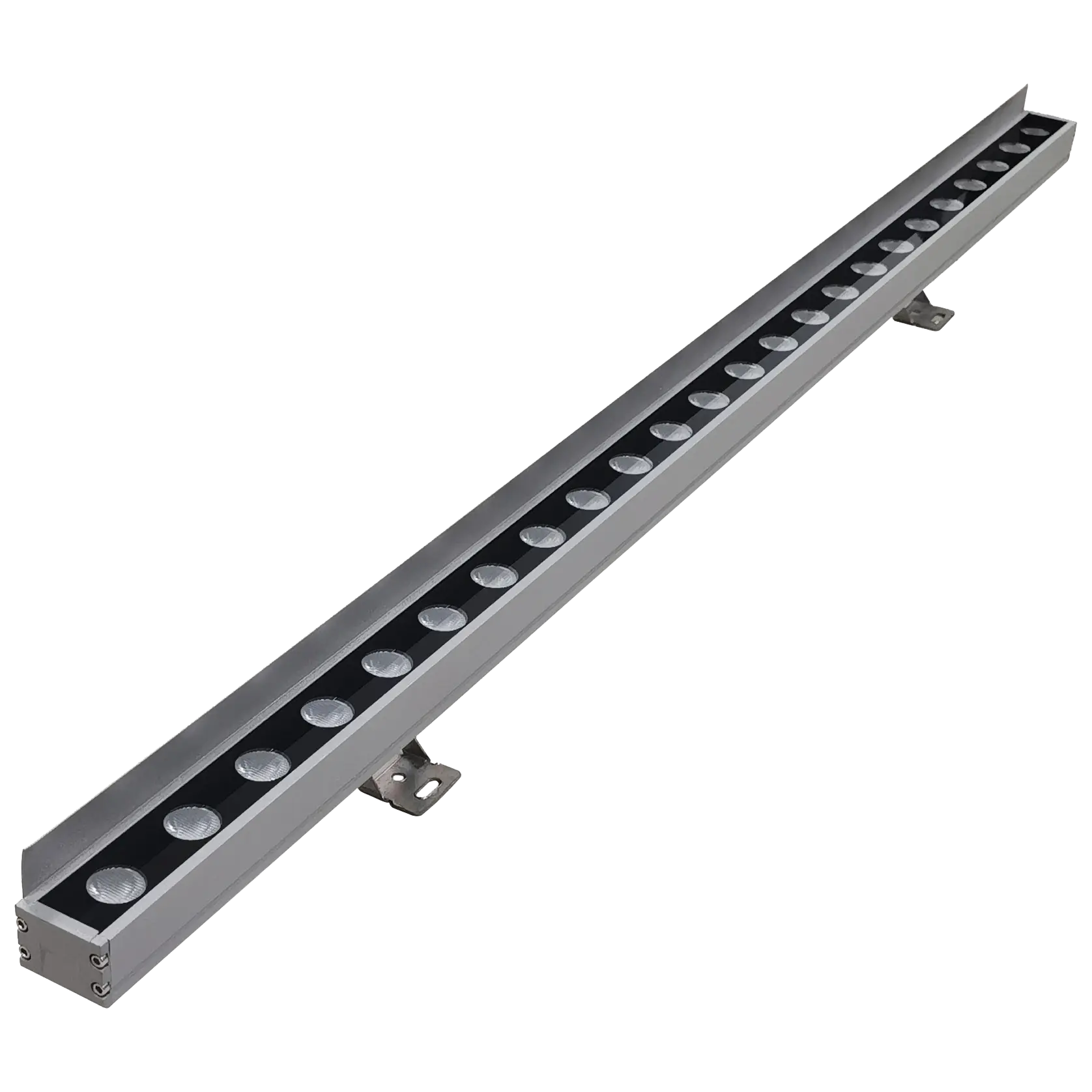
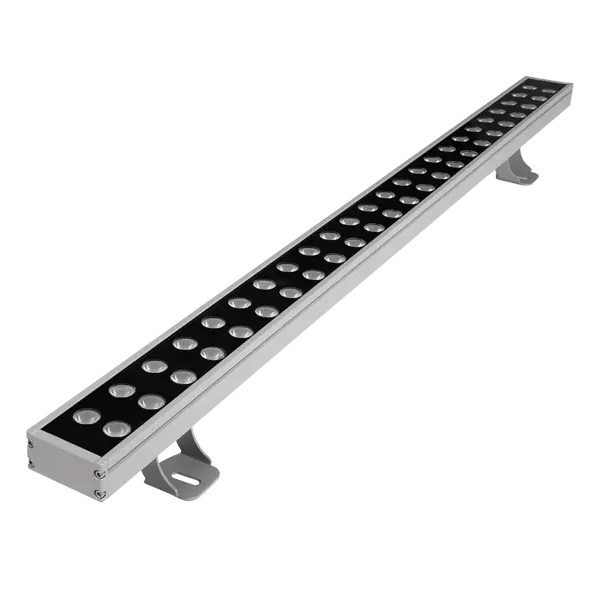
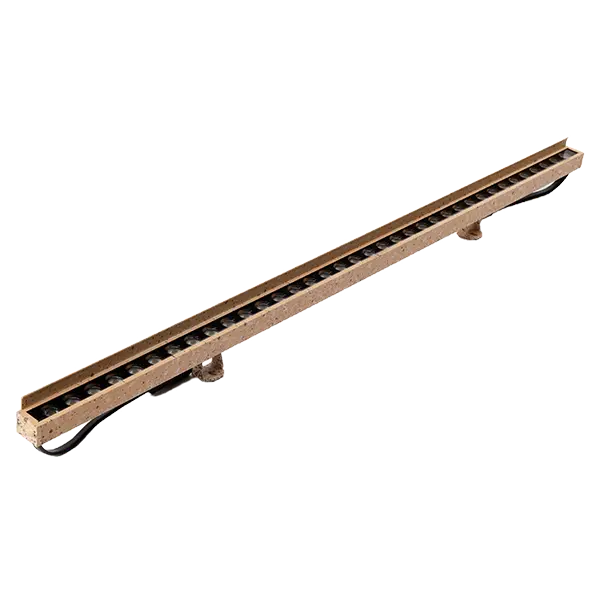
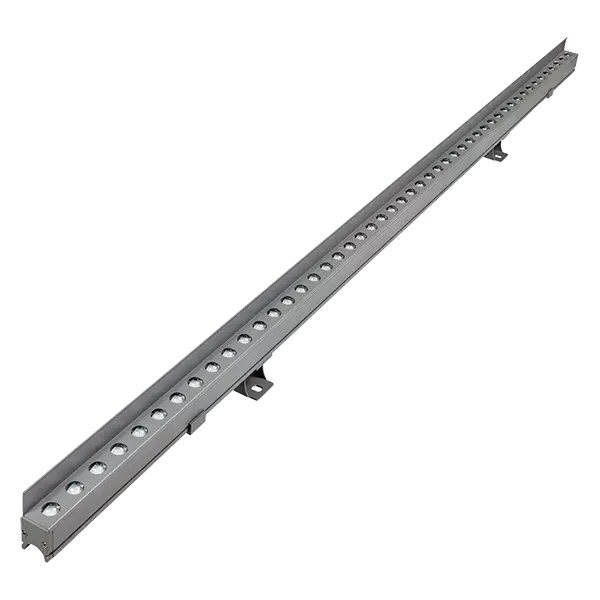
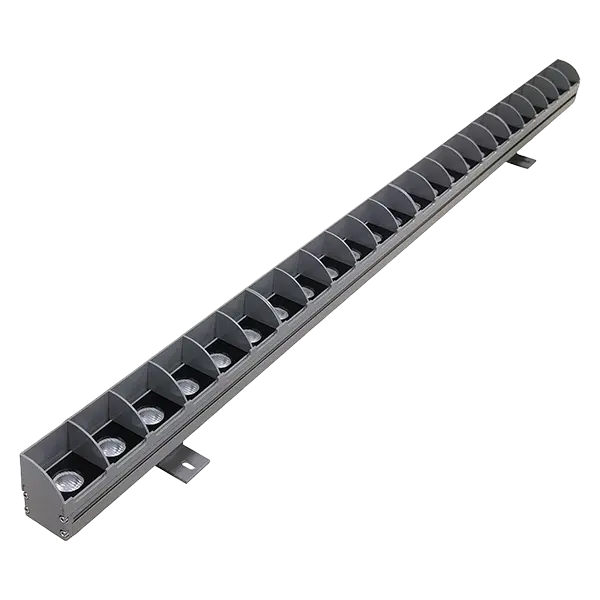
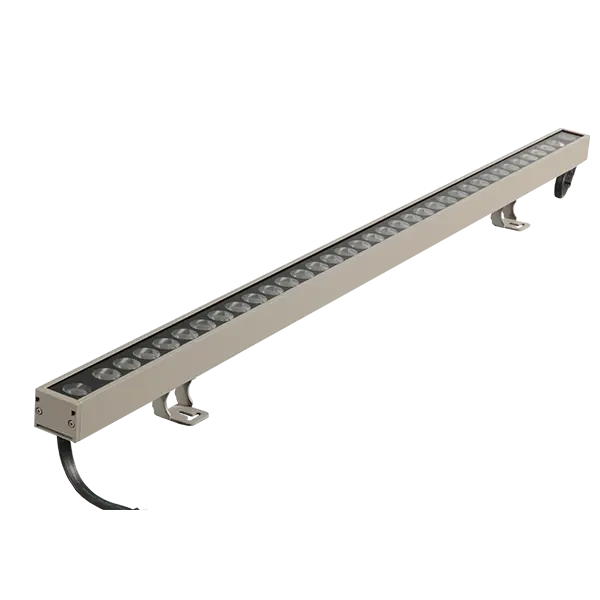
LED Wall Washer Light Product Gallery
Explore Guangqi GQ-WS LED wall washer lights for facade, bridge, landscape, and commercial exterior lighting projects. Choose from compact DC 24V fixtures, mid-power RGB/RGBW models, and IP67 high-output DMX wall washers for exposed outdoor installations.
Technical Specifications — Power, Beam Angle, IP Rating & DMX Control
Following is an overview of the Guangqi GQ-WS LED wall washer light series. Product specifications have been compiled from manufacturer data sheets.
| Model | Power | LED Type | Color Options | Beam Angle | IP Rating | Voltage | Housing |
|---|---|---|---|---|---|---|---|
| GQ-WS2025 | 8W-12W | SMD LEDs | Single / RGB | 10°–60° | IP65 | DC 24V | Aluminium |
| GQ-WS2832 | 12W–15W | SMD LEDs | Single / RGB | 10°–60° | IP65 | DC 24V | Aluminium |
| GQ-WS3628 | 18W | SMD / CREE | Single / RGB / RGBW | 10° /15° /30° /45° /10*45° /10*60° | IP66 | DC 24V | Aluminium |
| GQ-WS3953 | 18W-24W | SMD / CREE | Single Color | 10° /15° /30° /45° /10*45° /10*60° | IP65 | DC 24V | Aluminium |
| GQ-WS4030 | 18W–36W | Osram | Single Color / RGB / RGBW | 10° /15° /30° /45° /10*45° /10*60° | IP65 | AC 220V / DC24V | Aluminium |
| GQ-WS4530 | 18W–48W | CREE / Osram | Single Color / RGB / RGBW | 10° /15° /30° /45° /10*45° /10*60° | IP65 | AC 220V | Aluminium |
| GQ-WS6035 | 72W–108W+ | CREE / Osram / Philip / San’an | Single Color / RGB / RGBW | 10° /15° /30° /45° /10*45° /10*60° | IP65 | DC24V / AC 220V | Aluminium |
| GQ-WS8858 | 96W–200W+ | CREE / Osram / Philip / San’an | Single Color/RGBW | 10° /15° /30° /45° /10*45° /10*60° | IP66 | DC24V / AC 220V | Aluminium |
Specifications collected from Guangqi GQ-WS LED wall washer datasheets. Custom wattage, beam angle and color temperature configurations available by request. Lumen output varies based on LED chip selection and drive current. Please contact the manufacturer for photometric information on the product.
Key Specification Parameters Explained
Wattage and Lumen
Power does not always equal lumens. Drive current, thermal management, and material quality influence lumen output. For example, a high-quality 36W wall washer with CREE LED chip cans produce the same or more lumens than a generic 48W with lower-bin LED chips. Always compare lumen figures, not other parameters.
Beam Angle
Beam angle refers to how wide the beam is in degrees. Beams with smaller degrees (10-15°) are intense and accurately focused and aim well at long throw, or tall smooth walls. Beams greater than 45° in degree are excellent for smooth wall washes and flood-beams. Most Guangqi wall wash fixtures have easily interchangeable lenses so the beam angle can be adjusted in the field without replacing the entire fixture.
IP Code (Ingress Protection)
IEC standard 60529, this rating covers fixture dust and water resistance. IP65 fixtures are designed to withstand Spritz water and rainwater, perfect for building awnings. IP66 fixtures can deal with wind-floating waves and water jets, which is best for post-mounted wall facade fixtures. IP67 fixtures can be temporarily submerged, ideal for in-ground needs and fixtures situated in inhospitable environments. Guangqi wall washer IP performance comes from the mass of gaskets, waterproofing joints and waterproof connectors.
DMX512 Control
DMX512 is the digital control protocol of choice for professional stage and architectural lighting. Each wall washer lamp assembly is allocated a number of DMX channels (3 for RGB, 4 for RGBW+optional dimming and strobe channels). With a DMX universe being limited to 512 channels, one control console can run well over 128 RGBW wall washers. For larger networks, Ethernet based Art-Net or sACN can support thousands of fixtures across a city block or campus setting.
LED Wall Washer Light Installation — Mounting, Spacing & Wiring Guide
A correctly installed wall washer luminaire system provides uniform illumination of the target surface with no visible hot spots, unlit gaps or color artifacts. Here is a quick overview based on typical project scenarios.
Mounting Options
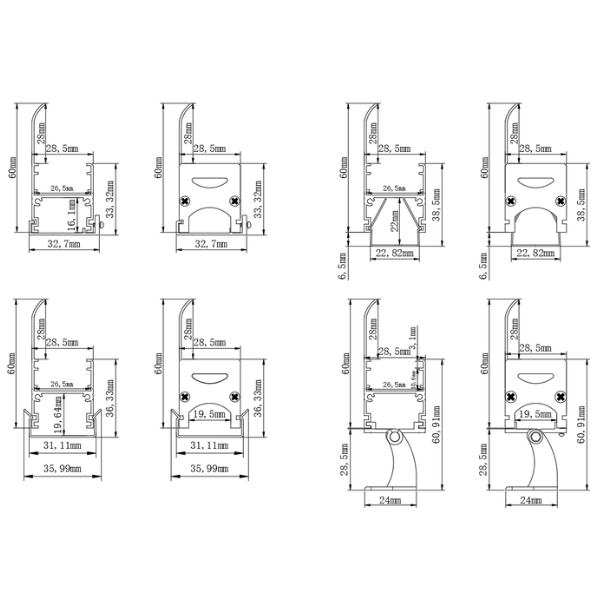
Standard linear LED wall washers are delivered in a stainless steel surface-mount bracket configuration that attaches to walls, parapets, soffits or concrete plinths. The hardware allows the lamp position tilts of ±30° so the beam can be aimed at the surface after the fixture is bolted down. Alternatively, pre-built recess housing channels can be embedded in the ceiling or wall after the structure is erected, and the bulb assembly can click into place after the finish work is done.
One feature that is often skipped for outdoor lighting: orientate the cable gland downward on the fixture to prevent water running down the cable and collecting in the fixture connection. Glands installed horizontally or upright will always admit moisture eventually due to silicone wear at the sealing lip over time due to thermal expansion and contraction, regardless of the IP ratings.
Spacing & Offset Distance
One easy rule of thumb for the spacing of wall washer luminaires: the distance from LED to wall surface should be roughly equal to the distance between luminaires. For example, put the fixtures roughly 1 m apart if they are pointing at the wall from a meter away. This spacing produces overlapping beam patterns with consistent mixing of color.
For taller facades (greater than 6 m), increase the lamp wattage or narrow the beam angle instead of moving the luminaires any further away. A long throw from a distant fixture wastes a large spill of light going straight up into the sky. For walls above 10 m, dual row mounting (one at grade and one at mid level of the wall) will illuminate the facade much more efficiently.
Wiring & Power Supply
Low voltage DC 24V is the recommended solution for shorter cable runs, as it is easier and safe to wire. However, for more extended runs, AC 220V fixtures reduce voltage drop across the cable and support higher wattages. Each power supply should be rated at 120% of the actual load applied in order to ensure the operation is safe and protected from the driver raising to a higher thermal stress.
Install IP65+ rated junction boxes at every cabling connection. Always choose UV-stabilized industrial cable that is rated for direct burial or conduit in an outdoor environment based on respective code considerations.
Project Case Studies — Facade, Bridge & Commercial Lighting
The following are three sample light projects with Guangqi GQ-WS led wall washers installed, each demonstrating a different aesthetic or technical solution.
Five-Star Hotel Facade — Coastal Resort, Southeast Asia
Hotel management needed to replace the external illumination of a 12-story, seaside high-rise tower but wanted to avoid scaffolding the entire building twice. They had metal-halide floodlights on each floor using 8 kW apiece, which needed bulb changes at least every 12-18 months due to the intense salt air by the coast. Guangqi provided 240 units of the GQ-WS3628 (36W, RGBW, IP66) with adjustable mounting brackets for attaching them to continuous parapet ledges at each floor level. They aimed the fixtures downward onto the sandstone exteriors surrounding the glass, and total connected load fell to just 8.6 kW for all 12 floors combined (roughly the same as one floor under the old system).
Today, the hotel runs warm white at 3000 K during standard operating hours before switching to branded color scenes for various nights of the week, all run from a centrally located DMX controller. Monthly bulb changes were reduced to annual visual inspections. The project paid back its installation cost within 14 months through energy and maintenance savings alone.
72% energy reduction vs. previous metal-halide system.Municipal Bridge Illumination — River Crossing, Middle East
| Challenge | A 180 m river bridge required full-length pier and deck-edge illumination capable of displaying national flag colors during public holidays, while surviving 50°C summer heat and sand-laden winds. |
|---|---|
| Solution | 192 × GQ-WS4032 (72W, RGBW, IP67) wall washers mounted on custom stainless steel brackets welded to the bridge railing. Each fixture received an individual DMX address for pixel-level color control. |
| Control System | Art-Net backbone over fiber-optic cable with a waterproof node box at each pier. Central control via Pharos LPC2 touchscreen panel. |
| Result | Zero fixture failures after 26 months of continuous outdoor operation. The city authority reported a measurable uptick in evening pedestrian traffic on the bridge promenade. |
Commercial Retail Plaza — Mixed-Use Development, Europe
The retail developer needed uniform exterior lighting for a complex made up of 4 connected building blocks, covering 320 meters of facade. The requirement was to keep all four illuminated in matching 4000 K neutral white. The client also wanted the ability to run RGB for seasonal promotions on top of regular hours, all managed from a central app without needing a dedicated on-site lighting technician.
Guangqi supplied 340 units of the GQ-WS3953 (48W, RGBW, IP66) with remote control access via a DALI-to-DMX gateway hardwired into the building management system. The operator manages color groups and dimming schedules from a tablet, and each section of the plaza can be illuminated at the press of a button, removing the need for a dedicated lighting technician on-site.
“We evaluated five manufacturers and chose Guangqi because they provided IES photometric files and a full-scale mockup panel before we committed to the order. That level of pre-project support was rare at the volume price point we needed.” — Project lighting consultant, European retail development380m of continuous facade coverage over 4 building blocks, totaling 320 linear meters.
LED Wall Washer Light Price Guide — Cost Factors & Budget Planning
RGBW wall washer lights price points can range from $150 more than warm white LED for each fixture to half that figure and less depending on performance standard, volume, and customization choices. Presented below, as exemplary generality figures, are wholesale industry averages for the going B2B direct from Guangqi Lighting’s own official current project price structure, for 2025-26 at this time:
| Category | Power Range | Color | IP | Indicative Price (per unit) |
|---|---|---|---|---|
| Entry Level | 10W–18W | Single Color | IP65 | $15–$35 |
| Mid-Range | 24W–48W | RGB | IP66 | $40–$90 |
| Professional | 48W–72W | RGBW | IP66/67 | $90–$150 |
| High-Power | 72W–108W+ | RGBW + DMX | IP67 | $150–$220+ |
Pricing is given as a wholesaler range for 100+ fixture packets, with variations taking into account the lead time order revision factors of increased wholesale per unit prices. The brand of individual LED chips (Lumileds vs. CREE vs. otherwise), option of clear or frosted lens, connection type, and attainment of the standard and CE certification package can have substantial impact on amount. Ask Guangqi Lighting for a project specific quotation.
What Drives the Price Difference?
LED chip variation
When considered for standard use without a premium for best monochromatic color binning, CREE and lumileds chips can both fetch a 20-40% run Cost factor. Buy CREE chips for tight monochromatic color trim, tight binning, and longer projected LED warranties regardless.
IP versus IP68 fittings
Moving up from IP 65 to 67 requires sealing with an additional gasket, use of marine-grade materials, and the inclusion of pressure-equalization vents. Such alterations can add 15-25% in cost.
Color control
For a single color LED, then generic, for RGBW fixtures, then each of the 4 resistor-controlled additional channels is in turn an extra electronic pathway built within the housing wall of each unit; this makes for increased manufacturing outlay.
Order quantities
If you buy 500+ units, then companies such as Guangqi can offer you project pricing that lessens the per-fixture costs by a further 10-20%. Repeat clients and long term arrangements will be committed a purchase discount.
Quality Certifications & Compliance Standards
All Guangqi Lighting sourced GQ-WS series LED wall washing equipment is manufactured in a facility that holds ISO 9001:2015 quality management system certification. Individual products carry the following marks and approvals depending on the intended export target.
CE Marking
Verifies limits of low voltage (LVD 2014/35/EU) and electromagnetic interference (EMC 2014/30/EU) compliance. All GQ-WS luminaires are type tested in accredited laboratories prior to BSI declaration of conformity.
RoHS Compliance
Ensures all components used comply with the EU Toxics in Electrical and Electronic Equipment Directive (RoHS 2011/65/EU). Solder is lead free, and housings and LED packages are free of Cadmium and Mercury respectively.
IP Code Testing
Ingress protection limits are tested by IEC 60529 approaches. IP66 product is tested against high-pressure water streams from all angles (12.5 mm nozzle, 100 liters/min, 3-m distance). IP67 product is tested for submersion (100 cm for 30-minute durations).
IEC 60598-1 (Luminaire Safety)
General luminaire safety instrument for electrical insulation, heat endurance, and durability.
IEC 62031 (LED Module Safety)
LED specific safety requirement standard, inclusive of photobiological hazard.
After-Sales Support & Warranty — Guangqi Lighting Service Commitment
Guangqi Lighting offers the following after-sales support services for every GQ-WS series wall washer.
Warranty: Standard 2-year warranty is provided for failure of internal components (LED driver modules), chronic chip degradation (> 30% depreciation), and waterproofing seals.
Project-based 3-year and 5-year warranties are available on large orders (over 200 units).
Support requests through email or our support helpline will be responded to within one working day. Remote diagnostics with photo and video identification of the scope of fault allows Guangqi Lighting to identify whether wall washer or installation issues exist.
All standard spare parts including LED driver modules, lenses, mounts are stock-held and will be shipped within 3-5 working days of warranty claim.
For large projects over 500 luminaires, below site visit services may be provided by our (payable) field engineer for commissioning, DMX programming, and annual maintenance.
Warranty claims processing requires the original PO and images of the failed luminaire with labels. Each faulty item is considered by Guangqi Lighting’s quality assurance team individually and rectified through repair or replacement within 5 working days.
GQ-WS Model Comparison
Select two or three models to compare their specifications side by side. Highlighted cells indicate the stronger value for each parameter.
Select at least two models and click “Compare” to see them side by side.
Start Your LED Wall Washer Light Project
Tell us about your façade, bridge, or landscape lighting needs. Our team of engineers will advise you on which GQ-WS product, beam angle, and color set up will best suit your application.
Get a Free Project QuoteFrequently Asked Questions About LED Wall Washer Lights
It provides an evenly distributed sheet of lighting on a vertical surface eliminating shadows, allowing viewers to perceive material textures and giving walls a glow that appears warm and homogenous. Wall washing is used to make a space look larger by stretching the perceived dimensions or highlighting a design feature such as a material wall cladding.
A wall washer employs a precisely controlled beam – 15 to 60 typically – projected at a wall from a fixed distance, resulting in a featureless soft edge to the lighting along the wall plane. Floodlights on the other hand, spread illumination in a wide uncontrolled manner, casting shiny liquid reflections in a heterogeneous pattern over large open areas such as building rooftops, parking lots, or construction grounds. Wall washers contain uniformity within their narrow paint line; flood lights exist to cast uncontrolled wide-angle coverage.
Most LED wall washers attach with brackets (steel, CMC2 or cast aluminum) bolted onto the wall, parapet, or ground. For linear models, attach the mounting bracket a recommended offset distance away from the wall (generally 0.5 m – 1 m), route low-voltage wiring (DC 24V for shorter runs or AC 220V for longer distances) through waterproof connectors, and string the fixtures in series to save on cable costs. Position IP65+ rated junction boxes at every connection point when installing outside. You should double check the maximum run length with your power supply to reduce risk of voltage drop.
A quick heuristic: spacing the fixtures approximately equal to their offset distance from the surface tends to yield more uniform illumination. When pairing wall washers for a 20-meter long façade, first orient them at a 1 m away from the wall, then space them 1 m apart from each other (specifying a beam angle and wattage will yield exact recommendations). Taller facades would generally need two-row mounting or higher-watt fixtures. Use a photometric calculation or ask your manufacturer for tables indicating appropriate spacing based on the fixture beam angle / wattage combination chosen.
Warm white (2700 K-3000 K) is by far the most common color temperature for facade fixtures, lending an inviting amber cast to natural stone, brick, or warm appearing cladding. Neutral white (4000 K) works well on modern concrete or glass facades. Cool white (5000 K-6500 K) creates strong clarity and high contrast, appropriate for modern commercial or industrial displays. RGB and RGBW fixtures provide access to color changing effects and playful color schemes.
Pricing will depend on wattage, color option, and quantity ordered. In general, entry-level single-color units (10W-18W, IP65) run about $15-$40 wholesale. Higher power RGB units ($50-$90 range, IP66, 24-48W) represent the next price range. Top, DMX512 or Ethernet controlled, 70W+ indoor or outdoor RGBW fixtures generally fall well into the $90-$200+ range. Showroom-scale picks (500+ fixtures for a sporting event, a store opening, etc.) attract project pricing. Contact the light fixture manufacturer directly for a formal quote on your order.
Led lamps consume 60-80% less electricity than equivalent halogen or metal-halide fixtures, and last many thousands of hours longer making for less frequent lamp replacement. They operate at much lower thermal temperatures, saving heat-sensitive building elements from overheating. Additionally they turn on to full brightness instantly.
Trending now