Get in Touch with GUANGQI


Industrial LED Lighting Solutions — UFO High Bay, Warehouse & Explosion-Proof Fixtures
Certified industrial LED lighting solutions for warehouses, factories & hazardous locations. Factory-direct from Guangqi Lighting since 2010 – OEM-ready from 10 pcs MOQ, UL DLC CE IP65 tested at the fixture level. Complete commercial industrial lighting range including industrial outdoor lighting and industrial ceiling lights.
Established 2010
15+ years of LED manufacturing
Ships to Asia · EU · NA · ME
ISO 9001:2015 quality system

Why Industrial Facilities Retrofit from HID and Fluorescent to LED
Industrial LED lighting replaces metal halide, high pressure sodium and T5/T8 fluorescent fixtures because the economics and failure modes finally broke. Metal halide lamps draw 400watts at the bulb but closer to 460watts at the circuit once magnetic ballasts are accounted for – they start dimming from day one, losing 20-30% of their initial lumens before they burn out. Plant managers we speak to cite three pains on every retrofit call, in the same order.
1 Uncertain electricity price.
A 40-lamp metal-halide bay draws 18,400W constantly during working hours – at $0.12/kWh & 4,000 hours operating a year, that is $8,832 every year just in lighting power consumption before you count HVAC load from lamp heat.
2 Maintenance windows disturbing manufacturing.
HID lamps average 15000-20000 rated hours but frequently burn out earlier; replacement needs a forklift and a 2-person crew per lamp. In a 10-meter ceiling plant, a single lamp change can be $150 in labor alone.
3 Compliance and safety drift.
Fluorescent tubes break, contain mercury, and are now restricted under RoHS & a number of state EPA rules. Hazardous-zone locations face added pressure under OSHA 1910.307 to use certified fixtures correct to their Class and Division.
Energy efficient LED luminaires address all three in a single retrofit: continuous 140-160lm/W efficacy, 50000hours L70 rated service life tested by LM-80 and TM-21 test methodology (the DOE-recommended reliability standard), & explosion proof plus hazardous-location-rated versions – C1D1, C1D2, ATEX Zone 1/2 – which shift compliance from aspirational to certifiable.
Three Core Industrial Lighting Solutions by Facility Type
Our industrial LED lighting portfolio is grouped around the three facility types that drive 90% of incoming requests: high-ceiling open areas, multi-aisle storage facilities and hazardous zones. Each line also has its own certifications, photometric design, and decision chart. The flowchart below depends on ceiling height & facility use – choose the most similar to yours.
UFO LED High Bay Light
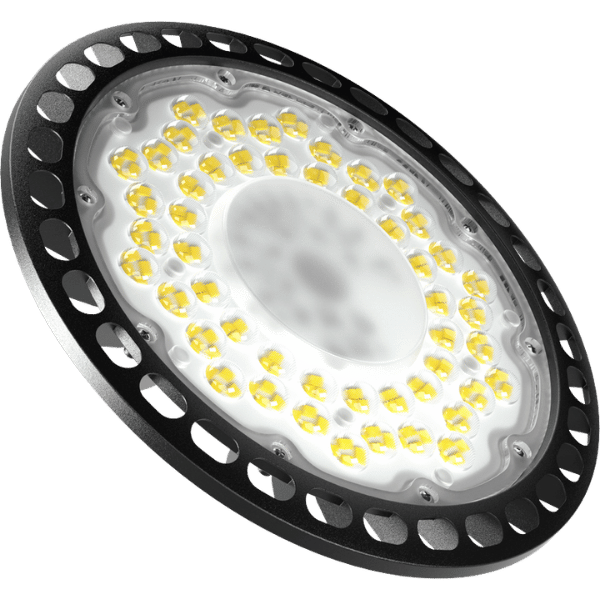
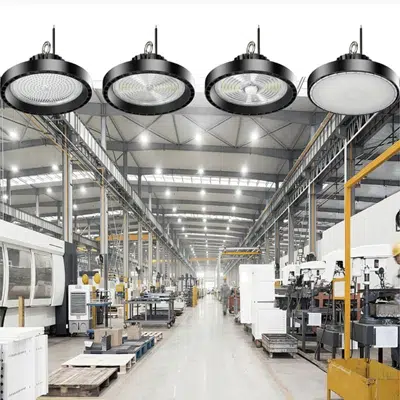
Suitable for: High-ceiling highbay 15-40ft – manufacturing plants, distribution centers, gyms, aircraft hangars.
100-400 W high bay led lights 150w high bay led lights 200w 14,500-58,000 lm Up to 160 lm/W 60°/90°/120° beam UL · DLC Premium IP65 · 5-yr warranty
Round aluminum housing with die-cast heat sink & purpose-designed driver. Selectable CCT (4000K/5000K) and dimmable, selectable wattage in a single SKU makes stocking easier. Motion-sensor, plug and play mounting, 0-10V and DALI dimming options are available – this is our top-selling industrial high bay LED light, and the backbone of our own high bay led lights catalog.
View UFO High Bay models →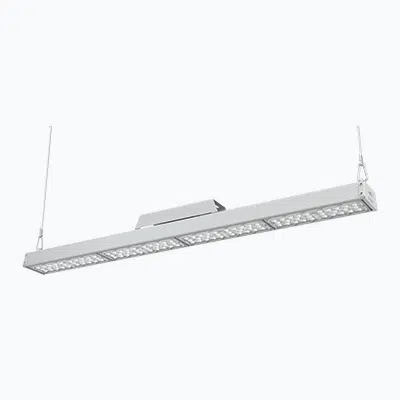
LED Warehouse Lighting
Suitable for: Multi-aisle warehouses, racking systems, distribution centers 10-25ft – when fixtures provide more linear intensity than beam focus.
50-400 W 4ft · 8ft linear Selectable CCT Motion sensor ready 120-277 V / 347 V / 480 V IP65
Linear and low-bay variants provide uniform foot candles distribution down a rack aisle. DLC listed industrial warehouse lighting fixtures back most US utility rebate programs and ENERGY STAR commercial incentives. Surface mount and pendant configurations with plug and play wiring cut retrofit labor in 120V, 277V, and 480V facility infrastructures.
View Warehouse Lighting range →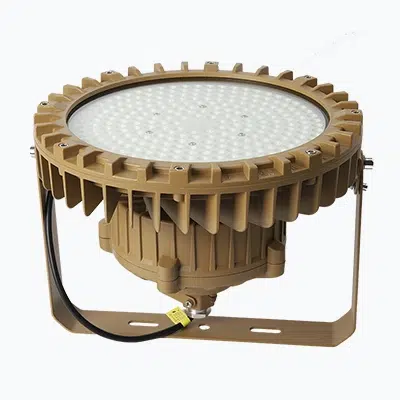
Explosion-Proof LED Light
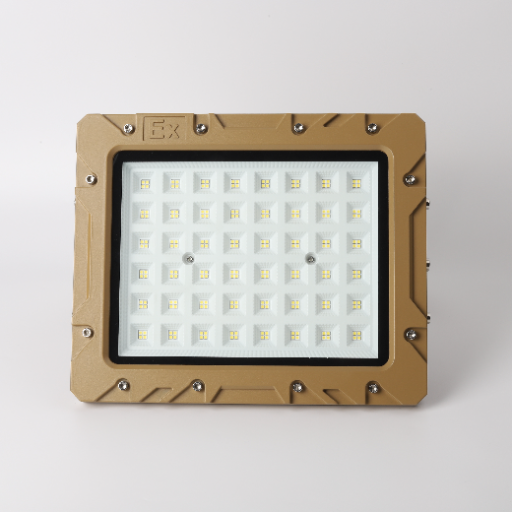
Ideal for: Oil and gas, petrochemical, mill processing, pharma, paint booths any NEC Class I Div 1/2, ATEX Zone 1/2, or IECEx zone.
50-200 W C1D1 · C1D2 ATEX Zone 1/2/21/22 IECEx · CNEx -40°C to +55°C IP66
Cast-copper free aluminum alloy housing, tempered borosilicate glass, and certified explosion proof glands. Temperature class T4/T5 available. Every fixture ships with a serial-traceable certificate of conformity – our hazardous location led lights are deployed in petrochemical refineries, offshore platforms, and mining operations with emergency-grade battery backup optional on every SKU.
View Explosion-Proof models →Facility managers often need a fourth check: lumen requirement per square foot. Warehouse general areas typically specify 20-30 foot-candles (fc); aisles 10-15fc; assembly and inspection zones 50-75fc. Our engineering team runs a free photometric layout (IES file + lux plan) once you share a floor plan – this is the same calculation Acuity and Cooper charge for as part of a design service.
Industrial LED vs Legacy Lighting — Data-Driven Performance Comparison
Specifiers who still field metal-halide, high-pressure-sodium, or T5HO fluorescent bays know the figures on paper but rarely see them juxtaposed with a lighting-supply-grade LED. The table below uses published ANSI C78 and NEMA data for legacy sources and our own LM-80/TM-21-verified LED data for the right-most column. Every number has a source; we can send the underlying reports on request.
| Metric | Metal Halide 400 W | High-Pressure Sodium 400 W | Fluorescent T5HO 6-lamp | Guangqi LED UFO 150 W |
|---|---|---|---|---|
| Efficacy (lm/W) | 80-100 | 90-110 | 85-95 | 145-160 |
| Rated service life (hours) | 15,000-20,000 | 24,000 | 30,000 | 50,000 (L70, LM-80/TM-21 verified) |
| Warm-up time to full output | 5-15 minutes | 3-10 minutes | Instant | Instant |
| Hot restrike (after brief outage) | 10-20 minutes | 1-2 minutes | Instant | Instant |
| Lumen maintenance @ end of life | ~50% | ~60% | ~70% | 70% (L70 definition) |
| CRI (color rendering) | 65-70 | 25 (poor) | 80-85 | 80 (standard), 90+ (high-CRI option) |
| Dimming native to driver | Difficult | No | Yes (limited) | 0-10V, DALI, PWM |
| Mercury / lead content | Yes (mercury) | Yes (mercury) | Yes (mercury) | RoHS-compliant |
| 5-year total cost of ownership (40-fixture bay @ $0.12/kWh, 4,000 hr/yr) | ~$28,600 | ~$25,200 | ~$22,800 | ~$11,700 |
The comparison that catches most facility managers off guard is not efficacy – it is the lumen-maintenance curve. A metal-halide fixture at 48 month is delivering about half its day-one lumens. Crews compensate by over specifying new installs with 50-100% more fixtures than a level photometric calculation would demand, elevating capex and constant energy draw. LED with verified L70 uncouples those two sums.
“We request LM-80 test reports in our standard quotation package because a 50,000-hour claim without the raw data behind it has no physical bearing. Two LED modules can both carry a 50,000-hour spec sheet and act entirely different at month 36 in 45C ambient. This is the single greatest reason Western facility managers used to mistrust Asian-made LED – and the single biggest reason we moved to full-test-data disclosure 4 years ago.”
Would you like to see our L70 test data for a certain SKU?
Request LM-80 & TM-21 reports → Free, no gated form, delivered the same business day.Certifications & Global Compliance
Procurement teams are wise to be suspicious of certification claims. An industrial lighting manufacturer can truthfully state “UL-certified” on their literature and packaging even if only one SKU from their catalog has the Listed mark. We list the individual certificate number for each fixture series in the table below so you can confirm each one in the appropriate db—UL Product iQ, DesignLights.org QPL, the ATEX/IECEx certification portals.
UL Listed
Fixture-level safety certification per UL 1598 / UL 844. Verify at UL Product iQ.
DLC Premium
L70 ≥50,000 hrs verified. Required for most US utility rebate programs. QPL lookup at designlights.org.
ENERGY STAR
DOE efficiency recognition; qualifies California Title 24 compliance.
CE
EU Declaration of Conformity under LVD, EMC, and RoHS directives.
RoHS · REACH
Hazardous substance restriction (mercury, lead, cadmium, hexavalent chromium).
IP65 / IP66 / IP67
Ingress Protection per IEC 60529. IP65: dust-tight + water jet resistant.
Class I Division 1
NEC Art. 500. Continuous/intermittent flammable gas presence. Required for oil & gas wellheads.
Class I Division 2
Flammable gas present only under abnormal conditions. Covers most petrochemical process areas.
ATEX Zone 1/2/21/22
EU directive 2014/34/EU. Zones 1/2 for gas, 21/22 for combustible dust.
IECEx · CNEx
IEC international hazardous-location scheme. CNEx is the China equivalent.
ISO 9001:2015
Quality management system — factory audit-ready, annually recertified.
ISO 14001
Environmental management system covering our 18,000 m² production facility.
The accident causing differentiator for the buyer
IECEX Class I Division 1 is not the same as Division 2. Class I Division 1 indicates that a flammable gas or vapor is present during normal operation –a solvent vapor-recovery area or an open wellhead situation. Class I Division 2 indicates that the flammable vapor may only be present under abnormal situations such as a process pump seal failure. Installing Class I Division 2 lighting in a Class I Division 1 area is a reportable OSHA violation. On the quotation sheet we specify the division and we print the Class-Division-Group-Temperature-Class serial number on the nameplate.
OEM/ODM Customization — Beyond Off-the-Shelf Procurement
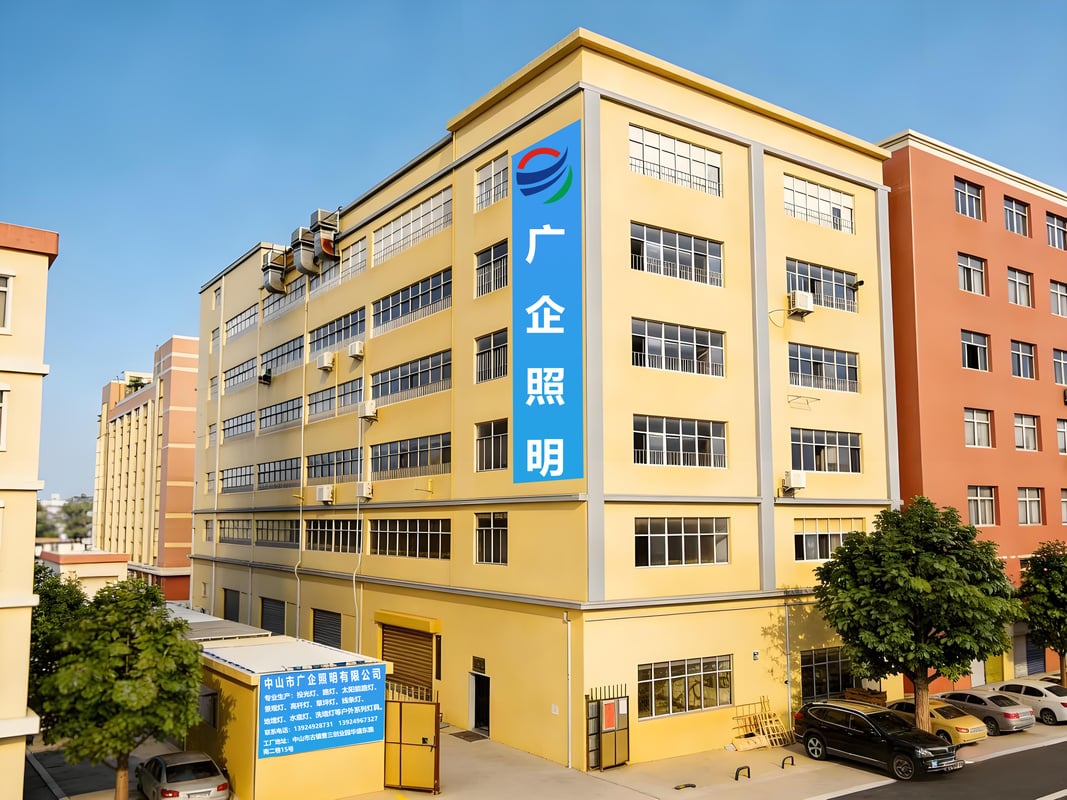
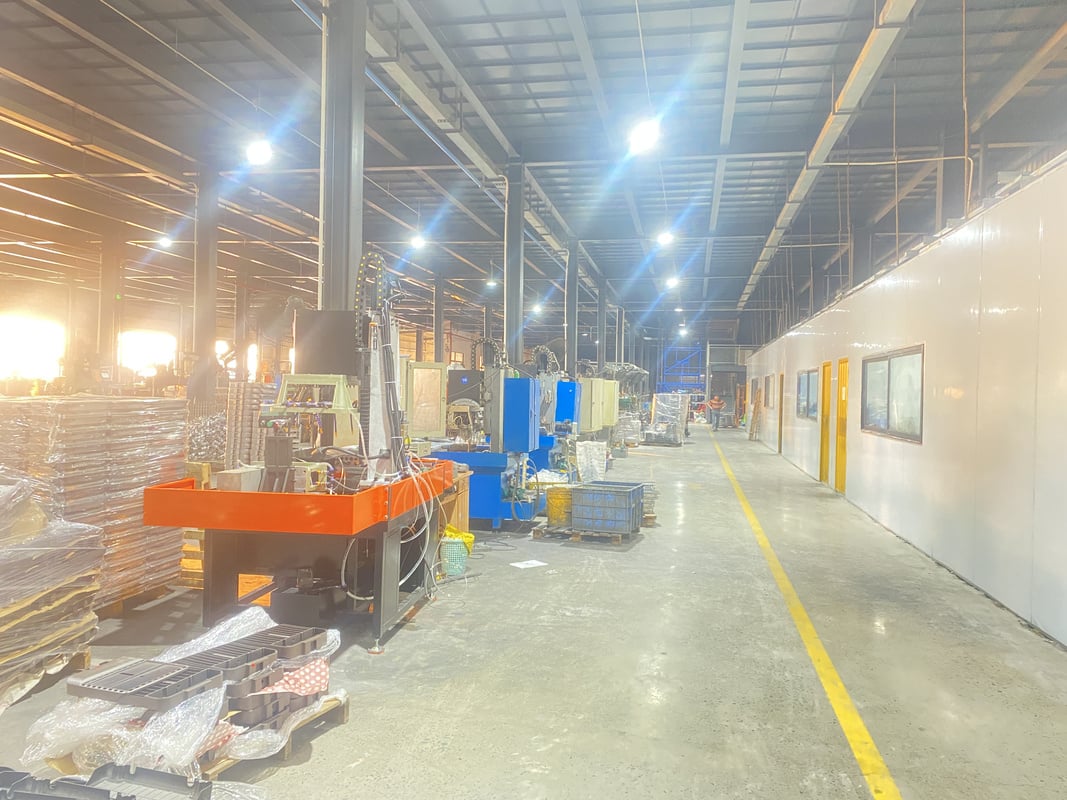
One common question we get from U.S. and European procurement teams is: “Are you actually a factory, or just a trading house importing fixtures from third parties?” For most industrial lighting suppliers the answer is the latter and it affects the practical ability to change a driver, a beam angle, a housing color, or a label. As a direct LED manufacturer we built our 18,000 sq m facility in 2010 specifically so we could keep the resin, the optics, the thermal, and the driver engineering tightly integrated. When we ask our own factory to change a sample, the change occurs immediately on our factory floor, not after a conversation with another factory upstream. This is why our industrial LED fixtures ship with factory-audit-focused documentation and seldom charge an extra premium for a high-CRI module option.
Our OEM/ODM process is open-book by design. Most of our bulk industrial-LED-lighting-manufacturer work starts in a four-stage pipeline:
1
Requirement + CAD Review
Description of technical requirements captured, drawing set issued within 3-5 business days. Includes rendering, assembly schematics, driver specifications, thermal profile, and housing dimensions with LM-80 data for each LED module choice.
2
Prototype + Sample Shipping
Engineering sample constructed and delivered within 7-10 days. Single-fixture prototypical luminaire with complete photometric IES fileand in-house integratingsphere test results.
3
Production + QC
Series-producing within 12-18 days after sample approval. Full 85C 100% aging; UL1598 electrical-tests; serial-numver-related traceability.
4
Inspection + Global Shipping
Pre-shipment inspection performed (third-party verifiable on request), outgoing crating with documentation including CoC, DoC, RoHS, packing list, etc. FOB, CIF, or DDP Incoterms.
Customization Dimensions
The above enumerates scope adjustments most OEM projects request from standard SKU configurations, chronologically:
Labeling branding
silkscreen label or laser-etched private label; legend style to be compatible with customer asset tag system.
Color temperature (CCT)
3000K, 4000K, 5000K, 5700K – or tunable (+/-50K change) (selectable flip switch on driver cover).
Power and photon package
80W to 400W, continuous or switchable, within a series aesthetic; corresponding driver configuration package with selectable outputs.
Light distribution
60, 90, 120, asymmetric and bat-wing lens options for aisle-specific focused distribution.
Electrical component choice
0-10V, DALI, DALI-2, PWM, Bluetooth Mesh, Zigbee 3.0, wired DMX for controllable systems.
Housing finish & color
powder-coat RAL, anodize, corrosion-resistant marine coating.
Extended authentication bands and certifications
add additional certifications to current lines – the most requested variants are from SAA (Australia), PSE (Japan), INMETRO (Brazil), and SASO (Saudi Arabia).
Procurement Guide — MOQ, Tiered Pricing, Lead Time & Logistics
Most industrial-lighting-producer transparency is quite thin. A loof at the first web page of most competitors competitors directs to a contact form and a two-week-delayed quotation process. Ours is published on this page, and the terms listed below will be held for every order; project-specific details such as FOB-DAP, extended- payment, container rate are actualk included in our quotes against your RFQ volume:
Minimum Order Quantity
Standard catalog SKUs: 10 pcs. Custom OEM: 50 pcs per SKU. Small-batch prototyping (1-5 pcs) available for approved project pipelines.
After-Sales Support
7×24 technical WhatsApp support, 48-hour engineering response on specification questions, on-site troubleshooting assistance for orders above 500 fixtures.
Lead Time — Stock
≤48 hours dispatch for in-stock catalog SKUs from regional warehouses (China, Netherlands, and US Eastern Seaboard partner fulfillment).
Lead Time — Custom
15-21 days from approved sample to shipping, including mass production and QC. First-sample prototyping adds 7-10 days to the front of this timeline.
Incoterms Supported
EXW · FOB (Ningbo / Shanghai / Shenzhen) · CIF · DDP to most US, EU, and Middle East destinations. DDP pricing includes tariff and inland freight to your warehouse.
Payment Terms
T/T: 30% deposit, 70% against B/L copy. L/C: 100% at sight. Trade Assurance (Alibaba) supported. Extended net-30/net-60 terms available for repeat buyers.
Warranty Coverage
5 years on fixture + driver + LED module. Covers parts replacement and return freight on defective units; does not cover installation labor unless specified in purchase contract. Warranty fine print available in our standard terms document.
Tiered Unit Pricing
Pricing breaks at 10 / 100 / 500 / 1,000+ units. Pricing factors: SKU complexity, certification set, CCT and wattage configuration, driver protocol. Request a formal quotation for your exact configuration and volume.
Operational Caveat
The lead-time question requires one candid caveat. A Hyperlite or a warehouse-lighting.com can ship a catalog UFO high bay today as we keep US stock on common SKUs. We can match that turn on stock-configurations but a custom CCT, custom optics, or branded-label order truly requires the 15-21 day lead-time to run through our manufacturing schedule. If a project timeline does not allow us to custom produce we often simply advise a catalog SKU on the first run and customize on the subsequent container shipment.
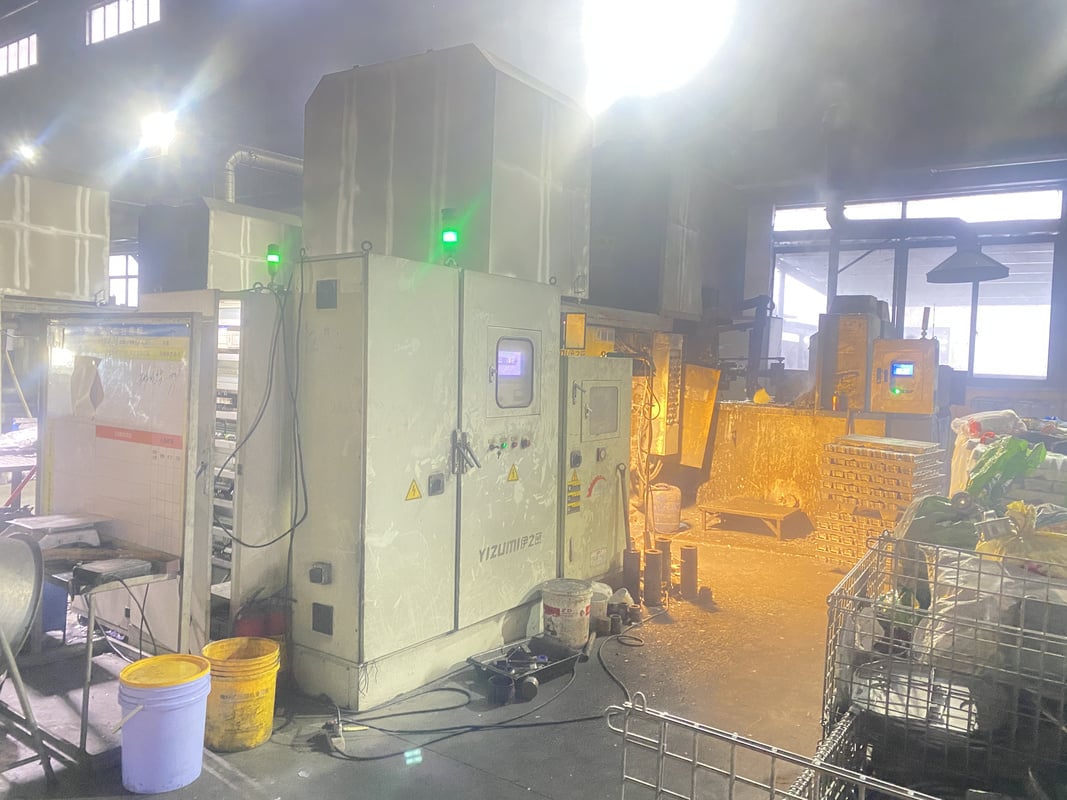
Guangqi Lighting Factory Tour — Industrial Lighting Manufacturing


Engineering & Specification Tools
Leverage our data-driven calculators and selection matrices to optimize your facility’s lighting layout, verify regulatory compliance, and project financial returns.
Industrial LED ROI Calculator
Calculate precise energy savings, simple payback periods, and total cost of ownership by simulating an upgrade from legacy HID or Fluorescent systems to LED.
Launch Calculator
UFO vs Linear High Bay Selector
Determine the optimal fixture geometry and photometric distribution based on your specific facility variables, including ceiling height, aisle dimensions, and racking layout.
Start Selection
Certification Requirement Matcher
Cross-reference your operational environment and hazard classifications to instantly identify required UL, ATEX, IECEx, and IP-rated lighting specifications.
Find Requirements
Get an Industrial LED Lighting Quote for Your Facility
Provide your facility type, number of fixtures and desired foot-candle level. We provide you within 48 business hours a line-item quote including photometric plan, tiered pricing, and DLC rebate identifier. None of the quoting systems we have seen use gated forms or middlemen.
Frequently Asked Questions
What wattage LED — and what are the best led lights for warehouse facilities?
For a 10-meter-ceiling warehouse 150-200W UFO fixtures generally give 20-30 foot candles in general-area spacing (approximately 1 fixture per 35m). For 12-meter ceilings go to 200-240W; for 15 meters and up, 300-400W or dual-fixture per bay. Exact lumen per fixture calculations should be run against your facility drawing- we provide that layout free with every quotation. Our most recommended best led lights for warehouse retrofit are the 150W and the 200W UFOs, plus the 4ft linear for narrow-aisle racking.
How many UFO high bay lights do I need per 1,000 m²?
For 10-meter-ceiling warehouse 150W UFO fixtures would spaced 1 per 35-40 m and would give 25-30 fixtures per 1,000m. Aisle-oriented facilities looking for more linear coverage may wish use 35-40 linear low-bays instead. Racking and shelving intensifies spacing considerations- a floor plan and a target foot-candle value are the two inputs we require.
What’s the difference between C1D1 and C1D2 explosion-proof lighting?
Class I Division 1 (NEC Article 500) corresponds to areas where flammable gases or vapors are present for any duration during normal operation- well-heads, solvent process tanks, open paint booths. Class I Division 2 pertains to areas where these gases are present for short durations or are normally contained- pump rooms, process piping corridors, storage of Class I flammable liquids. Marking D2 fixtures at a Class 1 Division 1 worksite not only violates OSHA 1910.307 but is incompatible with compliance. When in doubt refer your hazard classification to a licensed electrical engineer we will supply a matrix of our D1 and D2 fixtures once your zone is classified.
Are LED lights considered explosion-proof?
Not necessarily. An LED fixture must bear a specific hazardous-location approval (C1D1, C1D2, ATEX, IECEx) in order to be installed in a certified enclosure. Ordinary industrial LED fixtures- even IP65 or IP66- rating are not explosion-proof. Explosion-proof LED fixtures have specially designed housings (cast alloy, sealed drivers, approved cable glands) that contain any internal ignition without igniting surrounding atmosphere.
What is the MOQ for OEM industrial LED lighting from Guangqi?
Catalog standard SKUs: 10 pcs. OEM custom (private-label, custom CCT, custom optics): 50 pcs. per SKU. Small-batch prototyping is acceptable on approved project pipelines- 1-5 pcs. as required by engineering firm for a named final user. Certification add-ons (SAA, PSE, INMETRO) or others will have their own small MOQ for the certification run and the commercial production.
How long is the lead time for custom LED fixtures?
Custom order shipment 15-21 days after sample approval plus 7-10 days for first-sample prototyping. OEM projects from conceptual spec to container 30-45 days even. Standard catalog SKUs ready to ship in 48 hours+ from in-stock components. When projects have accelerated schedules we often advise splitting order- immediate dispatch of a first tranche of standard catalog fixtures, higher volume custom cluster in the second fleet.
Do industrial LED fixtures qualify for utility rebates in the US?
Yes, as long as the fixture is DLC-listed (Design Lights Consortium) or ENERGY STAR approved. We provide each DLC identification number on your quote so you can confirm your facility meets the utility rebate requirements (searchbale at designlights.org/qualified-products-list). Utility rebates range from utility program to program, but most include a typical $20-80 per DLC-Premium retrofit LED-lighting fixture with additional premium per high-efficiency tier. The three largest in our experience are NYSERDA, PG&E, and Mass Save.
What does the 5-year warranty actually cover?
The warranty covers fixture housing, LED module and driver for 5 years from ship date. We provide the replacement fixture to your facility, or equivalent credit towards your next purchase. Default is to exclude on-site repair labour, damage to the fixture from improper installation or operaion outside IEC 61000-4-5 surge-protection allowed level, and from use outside stated ambient temperature. Labour upgrades are available to purchase as a contract if you order more than 500 fixtures.
![Industrial LED Bulbs: Bases, Voltage & Heat [Checklist]](https://gqlamp.com/wp-content/uploads/2026/10/industrial-led-bulbs-blog-featured-150x150.png)