Get in Touch with GUANGQI


SYS.ARCH // STREET ILLUMINATION
LED Street Lights: Solar, Commercial & Municipal Lighting Solutions
From off grid rural solar lamps to high-output commercial LED street lights, Guangqi Lighting provides dependable outdoor illumination with 15 years of manufacturing experience and CE/RoHS approved quality.
Request a Quote

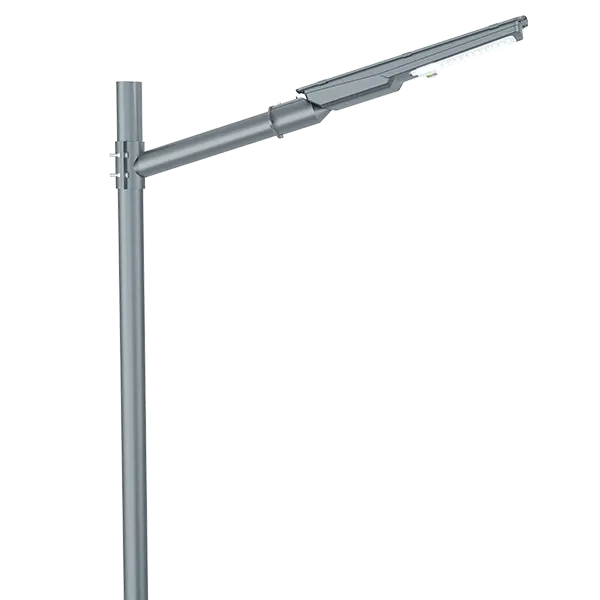
Efficacy
160+ LM/W
L70 Lifespan
50,000h
Weatherproof
IP65
Power Range
20-300W
Product Architecture
The Guangqi LED Street Lights Family — Solar & Commercial Roadway Lighting Systems
Guangqi LED street lights are organized into two project-ready product families: solar street lights for off-grid roads, rural communities, parking lots, and new developments; and commercial LED street lights for highways, municipal roads, campuses, parking areas, and grid-powered retrofit projects.
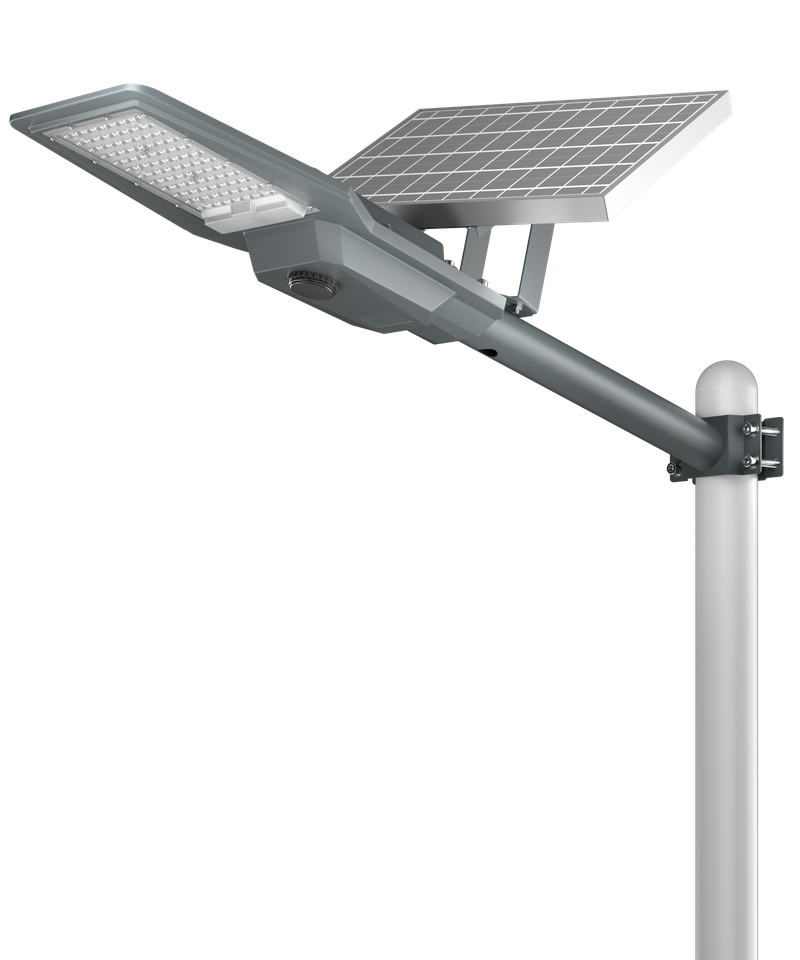
Solar Street Lights
Application Range
For off-grid roads, rural roadways, parks, campuses, parking lots, industrial compounds, and projects where trenching AC power is expensive or impractical.
System Specifications
- 9 solar street light product series
- All-in-one, integrated, and split solar system options
- 20W-120W configurations for pathways, secondary roads, and highways
- Monocrystalline solar panel + LiFePO4 battery system
- IP65 / IP66 protection with CE and RoHS options
- Dusk-to-dawn, motion sensor, timer dimming, and optional smart control
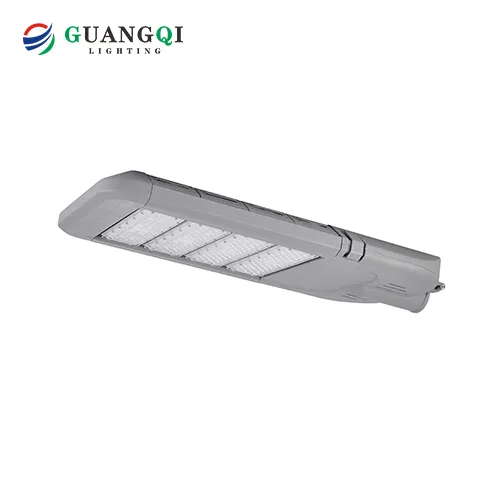
Commercial Street Lights
Application Range
For highways, arterial roads, municipal streets, residential communities, campuses, parking lots, commercial properties, and industrial outdoor areas.
System Specifications
- 30W-300W roadway and area lighting range
- 130-160 lm/W system efficacy
- Cobra head, modular roadway, post-top, and shoebox fixture options
- IP65 / IP66 weatherproof housing
- 2700K-6000K CCT options for roadway and community lighting
- 0-10V, DALI, photocell, and smart-control-ready configurations
[SYS.DOC] Technology Report
Complete Guide to LED Street Lighting Solutions
Led street lights have surpassed high-pressure sodium (HPS) and metal halide lamps on the streets of thousands of municipalities worldwide and the switch is gaining more momentum. That is because a modern LED street light fixture can provide twice to three times the lumens per watt of a legacy sodium-vapor lamp and last more than twice as long. That combination reduces energy costs and slashes the maintenance budget that local governments must lay out for bucket-truck crews replacing burned out bulbs.
01
Hardware & Engineering
An LED street light fixture typically contains an array of surface-mount led chips, often on 5054 or 3030 packages, encased within an aluminum die-cast housing or galvanized steel housing with precisely formed polycarbonate lenses to craft a beam pattern. Each fixture connects to a driver circuit that controls current and mounts with a slip fitter or arm bracket that is compatible with existing poles. Grid-powered models connect into the AC120-277V electrical grid and solar-powered models coordinate with a photovoltaic module and a lithium iron phosphate (LiFePO4) battery to operate independently of the grid.
02
Technology & Optics
Core LED technology used in these fixtures has greatly matured since the early LED road fixtures entered service in the late 2000s. Today many units offer the ability to select correlated color temperature, LED-S12 reflectors for warm 3000K residential streetscapes, LED-S22 reflectors for 4000K mixed use environments, or LED-S52 reflectors for the maximum luminance on highways and parking lots. Most commercial-grade fixtures also include UL listed or DLC certification, which makes the LEDs elligible for utility rebate programs, and guarantees that an independent third-party laboratory measured the lights photometric performance.
03
Comprehensive Project Evaluation
To help project developers determine if they should spend the extra time and money upgrading existing project infrastructure before adding new off grid lighting, in the following report Guangqi represents their complete product line, provides specifications based on actual factory data, compares off grid solar LEDs to grid power, discusses municipal street lighting and parking lot applications, and provides a realistic estimate of products cost.
CAT.SYS // Product Architecture
LED Street Light Product Range: Solar, Commercial & Modular Options
Guangqi offers nine series of solar LED street lights that include residential pathways, commercial parking lots, four lane boulevards, and six lane superhighways. Each product line serves a specific installation scenario, wattage range, and mounting configuration.
Flagship
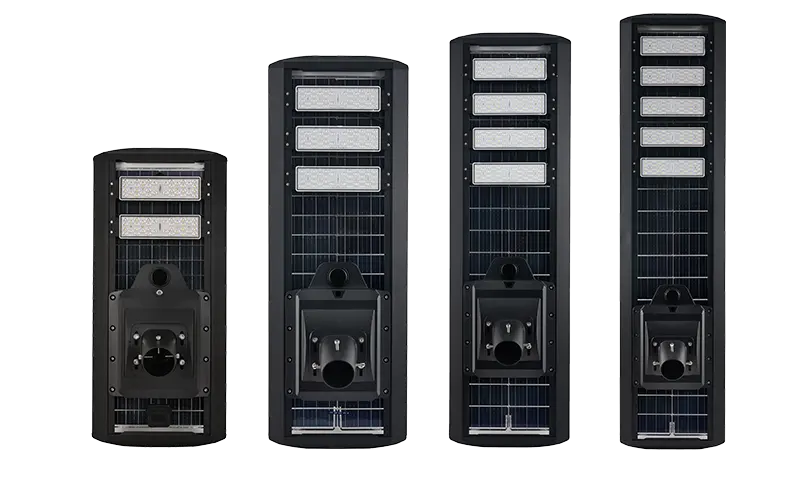
Gen 2
GQ-TKJ-B Series (Space Ship Gen 2)
Modular LED street light coupled with boom controller design. Efficiency exceeds 140+ LM/W – a best in class performance for commercial solar street lights.
System Specs
- Power: 30W / 50W / 80W / 100W
- Battery: 15-60 AH LiFePO4 at 12.8V
- Panel: 60-120W monocrystalline at 18V
- LED: 72-180× 3030 chips, CRI >70
- Adjustable arm mount, φ60-76mm
Value Series
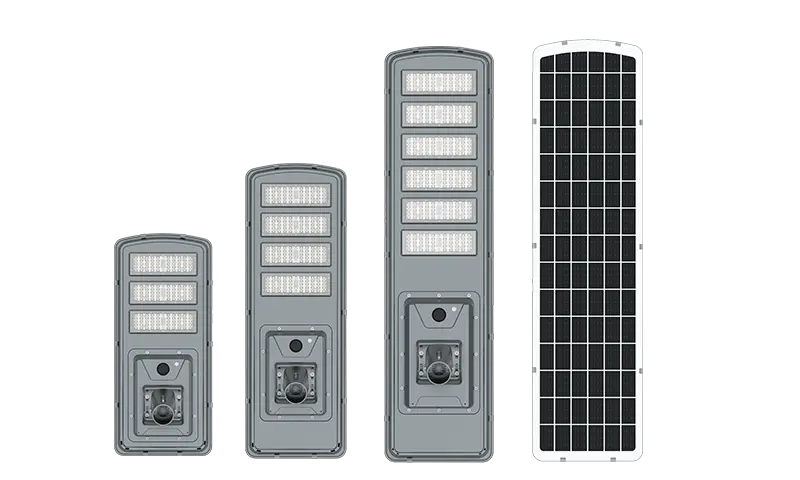
Gen 1
GQ-TKJ-A Series (Space Ship Gen 1)
Galvanized steel housing with constant-voltage 3.2V controller system. Workhorse solar powered street light for municipalities and rural areas where budget constraints still apply.
System Specs
- Power: 50W / 80W / 120W configs
- Battery: 60-120 AH LiFePO4 at 3.2V
- Panel: 50-120W at 6V
- System efficacy: ≥150 LM/W
- Fixed arm mount, φ60-80mm
Split Solar

Split Solar
GQ-STSL08 Series
Split-type solar street light with independent panel and fixture head. The landscape panel location allows for maximum tilt angle, independent of lamp orientation, that is essential for locations that have roof-based shading concerns or irregular pole placement.
System Specs
- Power: 20W / 60W / 80W
- Separate panel and light head
- Ideal for shaded or angled installations
Highway
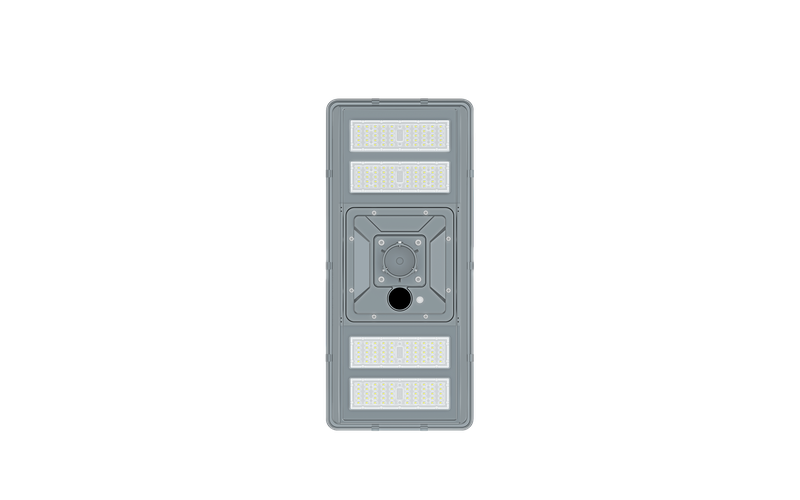
Highway Modular
GQ-STSL10 & GQ-STSL11 Series
Split-Mount LED parking lot light with multiple modules for commercial applications. Modular modules allow installers to add uniform lumen packages without replacing entire fixture.
System Specs
- 3-module, 4-module, 6-module configs
- Heavy-duty support arm
- Designed for highway pole spacing
Compact
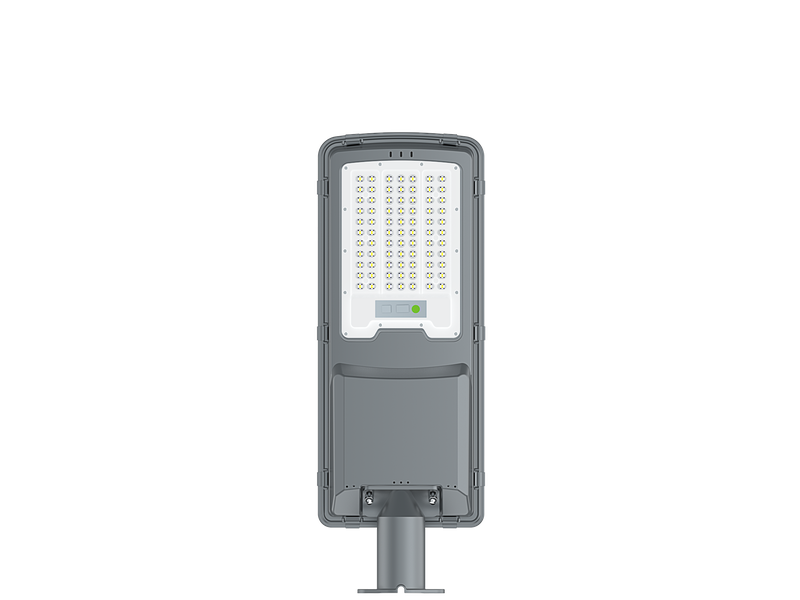
Compact
GQ-STSL06 & GQ-STSL09 Series
Combination solar street luminaires for neighborhood streets, walkways, and paths. Available in 20W, 35W, 50W, 90W, and 100W models – the cost-effective entry point for neighborhoods making the switch to solar outdoor lighting.
System Specs
- Power: 20W–60W
- Integrated all-in-one design
- Perfect for residential and pedestrian areas
Landscape
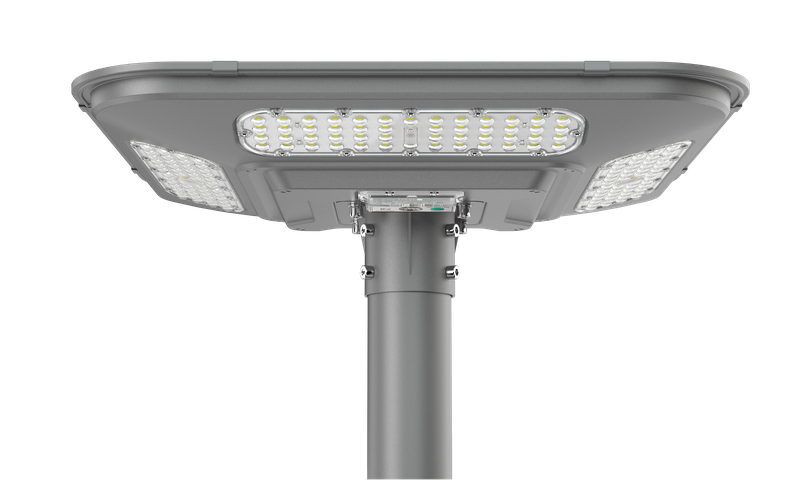
Garden & Landscape
GQ-STSL07 Series
Solar garden and courtyard luminaire for ornamental landscape lighting. Dual-mount mountings provide additional flexibility: pole-top or wall-mount allow these fixtures to punctuate dusk-to-dawn driveways, park entrances, and building exteriors.
System Specs
- Pole-top and wall mount options
- Decorative lighting design
- Parks, courtyards, perimeter paths
[REF.01] GQ-TKJ-B Series — Full Specification
| Parameter | GQ-TKJ-B-30W | GQ-TKJ-B-50W | GQ-TKJ-B-80W | GQ-TKJ-B-100W |
|---|---|---|---|---|
| System Efficacy | ≥160 LM/W | ≥160 LM/W | ≥160 LM/W | ≥160 LM/W |
| Lumen Output | 4800 LM | 8000 LM | 12800 | 16000 |
| Solar Panel | 60W / 18V | 80W / 18V | 100W / 18V | 120W / 18V |
| Battery (LiFePO4) | 30AH 12.8V | 50AH 12.8V | 80AH 12.8V | 120AH 12.8V |
| Battery Cycles | >2,000 | >2,000 | >2,000 | >2,000 |
| LED Chips | 72× 5054 | 108× 5054 | 144× 5054 | 180× 5054 |
| CRI | Ra >70 | Ra >70 | Ra >70 | Ra >70 |
| Color Temp (CCT) | Selectable | Selectable | Selectable | Selectable |
| Controller | 12.8V BOOST SYSTEM — SENSING & PROTECTION | |||
| IP Rating | IP65 | IP65 | IP65 | IP65 |
| Working Temp | -20°~50°C | -20°~50°C | -20°~50°C | -20°~50°C |
| Lifespan (L70B50) | 50,000h | 50,000h | 50,000h | 50,000h |
| Heatsink | DIE-CAST ALUMINUM MODULE | |||
| Lens | INJECTION-MOLDED PC LENS (T2-S) | |||
| Mounting | ADJUSTABLE ARM BRACKET, Φ60-76MM | |||
| Autonomy | 2 CONSECUTIVE RAINY/CLOUDY DAYS | |||
| Dimensions (mm) | 900×401×254 | 1140×401×254 | 1380×401×254 | 1660×401×254 |
| Warranty | 2-YEAR FULL WARRANTY | |||
[REF.02] GQ-TKJ-A Series — Key Specs
| Parameter | GQ-TKJ-A-50W | GQ-TKJ-A-80W | GQ-TKJ-A-100W | GQ-TKJ-A-120W |
|---|---|---|---|---|
| System Efficacy | ≥150 LM/W | ≥150 LM/W | ≥150 LM/W | ≥150 LM/W |
| Solar Panel | 60W / 6V | 80W / 6V | 100W / 6V | 120W / 6V |
| Battery (LiFePO4) | 60AH 3.2V | 80AH 3.2V | 100AH 3.2V | 120AH 3.2V |
| LED Chips | 50× 5054 | 100× 5054 | 150× 5054 | 200× 5054 |
| Housing | GALVANIZED STEEL + POWDER COATING | |||
| Lens | INJECTION-MOLDED PC LENS (T2) | |||
| Mounting | FIXED ARM BRACKET, Φ60-80MM | |||
| Dimensions (mm) | 900×401×175 | 1135×401×175 | 1375×401×175 | 1655×401×175 |
System Evaluation
Solar vs Grid-Powered LED Street Lights: Which Is Right for Your Project?
Choosing between grid-tied versus solar-powered street lighting depends on three project-variable factors: proximity to electrical service, the lifetime ownership costing over a decade, and local solar insolation. There is no one-size-fits-all best option – but one approach produces conspicuously lower cost structures depending on conditions.
| Assessment Factor | Solar LED System | Grid-Powered System |
|---|---|---|
| Upfront Cost (per unit) | $30–$350 | $20–$200 (fixture only) |
| Installation Cost | $100–$300 (no trenching) | $500–$2,000+ (trenching + wiring) |
| Monthly Energy Cost | $0 — FULLY OFF-GRID | $8–$25/fixture/month |
| 10-Year Energy Cost (50 units) | $0 | $48,000–$150,000 |
| Battery Replacement | Every 5-6 years (~$15-150/unit) | N/A |
| Power Source | Photovoltaic panel + LiFePO4 battery | AC mains (120-277V) |
| Weather Dependence | 2-day autonomy; reduced output in adverse weather conditions | Unaffected |
| Best Application | Rural roads, off-grid sites, parking lots, developing regions | Dense urban areas with existing grid infrastructure |
| Environmental Impact | ZERO OPERATIONAL CARBON | Depends on grid energy mix |
Real-World ROI Scenarios
In real-world installations, solar powered street lighting achieves the quickest return on investment in three scenarios: new-build where no electrical feeders are yet in place, remote mountainous highways where the additional trenching exceeds the solar electric system premium, and regions with electricity rates above $0.15/kWh (peak). Grid-connected high power factor LED fixtures stand out as the best choice for dense urban avenues already wired by utility companies, or for sites with less than 3 hours of peak daily solar input where system battery sizing becomes infeasible.
Addressing the Orientation Dilemma
Guangqi’s split solar street light models (GQ-STSL08) fill a longtime void in the industry: they can orient the photovoltaic array directly toward the sun for maximum capturing efficiency but still allow the LED light head to aim toward the pavement – resolving the orientation dilemma that afflicts many integrated all-in-one solar street luminaires.
[SYS.APP] Deployment Scenarios
Municipal, Highway & Commercial Lighting Applications
LED roadway luminaires have an application spectrum that extends beyond commutes. Usage includes illuminance in parking areas, walkways, building peripheries, construction sites, and mixed-use commercial neighborhoods.
APP.01
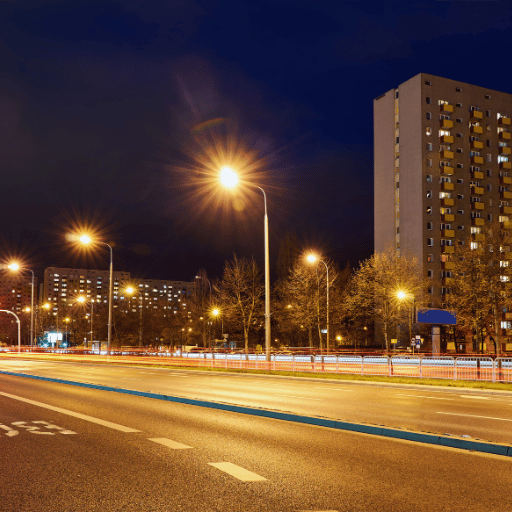
Municipal & Residential Roads
Two-lane collector and residential streets usually need 6-10 lux average maintained illuminations, per IES RP-8 guidelines. Guangqi 100-200W luminaires on 6-8 meter light poles spaced every 25-30 meters address these requirements while passing dark sky compliance at municipalities that regulate cast-upward light.
APP.02
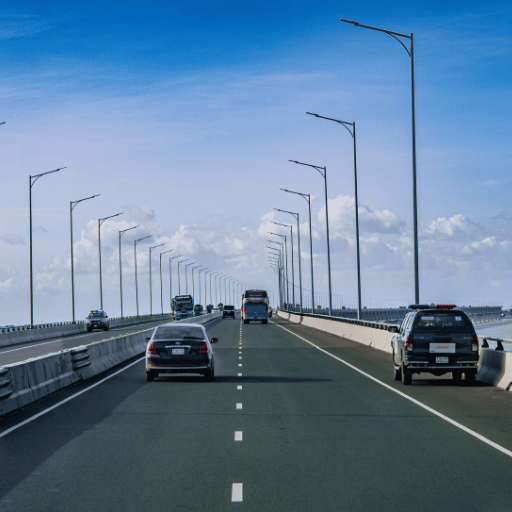
Highway & Arterial Roadways
4-lane arterials and expressway ramps have higher illumination requirements of 15-25 lux at higher mounting heights of 10-12 meters. Guangqi’s GQ-STSL10 and GQ-STSL11 series achieve this requirement for 3-6 module megasystem designs that produce lumen output 30,000+ and higher.
APP.03
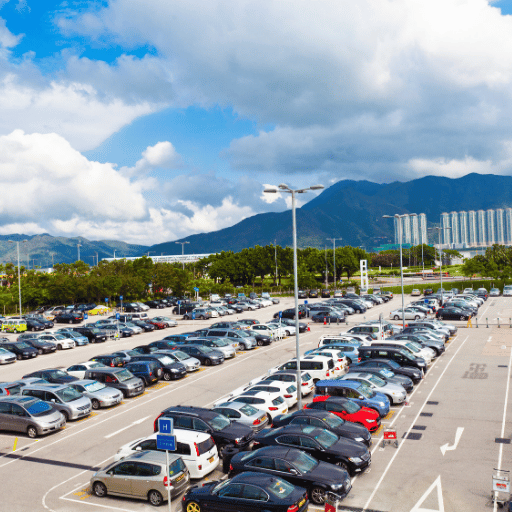
Commercial Parking Lots
Led parking lot fixtures require wide-area distribution architectures to minimize dark zones between parking lanes. Guangqi’s 300-500W GQ-TKJ-B fixtures provide the dispersion and illumination that commercial outdoor lighting standards demand (usually 20-50 Lux at pavement intensity).
APP.04

Pedestrian Walkways & Parks
Walkway and park lighting requires uniformity and low-out glare illumination at modest mounting heights of 3-5 meters. The small GQ-STSL06 and GQ-STSL09 integrated solar lamps at 20-100W provide field radiation bright enough to support CCTV cameras.
APP.05

Industrial Yards & Warehouses
Outside storage yards and railroad container terminals require higher-lumen security fixtures. High-output area fixtures in the 200-500W range supply raw output; LCD clock timing allows fallback into low-power standby mode to reduce solar battery drain.
APP.06
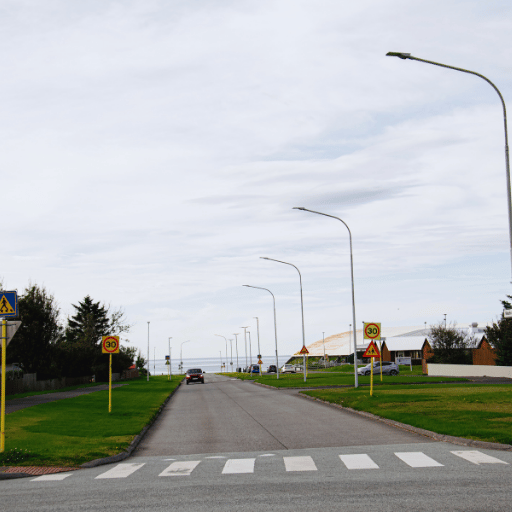
Rural & Off-Grid Communities
Off-grid villages and settlements need solar powered lights due to prohibitive connection costs. The 2 day battery autonomy, motion sensing, and dusk-to-dawn function removes the requirement for external energy sources and human supervision.
Corporate Advantages
Why Guangqi for Your LED Street Lighting Project
Specifying an LED street light manufacturer involves more than a reading of specs sheets. Supply chain stability, certification coverage, customization ability, and after-sales support impact upon the project’s ability to meet schedule and perform to spec for a full service life.
01
Vertically Integrated Manufacturing
Guangqi manages each step of manufacturing – from mold design to optical system design to the thermal heat flow and driver board installation to each final test. This in-house development results in more rapid speed and more control over in-spec quality from out-of-region OEM sources.
02
CE, RoHS & IP65 Certified
All Guangqi LED fixtures meet CE RF and CE EM emission standards, and CE safety standards. All Guangqi LED fixtures are RoHS compatible. All Guangqi LED fixtures are IP65 weather resistant.
Certified Quality
03
Global Project Experience
Since 2010, Guangqi Lighting has supplied solar and commercial LED lighting for projects in Asia, Europe, North America, and the Middle East. Local service centers offer timely support and local stocks of spare parts, while inter-site logistics facilitate on-site servicing.
04
Custom Solutions & Fast Prototyping
Every project has specific restrictions. Guangqi’s engineering team uses the photometric layout planning, special color temperature selection, special mount adapters, and logo branding provide to all, the special key, waiting prototype can be ready in 7-10 days for test before mass.
LED Street Light Cost Analysis & Energy Savings Calculator
Determining the effective cost of LED street lighting requires consideration of factors beyond the fixture purchase price. A 10-year total cost of ownership (TCO) includes hardware, labor, electricity, and maintenance, which is where LED shines.
Cost Comparison: LED vs HPS (50-Fixture Municipal Project)
Fixture Cost (50 units)
LED: ~$15,000
HPS: ~$7,500
Installation
Comparable for grid-connected
Annual Energy (@ $0.12/kWh)
LED 150W: ~$3,285
HPS 400W: ~$8,760
10-Year Energy Savings
$54,750 saved with LED
Lamp Replacements (10 yr)
LED: 0
HPS: ~3 replacements × $50 × 50 = $7,500
Maintenance Labor (10 yr)
LED: ~$2,500
HPS: ~$12,000
10-Year TCO
LED: ~$20,785
HPS: ~$35,760
Assumptions: 12 hours operation per night, 365 nights per year, average U.S. commercial electricity rate. LED 150W fixture uses 150 W real power. HID 400W fixture uses 400W+ power with ballast. Source: DOE Municipal Solid-State Street Lighting Consortium.
Project Engineering & Planning Tools
[SYS.DOC] Technical FAQ
Frequently Asked Questions About LED Street Lights
LED street lights use light-emitting diodes mounted in a fixture housing with precision optics to direct illumination onto roadways and pedestrian areas. A driver circuit converts AC or DC power into regulated current for the LED chips. Solar models add a photovoltaic panel, charge controller, and LiFePO4 battery to store energy collected during daylight hours. Most units include a photocell or light sensor that activates the lamp at dusk and shuts it off at dawn, while advanced controllers offer time-dimming profiles and motion-sensor modes to extend battery life and reduce light pollution.
LED street lights deliver 120-170 LM/W system efficacy compared to 50-90 LM/W for high-pressure sodium (HPS) and metal halide fixtures. That translates to 50-70% energy savings on the same roadway. LEDs also last 50,000+ hours versus 15,000-24,000 for HPS, which cuts lamp replacement and bucket-truck visits roughly in half. Color rendering is significantly better at CRI 70-80+ versus CRI 22 for HPS, improving driver visibility and CCTV image quality. LED fixtures reach full brightness instantly with no warm-up period and handle frequent on-off cycles without degrading the light source.
Most commercial LED street lights are rated at 50,000 hours to L70, meaning the fixture still produces 70% of its original lumen output at that point. At 12 hours of nightly operation, that works out to roughly 11 years before a noticeable decline in brightness. Guangqi’s GQ-TKJ series carries this same 50,000-hour L70B50 rating. The solar components — particularly LiFePO4 batteries — typically maintain over 80% capacity through 2,000+ charge-discharge cycles, which covers approximately 5-6 years of daily use before a battery swap is needed.
Yes, when properly sized. Guangqi’s solar street lights carry a 2-day autonomy rating, meaning the LiFePO4 battery stores enough energy to run the light at full brightness through two consecutive overcast or rainy nights without any solar charging.
An integrated (all-in-one) solar street light packages the solar panel, battery, LED module, and controller inside a single housing that mounts directly to a pole arm. This makes installation fast with fewer connection points. A split solar street light separates the solar panel from the light head — the panel mounts on top of the pole facing optimal sun exposure while the fixture sits lower on an arm bracket. Split designs allow larger solar panels and batteries, making them better suited for high-wattage applications above 100W or locations where the optimal panel angle differs from the fixture mounting direction.
Pricing for commercial LED street lights varies widely based on wattage, whether the unit is grid-powered or solar, and the fixture grade. Grid-powered LED cobra head fixtures in the 100-300W range typically run $150-$600 per unit at wholesale. Solar LED street lights carry a higher upfront cost — a complete system with panel, battery, and controller generally falls between $300 and $1,200 depending on wattage and battery capacity — but eliminate trenching, wiring, and monthly electricity bills. Over a 10-year lifecycle, solar units in off-grid or high-electricity-cost areas often deliver a lower total cost of ownership.
Look for CE marking (confirms compliance with European safety and electromagnetic compatibility directives), RoHS certification (restricts hazardous substances), and an IP65 or IP66 ingress protection rating (dust-tight and protected against water jets). For the North American market, UL listing and DLC qualification are important — DLC-listed products qualify for utility rebates in many states.
Start with the road classification and required illuminance level: residential streets typically need 6-10 lux average maintained, collector roads 10-15 lux, and arterial highways 15-25 lux per IES RP-8 recommendations. Then factor in pole height, spacing, and the fixture’s lumen output. A 100W LED fixture producing 15,000+ lumens can adequately light a two-lane residential road with poles spaced 25-30 meters apart at 8-meter mounting height. For wider four-lane highways, 200-400W fixtures at 10-12 meter mounting heights with 30-40 meter spacing are more common. Always request a photometric simulation from the manufacturer to verify coverage before finalizing the design.
Ready to Light Up Your Project?
Please inform us of your street lighting needs road category, number of columns, solar or mains power etc., and our engineering team will produce a photometric plan and quotation within 48 hours.
Get Your Free Lighting Plan