Get in Touch with GUANGQI



Facade and architectural lighting is the art of lighting the outside of a building so the architecture is perfectly legible at night – not as a brighter, night time reincarnation of daylight, but as a unified, zoned, and rolled back articulation of form. Such a lighting design reveals material details, emphasizes the hierarchy of structures, moderates the sky, and answers to an IES RP-43-22 audit. It may be marred by excessive lighting of the top third of the wall, zoo-magnification of the sky above, a color temperature that runs counter to the cladding, and breaking Title 24 BUG limits at commissioning. This guide leads specifiers through the seven fundamental techniques, the illuminance calculations, fixture selection, code compliance, and a professional lighting design process from survey through to commissioning.
Quick Specs — Facade & Architectural Lighting at a Glance
| Target illuminance (LZ3 medium reflectance) | 0.2–1.5 footcandles (IES RP-43-22) |
| BUG rating trigger (US) | Any luminaire ≥ 6,200 initial lumens (Title 24 Part 6) |
| Facade wattage allowance LZ3 | 0.17 W/sqft of illuminated surface (Title 24 Table 140.7-A) |
| Minimum IP rating | IP65 (IEC 60529) — IP66/IP67 for ground-recessed or coastal |
| Color consistency threshold | 3-step MacAdam binning (practically invisible to the eye) |
| Typical CCT range | 2700K (heritage / hospitality) → 4000K (contemporary commercial) |
| Dark Sky compliance | DarkSky Five Principles (joint IES statement, 2024) |
What Facade & Architectural Lighting Actually Means (and What It Is Not)
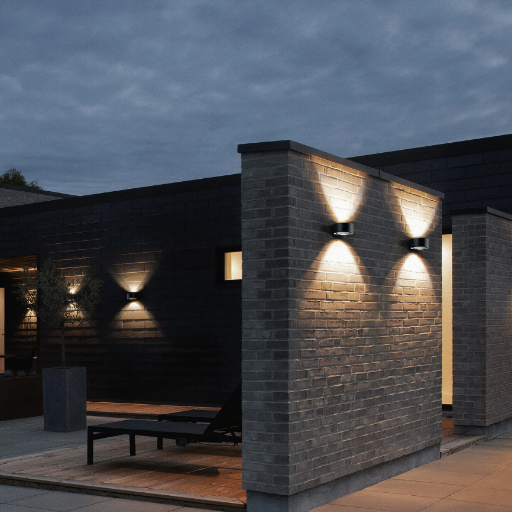
Facade lighting (this term still mostly used by European technical literature) is a sub-category in architecture lighting design specifically focused on visually describing the building facade — its vertical envelope — after dark. It is a parallel – not a department-within-a-department – of streetscape, landscape, and interior lighting. Fixture choice separates a good facade from a generic one; this decision is best made when understanding the goal of the light – which effect the architect would like the viewer to perceive, in the material, space, and context. That goal may be: the texture of the material, the rhythm of openings, the hierarchy of entries, or the strength of the wall.
What does not apply: blaring floodlighting at the wall. Individual fixtures matter less than the design techniques themselves, including grazing, wall washing, flood, wide and narrow-angle spot, linear lighting fixtures, uplights, and pixels. Also included in the discussion of the category of exterior lighting, though beyond the scope of the article, is lighting for outdoor entry areas – but only the vertical wall is in scope: this is the facade. RP-43-22 lighting zone footcandles are tied to the reflectance of the facade material and the zone, from LZ0 (gauzy fabric) to LZ4 (slate). 0.2 to 1.5 fc is the range for the typical urbanscape of medium-reflectance masonry within the common LZ3 category. Defining success enables the designer to specify for the result but avoid specificity that limits creative options.
Good facade lighting rests on restraint. An overly lit wall can easily look like signboard at night, not architecture. A telltale sign: the designer selected one flood fixture type across walls of mixed heights, producing 9 footcandles at the base and under 2 footcandles at the top of a 20-foot elevation. Fixing this is not about more lumens. It is matching the right technique to the right wall segment — which is why this guide leads with technique selection before it touches fixture catalogs.
The Seven Facade Lighting Techniques — When to Use Each
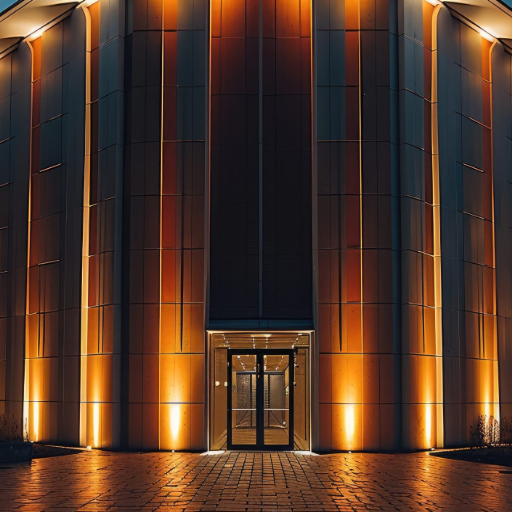
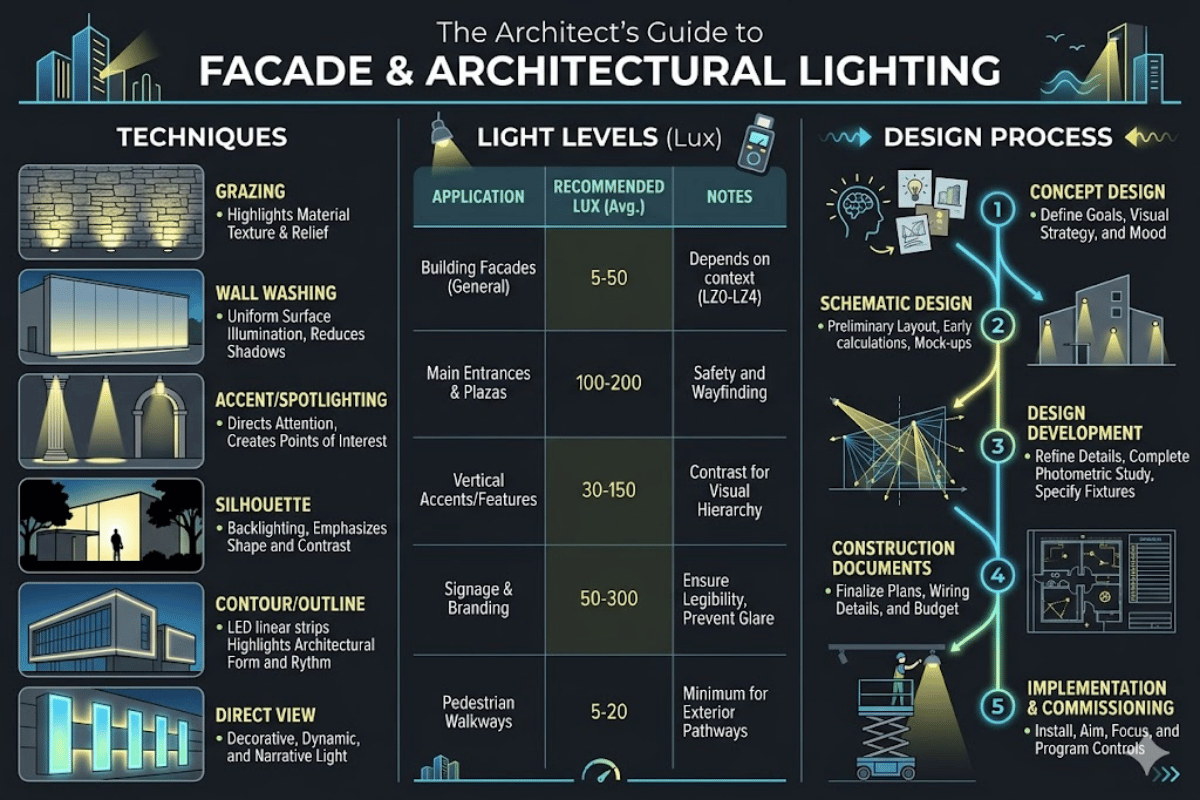
Seven techniques exist to apply to virtually any situation on the commercial facade. Each technique carries a measurable signature in setback distance, beam spread, and footcandle output. Using the wrong technique – not the wrong lumen package – is the leading cause of amateurish facade applications on opening night.
1. Wall Washing — Uniform Illumination
Wall washing creates a uniform sheet of light along a surface. It is the appropriate measure when the material of the facade is flat (modern stucco, panel, smooth concrete) and when it is necessary to emphasize a volumetric quality of the design – to read the wall as a plane. A LED wall washer fixture with wide-flash optics at a mounting height of 1.5 to 2.5 ft from the facade will generally deliver 4.5-11 footcandles on a 10-20 ft wall with a maximum/minimum uniformity ratio from 2.7:1 to 6:1.
ERCO suggests a wall distance of about 1/3 the size of the facade, with fixtures spaced no more than 1.2 times farther apart to produce acceptable linear uniformity. This type of light will not work well on textured or historic materials – the even flat light erases the relief that makes the material memorable.
2. Wall Grazing — Texture Reveal
Grazing holds the luminaire tight to the wall (usually 0.5-1.0 ft setback) and throws a narrow beam along the surface. Shadows of wall relief become the subject. Grazing is perfect for heritage stone, brick, textured concrete, or any facade where the surface tells the story.
Trade-off: uniformity suffers. a grazing installation on 20-ft wall set 1.5-ft from surface at 5-ft room to room spacing will yield, on average, about 4.6 fc with a max/min ratio of about 6.9:1. That ratio would not pass a uniformity test on a washing project, but it is exactly what makes grazing shine.
3. Flood Lighting — Large-Surface Coverage
Flood used wide beam fixtures on a higher setback than grazing to uniformly wash large flat façade areas over broad even spaces with one lighting point / fixture. Flood is a cheap solution to an issue and can be installed in no time at all or certainly significantly quicker than washing. But it is also an easy way to get a project specified on something that should really have been washed, washed and grazing or even grazing.
Flood works well on warehouse façades, retail back-of-house areas and storage facilities where the instruction is “visible and safe” rather than “formal”. Asymmetric flood distribution — wide on one axis, narrow on the other — is the specifier’s friend for tall, narrow facades.
4. Spot Lighting — Architectural Accent
Spots project a constrained beam – usually 10 to 25 – onto a defined element of architectural detail columns, cornice, carved panel, sign element, sculpture. Field-install outdoor fixtures with adjustable tilt yoke bases is king of course. ERCO categorizes beam spreads from narrow spot (~8) to wash(30) to extra wide(about 90); the range best for facade accent is in the 10 to 25 window.
Spots are just where layering becomes important – accent illuminance should be 3 to 5 as bright as the general wash in order to register as an added dimension, rather than fuss.
5. Linear Lighting — Outlines and Contours
Linear fixtures are the primary instrument for flare of edges, cornices, window frames, balcony silhouettes, and continuous architectural runs. A modular facade linear light system with 1m or 2m jumper-cable modules and interchangeable narrow/wide/asymmetric optics may span up to 25m per circuit. It is the standard for both grazing and outlining because the beam field can be swapped without removing the fixture from its housing. Tunable-white and RGBW linear fixtures migrate the same hardware into the hospitality zones where the facade might be expected to shift shade through the evening.
6. Uplighting vs Downlighting
Uplighting mounts the fixture at or near grade and projects into the facade. It is capable of providing a dramatic bottom-up reveal, but immediately comes up against sky spill (uplight categories U0-U5, which we will get into shortly) and viewer glare. Downlighting–outdoor wallwash lights mounted high on the facade and projecting down–is weaker on the sky and can perform double-duty as pedestrian lighting in entry zones. For dark-sky-sensitive sites, downlighting or tightly masked uplighting (U0) is the best practice.
7. Direct-View Pixel and Media Facade
When a facade is meant to be a display– videos, holiday scenes, animations, color fields–direct-view pixel fixtures replace reflected light with individually addressable LED nodes. LED pixel lighting with pitches of 50-150 mm are common to sparse architectural patterns; LED mesh displays with 15-50 mm pitch and 60-80% transparency turn curtain walls into day-transparent, night-active media surfaces. Pixel and mesh arrays operate on DMX512 or SPI protocols. DMX is rated for length of 300-500 m per run/ per spec, so media facades on tall towers necessitate an RDM control system with the use of a laser or fiber connection–a detail that tends to get ironed out in commissioning not in specs.
| Technique | Beam | Wall Height | Setback | Avg Illuminance | Max/Min Ratio |
|---|---|---|---|---|---|
| Wall Washing | Wide (50–90°) | 10 ft | 1.5 ft | 11.0 fc | 6.0 : 1 |
| Wall Grazing | Narrow (8–20°) | 20 ft | 1.5 ft | 4.6 fc | 6.9 : 1 |
| Asymmetric Flood | Asymmetric (30° × 60°) | 20 ft | 4.0 ft | 9.0 fc | 16.4 : 1 |
| Spot (accent) | Narrow (10–25°) | Any | Varies | 3–5x base fc | Per target |
| Pixel / Media | Direct-view | Curtain wall | On-plane | Pixel-level | N/A |
Photometric examples from BEGA facade floodlight reference tables; all assume targets of LZ3 medium reflectance. Actual values depend upon fixture input wattage, wall material, and mounting location. Consult Dialux or AGi32 for confirmation before PO.
💡 Three-Question Test for Technique Selection
- Is the facade uneven, irregular, or textured? Grazing on texture. Flat on uniform surface.
- Is the wall over 15 ft? In linear or point sources. Under flood, pixel, or two-tier wash.
- Is the viewing distance under 50 ft? In accent+detail or silhouette/ media ranges.
Each technique maps directly to a specific fixture family — for facade applications, the seven techniques above are delivered through purpose-built product lines including outdoor wall lights, LED pixel lights.
The 3-Layer Rule — An Illuminance Hierarchy That Separates Good Facades from Amateur Ones
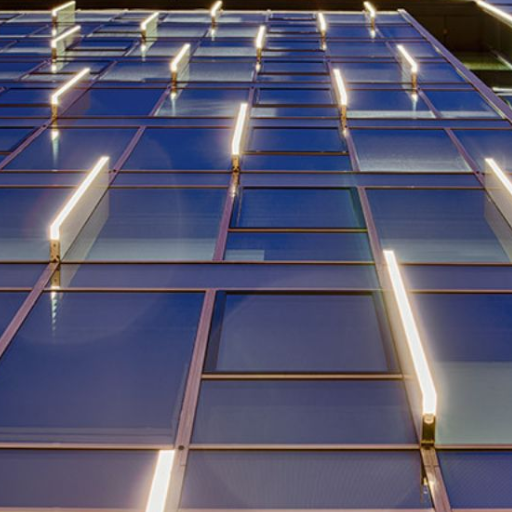
Three layers is just about the most practical methodology we use on facade projects. It is a simple 3-Layer Rule that summarizes the Contrast and IES Light Zone logic that drives the majority of commercial storefront lighting, without requiring any negotiation. We use it to add clarity to review of bland scope: Where we are ranking facade luminance, how hard we are pressing the contrast ratios, and why we demand the illumination to be delivered in distinct intensities.
📐 Engineering Note — The 3-Layer Rule
On a LZ3 facade, give three bands:
- Layer 1 – Base (1= 0.2-1.5 fc): washover for the entire facade – General Surface Light, per IES RP-43-22.
- Layer 2 – Accent (3= 0.6-4.5 fc): architectural details (cornices, windowframes, signage bands, columns).
- Layer 3 – Feature (6=1.2-9 fc): primary feature ground plane, major entrance, landmark elements.
Why three layers and not two or five? Two tiers read as signage – hero element plus generic wash, with no middle vocabulary. Five tiers overflow the eye’s comfortable ability to differentiate brightness ratios at facade distances. Three tiers map to the way human perception handles hierarchy in architectural reading: primary, secondary, ground. Those multipliers (1× / 3× / 6×) align with the 1:5 to 1:10 accent-to-general ratio ERCO and other design-knowledge references recommend, calibrated to the IES entrance-allowance reference point (4 footcandles ground-level at LZ3 entry, which maps to roughly 4-6 the base wash).
On a real PO review, the 3-Layer Rule translates into a photometric checklist: are the base wash fixtures spec’d to land in the 0.2-1.5 fc range? Are the accent fixtures delivering at least 3 that base number on the detail they are aimed at? Is the feature illuminance on the primary entrance reaching the 1.2-9 fc top-tier range? If any of those three answers is “no” – or worse, “the designer didn’t calculate it” – the facade will not read as layered at night. It will read as bright-and-flat, which is the look most architects spend RFQs trying to avoid.
Light Levels by Lighting Zone — IES RP-43-22 and Title 24 Made Practical
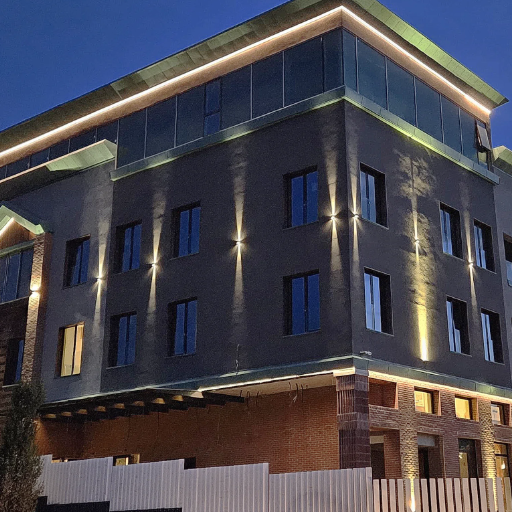
For US projects, the regulatory baseline is a two-document stack: IES RP-43-22 (recommended practice, not code) sets the illuminance targets; California Title 24 Part 6, 2022 Energy Code (adopted as code in California, referenced widely in other jurisdictions) sets the wattage allowances, BUG rating requirements, and lighting controls. Most other state-level codes track Title 24 within one code cycle – specifying to Title 24 tends to future-proof against later adoption.
Lighting Zone Matrix
| Lighting Zone | Context | Target fc (medium reflectance facade) | Title 24 LZ3 Facade Wattage Allowance |
|---|---|---|---|
| LZ0 | Natural / dark-sky preserve | Facade lighting generally not permitted | Not applicable |
| LZ1 | Rural | 0.05–0.4 fc | Limited per Title 24 |
| LZ2 | Urban cluster / suburban | 0.1–0.8 fc | 0.10 W/sqft of illuminated facade |
| LZ3 | Urban (most common) | 0.2–1.5 fc | 0.17 W/sqft of illuminated facade |
| LZ4 | High-activity urban (not used in CA) | 0.4–3 fc | Not recognized by CEC; check local code |
BUG Rating and the 6,200-Lumen Trigger
Every outdoor luminaire emitting 6,200 initial lumens or more must comply with the Backlight / Uplight / Glare (BUG) rating in Title 24 Part 6 Section 140.7. That threshold is where compliance engineering begins. Below it, the fixture is BUG-exempt but still subject to the zone wattage allowance; above it, the fixture must be rated – for example, U0 (zero uplight) for dark-sky-sensitive sites and typically G2 or lower for glare in a residential-adjacent urban zone. Title 24 also requires motion reduction of 50-90% on facade fixtures mounted 24 ft or lower, and all outdoor lighting to be controlled by an automatic time-switch plus photocontrol – a set of requirements designed to reduce energy consumption across outdoor spaces without compromising the design reading of the facade.
A clarification worth making at PO review: the 0.17 W/sqft LZ3 figure in Title 24 Table 140.7-A applies specifically to the illuminated facade surface area, not to the general site area. Separately, the general outdoor area wattage allowance (typically 0.021 W/sqft for LZ3) is a separate figure that appears in different rows of the same table. Confusing the two leads to either over-specifying fixtures (if the smaller number is applied) or non-compliance (if the larger number is applied where it should not be). When in doubt, run the numbers through a Title 24 compliance checker before committing to the schedule.
Fixture Selection — Beam, CCT, CRI, IP Rating, and LED Binning
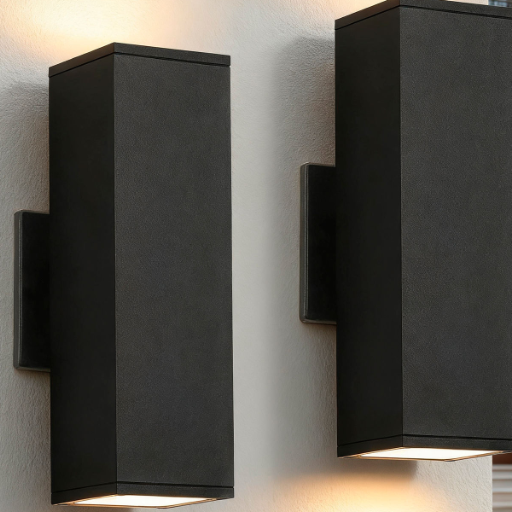
Once technique and illuminance are settled, fixture selection is a 5 parametric problem: beam angle, color temperature, color rendering, ingress protection, and LED binning. A single wall washer spec — same illuminance target, but with the incorrect combination of these 5 specs, will appear completely different at night than the photometric model predicted.
What CCT Should Facade Lighting Use?
Color temperature is not a taste preference; it is a material pairing choice. Modern LED lighting enables the entire 2700K-6500K spectrum to be accessible on the same hardware platform, which means the choice needs to be made intentionally. 2700K-3000K warm CCT in tone works for red brick, warm limestone, terracotta, and wood. Neutral 3500-4000K is good for modern concrete, metal curtain wall, and glass-dominant treatments. 5000K and above is mostly incorrect for facades unless that is the design intention (techno, back-of-house, signage). A specific pitfall on heritage retrofits: 5000K cool-white spec’d on brownstone or red brick visually ages the material — stone reads as blue-gray rather than the warm terracotta it was designed to present. For a first approximation, ERCO (warm for wood, cool for concrete) and the second order detail per IES LM-79 color data on the datasheet, both work.
“The beam selection call is the one correction that makes most facade installs economical. Dropping 50W wide flood fixtures to 20W narrow beam grazers on 10-12 ft walls delivers the same visual intensity to the pedestrian at one-third the power bill, and the architect gets the texture they specified – the generic wide flood washes it out.”
Why IP65 vs IP66 Matters for Outdoor Use
IEC 60529 states that it is IP rated; the standard codes from it. IP65 is dust- and protected from Jets of water from any angle. It is a bare minimum for outdoor fixtures. IP66 is a greater jet resistance, as the heavy rain-driven or pressure-washing scenario is arguably more important. IP 67 adds resistance to temporary immersion, which is why any fixture sitting in a pool of water in a downpour, for example, needs to be IP67. Saltwater or coastal salt-fog environments have their own marine treatment coat specified in addition to the IP.
LED Binning and Color Consistency
Two same nominal CCT fixtures can appear different at night time if they have different CCT bin placements in the chromaticity diagram. Engineers describe this in layers of precision of precision, from the bin, to the 5-pairs around it, to the next bin, is the Macadam ellipse. A 1-step MacAdam ellipse represents one SDCM (standard deviation of color matching) from the target color; 3-step represents three SDCM (Surface-coloring match limit; which is why the observer stops detecting differences at 3 SDCM). A 7-step MacAdam specification — common on builder-grade LED — produces visibly different neighboring fixtures, creating stripes of subtly different white-light color along a facade. For architectural specifications, 3-step MacAdam is the professional floor; 5-step is acceptable for back-of-house work; 7-step should not appear on a facade RFQ.
Related CRI discussion is more succinct. CRI 80+ is generic commercial grade. CRI 90+ with R9 > 50 is the threshold for retail, hospitality, and any facade where red tones need to render accurately – red brick, red awnings, branded red signage. CRI 95+ with high R9 is specified for museum and art-lighting.
✔ Fixture Spec Checklist — Demand on RFQ
- Beam angle (specific number, not “adjustable”)
- CCT (2700K / 3000K / 3500K / 4000K)
- CRI (80+ / 90+ / 95+ with R9 value)
- IP rating (65 / 66 / 67)
- MacAdam binning (3-step minimum)
- Driver type (constant current for facade)
- Dimming protocol (0-10V / DALI / DMX)
- Ta rating (-30°C to +50°C or higher)
- IES photometric file availability
⚠ Fixture Spec Traps
- “High CRI” without an R9 number – generic CRI can hide poor red rendering
- “Tunable white” without a binning class – tuning does not fix color consistency
- IP65 on ground-recessed fixtures — insufficient; need IP67 minimum
- Ta rating omitted on Middle East / Southeast Asia projects – thermal derating kills warranty
- Constant-voltage drivers on dimmed facade fixtures – flicker at low output
Light Pollution, Dark Sky, and the Ethics of Facade Lighting
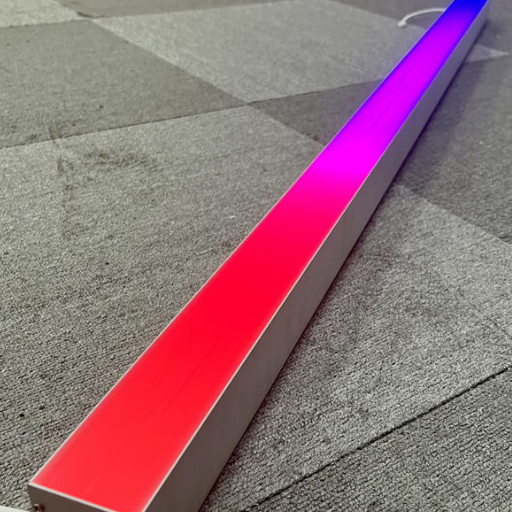
The ethics discussion is no longer optional. Since DarkSky International and the Illuminating Engineering Society published their joint Five Principles for Responsible Outdoor Lighting, the frame of reference has moved from regulatory minimum (Title 24 BUG compliance) to professional consensus (the Five Principles). Facade lighting specifications that do not consider the Principles are increasingly flagged at design review in municipalities with dark-sky overlays – a set that now includes Paris, New York, Flagstaff, and most of the US National Parks adjacency zone.
Five Principles Applied to Facade Lighting
- Practical – Every fixture has a clear architectural function. “Decorative” is not a function if the ornamentation appears as noise.
- Targeted – Light is confined to the desired facade surface. Spill onto sky, neighboring buildings, or the ground outside the design scope is a specification violation.
- Low Level – Illuminance is the maximum needed to achieve the design reading. Over-lighting is both a Dark Sky breach and an aesthetic flaw.
- Controlled – Mechanical timers and photocontrols are required. Modern best-practice adds a curfew schedule (historically 11 PM for non-monumental facades) and motion reduction on lower fixtures.
- Warm-Colored – 3000K or warmer is the Dark Sky preference. Cool-white on a facade is now a compliance question, not simply an aesthetic one.
BUG Rating Translated to Design Decisions
The BUG classification has three letters and each imposes a design restriction. B (Backlight) specifies the ratio of light emitted back from the fixture away from the target; B0 is the dark-sky target and reads as shadowed. U (Uplight) specifies the ratio of light above the horizontal; U0 is the dark-sky target and almost always requires shielded downlighting or flush-mounted uplights. G (Glare) specifies the amount of high-angle forward lumen output; G0-G2 is standard for residential-adjacent zones. A common non-compliance pattern: wall-wash fixtures with exposed optics aimed upward; they reliably exceeds U2 and trip review. Standard fixes include asymmetric-distribution uplights with shielded sources, or switching to downlighting from a higher mount.
⚠️ Common Mistake: Uplighting Without U0 Shielding
The single most common BUG-rating non-compliance on commercial facade retrofits is specifying unshielded uplights directed at building heights exceeding 24 ft. Sky spill above the roofline reads as U3+ during photometric review and almost always results in non-compliance within urban Lighting Zones. Corrective strategies include shielded asymmetric optics at the base or a change to a downlight-from-above scheme situated at roof height.
The Facade Lighting Design Process — From Site Survey to Commissioning
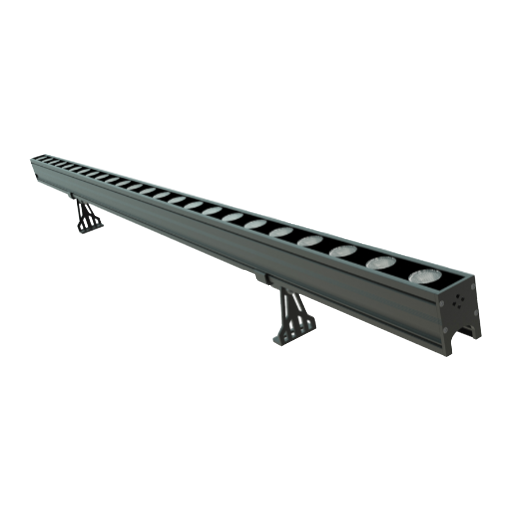
A facade lighting project can have up to six phases. Delivering all six finds the specifier arriving at commissioning with a facade in synchrony with the photometric model. Running away from all six, most typically Phase 4 (Mockup), finds the specifier arriving at commissioning with surprises. What follows is the phase-by-phase checklist.
Phase 1 — Site Survey
Measure the wall: height, width, materials, reflectance (a handheld reflectometer reading is worth the five minutes it takes), setback distance available at grade and at facade, nearest adjacent buildings, sightlines from prime viewing distances (pedestrian and vehicular), the power budget (panel capacity, circuit availability). Record the existing ambient illuminance from street lighting so the facade design does not fight it. This is also where the Lighting Zone is confirmed – Zoning sometimes surprises specifiers on sites that appear urban but are formal zoning suburban.
Phase 2 — Concept and Precedent Research
Reference projects tell the architect and client what the end result will feel like. Three precedents that frequently emerge in hospitality and institutional work: Steven Holl’s Nelson-Atkins Museum in Kansas City (linear lighting inside a translucent facade for a glowing-volume effect), the REACH Kennedy Center (directional flood along curved solid forms), and – on the media facade end – towers adopting RGBW pixel systems for programmed demand responses and holiday events. Select two to three precedents somewhat analogous in size and material palette to the current project, and that fit client expectations.
Phase 3 — Photometric Modeling
Dialux and AGi32 are the industry standards. Both require vendor IES photometric files for the specific fixtures under consideration – a specified line item on RFQ. That model produces a footcandle map across the facade surface, a uniformity ratio, and the BUG category for each fixture. Designers should run at least two scenarios: “design intention” (full capability output) and “after 11 PM curfew” (reduced output by means of dimming.) Often, the second scenario is the one that achieves compliance.
Phase 4 — Mockup
The mockup is that phase that separates projects that commission seamlessly from projects that do not. One-to-one example installation (usually one vertical bay or one accent element) designed with the specific fixtures, angles, setbacks, reflects what the photometric model cannot: how the actual wall material reflects the actual light. Silk-matte concrete reflects differently than the model predicts. Dark stone absorbs more light. Rain-saturated facade materials behave differently again. Changes discovered by mockup before purchase order are far more economical than changes discovered in the field after installation.
Phase 5 — Specification Package
Cut sheets, IES files, wiring diagrams, control sequences (DMX addressing, scene programming, time schedules), mounting details, compliance certification (CE or ETL, IP certification, Title 24 BUG rating confirmation). This package represents the contractual transfer from design into construction.
Phase 6 — Commissioning
Aim-and-focus each fixture at the photometric plan. Program scenes (static wash, accent mode, holiday / event mode) and certify dimming curves. Conduct a 72-hour burn-in – early driver failures routinely appear within 72 hours of continuous operation. Use a handheld illuminance meter at key zones to compare actual to model. Record the as-built installation and provide to the facility management team.
6-Phase Design Checklist
- Landscape survey – wall geometry, wall material, setback, power budget, zone confirmation
- Concept — precedent selection, design narrative, client alignment
- Lighting simulation – Dialux / AGi32 using vendor IES files; test + curfew scenarios
- Mockup — 1:1 sample installation, reconcile predictions vs reality
- Specification package — cut sheets, wiring, controls, compliance
- Commissioning — aim-and-focus, scene programming, 72-hour burn-in
Frequently Asked Questions
Q: What is architectural facade lighting?
View Answer
Architectural facade lighting is the field of architectural lighting design that architects, engineers and lighting designers practice to ensure a public architecture building’s vertical envelope captures the imagined architecture correctly at night. Techniques – washing, grazing, flood, spot, linear, uplight, pixel – are matched to wall material and design concept.
Q: What are the main techniques used in facade lighting?
View Answer
Seven fundamental techniques apart from the street lights themselves cover most facades: wall washing (uniform illumination), wall grazing (texture delineation), flood lighting (field), spot lighting (detail), linear (contour, outline), uplighting and downlighting (directionality), and direct-view (pixel or LED mesh). Technique selection follows wall height, material texture, and viewing distance.
Q: How many footcandles does facade lighting need?
View Answer
Published performance objectives by Lighting Zone are outlined in IES RP-43-22. For LZ3, typical of most urban facades of medium reflectance, the recommended effective illuminance range on the vertical is 0.2-1.5 fc. Entry zones are 4 fc on the ground and 2 fc on the wall, whereas dark facades require twice the base figures, and high-reflectance walls half. Using this method, double or halve the Lighting Zone to achieve the next lowest or highest illuminance range.
Q: Ground, building, or mast — from where should facade lighting be installed?
View Answer
Mounting location depends on the target technique and compliance with Dark Sky regulations. Ground-mounted luminaires provide soft uplight and avoid fixture-show, optimal to grazing heritage stone. Façade-mounted fixtures provide discreet downlight or grazing and serve as the pedestrian illumination source at entry zones. Mast-mounted flood lights provide up and cross-lighting of large walls, but must be designed for COMBG to minimize glare. For dark-sky sensitive sites the default is uplight from the downward glare shielded facade or roof fixtures; otherwise uplight spill impact is minimized by U0-rated shielding.
Q: What CCT is best for exterior facade lighting?
View Answer
CCT should resemble wall material reflectance to the human eye. For warm colors such as wood, limestone, red brick, terracotta, and hospitality interior environments, 2700K – 3000K (warm white). For modern textures such as concrete, metal panel, and glass curtain wall, 3500K – 4000K (neutral white). For cold textures such as dark stone, low-reflectance metal, 5000K and above (cool white). Cool white color rejects the natural warm wall tones and ages the material when seen over time, generally a misuse. Dim or tunable warmth is a growing default for mixed use spaces, especially when the street is also lit.
Q: Does facade lighting contribute to light pollution?
View Answer
Can be achieved when specifications are incorrect. Excess uplighter spill above the roof feeds the ultraviolet sky glow phenomenon of light pollution, and overlit facades contribute to urban sky glow, the phenomenon recorded world-wide by DarkSky International and us. Filling the gap is achieved by: only lighting at a minimum illuminance near the target (the “Low Level” Principle), using U0-rated shielded optics, implementing time schedules with illumination dimming and controls, and designing lighting for minimum mounting height. Title 24 BUG is the regulatory device; the FIVE Principles (DarkSky and IES) are the light professional’s expert consensus.
Designing a Facade Lighting System That Holds Up
The key moments for every facade lighting project—technique, illuminance hierarchy, material to CCT matching, Dark Sky nature, resourcing—are usually few. Then executes through a methodical design process that ends with an unassembled mockup. Without mockup, commissioning will find problems. Without confirmation of the Lighting Zone, the compliance officer will find problems. Without checking the CCT against the material, the architect will find problems. This workflow is no secret; it is the workflow used on commercial facade lighting projects that will pass commissioning on the first try — the workflow behind every lighting solution that actually holds up.
If you are selecting a facade today and want decision speed: the lighting design decision helper will give you a technique+cover height+ setback ratio recommendation for your wall geometry; the facade lighting TCO calculator will run the ten-year cost comparison against metal halide or halogen. For RFQ focused specifiers, photometric IES files and Dialux data are provided pre-PO on every Guangqi facade product line.
About This Guide
This guide is designed for architects and lighting specifiers working on commercial facade projects within LZ2 to LZ4 contexts. Our 3-Layer Rule, photometric tables, and 6-phase design methodology reflect patterns observed across Guangqi Lighting’s current 2024-2025 project bid library of hospitality, retail, and landmark facade projects commissioned throughout Southeast Asia, the Middle East, Europe, and North America. Figures relating to regulations are drawn from the documentation cited in References & Sources. Where paywalled standards are cited, the specific argument is cross-referenced to a freely accessible précis.
References & Sources
- ANSI/IES RP-43-22 Recommended Practice: Lighting Exterior Applications – Illuminating Engineering Society (2022)
- California Title 24 Part 6 – 2022 Nonresidential Outdoor Lighting – California Energy Commission
- Five Principles for Responsible Outdoor Lighting – DarkSky International (joint statement with IES)
- IEC 60529 Ingress Protection Rating Standard – International Electrotechnical Commission
- Exterior Lighting for Energy Savings, Security, and Safety – U.S. Department of Energy Better Buildings
- RP-43: Lighting for People in Outdoor Environments – IES New York City Section
- How MacAdam Ellipses Affect LED Color Consistency – Eaton Lighting Resource
Related Articles
- Outdoor Wall Lights: Commercial Selection Guide – downlight and uplight strategies for entry and facade mounting
- Outdoor Spot Light Guide – beam angle selection for architectural accent lighting
- LED Driver Guide – constant current vs constant voltage for facade fixtures
- Metal Halide to LED Retrofit – total cost analysis for facade relighting projects