Get in Touch with GUANGQI



![IP Rating Guide: IP65 to IP69K Decoder + Chart [2026]](https://gqlamp.com/wp-content/uploads/2026/05/0-1.png)
An Ingress Protection guide for lighting begins with one frustrating fact: the two digit code printed on a lμminaire spec sheet seems logical but conceals three different tests, two opposing standards bodies, and no fewer than six durability elements the rating fails to address. Before specifying IP65 on a parking lot flood or upcharging to IP68 on a poolside lamp, you need to know what each nμmber actually guarantees – and what it doesn’t. This is a one-stop decodexeil of IEC 60529 ingress protection ratings from IP20 to IP69K, correlating codes with lit equivalent application, and exposing the spec gaps that cause most “IP-rated” outdoor lights to fail in 18 months.
Quick Specs
| Standard | IEC 60529 (1989, amendments 1999, 2013, 2021) |
| Code format | IPXX (sometimes IPXXX with K, M, W suffix) |
| First digit | 0–6 (solid particle and contact protection) |
| Second digit | 0–9; “9K” denotes high-pressure, high-temperature jets |
| Lighting common range | IP20 (indoor decorative) to IP68 (submerged pool) |
| Test authority | Accredited 3rd-party labs: TÜV, SGS, UL, Intertek, Bureau Veritas |
| Re-test trigger | Material change, manufacturing variant, housing redesign |
What an IP Rating Actually Means
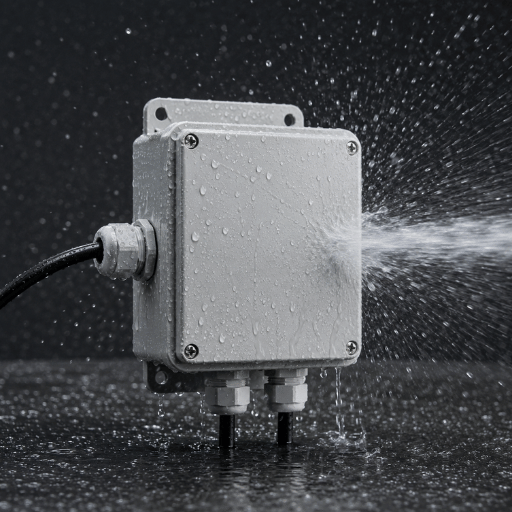
An IP or Ingress Protection rating is a two character code set by the International Electrotechnical Commission IEC that distinguishes how hardy an electric enclosure is to ingress of solid objects, dust and liquids. This code was originally published in IEC 60529:1989 and was superseded by an amended version in 1999, followed by additions in 2013 and 2021. In Europe this standard is published as EN 60529; in the UK as BS EN 60529. The same nμmbering system is accepted globally which is why “IP” is also known as the “International Protection” rating.
The code is standardized. “IP” is always there, then follow two digits. The first digit (0-6) measures solid body intrusion and accidental access fingers, tools, etc. The second digit (0-9) measures liquid intrusion from dripping, spraying, jetting and immersion. An “X” in place of either digit indicates that the test for that element was omitted (IPX7= tested for immersion but not for body intrusion). Optional trailing suffix letters= M if the item was tested while in motion, S if tested while stationary, W for weather conditions, or K in the case of German high temperature high pressure jets was adopted from the NATO run by the automotive standard ISO 20653.
Two considerations that blind most lighting viewers: addition of a higher second digit test does not entail previous lower second digit tests—”IPX7″ (water immersion, 1 meter) does not necessarily qualify for “IPX5” (low-pressure jet). and the IP rating signifies only that the body underwent IEC testing, not whether the luminaire will stand up to UV radiation, salt water, mechanical vibration, or thermal fluctuations, which otherwise follow separate codes. IEC ingress protection simplified testing criteria illustrate perfectly.
Who Issues IP Ratings and Which Standards Govern Them
The IP rating system is published by IEC Technical Committee 70 in Geneva, Switzerland, with the defining document being IEC 60529 — currently in its second edition with consolidated amendments through 2021. No single authority issues IP ratings; instead, IEC 60529 specifies test procedures any ISO/IEC 17025-accredited laboratory can perform. A manufacturer can therefore claim an IP rating only after the enclosure passes the prescribed tests at an accredited lab.
All the lighting buyer needs to know is who sent the test report. Self-declaration is perfectly legal but utterly weak. The luminaire from a responsible manufacturer will always cite a third-party test report from one of the 4 major global accredited laboratories:
- TV Rheinland / TV SD / TV Nord- German testing networks, common for European and Asian-made outdoor luminaires
- SGS — Swiss-based, dominant in Asian export inspection
- UL Solutions / Intertek (ETL) – North American lab certifications
- Bureau Veritas- French-headquartered, common for Middle East and Africa lighting projects
The trust chain matters. CE label shows the manufacturer’s declaration of conformity to EU directives, including ingress protection when suitable- but CE by itself not a test report. RoHS covers hazardous substances, not ingress. ISO 9001:2015 quality assurance certification shows process discipline but says nothing about whether a particular luminaire was certified. Always make sure you ask for the test report number, the lab name, and the date- the three pieces of data that take five minutes for an honest manufacturer to provide and weeks for a marketing-only claim to obscure.
“Buyers ask “what’s the IP level” not knowing that they should ask “what is tested per IEC 60529 by which accredited third-party laboratory and what is the test report number”. This IP level without traceability is simply marketing.”
— Guangqi Engineering Team
The Complete IP Rating Chart — Quick Reference
The following table lists in detail the simplest interpretations for the eleven IP ratings you need most in lighting procurement. The first column lists the code; the next 2 decode each digit; the fourth provides a usual lighting application; the fifth adds the durability limit you absolutely shouldn’t drive beyond.
| IP Code | First Digit (Solids) | Second Digit (Liquids) | Typical Lighting Use | Boundary |
|---|---|---|---|---|
| IP20 | ≥12.5 mm objects (fingers) | No water protection | Indoor decorative pendants, downlights | Dry rooms only |
| IP21 | ≥12.5 mm | Vertical drips (10 min) | Bathroom indirect, basement | No spray angle |
| IP24 | ≥12.5 mm | Splash from any direction | Sheltered eaves, covered porch | Not direct rain |
| IP44 | ≥1 mm wires | Splash from any direction | Bathroom Zone 2, garden path lights | Not jets |
| IP54 | Limited dust ingress | Splash any direction | Industrial covered, workshop bay | Light dust only |
| IP55 | Limited dust ingress | Low-pressure jets | Light industrial wall packs | Not coastal |
| IP65 | Dust-tight | 6.3 mm jet, 12.5 L/min, 30 kPa | LED flood, facade wash, high bay | Vertical rain only |
| IP66 | Dust-tight | 12.5 mm jet, 100 L/min, 100 kPa | Street, roadway, industrial yard | Not immersion |
| IP67 | Dust-tight | 1 m depth, 30 min | In-ground uplight, flood-zone fixture | Not continuous immersion |
| IP68 | Dust-tight | Continuous immersion (depth/duration manufacturer-specified) | Pool, fountain, submerged landscape | Pool light needs IEC 60598-2-18 too |
| IP69K | Dust-tight | 80 °C jets, 8–10 MPa, 10–15 cm distance | Food/pharma washdown luminaires | Not auto-IP68 capable |
Use this as an initial screen, not a final unchangeable block. The “limit” column identifies the failure mechanism that trips up buyers who assume a higher number means greater intrusion defense across all environments. The next 2 two H2s interpret each digit individually so that you may interpret any IP code on any product spec sheet- not just the fields in this table.
First Digit Decoder — Solid and Particle Protection (0 to 6)
The first digit measures the smallest particle able to intrude into the enclosure and the largest particle that can touch live parts. The IEC 60529 test procedure differs with each level. Levels 1 to 4 function using bent wires or rods of diminishing diameter pressed against a test sample with calibrated force. Levels 5 and 6 employ a sealed dust chamber filled with talcum particles of mean size 75 m at negative pressure for 2-8 hours, mimicking airborne contamination over a service life.
| Digit | Protection | Test Method (IEC 60529) | Lighting Example |
|---|---|---|---|
| 0 | None | No test | Bare LED strip in workshop |
| 1 | ≥50 mm objects (back of hand) | 50 mm sphere applied with 50 N force | Open-frame troffer in service area |
| 2 | ≥12.5 mm (fingers) | 12.5 mm sphere with 30 N force | Standard indoor downlight |
| 3 | ≥2.5 mm (tools) | 2.5 mm rigid rod, 3 N force | Older covered fixtures |
| 4 | ≥1 mm (wires) | 1 mm rigid wire, 1 N force | Bathroom Zone 2 wall light |
| 5 | Dust-protected (limited ingress) | Dust chamber 2–8 h under vacuum; deposit must not interfere with operation | Workshop bay, light industrial high bay |
| 6 | Dust-tight (no ingress) | Same chamber, but zero dust ingress allowed | Outdoor flood, street, facade, pool |
📐 Engineering NoteThe leap from IP5X- dust protected- to IP6X- dust tight- costs the costliest single step in the entire system because it will necessitate putting the enclosure into a fully sealed assembly with compressed gaskets on every joint. For a typical outdoor LED flood light, moving from IP5X to IP6X will increase your bill of materials by around 10 to 15 percent, mostly more costly silicone gasket and tighter-tolerance casting. For coastal or desert locations, IP6X is always necessary; for slightly sheltered industrial bays, IP5X is frequently the smarter choice.
A subtle but important point: the dust test employs talc with a 75 m mean particle size, coarser than most industrial dusts but finer than the finest flyash, oil mist or pharmaceutical powders encountered in some high-end lighting applications. An IP6X luminaire will pass this test and still produce even more diminutive particles that are not tested; in the event you are dealing in smaller particulates – particularly aerosols – the rating begins to lose some of its relevance. This is one of the deficiencies the Hidden Lighting Durability Filter later begins to address.
Second Digit Decoder — Liquid Ingress Protection (0 to 9K)
The second digit is where just about every lighting buyer gets burned. This only reflects the test conditions; each number various pressure, distance, angle, duration, and orientation. Higher numbers don’t necessarily protect at lower numbers- IPX7 (immersion) and IPX5/IPX6 (jets) put water in contact with very different stress mechanisms.
An IPX7 device will usually not survive a power-washer jet that an IPX5 device lives through everyday; the housing’s seal geometry that accommodates static, 1m-deep pressure will differ from the geometry that accommodates a 100 kPa directional jet. Those that truly contemplate both will list both ratings as “IP66/IP68” with evidence from two test reports.
| Digit | Protection | Test Parameters (IEC 60529) |
|---|---|---|
| 0 | None | No water test |
| 1 | Vertical drips | 1 mm rainfall per minute equivalent, 10 min |
| 2 | Drips, 15° tilt | Same drip, four 15° tilt positions, 2.5 min each |
| 3 | Sprays up to 60° from vertical | Oscillating tube or spray nozzle, 5 min |
| 4 | Splash any direction | Oscillating spray 10 min or hose 5 min, all sides |
| 5 | Low-pressure jets | 6.3 mm nozzle, 12.5 L/min, 30 kPa, 3 m distance, 3 min |
| 6 | Powerful jets | 12.5 mm nozzle, 100 L/min, 100 kPa, 3 m distance, 3 min |
| 7 | Immersion to 1 m | 1 m depth (top of enclosure), 30 min |
| 8 | Continuous immersion beyond 1 m | Manufacturer-specified depth and duration; must exceed IPX7 |
| 9K | High-pressure, high-temperature jets | 80 °C, 8–10 MPa (80–100 bar), 14–16 L/min, 10–15 cm distance, 30 s per face (per ISO 20653 / DIN 40050-9 incorporated into IEC 60529:2013) |
What does the X mean in IPX7?
The “X” in either number indicates the category was not tested to IEC 60529. “IPX7” tells you the enclosure survives the immersion test at 1 meter, but the manufacturer did not file the enclosure for the solid particle test for certification. Practically, many IPX7 enclosures are, as a matter of course, dust-tight – but without an IEC certified test, you cannot depend on it. For any required lighting specs/contract, don’t settle for an IPX-only or IP-X designation where the missing number affects how you’ll use the device; demand the full IPXX number with both values certified.
One more thing buyers miss. IPX7 and IPX8 immersion tests done with the device off and stationary. Pool lights, underwater landscape fixtures, jet jetted fountain lights, jack-in-the-pool fountains run while submerged, they require an “M” suffix (IP67M or IP68M) to indicate the enclosure was tested while running, not stopped.
Without the M, the seal was proven to not leak during static immersion alone, not during operation. The swimming-pool only standard IEC 60598-2-18 luminaires for swimming pools (that are defined as pool rated) add insulation class III isolation transformer requirements and chlorine corrosion tests on top of IP68 – without, an IP68 luminaire isn’t legal pool rated in most areas.
IP Rating by Lighting Application — Indoor, Outdoor, Coastal, Submerged
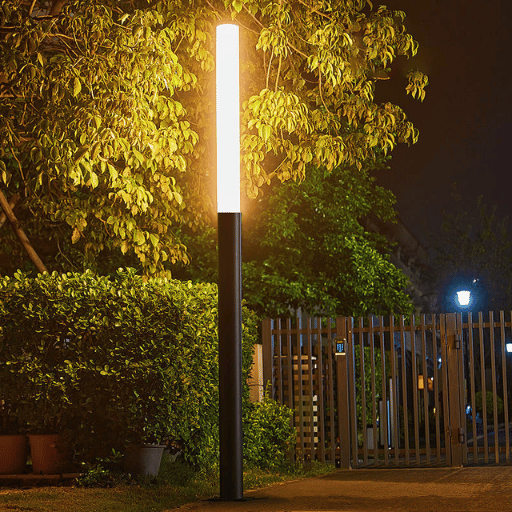
The 가장 effective method to select an IP is to begin with the application instead of the spec sheet. The following lookup table matches lighting usage scenarios with the required minimum IP rating , the recommended premium IP value to select when budget permits, and the durability factor that outweighs the IP code itself.
| Application | Minimum IP | Premium IP | What Matters More Than IP |
|---|---|---|---|
| Indoor decorative (homes, offices) | IP20 | IP44 in bathrooms | Glare control, color rendering (CRI >90) |
| Industrial dust environments (warehouse, workshop) | IP54 | IP65 high bay | Thermal management (LED junction temp), L70 lifetime |
| Outdoor wall, canopy, soffit | IP65 | IP66 in driving rain regions | UV-stabilized housing, gasket compression set |
| Outdoor pole-mounted (parking, roadway) | IP66 | IP66 + corrosion class C4 | Surge protection (10 kV), driver MTBF |
| Coastal, marine, industrial wash-down | IP66 + ISO 12944 C5 | IP66/IP68 dual + stainless | Salt spray test (ASTM B117 ≥1000 h) |
| Pool, fountain, submerged landscape | IP68 + IEC 60598-2-18 | IP68 with M suffix | Class III SELV, chlorine corrosion test |
The above Application Lookup Matrix provides indication of how customers actually specify serious lighting – IP rating becomes entry point, not point of difference. An IP65 luminaire from the manufacturer who uses a polyamide UV-stable housing will outperform an IP66 luminaire with plain polycarbonate in the same site environment by the service end date. The IP code tells us only what the enclosure end test result was, the durability column tells us what determines whether the luminaire makes it to the end date.
The most common mistake for our 2024- 2025 European industrial retrofit projects is flying too high on IP-spec and not paying attention to thermal cycling. Polish logistics warehouse derated 250w metal halide high bays to 200 watt IP65 LED using payback in 18 months – but only by selecting an aluminum Thermally-Cycling Tolerant heat sink plus a remotely specified L70 of 50,000 hours as well. Where sites specified IP66 high bay (without the thermal spec), the kit was transistor-overheating warranty replacements within 24 months despite the higher IP rating. See comparable buying-decision logic in our LED high bay light specification buying guide and LED vs. metal halide retrofit analysis.
For our Southeast Asian street-light replacement projects, more than 500 IP66 LED units now operate after replacing high-pressure sodium fixtures. The ingress side held; the actual variable in failure rates was the surge protection rating in monsoon-prone regions, which IP66 does not measure. Our LED street light range pairs IP66 housings with 10 kV/10 kA surge protection on every driver. Coastal Middle East commercial-complex facade installations hit a different limitation — IP66 housings without C5-grade powder-coat lost their finish in 24 months despite the rating remaining intact. The choice for those projects shifted to RGBW facade lighting with marine-grade aluminum and ISO 12944 C5 coating. Pool installations always pair IP68 with the IEC 60598-2-18 swimming-pool standard; an IP68-only label is not legally a pool light in most EU and North American jurisdictions.
IP65 vs IP66 vs IP67 vs IP68 — Decision Threshold for Lighting
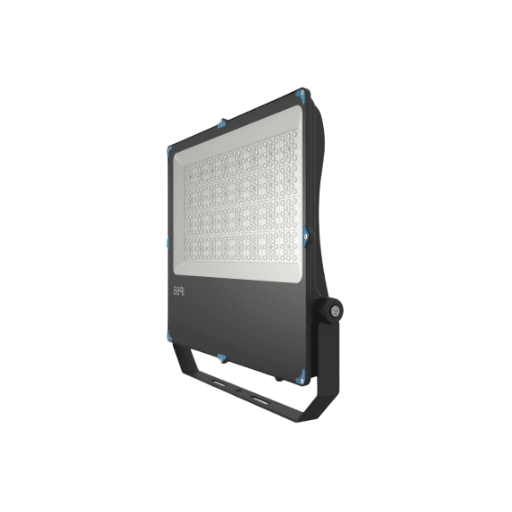
The most practical comparison for outdoor lighting buyers is the four-step ladder from IP65 to IP68. Each step adds capability — and cost — but only solves a specific failure mode. The Decision Threshold Rule below captures when each step is worth the price.
✔ When upgrading is worth it
- IP65 → IP66 in driving-rain or coastal regions where wind-driven water hits horizontally
- IP66 IP67 in case of unlikely, but quick, near-instantaneous temporary submersion (flood area in-floor uplights)
- IP67 IP68 at due to possibility of long-term, permanent submersion – which occurs in indoor pools and water features
⚠ When upgrading wastes money
- Add C4 or C5 for any salt spray environment to the waterproofness range
- IP66 on an attic-installed downlight — vertical environment only
- IP68 on the canopy of an outdoor covered kitchen / barbeque fascia – no water submersion or even water splash on the aperture
- IP69K in the Bakkie-kissed automobile wash system – not actually a need-to-have!
Is IP65 better than IP66?
Not categorically. The greater protection offered by IP66 (12.5 mm diameter jet at 100 Litres per minute and 100 kPa) is significant in the exposure environment of high-power jets of water. The case for pole-mount parking lot lights, roadway path luminaires and any other horizontal installation in wind-driven horizontal rain or pressure-washing should be made with a stronger argument than form-fitting high-silicone IP65 versus IP66.
A wall-up soffit light in an eave (rain running vertically) easily makes use of just as well an IP65 at the sound station—but the more costly IP66 unit is protected from the hydrodynamic pressure that will never bother the sealed infrastructure. Match the rating to the exposure, not the reputation.
The greatser difference in cost from IP66 to IP67 is becauses the immersion test is for a totaly sealed pressure-equalized housing – this difference is likely to be in the 25 to 40 percent range. The increase from IP67 to IP68, which involves testing a specific specified depth and duration beyond that which is covered by IP67-IP68 standard use (1 meter for 30 mins) is even more (40-70 percent). Again, these are industry estimates from several Asian and European LED manufacturers and are based on procurement bids for 2024/2025, numbers will depend on housing size and driver design complexity and quantity ordered and so should only be used as a planning tool and not contractual.
How IP Ratings Are Tested — IEC 60529 Protocol
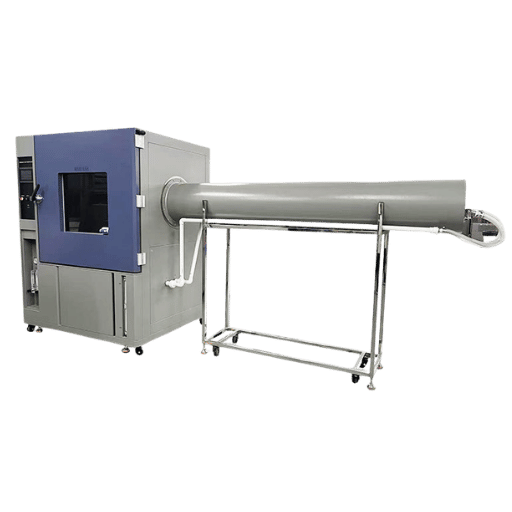
The IP rating is only as good as the lab procedure that defined it. IEC 60529 is very specific on the test parameters – but does not specify the lab required to under take the test. ‘Self-declaration’ is allowed; third-party check is the buying standard. Understanding the test run allows you to distinguish the luminaires that achieved the rating from the luminaires that published it.
For solid-particle protections, levels 1-4 all employ Mechanical probes (dia.50mm sphere, dia.12.5mm sphere, dia.2.5mm rods, dia.1mm wires) pressed with calibrated force upon all joints and openings. These levels employ a sealed talc dust chamber under negative pressure with a duration of 2 to 8 hours depending upon internal door circulation. At conclusion of testing, the enclosure is opened and inspected; for IP6X, no dust is permitted; for IP5X, dust may be present but cannot affects the safe operation and insulation of the unit.
Liquid protections are considerably more varied among test rigs. Drip (levels 1 and 2) use a constant dripping box. Spray (levels 3 and 4) use an oscillating tube with a nozzle pattern calibrated to be the same across a 2 x 2 m square in front of the device.
Jet (levels 5 and 6) use a hose with a nozzle of known diam eter, flow rate, pressure, and standoff distance held by the test technician to the enclosure at an average of 3 feet away for three minutes. Immersion (levels 7 and 8) submerge the device in a tank with the top of the enclosure 150 mm below 1 m water depth (again stating the bottom, not the top). Level 9K was added to the current IEC 60529 standard in 2013; it uses a high-pressure pressure spray gun at 80 C, 8 10 MPa with a 30 s dwell at four locations around the enclosure.
The trust signal is traceability. An honest IP report shows the laboratory name, lab accreditation number (typically ISO/IEC 17025,) product serial or model number, date of test, signature of the test technician and the detailed test sequence (not all numbers are tested on all products.) Thus a luminaire for the European markets will be tested to EN 60598-1 (general luminaire safety) plus the relevant part 2 (e.g. EN 60598-2-3 for street lights or EN 60598-2-18 for pool lights.) The North American standards include UL 1598 (luminary general) and the relevant standards for outdoor or industrial fixtures.
Request both the IP test report and the safety certification – they are two separate papers.
What an IP Rating DOESN’T Tell You — The Hidden Lighting Durability Filter
The most costly failures in lighting are not ingress failures – but durability failures. In the six factors IEC 60529 doesn’t measures. The Hidden Lighting Durability Filter below is the due diligence checklist that serious specifiers add to those pesky IP code – each of those six factors has a separate standard, a separate test method and a separate failure mode that the IP code cannot avoid:
| Hidden Spec | Standard | Failure Mode IP Misses |
|---|---|---|
| UV stability | ASTM G154 or ISO 4892-3 | Polycarbonate diffuser yellowing, gasket cracking after 18–24 months sun |
| Corrosion class | ISO 12944 (C1–C5/CX), ASTM B117 salt spray | Coastal pitting, powder-coat blistering even with intact IP66 seals |
| Impact (IK rating) | IEC 62262 (IK00–IK10) | Stone-chip cracking on roadway luminaires, vandalism in public lighting |
| Thermal cycling | IEC 60068-2-14, IES TM-21 (LED L70) | Driver electrolytic capacitor drying, solder fatigue, lumen depreciation |
| Connector seal aging | IEC 61810 cycling, IP-cycling tests | Cable gland gasket compression set, water wicking after 1000+ open-close cycles |
| MTBF and L70 lifetime | IES LM-79, LM-80, TM-21 | Premature lumen drop and color shift independent of any IP performance |
This is the most common gap behind most ‘IP66 light failed in 18 months’ complaints. A village contractor specified IP66 LED floods for a hotel project, and relied on the ‘IP66 marine grade’ assurances of the supplier. Within 14 months, the housings had started to pit and the gaskets had become rigid from UV aging, although the seals were intact – water ingress was not the failure mode – the aluminum housing had pitted because the powder-coat was C2 grade not C5 grade.
The manufacturer refused the warranty claim because technically IP66 was still attained. The point is that IP66 validates water and dust ingress at the time of test: it does not guarantee that the housing is going to look or operate the same in 3 years of salt spray.
💡 Pro Tip
When you request a quote on outdoor or industrial luminaires, request the 6 hidden specs along with the IP rating. A credible manufacturer will on request supply UV stability test report, corrosion class certificate, IK rating, thermal cycling information, connector spec sheet, TM-21 L70 projection. Marketing glitz supplier will only (provide) the IP number.
The Hidden Lighting Durability Filter will split the 2 before you sign the p/o.
IP Rating vs NEMA Rating — When to Use Which
If your contractor orders NEMA Type 4 enclosures to run outdoor lighting, that is the North American standard: in global projects it is far more common to use the IP code. The two standards do not cross-judge, but can be converted: IEC 60529 wholly measures ingress at the time of test, corrosion, ice, oil-resistance & gasket aging is fully enumerated as part of NEMA rating. See conversion table below:
| NEMA Type | Approximate IP | NEMA Includes |
|---|---|---|
| NEMA 1 (indoor general) | IP10 / IP20 | Touch protection only |
| NEMA 2 (drip-proof) | IP11 / IP21 | Light drip resistance |
| NEMA 3R (outdoor rain) | IPX4 | Rain + sleet + ice formation |
| NEMA 4 (water-tight, indoor/outdoor) | IP66 | Hose-down + ice + rust resistance |
| NEMA 4X (NEMA 4 + corrosion) | IP66 + ISO 12944 C4 | Stainless or corrosion-resistant construction |
| NEMA 6 (submersible, occasional) | IP67 | Temporary submersion + ice |
| NEMA 6P (submersible, prolonged) | IP68 + corrosion | Long-term immersion + corrosion |
| NEMA 12 (indoor, dust-tight) | IP52 | Dust + drip + non-corrosive coolants |
| NEMA 13 (oil/coolant tight) | IP54 | Dust + oil splash protection |
Are IP ratings the same as NEMA ratings?
No, albeit both systems cover some of the same ground. The most pure mental model: NEMA covers the IP rating plus the environmental factors that NEMA labs have deemed relevant corrosion, ice, oil. Your NEMA 4X enclosure corresponds to an IP66, plus the environmental performance assurance that NEMA 4X NEMA-only luminaire cannot make. And vice-versa: a global OEM IP66 luminaire may have not NEMA testing recorded, though it would easily pass NEMA 4 if tested. When specifying for North American electrical jurisdictions with NEMA demand, demand certified NEMA testing, not a cross-reference from the IP number.
Industry Outlook — Where IP Standards Are Heading
Though the IP coding remains evergreen, the boundaries the it lays in are changing. These are the three trends that will change how OEMs commission lighting procurement teams on projects from 2022 to 2028:
– IP69K enters new industries: From food and pharma to EV packs and industrial automation. While originally mandated with overcoming the washing requirements of European trucks, IP69K earned its stamp in automotive battery boxes, mining industry presses, and cement-industry pressure-washed production floors by 2024. Expect IP69K to become the default procurement spec for industrial luminaires exposed to 80 degree Centigrade pressure washer jets, by 2027.
– Connected lighting specs will pair IP with electromagnetic compatibility (EMC) and cybersecurity standards. An urban area luminaire is no longer just an LED and a driver; it packs 4G (or 5G) modules, Bluetooth mesh channels, nozzled gases or sensors payloads. Today, procurement specifiers are bundling IP66 (housing), along with IEC 61000-6- (EMC), with IEC 62443-4-1 (cybersecurity). They will have to. When issuing IFBs between 2024 and 2028, they should be demanding all three specifications be met.
– Swimming pool and underwater-landscape luminaire specs grow more strict. A foothold is building in a number of European countries for IEC 60598-2-18 (means of lighting of swimming pools and the like) indicating specifiers will no longer specify IP68-only luminaires without the IEC 60598-2-18 Class III SSL transformer and standard-chlorine-content performance challenge tests in 97% measures. When specifying for 2026 pool construction, specifiers should be demanding IEC 60598-2-18 implementation included with the IP68 rating.
For procurement professionals designing 2026-2027 projects, these are the suggested separate deliverables when putting out an IFB: has to show an IP66 minimum; corrosion categories must have a minimum ISO 12944 C4; must show an IP69K; IEC 60598-2-18 must be shown when specifying a pool or submerged-landscape luminaire. Expect to see the specifier treat the IP number as the required entry point, not the final qualification. For broader industry-wide trends on the LED transition to industrial applications, we have a companion blog post covering LED pool light specifiers and facade LED specifiers.
Frequently Asked Questions
Q: Is IP66 or IP68 better?
View Answer
Both are still good – they test different stress types. IP66 must withstand 100L/min jet washing from 3m; IP68 must withstand submerged at your listed depth for your listed length of time, assuming the manufacturer specified the right pressure. IP66 is the street-light on a longpole, street lighting IS seen in driving rains so it needs jet wash protection. IP68 is a pool light, the water is where it needs to be. Specify the correct IP rating to avoid financing over- or under-specification.
Q: Is IP65 better than IP66?
View Answer
IP66 is still protective when there is high-head, pressure water-lances or horizontal driving rain – the standard nozzles used for the test are 12.5 mm at 100 L/min for IP66 versus 6.3 mm at 12.5 L/min for IP65. If a soffit light is protected with a flat cover under a covered soffit with vertical only rain, IP66 and IP65 work just the same in service while IP66 costs about 10 to 20% more. Pay the extra for IP66 only when wind-driven rain or pressure-washing are real weather conditions.
Q: What does the X mean in an IP rating like IPX7?
View Answer
An “X” in an IP code was unused ventilation or other testing that contained no certifier mark. IPX7 means the IEC 60529 immersion test was performed 1 m for 30 minutes without the 6.3 mm/12.5 L/min jet wash test, so the device in question could still be water-tight to the IEC spec but not be deemed certified. Never buy a sub-category-only IPX rating in procurement despite the missing number: always demand both digits demonstrated by a third-party test report.
Q: How often should IP ratings be re-tested?
View Answer
The lifetime of an IP rating is the lifetime of the protected component or connector or seal or gasket, not the IEC code. Gaskets dry out, connectors become brittle, polymers age. Routine checking is done annually at most harsh climates (coastal, wash-down) or for out-door applications quarterly. Any time a sealed housing is opened – driver replaced, lens cleaned, seal inspected – it must be reconditioned with care as described by the manufacturer, with the rating then invalid until a new test report is issued. Changes in seal gasket compound, housing plastic or other factor warrant re-testing.
Q: Can I upgrade my luminaire’s IP rating after purchase?
View Answer
Not necessarily – the housing design, how the gasket seating is machined, how the sealing connectors are pre-loaded are still native to the manufacturer. Applying silicone sealant is not enough to turn an IP44 junction box into an IP66 barrier. The solution is to provide a dedicated rated outer enclosure (IP66 junction box over an IP44 driver, for example), but this method eats the lumen count by forcing the design to be only as safe as the cumbersome ratio permits. Always specify the right test at purchase.
Q: What is the difference between water-resistant and waterproof IP ratings?
View Answer
“Water-proof” and “water-resistant” are marketing terms with no formal IEC definitions. IP54- to IP65-rated luminaires are often called “water-resistant” — they endure splash, rain, or low-pressure jets. IP67- and IP68-rated luminaires are often called “waterproof” — they survive immersion. The honest answer is to ignore the marketing words and read the IP code. IP65 means the manufacturer tested with a 6.3 mm nozzle at 12.5 L/min. IP68 means manufacturer-specified continuous immersion. Those test conditions, not the adjective on the box, determine your actual practical performance.
Q: What does IP69K mean and when is it used?
View Answer
IP69K is the highest level IP liquid protection standard, testing the luminaire against high-pressure, high-temperature water jets. The protocol-this earlier German automotive standard, DIN 40050-9, adopted by IEC 60529 in 2013 : specifies 80 C water at 8 10 MPa (80 100 bar) poured through 10 15 cm spray nozzle. Designed originally in the 1980’s for truck and bus wash, IP69K is becoming common in food processing, pharmaceutical clean rooms, dairy farms, and emerging EV battery housings. It is virtually never relevant outside of those exceptions, but for any luminaire being cleaned with a commercial hot pressure washer, it is necessary. Note that an IP69K label doesn’t imply any IP67 or IP68 rating- the immersion tests are separate, meaning a dual rating (IP69K/IP67) must receive additional testing.
About This IP Rating Guide
This paper is based on Guangqi Lighting’s 2024 2025 portfolio of outdoor and industrial LED retrofit projects for Europe, SE Asia and the Middle East the Polish warehouse high-bay retrofit with 9 fixtures using IP65 flood lights, 503 outdoor street-light replacements in Vietnam, and 2,400+ facade project installations in the coastal Middle East. Exact test parameters, standards and classifications are cited directly from IEC 60529, ISO 20653, and IEC 60598-2-18 documentation. Manufacturer-specific markup is over specified; procurement cost estimates are 2024- 2025 quotes.
References & Sources
- Ingress Protection (IP) Ratings – International Electrotechnical Commission
- IEC IP Ratings Guide (Basecamp) – International Electrotechnical Commission
- ISO 20653:2023 Road vehicles – Degrees of protection (IP-Code) – International Organization for Standardization
- IEC 60598-2-18 Luminaires for Swimming Pools – International Electrotechnical Commission
- ISO 9001:2015 Quality Management Systems – International Organization for Standardization
- NEMA 250 Enclosures for Electrical Equipment – National Electrical Manufacturers Association
- DIN 40050-9 (legacy IP69K source) – Deutsches Institut fr Normung
- DOE CALiPER Program — Solid-State Lighting Performance — U.S. Department of Energy
Related Articles
- LED High Bay Light Buying Guide – IP65 industrial bay procurement decisions
- What Is Facade Lighting? – Architectural lighting fundamentals and IP65 facade selection
- Are LED Pool Lights Worth It? – IP68 pool lighting cost-benefit analysis
- LED vs Metal Halide Retrofit Analysis – Industrial high-bay efficiency comparison
- Guangqi Lighting Manufacturer – OEM/ODM LED lighting since 2010
Need an IP-Rated Luminaire Specification?
Send your application brief – environment, mounting, lumen target, IP required – and Guangqi engineering will send you a luminaire match with test report refs.