Get in Touch with GUANGQI



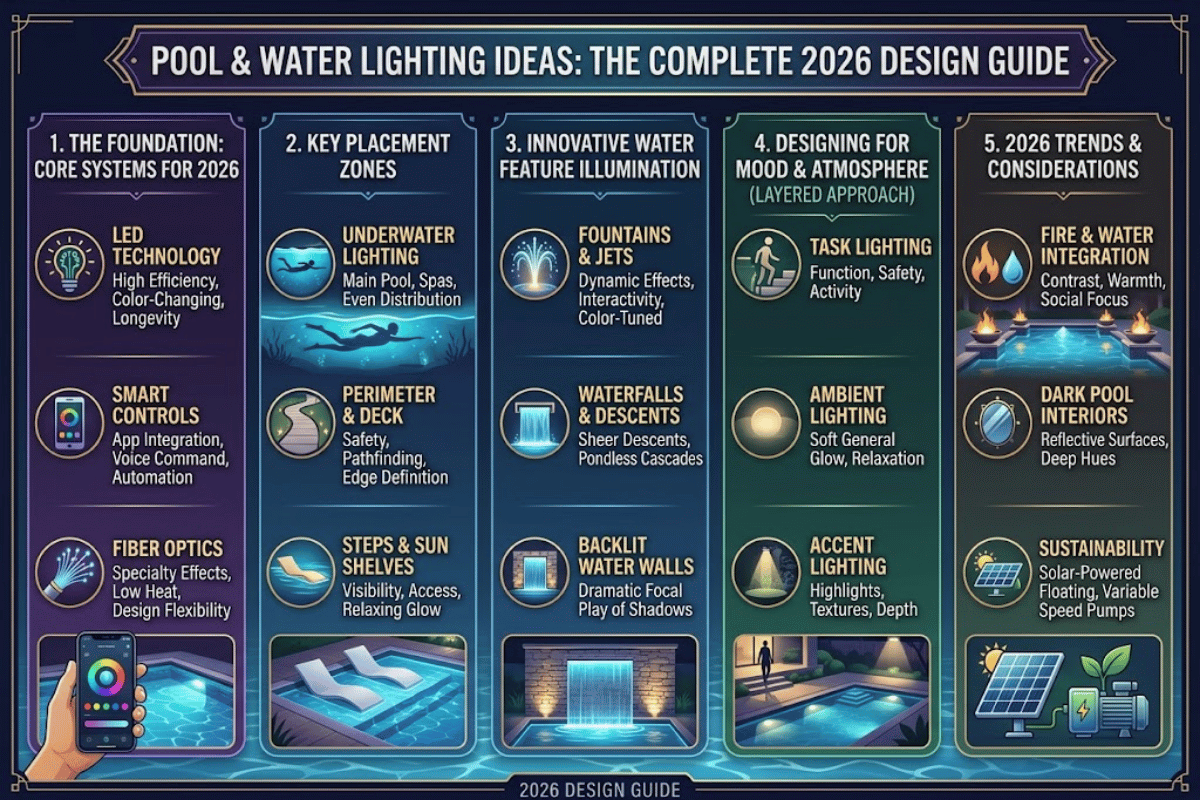
Light up pool & water turns any daylight use of your swimming pool or pond, fountain, waterfall or other water feature into a ²4/7 design feature. In this guide we include all si× categories of water lighting fi×tures – LED pool fi×tures, underwater submersibles, fountain shows, landscape water features – with all the types, lighting applications, ideas, safety rules and selection logic to design, retrofit or upgrade a water feature in ²0²6. For commercial applications, our commercial pool & water lighting solutions center includes hospitality, municipal and architectural requirements with photometric documentation.
Quick Specs — Pool & Water Lighting at a Glance
| Typical IP rating (submerged) | IP68 per IEC 605²9 (continuous submersion) |
| Voltage | 1²V DC / 1²V AC (safety) or 120V AC (higher output, GFCI required) |
| Color temperature range | 2700 K – 10,000 K white, or RGB / RGBW / RGBCW color-changing |
| Rated LED life (L70) | 30,000 h residential — 50,000 h project-grade |
| Fi×ture density (leisure pool) | ~1 fixture per 50 ft² (4.6 m²) at 30 fc / 323 lux |
| Typical energy savings LED vs halogen | Up to 85% reduction in kWh |
What Is Pool & Water Lighting? Categories & Why It Matters
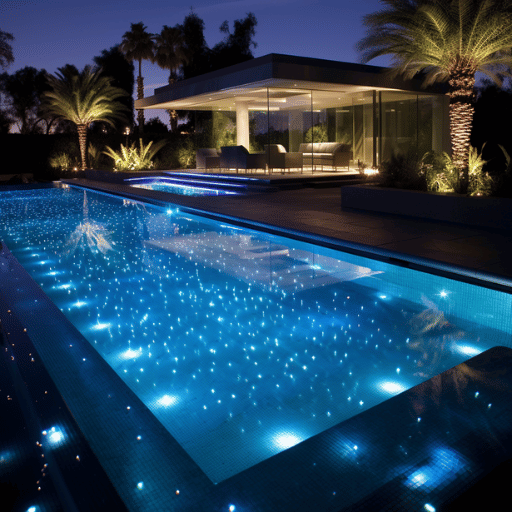
Pool & water lighting involves providing for visibility, ambience and safety in any enclosed or open body of water or adjacent water feature — and for the outdoor space around it. It is a larger category than “swimming pool lights” — a full outdoor lighting plan for a backyard or resort area usually involves six distinctly different families of light fixtures, each with their own engineering priorities:
- Swimming pool lighting – niche-mount or surface-mount fixtures through out the pool enclosure (traditionally PAR56 form factor; more often, nicheless LEDs).
- Pond and water garden lighting – low-voltage submersibles for koi ponds, natural ponds and ornamental water gardens.
- Fountain lighting – submersibles with DALI or DMX controls for architectural and musical fountains.
- Waterfall & cascade lighting – back-lighting flow with discreet wall-mount or concealed lights.
- Pool deck & landscape lighting – pathway, paver, step and area lights in the pool area and surrounding patio.
- Docks & marine-related underwater fixtures – dock lighting, underwater boat and yacht lights (all immune to moisture with the same IP68 and 316L-stainless engineering vocabulary as pool fixtures).
Why bother? Three reasons, with different levels of consequence. First safety – a poorly lit pool deck is where trip-and-fall injuries happen, and an not-lit pool deck can cause drowning. Second value & expanded use – lit backyard and hospitality environments readily double the hours of the day usable seating, swimming, and social spaces, and high-quality landscape lighting ranks at or near the top of home-improvement ROI enhancements per property appraisal. Third moods & aesthetics – lighting is hands-down the one design element that most dramatically alters how a home, hotel or restaurant looks at night.
Detail on each of the six categories follows — styles, lighting options, ideas, installation strategies, and the electrical code to learn before any wiring begins.
Pool Lighting Types — LED, Halogen, Fiber-Optic, Solar & Floating
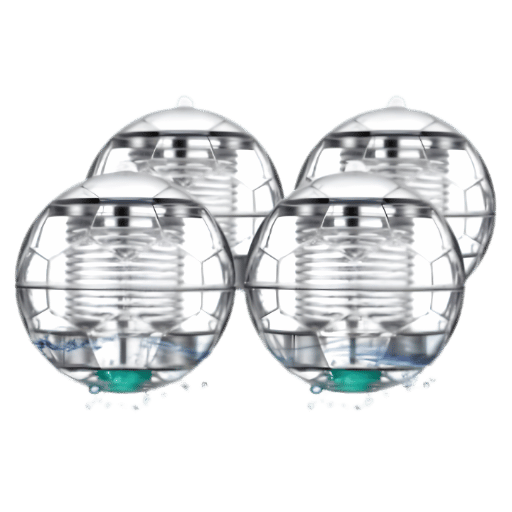
These six families of fixtures cover virtually every water lighting use case around your pool and water garden. Selection among the lighting options is driven by installation budget, existing infrastructure (new build or renovation) and control requirements. For a swimming-pool-only deep dive, see our complete guide to swimming pool lights.
| Type | Typical Power | Rated Life | Best Use Case |
|---|---|---|---|
| LED (standard) | 12–35 W | 30,000–50,000 h | Default choice for new installs and most retrofits |
| LED (color-changing RGBW/RGBCW) | 25–54 W | 50,000 h project-grade | Scenes, shows, hotel/resort aesthetics |
| Halogen | 300–500 W | 1,000–2,500 h | Legacy installs still in service; cheaper upfront, expensive over time |
| Incandescent | 300–500 W | 750–1,500 h | Mostly phased out; still found in old pools |
| Fiber-optic | 35–75 W (illuminator) | 10,000+ h illuminator | Luxury spas — no electricity contacts the water |
| Solar / floating LED | 1–5 W panel | 1–3 yr battery | Wireless accent, above-ground pools, rental properties |
Those LED-vs-halogen economics: the headline shift in pool lighting. An up-to-date LED pool light consumes approximately 15-35 W for an equivalent usable illumination as a 300-500 W halogen—up to 85% energy savings at typical hours of operation (based on Energy Star LED certification data and trade accounts). At a Typical US residential electricity rate of about $0.16/kWh—and four hours of nightly operation—that savings is approximately $55-$70 per year, per fixture (with a lifetime 10-20X longer before EOL).
One benefit that should be corrected in these numbers: fiber-optic is neither obsolete nor hard to specify as part of a high-end spa or commercial aquatic installation for one good engineering reason—no electrical current needs to flow into the water, since the illuminator is remote and only bundled fiber strands go into the pool itself. That is a de facto safety architecture, not a legacy ITU technology. Solar is the other often-overlooked option—today’s floating solar pool lights deliver enough charge for a full evening of decorative color in direct-sun climates, and above-ground pool owners can deploy them without any wiring work at all.
What is the best type of light for a pool?
The quick answer: a 12V or 120V project-grade LED fixture with a 316L stainless bezel, IP68 rating, and a 5-year commercial warranty—unless you have a specific reason to select otherwise. LED wins for energy, heat, and lifetime economics for more than 90% of our residential and hospitality pool projects. Fiber-optic wins when absolute water-electrical isolation is a design requirement. Solar wins for wireless retrofit applications on above-ground pools and as decorative accents. Halogen and incandescent cling to their very existence precisely because they are already installed—at any new build, replacement, or retrofit, they are not the right place to start.
Underwater Lighting — Beyond Pools to Ponds, Fountains & Marine
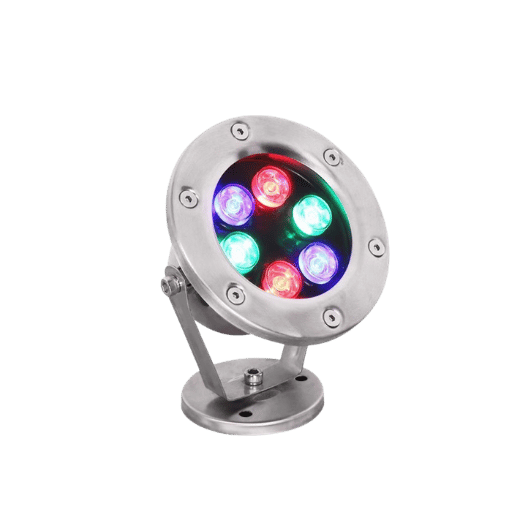
Underwater lighting is always a shared engineering language across pool, pond, fountain, waterfall, and marine dock fixtures. Performance benchmarks — ingress protection, metallurgy, beam shaping — are exactly the same whether the fixture is in a chlorinated pool, a koi pond, or under a salt-water dock. What changes is the water chemistry the fixture housing needs to survive.
| IP Rating (IEC 60529) | What It Means | Pool & Water Use |
|---|---|---|
| IP65 | Dust-tight; protected against low-pressure water jets | Deck / pathway / pergola — above water only |
| IP66 | Dust-tight; powerful water jets | Natatorium overhead; splash zone step lights |
| IP67 | Dust-tight; temporary immersion to 1 m for 30 min | Insufficient for permanently submerged fixtures |
| IP68 | Dust-tight; continuous submersion per manufacturer spec | Required for any underwater pool, pond, fountain, or marine fixture |
Housing and bezel metallurgy can matter far more than most program managers or specifiers appreciate. AISI 316L stainless steel (featuring 2.0-2.5% molybdenum content by ASTM A276) can withstand the pitting corrosion caused by both salt water and chlorinated pool water. AISI 304 and plated brass look similar on day one but fail on day 30 of a single chlorine season—they pit, weep, and finally allow water ingress behind the gasket. To account for this, project-grade fixtures validate 316L housings by 72 hours of immersion in 3 ppm water cycled continuously from 0 to 40 C, while residential-grade fixtures do not.
Voltage is the other factor to consider. A 12 V DC or 12 V AC power source is inherently safer around water, making it the optimum choice for ponds and water gardens. 120 V AC power sources, while providing greater output for commercial swimming pools, impose more stringent code requirements (see the installation sector, below). Our LED underwater light range accommodates both voltage classes, with IP68 and 316L stainless across all options.
Pond & Water Feature Lighting — Design for Living Water
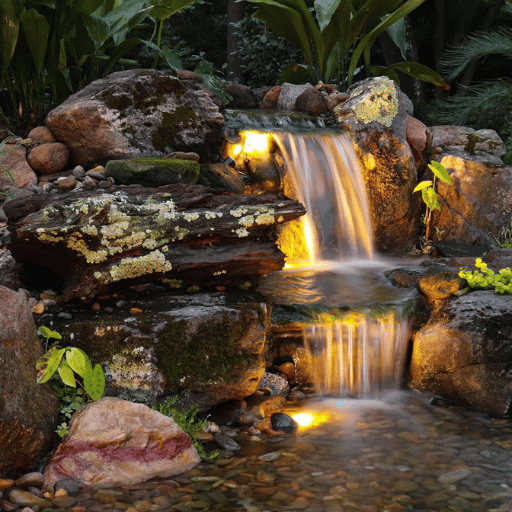
There is a totally different set of principles governing pond lighting to swimming pool lighting because the water is alive – fish, aquatic plants, microbial balance. Current is to be kept low, intensity is to be mode rated and the lights are to be off for some part of the night.
Voltage-wise, on ponds and other natural water features 12V low-voltage standards are universally used. In the U.S., the basket of rules for ponds and water features is separate from swimming pools in Article 682 of the National Electrical Code (covering “Natural and Artificially Made Bodies of Water”; 12V is again the ‘standard safe’ architecture). Bonding of any nearby exposed metal is still requisite.
In terms of intensity and duration, pond lighting can exert a negative effect on the environment if overused. Pond-industry publishings such as Best Pro Lighting, the UK Aquatic Plant Society and forums, reveal how intensively-lit ponds profused with algae, reduce oxygen and disrupt their inhabitants natural circadian rhythms when wintery darkness is ‘removed’. Moderation is the fix.
The Two-Third Rule for Pond Lighting
For direct light, plan on illuminating a third of what you want to have visible after dark. The other third—water-surface reflection, the moonlight simulation, and spill from off-site landscape lighting—run off the other two-thirds. Run it on a timer—three or four hours after dark is enough for most residential ponds.
Why it works: over-lit ponds cause algae blooms, stress fish and simply look wrong. Darker ponds that hint at their shape through reflection appear far more natural and remain ecologically balanced. This principle isour framing- pond manufacturers have held back for many years, but few commentary publications have identified or documented it.
For fixture choice, watch out for three: 316L stainless or polycarbonate housings (never plated brass – it will tarnish within a season in a biologically active pond), wide beam angles (60 or so so the reflection can diffuse the light), and dimmable drivers so you can fine-tune the intensity from an app or wall timer. A waterfall requires a different touch – a narrow 15 or 30 spot behind or underneath the cascade helps the flowing water read as motion and not a static object.
Fountain & Musical Water Show Lighting — DMX, RGBW, Synchronization
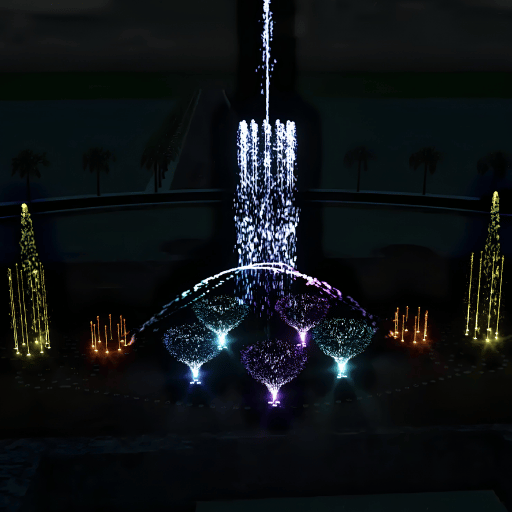
A normal submersible LED can be run under a programming timeline for a static fountain. To run a musical or choreographed fountain you need a control backbone that can individually address each fixture and adapt to a timeline. That backbone is more or less DMX512 – the protocol for theatre and concert use since the 1990s and the protocol for civic fountain installations like Michigan’s Grand Haven Musical Fountain which has been choreographed to music since 1962.
Here is a simple control protocol comparison:
- DMX512 / DMX512-A—the show standard. 512 addressable channels per universe, fixtures individually selectable, essential for musical fountains on cue.
- DALI- most suitable for architectural/ commercial building integration, much easier than DMX for static scenes, can easily be incorporated into building management systems.
- 0-10 V / 1-10V – the most basic analog dimming protocol. Defined where controlling color is not needed, as only the light level is adjusted.
- BACnet bridge – occurring where a hotel or resort BMS has to time and control the lighting of fountains as a piece of the whole-building BMS.
In terms of color space, RGBW has long been the commercial industry default but over the last decade and into the new high-end residential and hospitality specifications the more complex RGBCW (additional warm-white channel added to an RGB+cool-white channel) is emerging due its ability to give cleaner pastel shades and much more realistic skin tones with late-afternoon and evening light. Our architectural fountain illumination is DMX512-controllable with RGBCW pixel mixing and also available with DMX-to-DALI and DMX-to-BACnet bridge modules for hotel BMS commissioning.
Pool Lighting Ideas — Design Concepts That Transform Every Space
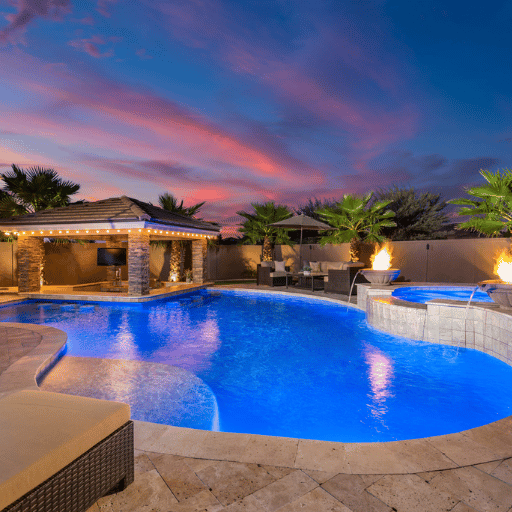
The most common complaint we get from pool owners and landscape design clients is not that their lighting is too dim, but that it looks like one spotlight plus a scattering of path lights. It is the standard pattern that practically every pool builder installs, and it considers each task individually. Layering is the fix.
The Layered Pool Lighting Stack — 6 Tiers
- Underwater (Tier 1): the main light source of the inside of the pool shell—the fixtures you see designated as PAR56, niche-mount, or nicheless. Use this to set the dominant mood color.
- Edge Glow (Tier 2): continuous low profile strip or ribbon along the water line of the pool, coping or raised wall. Defining the shape of the pool at night without creating glare.
- Feature Accent (Level 3): focused has of any waterfall, sheer, bubbler or sculptural detail—a narrow beam to make movement.visible.
- Deck Ambient (Tier 4): recessed paver lights, step lights, and bollards around the pool perimeter. Everyday safety lighting & visual grounding.
- Hardscape Wash (Tier 5): uplights that wash over the retaining walls, pergola posts, and the surrounding planting areas. Draws your eye away from the pool and constructs an illusion of depth.
- Additional Atmosphere (Tier 6): Over the outdoor kitchens, hanging between the trees. tiki torches, Wall lights. Gas lights, lanterns, sconces, lights. Warmth from seating-height.
Any pool space can afford at least three tiers. Resort lagoons use all six. A contemporary plastic minimal rectangular pool generally can perform on three (Tier 1, 2, 4).
Tiny plunge pools can glow beautifully on only two (Tier 1 and 4, warm 3000 K alone).
Three worked scenarios make the stack concrete:
Resort style lagoon pool. 300 m curved lagoon pool at a Middle East resort. All 6 tiers utilized here. Underwater PAR56 at 6,500 K cool white for sparkle; continuous 3,000 K ribbon along the water line (warm contrast); narrow spill lights on 2 beach-entry shelves and the boulders waterfall; recessed paver step lights into the access deck; uplights on the palm trunks behind the seating area; and 2,700 K warm pendants over the swim-up bar.
Mixed color is deliberate — cool blue water against warm creamy deck reads as a luxury hotel brochure.
Conventional minimal rectangular pool. An urban pool 12 m 4 m sitting on a black stone coping is more straightforward—Tiers 1 (nicheless LED, single 4,000 K CCT), 2 (concealed edge glow), and 4 (linear recessed LED in the coping). Period.
Restraint is the design.
Small backyard swim-up plunge pool. A 4 m by 3 m swim-up pool in a courtyard garden: a single warm 3,000 K nicheless LED in the shell (Tier 1) plus four recessed paver lights around the deck perimeter (Tier 4). Two tiers, warm only, minimal cost, good atmosphere.
How to light up your pool at night?
Start with the Underwater tier – decide whether you want a static white (3,000 K warm for cozy, 6,500 K cool for lively) or RGBW/RGBC W color-changing. Add Edge Glow if there is a water line visible or a raised wall worth defining. Only then consider Deck Ambient and the lighting around the pool perimeter. One common and expensive mistake we see is too many path lights and too few underwater lights — the pool itself is the design focal point, and needs to be the brightest layer at night.
How to make your pool look expensive?
Three moves, in order. First, apply four or more layers of the Layered Pool Lighting Stack – high-quality lighting effects are never a one-source shot. Second, deliberately mix color temperatures: 3,000 K warm on the deck against 5,000-6,500 K cool out on the water adds a luxury-hotel split. Third, add fire: a gas fire pit, fire bowl, or built-in fire-and-water feature costs less than another $1,500 worth of path lights but raises perceived quality more than any single lighting upgrade does.
Designing for Pool Size & Depth — How Many Lights Do You Need?
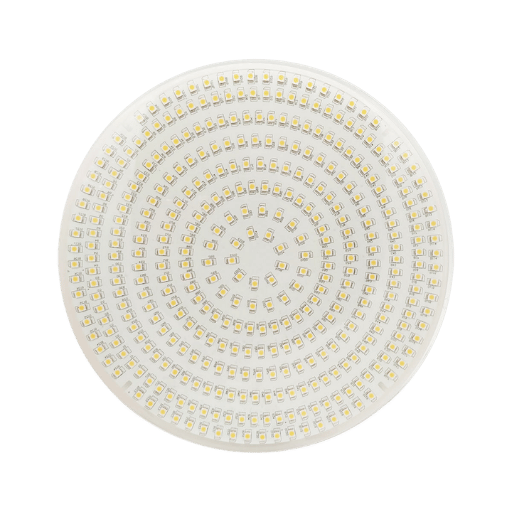
One of the most useful numbers in pool lighting design is the illuminance target. The Illuminating Engineering Society issues a recommended-practice standard – ANSI/IES RP-6-20, “Lighting Sports and Recreational Areas” – that defines four illuminance classes for water features:
| IES Class | Use Case | Target Illuminance |
|---|---|---|
| Class I | Olympic / televised competition | 75 fc / 807 lux |
| Class II | Collegiate / training | 50 fc / 538 lux |
| Class III | Municipal community pool | 30 fc / 323 lux |
| Class IV | Hotel / resort leisure + most residential | 30 fc / 323 lux |
A quick sizing rule of thumb: approximately one 35 W PAR56-style LED lamp every fifty linear feet (4.6 m) of water surface for Class IV leisure lighting, at 140 lumens/watt fixture efficacy, nominally 6,500 K cool-white. A 40 m small hotel pool should have around 3 fixtures; a 105 m medium hotel pool, about 8; a 300 m resort lagoon, 22. Expand that by 50% for Class III municipal pools, and rate that lumen target for Class I televised-competition space.
Apart from the math, three geometry factors change the response: ceiling height above the water (important for indoor natatoriums), deck shape and beach-entry shelves (add corner fixtures), and glare control from specular water surfaces (the lighting designer truly earns their fee managing this). For a photometric study with isolines and uniformity ratios, use a specialized software tool – our Pool Lumen Calculator gives you an initial lamp count, and the IES Pool Lighting Class Selector helps you select the right class.
Color, Warmth & Dimming — Ambiance with CCT and Smart Control
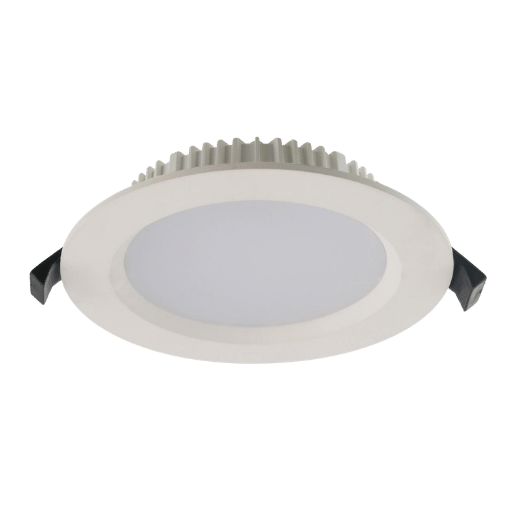
Color temperature (CCT), measured in Kelvin, is the single biggest lever for setting the tone of a pool space. Color temperature that matters runs from about 2,700 K (warm, candle-like — makes the pool space feel personal and inviting) through 4,000 K(neutral, modern – the norm for contemporary new home pools) up to 6,500 K(cool, daylight-like – makes water shimmer and appear its truest blue) and to 10,000 K(icy white, used in commercial and public displays).
A decision table for determining the correct combination of CCT and color mode for different use cases:
| Pool Use Case | Recommended CCT / Mode |
|---|---|
| Intimate backyard / romantic evening | 3,000 K warm white (static) |
| Modern residential / urban | 4,000 K neutral (static) or RGBCW with warm presets |
| Resort / hospitality leisure | Mixed — 5,000 K water + 3,000 K deck / RGBW scenes |
| Evening entertaining / parties | RGBW or RGBCW with dynamic scenes, 6,500 K sparkle |
| Competition / televised | 5,700 K, CRI > 80, R9 > 80 (broadcast-quality) |
On control, the scene has become much simpler since 2023. For residential applications, Wi-Fi or Bluetooth capable controls integrated into the fixture driver (commonly combined with a voice assistant system like Alexa / Google / Apple) are the lowest threshold of complexity – no hub required, simple wiring, direct control. For high end applications, the modern standard is the Matter protocol (Connected Standards Alliance dropped Matter 1.3 for outdoor lighting in 2024 which should make decision making simpler still) running on Thread or Wi-Fi, ensuring local access even if internet access is lost. DMX512 is suitable for light art installations; DALI is intended for whole-building lighting; Zigbee is a mid-tier option but is being phased out for Matter in new products.
Dimming capability is nearly as important as color choice. A luminous surface that can go from full illumination at the beginning of a pool party to soft atmospherics for lounging in mid-night is a much more livable space than one that is fixed at full on. Use drivers with a 0-100% dimming control if possible – many lower cost drivers only dim in 10% increments which makes for a stuttered and impatient space.
Installation, Power & Safety — Electrical Code and Pool Rules

This will be where the risk of coming to grief shifts from “looks bad” to “you’ve killed someone.” U.S. pool and spa lighting standards are defined in two sections of the National Electrical Code. NEC Article 680 states the requirements for “Swimming Pools, Fountains, and Similar Installations.” NEC Article 682 is applicable to “Natural and Artificially Made Bodies of Water.” Most other nations have similar provisions mirrored in their standards.
The Article 680 provisions which will be imposed on practically every residential and commercial pool:
📐 Engineering Note — NEC 680 Key Provisions
- Underwater luminaires: need to be designed to operate at 150 V; must be on a GFCI protected branch circuit if operating at more than 15 V.
- 120 V luminaires located near a water feature need to be GFCI protected, 5 ft. at least above the water level, or 12 ft. or more away from the water line.
- No new fixtures 5 ft. or closer to the water level vertically.
- Total metal bonding: every hollow body within about 5 m(16 ft.) of the pool must be bonded with a solid copper cable size 8;00 (or larger) – this covers pool ladders, diving platforms, metal fences, reinforcing rebar, light niches.
- The compartment for the underwater light transformer must be no closer than 4 inches to finished deck level and positioned so as not to be deliberately walked on.
Here is an example of a common and truly unsafe mistake to make when designing underwter water lighting: DIY install 120 V fixtures on a run without GFCI protection or proper equipotential bonding. An article previously referenced in AQUA Magazine’s ‘Avoiding Electrical Mistakes’ bout says: “A builder I work with encounters ’30 G’ (electrically dead) way too often, and it [turns out] to be the part that resides behind the tile, a tiny, corroded ground bonding clamp, that year after year, reads voltage to a dangerous degree.” Equipotential bonding is not optional, and it is not DIY – use a licensed electrician familiar with Article 680 on any upgrades of a pool lights, go bold at 12 V.
On lightning in the water: all of the other issues are separated by design reason. Everyone needs to get out of the pool when lightning strikes, regardless of the light fixture: “The use of low voltage in a lighting fixture does not eliminate the risk associated with water and electricity in proximity to thunderstorms”. Graphic is about spec planning.
Retrofit & Replacement — Upgrading Old Pool Lights

The shock came when users did a DIY retrofit on a failed pool light fixture. The typical forum variance between replacement light quote started at $450 a fixture, went up to $1,500 for LED-powered RGBW multi-fixture fancy service calls, and reached $4,500 for a four-fixture Jandy nicheless LED on a vinyl liner job. Variance is driven by three factors: type of LED fixture, condition of existing niche, and number of re-lights installed.
Retrofit decision framework:
| Failure Symptom | Recommended Action |
|---|---|
| Single halogen bulb burned out, fixture and niche intact | Cheapest: bulb-only swap. Better: upgrade to LED drop-in of matching voltage (not a cheap bulb — a real retrofit kit) |
| Fogged lens / moisture inside fixture | Gasket failure — replace the complete fixture. Do not reseal and re-submerge a gasket that has failed once. |
| GFCI keeps tripping | Stop using until a licensed electrician tests for ground fault, bonding, and wet conduit. Do not reset and hope. |
| Old Pentair, Hayward, or Jandy niche — fixture dead | Use a nicheless retrofit kit (PoolTone, Vivid 360, and similar products fit the legacy 1.5-inch or 2.5-inch face) for ~$200–$600 DIY or $600–$1,500 installed. |
| Whole lighting system dated and mismatched | Plan a phased full replacement with our LED vs halogen TCO calculator. A full resort/hotel rollout usually recovers cost inside 24–30 months on energy alone. |
Two retrofit warnings every buyer should know. First, do not drop a “replacement LED bulb” into an old halogen housing unless the product is explicitly listed for that fixture; ballast mismatches and heat-sink incompatibility have caused documented fires and voided warranties on several major brands. Second, the cheapest online “LED pool light” is almost always a 304 stainless or plated-brass housing that corrodes in a chlorinated pool within two seasons. A $60 DIY Pentair retrofit can work — plenty of homeowners have pulled it off — but only with a proper 12 V listed fixture, not a $30 no-name Amazon unit.
Industry Outlook — What’s Changing in Pool & Water Lighting in 2026
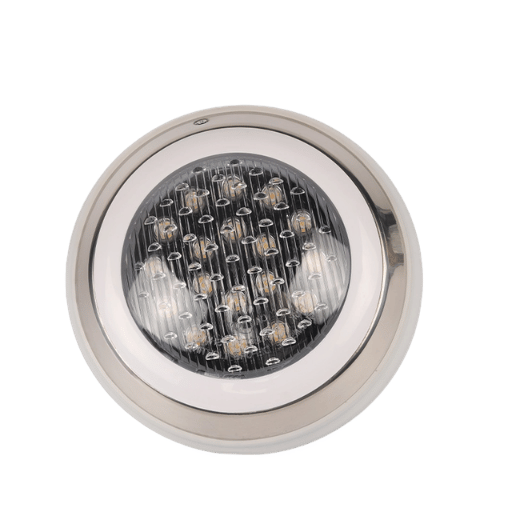
The pool and water lighting category has moved through a protocol and efficiency shift over the last three years. Five specific changes are worth planning around if you are designing or retrofitting in 2026:
- Matter 1.3 smart-lighting profile (2024). The Connectivity Standards Alliance released Matter 1.3 with a clearer profile for outdoor-grade fixtures. Matter-over-Thread will be the dominant new-build residential protocol by 2027 — specify it now where you can.
- Tunable-white (RGBCW) displacing RGBW in premium residential. The added warm-white channel produces better-looking pastels and more accurate skin tones in evening scenes. Expect RGBCW to be standard in $500+ commercial fixtures by 2027.
- DMX-over-IP adoption in commercial installations. Copper DMX is being replaced by Ethernet-based Art-Net and sACN in new civic and hospitality musical-fountain projects, which simplifies long runs and cuts cable cost.
- California Title 24 Part 6 (2022 revision, effective 2023). Stricter outdoor-lighting energy budgets and controls are already enforced in California new construction. Other U.S. states routinely follow California’s lead on energy codes — plan for similar rules elsewhere in the 2026–2028 window.
- L70 > 60,000-hour LEDs are reaching the premium tier. The 50,000-hour L70 rating that was premium in 2020 is mid-market in 2026. High-end commercial pool fixtures now rate L70 at 60,000 to 70,000 hours — close to 16 years of 12-hour-a-day operation before end-of-life.
Action for 2026 buyers: when specifying a new system, make Matter-readiness, RGBCW adaptability and L70 > 50,000 hours your three must-have criteria. The premium over 2020 standards should be negligible; the resale and future-proofing utility will be significant. If doing a pure retro-fit in an existing niche, a plain white LED will still be fine – don’t overspecify if you’ve still got a pool to swap it in a few years.
Frequently Asked Questions
Q: LED vs. halogen pool lighting — what’s the difference?
View Answer
LED consumes up to 85% less electrical power, lasts 10-20 longer (30,000-50,000 hours or so compared to 1,000-2,500 hours for halogen), remains cool and produces color-changing scenes without infrastructure changes. Halogen is cheaper up front. On a five-year total-cost-of-ownership basis, LED clearly wins in any pool you plan to retain.
Q: How do I choose the right lighting for my pool deck?
View Answer
Begin with your purpose: safety, ambiance or both. Safety-first decks will need glare-reduced step lights at every step change and along every 8-10 ft of a major walkway. Ambiance-first decks will want uplights on walls, sconces on pergola beams and toned down 2,700-3,000 K fixtures positioned around key furniture spots. Most decks will want some combination of both – and delivery order matters. Install the safety first, and add the ambiance afterwards. Budget just under one-third of the lighting costs on a typical deck/landscape juxtaposition before the pool itself and water features – these are the more expensive to work with: be sure it makes financial sense before laying out plan details. If you have pavers, get your lighting plan into your hardscape planning session – it is twice as expensive to retrofit lighting in them afterwards than to plan it in from the beginning.
Q: Is pool lighting expensive to run?
View Answer
No – unless it is LED. A 35 W LED pool light on for four hours night would cost in the ballpark of $0.80-$1.00 per month in a US residential setting at $0.16/kWh. Doing a full six-fixture LED pool and deck session and after costs would be $5 to $15 per month. Similarly, 500 W halogen on the same schedule would run around a tenth more.
Q: Can I add lighting to an existing pool?
View Answer
Yes. Underwater retrofit kits are available which drop into existing niches from Pentair, Hayward and Jandy, via a nicheless retrofit kit (PoolTone, Vivid 360, etc.) A nicheless unit seals directly into the pool wall and does away with the housing entirely. For deck and landscape lighting, 12 V LED can be added without any pool demolition – transformer, a buried low-voltage loop of cable and fixtures at each scene point. The one real can of worms is installing a new 120 V underwater fixture into a pool with no existing niche – the shell must be cut into and that’s a proper pool renovation, not a weekend project.
Q: When is the best time of year to install pool lighting?
View Answer
Early spring to mid-fall in temperate climates – before frozen ground and heavy rain. For new construction, plan for lighting installation to occur during the pool shell excavation; for existing pools, after paver installation is usually double the amount of money.
Q: How much does pool & water lighting cost?
View Answer
It depends on category. A single residential LED pool light retrofit typically costs around $450–$1,500 installed. A full new-build pool lighting package (1 underwater + 6 deck path lights + 1 water-feature spotlight) generally runs $2,000–$5,000 for parts and labor, and a color-changing RGBW system with smart control adds roughly 30–40% over an equivalent white-only install. Commercial hotel or resort packages scale non-linearly — a 22-fixture resort lagoon with DMX control can run $20,000–$60,000 installed, depending on control complexity and whether the project is a new build or a retrofit.
Q: Do I need a permit to install pool lights?
View Answer
Almost always yes for any work that involves a 120 V circuit in the vicinity of the water. To obtain the electrical permit, and to get the proper inspection that verifies bonding and GFCIs, it is required in most U.S. jurisdictions. 12 V fixtures in an existing low-voltage infrastructure generally do not require a permit, but you should check with local authorities first.
Ready to Plan Pool & Water Lighting for Your Project?
If your project is residential, the Layered Pool Lighting Stack design framework will get you a space you really want to spend evenings in – and the electrical-code section above is the safety backbone that must be followed carefully.
If your project is a hotel, resort, municipal aquatic facility, commercial lagoon, or architectural fountain, the performance standards are different (IP68 with published test depth and duration, 316L metalurgy, DMX/DALI/BACnet protocol control, luminaire support, and CE/RoHS/IP68 documentation). See our commercial pool & water lighting specifications hub for RFP-ready documentation, and our facade and architectural lighting range for integrated outdoor-lighting projects.
Request a Project Lighting Plan →
About This Guide
This article was authored by the team at Guangqi Lighting (GQLamp), after 15+ years of producing commercial pool and high power LED fixtures since 2010, and cross-checked against the 2023 edition of the NEC Article 680, ANSI/IES RP-6-20 specifications, the IEC 60529 ingress protection standards, and published field reports from various homeowners and pool professionals on r/pools, Trouble Free Pool and AQUA Magazine. Cost ranges, quotes for retrofit work refer to 2024-2025 US market prices, and can have very large variation, depending on location, fixture brand, labor conditions, etc. Always work with a licensed electrician if in doubt about electrical code.
References & Sources
- ANSI/IES RP-6-20: Recommended Practice, Lighting Sports and Recreational Areas — Illuminating Engineering Society
- NEC Article 680 — Swimming Pools, Fountains, and Similar Installations — National Fire Protection Association (NFPA) via NJ NEC reference
- 2023 NEC — Swimming Pools, Spas, Hot Tubs, and Fountains — Mike Holt Enterprises NEC reference
- Avoiding Electrical Missteps — AQUA Magazine (Paolo Benedetti, Aquatic Technology Pool and Spa)
- Interpretation of Current IES Illuminance Standards — National Collegiate Athletic Trainers (NCAT)
- Solid-State Lighting Program — U.S. Department of Energy
- LED Light Bulb Efficiency Criteria — Energy Star (U.S. EPA / DOE)
- Building Energy Efficiency Standards (Title 24, Part 6) — California Energy Commission
- Matter Specification (Version 1.3, 2024) — Connectivity Standards Alliance
- IEC 60529 Ingress Protection Code — International Electrotechnical Commission (via ANSI webstore)
Related Articles
- The Complete Guide to Swimming Pool Lights — types, selection and installation for swimming pools specifically
- Swimming Pool Light product range — PAR56 niche-mount and nicheless fixtures with 5-year commercial warranty
- Fountain Light range — DMX512-addressable RGBW and RGBCW fountain fixtures
- Facade & Architectural Lighting — integrated outdoor lighting for buildings and landscape
![Industrial LED Bulbs: Bases, Voltage & Heat [Checklist]](https://gqlamp.com/wp-content/uploads/2026/10/industrial-led-bulbs-blog-featured-150x150.png)