Get in Touch with GUANGQI



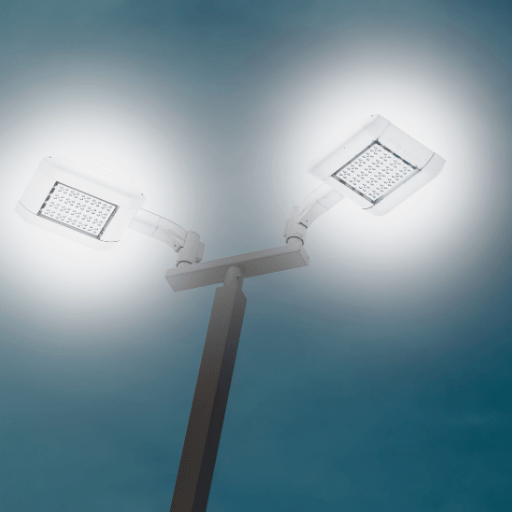
So if you have been gazing at a dead flood light and pondered what to replace it with, you are not the only one. LED flood light bulbs choices have evolved rapidly, what you could once simply replace is now a choice in between several. BR30s?
PAR38’s?
Different wattages?
Same wattage but different color temperature?
IP66?
Don’t get it right and you’ll be right back on that ladder in six months.
All bits and bobs this is a complete guide, providing you with information on what these, how the various forms compare, how to select the best replacement, and how to change one out safely for yourself. You’ll walk away from this with enough knowledge to make an educated purchase whether your illuminating a recessed ceiling light, illuminated driveway, or businesses security system.
What Is an LED Flood Light Bulb?
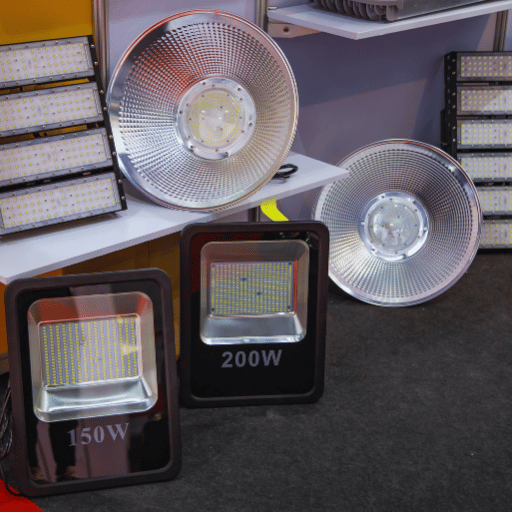
A LED flood light bulb is a bulb which is directional and is built with LED’s( light emitting diodes) to project a broad, yet controlled shine to a surface. While normal Bulbs(On the other hand produce light in all directions-360 Degrees) flood light bulbs are equipped with reflector to aim most the light forward. It thus offers higher output for most applications like task, landscape and security lighting.
A flood bulb (usually 100-120 for BR-style bulbs) is easily differentiated from spot lighting as it has a much wider beam spread to evenly fill an area (spot bulbs focus their beam into a much narrower 40 or less).
With LED technology, the main reason incandescent flood lights were replaced is energy consumption. The U.S. Department of Energy’s LED Lighting resource indicated that use of residential LED’s was at least three quarters lower than the use of incandescent lights and last eight to twenty five times longer than traditional bulbs. In the case of flood lighting, given that the lights are often operated in high intensity for hours every day, those figures count toward significant energy savings on electrical costs and maintenance round trips for replacements.
75%
Less energy than incandescent
25×
Longer lifespan vs. incandescent
$27B
Projected US savings over 30 years (DOE)
Most LED flood light bulbs use a standard E26 medium screw base (the same base as a standard household bulb). That means LED flood light bulbs will replace an incandescent bulb in your existing fixtures without needing to rewire. Differences will mainly be in the reflector shape and the built-in beam control.
💡 Key Takeaway
LED flood light bulbs take the directional reflector efficiency of the LED and combine it with the inherent reliability of an energy efficient solid state LED. The end result is a flood light bulb that produces more light per watt of energy used than an incandescent or halogen flood light bulb and has ten times the life expectancy.
LED Flood Light Bulb Types: BR vs PAR
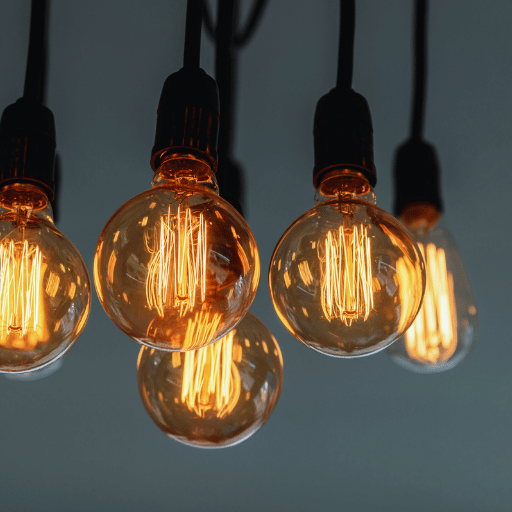
Two of the most common flood light bulb families (BR bulbs and PAR bulbs) appear identical on the shelf but can have a very different function after being installed. Knowing the difference prevents you from purchasing the incorrect type of bulb.
BR Bulbs (Bulged Reflector)
BR bulbs have a rounded, wide body containing a soft reflector. Offering a broad flood beam (generally 100-120), BR bulbs are used for most recessed ceiling fixtures, track heads, and interior accent lighting. Most BR bulbs have a frosted lens that cast a gentle diffusion of light, making them comfortable to be viewed in living rooms.
Letters following BR indicates the diameter of the bulb in eighths of an inch; a 30 has a diameter of 30/8 (3.75) inches; a 40 (the most common BR) 40/8 (5) inches. The BR20 fits smaller recessed lighting cans in hallways, while the BR40 handles 8-inch fixtures in open-plan spaces where soft white color temperature and energy efficient lumen output matter most.
PAR Bulbs (Parabolic Aluminized Reflector)
PAR bulbs feature a precision parabolic reflector; the single-steam reflector captures more light and projects it deeper into the distance-roughly 40 degrees for most PAR30 and PAR38 models. That intense beam can go a lot farther, which makes PAR bulbs the best call for outdoor security lighting, landscape spotlights, and architectural accent lighting where you need substantial throw distance. Many outdoor-oriented LED flood light bulb options are based on the outdoors-prevailing PAR38 design: 4.75″ diameters handle the heat of high-powered drivers, and most feature IP-rated weatherproofing seals. For outdoor use in landscape lighting or security lights applications, look for UL listed PAR38 models with an E26 medium screw base and a lifespan rating above 25,000 hours.
| Bulb Type | Diameter | Beam Angle | Best For | Typical LED Wattage |
|---|---|---|---|---|
| BR20 | 2.5″ | 110° | Small recessed lighting cans, hallways | 5–7W |
| BR30 | 3.75″ | 100–120° | 6″ recessed ceiling cans, living rooms | 9–11W |
| BR40 | 5″ | 110° | 8″ recessed cans, large spaces | 14–17W |
| PAR20 | 2.5″ | 25–40° | Track lighting, spot lighting accents | 7–8W |
| PAR30 | 3.75″ | 40° | Short-neck pendant/track, retail display | 10–12W |
| PAR38 | 4.75″ | 40° | Outdoor security lights, landscape lighting, architectural | 13–18W |
A little practical advice about choosing long neck or short neck PAR30 bulbs: the long neck model sticks out well beyond the socket and is used in deep set fixtures or hanging open pendants; the short neck is designed for standard open fixtures: be sure to check the fixture depth before you buy.
💡 Key Takeaway
For indoor recessed cans, the BR30 is the blue-chip standard. For outdoor directional lighting–driveways, landscaping, security zones-the PAR38 delivers the optimal focal distance and weather barrier a BR bulb can’t provide.
How to Choose the Right LED Flood Light Bulb Replacement
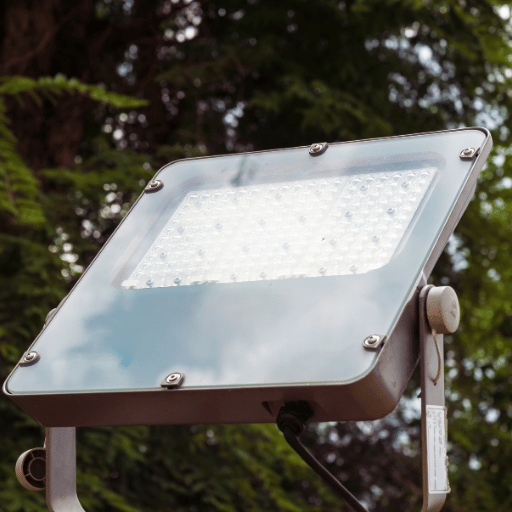
Selecting the right LED replacement largely hinges on five major variables. Ignore even one and you risk dimming out the room, having a buzz-prone dimmer control issue, or getting a bulb that fries in a year.
5-Step Selection Checklist
- ✔
Step 1 — Confirm the base type. Most residential flood light fixtures use an E26 medium screw base. Some recessed cans use a GU10 bayonet or GU24 twist-lock. Read the old bulb’s label before ordering. - ✔
Step 2 — Match lumens, not watts. The old wattage rating tells you energy consumed, not brightness. A 65W incandescent flood produces roughly 650 lumens; its LED replacement needs about 650 lumens at only 9–10W. A 90W halogen flood → look for an LED rated ≥900 lumens. - ✔
Step 3 — Choose color temperature for the application. 2700K–3000K: warm white (soft white), residential living areas. 4000K: neutral white, kitchens, workspaces. 5000K–6500K: daylight, outdoor security where maximum visibility matters. A frosted lens softens any color temperature for glare-sensitive indoor spaces. - ✔
Step 4 — Verify dimmer compatibility. Not all LED flood light bulbs are dimmable. Even dimmable LED bulbs can flicker or buzz with older TRIAC dimmers designed for incandescent loads. Look for bulbs listed as compatible with your dimmer brand, or replace the dimmer with one rated for LED loads (most are available for under $20). - ✔
Step 5 — Check the IP rating for outdoor use. Any bulb installed in an exposed outdoor fixture for outdoor use needs a weatherproof rating. IP65 handles rain and low-pressure jets. IP66 stands up to high-pressure water (hose washing, heavy rain exposure). Indoor-rated bulbs will fail in outdoor fixtures within months.
Wattage Equivalency Quick Reference
| Old Incandescent Wattage | LED Equivalent Watts | Min. Lumens to Match |
|---|---|---|
| 65W | 9–10W | 650 lm |
| 75W | 10–12W | 750 lm |
| 100W | 13–15W | 1,000 lm |
| 150W | 16–20W | 1,600 lm |
0At Guangqi Lighting our application-centric selection system then works backwards to the technical specs: where is the light going, what surface does it need to blanket, and what’s the environment? Those three concerns determine everything down to bulb type, wattage and IP standard.
— Guangqi Lighting, Technical Product Team
💡 Key Takeaway
Shop by lumens, temperature of the color it radiates – not watts. A 65W incandescent bulb equivalent isnot 650 lumens, but 650 lumens worth of LED. Shopping on halogen or incandescent wattage is the number-one mistake we see that causes buyers to have a dimly-lit space.
Outdoor LED Flood Light Bulbs: Best Uses and Specs
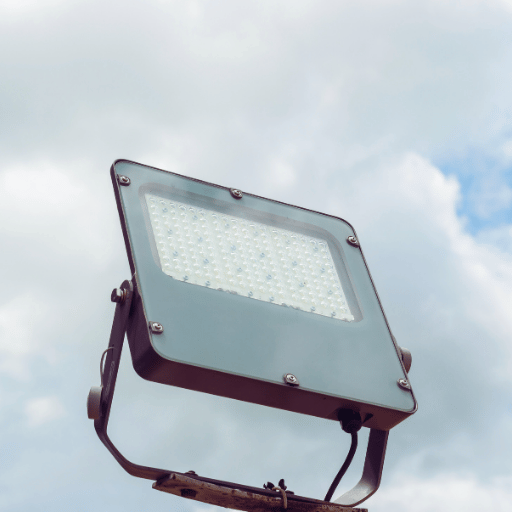
Outdoors flood lighting is among the highest-value LED uses: high daily runtime, brutal weather exposure, emphasis on good security. The overall difference between good and bad LED flood lights quickly becomes apparent. Learn how to match the LED to the task.
Common Outdoor Applications
| Application | Recommended Bulb | Key Specs | IP Minimum |
|---|---|---|---|
| Security / motion sensor | PAR38 | 5000K, 1,000–1,400 lm, 13–18W | IP65 |
| Landscape accent | PAR30 / PAR38 | 2700K–3000K, 40° beam | IP65 |
| Driveway / parking area | PAR38 flood | 4000K–5000K, 120° beam, 1,400+ lm | IP66 |
| Architectural facade | PAR38 narrow | 3000K, 25–40° beam | IP65 |
| Porch / entryway | BR30 outdoor-rated | 2700K–3000K, dimmable | IP44+ |
IP Ratings Explained
IP ratings are published in IEC 60529 and describe how hostile a bulb’s case can survive: for outdoor flood light purposes, the second digit (water resistance) is the one to pay attention to:
- IP65 – Dust impermeable + stands up to low-pressure jet streams of water from any direction. Handles rain, garden sprinklers, light hose sprays. Suitable for many residential outdoor fixtures.
- IP66 – Dust impermeable + is designed to stand up to powerful jet streams of water (100 kPa). Made to cope with direct hosing, industrial sandblasts, and mounting positions that could be especially exposed: parking garage ceiling fixtures, directly-mounted wall washers, coastal environments.
⚠️ Important
Putting an indoor-rated LED flood light bulb into an outdoor fixture–even under a covered porch–destroys the warranty and can lead to boiling moisture or thermal effects later:
For all indoor and even some commercial outdoor flood lighting fixtures — including units certified to IP65 and IP66 standards with integrated LED drivers-the LED flood lights range at Guangqi Lighting has a variety for retrofit-bulb or integrated fixture solutions, along with CE, RoHS, UL listed, and IP65/IP66 validation and third-party proofing.
💡 Key Takeaway
In outdoor flood lighting, the baseline isn’t IP55, it’s IP65. High-exposure locations — driveway poles, Industrial yards, fixed rooftop fixtures, etc. — need IP66. Costs are negligible; reliability is not.
Indoor LED Flood Light Bulbs: Recessed, Track & Accent Lighting
Indoor flood light bulb applications range from 6″ recessed lighting cans to narrow-beam track heads that emulate the spotlighting effects of paintings. Moving inside eliminates the element of weather, but introduces two concerns – a lack of compatibility with dimmers, and glare risks in inhabited rooms.
By Application Type
- 6 inch recessed ceiling cans: BR30 is the standard. Dimmable LED 9-11W BR30 (650-850 lm, 2700K to 3000K soft white) replaces a 65W incandescent without changing fixtures. frosted face, evenly diffuses light across a room, avoiding hot spots.
- 8 inch recessed ceiling cans: BR40 for broader coverage in big living rooms, open-plan kitchens, or commercial spaces. 14-17W 1200-1400 lm of a BR40 significantly expands usable area over a BR30.
- Track lighting system: PAR 20 or PAR 30 short-neck models suit most track heads. Narrower 25 beam angle allows precise directional focus onto shelving, work stations, or artwork in a way that’s subtle in the ceiling void.
- Feature lighting: artwork, dcor, or focal points: PAR 20 3000K narrow beam (25) is concentrated over one object. Use warm 2700K color temperature for paintings, cooler 4000K for sculpture or product display (retail).
- Task-oriented environments (kitchen, home office, workshop): BR30 or PAR30 Medium-spot 4000K neutral white. Slightly cooler color temperature improves vision for detail work without the hue of 5000K daylight.
Dimmer Compatibility: What Most Installers Miss
A dimmable LED flood bulb in a non-dimmable circuit will strobe at min flicker, hum, or refuse to dim below 30%. The resolution is a bulbs-from-string ICM compatibility list, or purchasing an LED-rated dimmer. Based on our extensive indoor LED experience installing multiple commercial projects, having the dimmer ready at the time of bulb selection precludes 80% of indoor LED issues. For track lighting or spot lighting setups, a dimmable LED PAR20 or PAR30 short neck with warm white color temperature gives the most flexible beam control without the heat output of a halogen reflector.
💡 Key Takeaway
Identify the bulb shape to the fixture type: BR30 for open 6″ cans, BR40 for 8″ cans, PAR20/30 for track heads. Then read the dimmer compatibility list before you buy – its the -only- way to avoid 80% of indoor LED complaints.
How to Replace an LED Flood Light Bulb: Step-by-Step
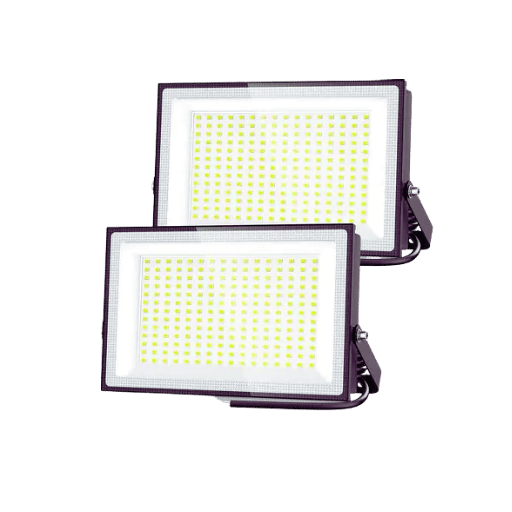
Changing a flood light bulb is a 5 minute task, done properly. Here are the steps, suitable for indoor recessed fixtures, and open-bottom outdoor flood fixtures with screw-shell sockets. For sealed integrated LED fixtures (where the LED array sits in the fixture, and is not replaceable), you’ll have to swap the entire fixture – not just the bulb.
- Turn off the power at the wall switch and then at the circuit breaker. Never rely on the wall switch, either indoor or outdoor, to turn off a circuit with a flood fixture in it. Ensure the power is off at the circuit break working at the light until the fixture is certain to be dead before beginning work.
- Allow the fixture to cool. This is especially critical with halogen and older incandescent flood bulbs – they generate so much heat they can cause burns or crack in contact with water or a lightly damp hand. Allow a minimum of 10 minutes after use to ensure the fixture has cooled to touch. LED bulbs generate significantly less heat but due to the heat retention characteristics of older fixtures it cannot always be relied upon that an old fixture has cooled from a hot bulb.
- Remove any lens or trim ring. It is the rule rather than the exception in most recessed fixtures to have a spring-loaded trim ring that simply pulls straight down. Outdoor fixtures often have a twist-lock glass cover, or a screw-retained lens. Make a note of the rotation before removing it to facilitate reassembly.
- Screw out the bulb in a counterclockwise direction. If the bulb does not turn because it has become stuck due to heat-bonded corrosion (as is common in outdoor fixtures), use a rubber grip pad – do not use pliers as they can crack the glass. If the glass is free from the metal base and the metal base turns, grip the base with needle-nose pliers (with the power confirmed off).
- Check the label on the old flood bulb (or on the inside of the fixture if available). Confirm the base style (e.g. E26, GU10, etc.), maximum wattage, and if the fixture can be installed outdoors or in humid locations. Your new flood light bulb for LED must be the same base type and not exceed the maximum wattage of the current fixture – despite the fact that LED wattages are far less.
- Install the bulb by hand using a clockwise rotation until the bulb becomes fully seated; normally around half a turn past initial contact. LED bulbs do not need to be tightened to a specified torque; overtightening has the potential to crack the base or stress the socket contacts.
- Restore power and test. Turn the circuit breaker on at the box then the switch. Check for full light output and operation of the dimmer if the fixture has one through the full range.
⚠️ Common Mistakes When Replacing Flood Light Bulbs
- Buying an E26 bulb for a GU10 fixture (or vice versa). Check the base type before purchasing.
- Installing an indoor-only bulb in an outdoor-rated fixture. This is one of the prime causes of premature bulb failure (several weeks in moist environments is not at all uncommon). If the fixture was not rated for the environment it was installed in, this was the mistake.
- Assuming “dimmable” will work. Dimmable LED bulbs still require a compatible dimmer; mismatched bulbs and dimmers may lead to flickering and premature LED driver burnout.
- Handling power while the circuit is live. Always disable the power at the breaker, not just from the wall switch before entering the fixture. This is by far the most dangerous omission made when working on a fixture.
💡 Key Takeaway
Engaging in physical removal of bulbs is fairly straightforward. Most of the pitfalls occur far in advance of stepping onto a ladder – choosing an incompatible bulb or neglecting to check the fixtures IP rating when installing in a damp outdoor environment. Confirm the specifications beforehand and the task takes less than five minutes. Whether you are doing a flood light bulb replacement for recessed lighting indoors or swapping an incandescent flood for an energy efficient LED in an outdoor security fixture, matching the E26 base and lumen output to the old wattage prevents return trips to the store.
LED vs Halogen vs Incandescent Flood Bulbs: Why Make the Switch
For the benefit of those still utilizing halogen or incandescent flood flood light bulbs in every fixture, here’s why the upgrade represents value for money (particularly within the first two years of operation).
| Factor | LED | Halogen | Incandescent |
|---|---|---|---|
| Energy use (650 lm output) | 9–10W | 45–50W | 65W |
| Typical lifespan | 25,000–50,000 hours | 2,000–4,000 hours | 750–1,500 hours |
| Annual electricity cost* | ~$1.08 | ~$5.40 | ~$7.80 |
| Heat output | Very low | Very high | High |
| Outdoor-rated options | Yes (IP65/66) | Limited | Very limited |
| Dimmable | Yes (most models) | Yes | Yes |
* Based on a unit rate of $0.12 per kilowatt-hour, overhead air-conditioning consumption of three hours per day. Individual results will vary depending on local prices and personal habits.
According to U.S. Department of Energy lighting efficiency guidance, LED lighting installations by 2035 could reduce annual US lighting energy demand by 569 TWh, which is more than the power generation of 92+ large power stations. The DOE also finalized new efficiency standards for new lamps to consume over 120 lumens per watt, projected to save Americans $27 billion on electricity bills over 30 years.
For flood lighting alone, extended daily run cycles – outdoor security lights on ‘dusk-to-dawn’ timers, seasonal landscape lighting on timers, etc., – greatly magnify the hourly degree of energy disparity. An 8-hour day outdoor security bulb network with 10 bulbs cost about $34/year in electricity using LEDs and $228/year using 65W incandescents. Those energy savings add up fast when you factor in the longer lifespan of dimmable LED flood light bulbs and zero halogen replacement cycles.
💡 Key Takeaway
A switch from halogen to LED flood lighting will pay for itself in less than two years on most residential applications—and less than one year when used as security or landscape lighting on business premises with extended hours of daily operation.
Frequently Asked Questions
Q: Can you replace flood lights with LED bulbs?
View Answer
Absolutely – LED flood light bulbs can screw into most current fittings identical to the traditional E26 screw fitting. Check existing to confirm you buy the right type (ie: GU10, GU24 or special fitting).
Q: What are the disadvantages of LED flood lights?
View Answer
Potential disadvantages of LED flood lights are: initial cost (LED lights were much more expensive than equivalent incandescent brands, until recently) and compatibility with existing dimmers (some older dimmers will cause flickering or buzzing with LED loads). If enclosed fixtures are used some LED driver modules will run very hot and requires a vented housing (use a product that is designed for use in an enclosed fixture). Over a lifespan LED flood lights are cheaper to operate in every scenario.
Q: Why do LED flood lights fail so quickly?
View Answer
Common reasons for premature LED failure are: heat from enclosed fixtures (the driver, itself, will wear out quicker if it is unable to cool, itself, inside the fixture), using incorrect voltage or if the dimmer is incompatible, the driver works too hard, low-end bulbs with over-exaggerated performance claims. Choosing bulbs for the right fixture (enclosed versus open), utilizing dimmer or non-dimmable as needed, and selecting UL listed bulbs drops the issues regardless of quality. Looking at cheap, unrated bulbs the driver is rated for 3000 to 5000 hours, giving you the choice between dozens of hours of maintenance for the non-rated junk, or a LONG time with the brightest LEDs on the planet!
Q: How long do LED flood light bulbs last?
View Answer
Good quality LED flood light bulbs will have rated lives of 25,000-50,000 hours— a substantial advance over 750-1,500 hours for incandescent flood bulbs or 2,000-4,000 hours for halogen equivalents. At 8 hours per day, a 25,000 hour LED will deliver a life of just under 8.5 years; a 50,000 hour premium LED will exceed 17 years. One point of interest to get your head around: LED life ratings are all based on an L70 standard, indicating when an LED bulb can be said to have reached the end of its rated life once luminescence (brightness) has fallen to 70 per cent of the original value.
This is quite different from the dramatic failure experienced by incandescent bulbs— with LEDs slowly running down over years without an obvious indication at first. Many commercial sites plan for scheduled replacement on a time basis, like 5 or 7 years, rather than by degraded dimming. This is because the dimming can be difficult for people to notice until it is affecting the light levels needed, for instance, in security zones or adjacent to production areas.
Q: What is equivalent brightness in LED flood lights?
View Answer
Brightness for equivalent wattages= lumens, not wattage. If that 10W LED produces 800 lumens, it will be similar in light to an 65W incandescent lamp that produced 800 lumens. Always buy by lumens – the LED wattage will be around 75-85% less that the bulb it replaces.
Q: What is a BR30 LED flood light bulb?
View Answer
A BR30 is a Bulged Reflector bulb that measures 3.75 inches (30/8′) across. The most common Beam angle on a BR30 LED flood light bulb is 100-120 ‘ flood. It’s the most common replacement bulb for ceiling can lights in homes and businesses in North America (replacing a 65W incandescent) at 9-11W and 650-850 lumens.
Most are available in either a dimmable form factor, or choosing from several color temperatures from warm white (2700 Kelvin) up to daylight (5000 Kelvin).
Q: Can LED flood light bulbs be used outdoors?
View Answer
Yes – but only if the bulb is an adequate IP (Ingress Protection) rating. It should be IP65 or IP66 for outside use. An IP65 rated LED flood light will be enough for rain or low pressure waters from any direction whilst IP66 rated bulbs are suitable for high pressure jets or heavy storms.
An indoors rated LED bulb (IP20 or unrated) will just fall to pieces within a few months of cold and wet outdoor flood fixtures due to moisture penetration issues and physical stresses caused by thermal cycling of outside air.
Ready to Upgrade Your Flood Lighting?
Based for performance and designed for longevity, Guangdong Guangqi Lighting supplies IP65 and IP66 rated LED floodlight products suitable for a wide variety of interior and exterior, residential, commercial and architectural lighting schemes.
Our Perspective on This Guide
Guangqi Lighting designs and markets LED floodlightbulb & outdoor lights. Here, we’ve combined 10+ years of real-world, building, testing and installing LED floodlight product (from IP65 outdoor area-security to dimmable indoor ceiling-recessed models) into a thorough, practical overview of selection criteria + installation best-practices. This content isn’t hypothetical.
References & Sources
- LED Lighting — U.S. Department of Energy, Energy Saver
- Lighting Choices to Save You Money — U.S. Department of Energy, Energy Saver
- DOE Finalizes Efficiency Standards for Lightbulbs — U.S. Department of Energy