Get in Touch with GUANGQI


LED Mesh Screen
LED Mesh Screen – Transparent Building Facade Display
Turn any glass curtain wall, building facade or stage backdrop into a high-brightness translucent LED display – without sacrificing daylight transmission or adding unwieldy steel support frames. Guangqi LED mesh screens provide 55-90% transparency at luminance levels up to 8,000 nits, with outdoor IP66/IP67 rating and P10-P100mm pixel pitch options.
Get Instant Quote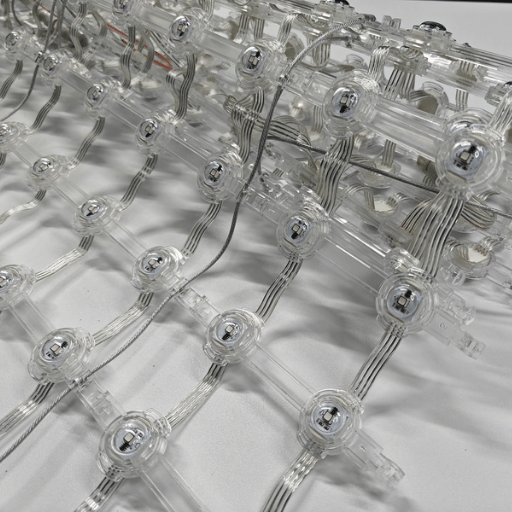
55–90%
Transparency Rate
5,000–8,000
Nits Brightness
IP66/67
Waterproof Rating
3–12 kg/m²
Weight per sqm
P50–P100
Pixel Pitch Range
50,000+ hrs
LED Lifespan
Why Building Owners Switch to LED Mesh Screens
Conventional outdoor advertising – vinyl billboards, LCD billboards and solid LED cabinets – exhibits a trio of problems that building owners and architects continually encounter. They threaten daylight. They impose structural weight that calls for engineering approval. And they inflate energy costs by 30-50% relative to what the facade would run if it were empty. These challenges come up in just about every pre-project consultation we’re involved in.
An LED mesh screen addresses all three issues. Its ultra-thin, open mesh structure permits 55-90% light transmittance, preserving natural light indoors so occupants keep their view and daylight. Weight drops to 3-12 kg per square meter — most installed glass curtain walls accept this load without reinforcement. And because the mesh uses fewer LEDs per square meter, the design reduces power consumption by 40-60% — delivering lower energy consumption than any solid LED video wall of comparable area.
Most architects today want a media facade solution that decorates without detracting. High brightness outdoor performance (5,000-8,000 nits visible even under direct sunlight) and superior wind load resistance distinguish transparent LED screens from other display screens in the signage category. That makes lightweight LED mesh the preferred retrofit for existing glass curtain walls, high-rise façades, and large-area building wraps. Creative installations now span retail storefronts, sports venues, commercial towers, and indoor/outdoor concert stage backgrounds across every continent.

Engineering Note
Wind load is a key consideration in any building façade LED display screen. A solid LED cabinet with 0% transparency functions as a giant wind sail, applying 100% of the calculated wind-force to the mounting structure. An open mesh with 70% transparency generates an effective wind load of about 30% that of a solid LED. (This theory is supported by wind-pressure calculations based on the sonic effect of the solidity ratio). Such a reduction in external imposed wind load often allows for the omission of additional structural steel supports – saving 15-25% of the project bill of materials on high-rise implementations. High permeability also means each mesh light point receives better airflow, improving thermal dissipation and extending LED lifespan compared to enclosed cabinets.
Guangqi LED Mesh Screen Series — Models & Selection Guide
6 standard pixel pitches – each tailored to a specific viewing distance and transparency profile – are available from Guangqi. All ranges deliver IP66/IP67 outdoor protection, are compatible with NovaStar or Colorlight controllers, and undergo a 48-hour full-lamp aging to ensure optimal colour distribution and uniformity before shipping.
Model
Pixel Pitch
Transparency
Brightness
Weight
Best Viewing Distance
Typical Application
GQ-M37.5
P37.5mm
85%
1500 nits
8 kg/m²
20–40 m
High-rise curtain walls, landmark buildings
GQ-M50
P50mm
80%
840 nits
6 kg/m²
25–75 m
Commercial building facades (most popular)
GQ-M55
P55mm
70%
630nits
5 kg/m²
30–80 m
Stadium facades, bridge lighting
GQ-M62.5
P62.5mm
65%
550nits
4 kg/m²
35-100 m
High-rise curtain walls, landmark buildings
GQ-M83
P83mm
60%
310 nits
3.3 kg/m²
40-130 m
Large-scale building media facades
GQ-M100
P100mm
55%
210 nits
3 kg/m²
50–150 m
Large-scale building media facades
Selection Rule of Thumb
Divide your rated minimum viewing distance by 1.5 to determine the maximum pixel pitch in millimeters still capable of delivering effective imaging. For instance, a 75-meter minimum viewing distance yields a maximum pixel pitch of P50mm. Output will remain crisp, but motion video at the specified distance will read comfortably with P62.5mm pixel pitch, while static content (logos, copy) works best with P40mm. Send us your outdoor facing facade dimensions and we’ll generate a trial model for free.
All of the models use a flexible mesh that contours to curved facades without custom tooling. The modular panel design means that individual LED strips can be replaced in the field—if a row goes out, a technician can just remove the entire string or dismantle any part of the frame and install a new one in under 15 minutes, no scaffolding needed for ground-floor installations. Quick-lock connectors link each panel, and the entire LED mesh screen outdoor or indoor system ties into cloud-based content publishing systems for managing many LED mesh screens in different locations from one central control room. Content supports full-color video, animation, and changeable scheduling — so a single operator can control LED mesh screens in different locations all over the world just from one central dashboard. Customization options include customizable panel sizes, grid screen layouts, and IP67 waterproof upgrades for high-exposure mounting points.
LED Mesh Screen vs Traditional Displays — Performance Comparison
Various competing technologies currently operate in the transparent LED display space. Each involves different trade offs between transparency, brightness, ruggedness, and cost. Here is a data based comparison based on industry standard specs – not subjective ratings. We have built up this table based on the exact parameters that our engineering team refers to when specifying a project so you can directly compare it with your project needs.
Detailed Technical Specifications
| Parameter | LED Mesh Screen | Solid LED Cabinet | LED Film Screen | LCD Billboard |
|---|---|---|---|---|
| Transparency | 55–90% | 0% | 70–95% | 0% |
| Brightness | 5,000–8,000 nits | 6,000–10,000 nits | 1,500–3,000 nits | 700–2,500 nits |
| Weight | 3–12 kg/m² | 25–45 kg/m² | 0.5–2 kg/m² | 15–30 kg/m² |
| IP Rating (Outdoor) | IP66/IP67 | IP65/IP66 | IP20–IP44 (mostly indoor) | IP55–IP65 |
| Power Consumption | 150–350 W/m² | 400–800 W/m² | 80–200 W/m² | 200–400 W/m² |
| Min. Pixel Pitch | P10mm | P1.5mm | P3.9mm | N/A (pixel-based LCD) |
| Wind Load Factor | 0.1–0.45 (low) | 1.0 (full) | ~0 (glass-mounted) | 1.0 (full) |
| Typical Lifespan | 50,000–100,000 hrs | 50,000–100,000 hrs | 30,000–50,000 hrs | 50,000–60,000 hrs |
| Maintenance Access | Front or rear, modular strip | Rear access required | Full panel replacement | Rear access required |
| Best For | Building facades, stages, outdoor | Indoor fixed, close viewing | Retail glass windows, indoor | Bus shelters, indoor signage |
Technology Positioning & Trade-offs
One pattern stands out: LED mesh screens sit between transparent LED film (which lacks outdoor durability and high brightness for direct sunlight exposure) and solid LED cabinets (which sacrifice transparency and add excessive weight). Compared to micro LED and indoor LED video wall panels designed for close viewing, mesh LED technology trades higher resolution for dramatically better light permeability and weather resistance — making it the practical pick for large-scale building façades and various creative outdoor or indoor outdoor applications. LED curtain screens and LED curtain display screens are regional naming variants for the same mesh-based technology. When selecting between transparent flexible LED film and flexible LED mesh screen products, outdoor projects over 50 m² almost always favor the mesh for its IP67 waterproof protection and long-distance visibility.
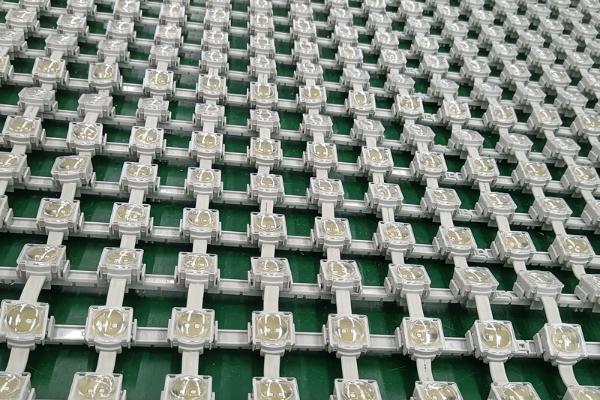
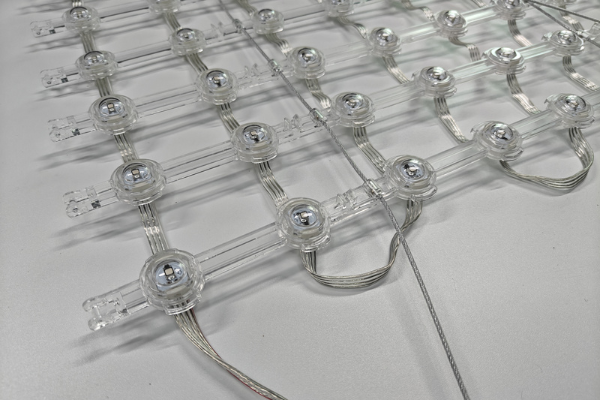
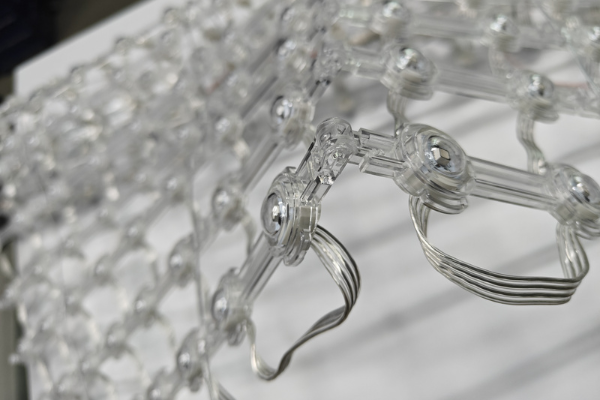
LED Mesh Screen Factory Gallery
Manufacturing and Quality Control Process



×
❮
![Enlarged LED Mesh Screen Image]() ❯
❯
Flexible LED Mesh Screen Project Showcase: Real-World Installations
Spec sheets are not always representative of reality; statistics from finished projects across locations all over the world provide a more accurate depiction of what is actually possible. As such, here are three city-based installations that typify the demand placed on our LED mesh screens, covering everything from upscale commercial high-rises to the rather louder world of entertainment venues. Each project had differing pixel pitches, mounting situations and content demands, which is the reason for their presentation here on an individual basis rather than averaged out:
Commercial Office Tower — Glass Curtain Wall Media Facade
Scope
420 m LED mesh wall on floors 3 to 12 of the East glass curtain wall of a commercial tower.
Configuration
GQ-M40 (P40mm), 75% transparency, 7,000 nits, IP66.
Installation
Aluminum system brags to existing mullions. N structural steel members added. Finished by a team of 6 men in 8 man days.
Results
The after-installation detecting revealed that the transparent LED mesh screen transmitted natural daylight to establish the interior luminance 85% of the initial levels. Advertising sponsorships generated the full spectrum of back-end investment during initial 14 months of achieving operation. The power consumption was 220 W/m in mean during the peak luminance time.
Retail Storefront — Indoor LED Mesh Screen for Window Display
Scope
LED mesh display of 35m deployed behind the glass window of a flagship retail shop.
Configuration
GQ-M25 (P25mm), 65% transparency, 6,000 nits.
Installation
Aluminum track system installed on ceiling. 2 days including all electrical. Disruption: None. Store retained full operation during construction.
Results
22% increase in incoming customer foot traffic received by retailer’s in-store sensors within 60 days of activation. Visible LED window display maintained entire product line visibility from the street while playing promotional video. Power use: 180 W/m average, around $4.20/day for the whole display at prevailing local commercial electricity rates.
Stage & Event — Flexible LED Mesh Screen Backdrop
Scope
180m flex LED mesh screen as curved, stage background, up to 3 times a day over a 10 day period for a concert series.
Configuration
GQ-M31 (P31.25mm), 70% transparency, 6,500 nits, indoor/outdoor rated.
Installation
It is flexible mesh structure that was bent into 5 meter radius curve without using special frames. Duration of set up was 1 day and tear down 4 hours. The entire screen was packed in 6 flight cases.
Results
According to the lighting professionals stage lighting was visible through mesh with little color change, creating back-lighting effects not feasible with solid LED panels. The rental LED operator revealed no dead pixel failures on all three occasions even with outdoor waterproof exposure to rain on day 7. This type of flexible transparent LED deployment demonstrates how mesh screens handle various creative event applications that traditional long-distance fixed displays cannot.
LED Mesh Screen Certifications and Global Compliance
All raised Guangqi LED mesh screen are subjected to rigorous quality control process before dispatch: Incoming raw material inspection, 48 hour full load aging test, Brightness uniformity check ( variance less than 5% across entire panel) and final water proofing validation. Accreditations below demonstrate third-party standard conformance that procurement specialists look for building and lighting projects. We also offer IP68 protection for fully submersible point light installations and rental LED configurations for short-term event deployments.
CE
CE
EU Safety & EMC Directive 2014/35/EU
RoHS
RoHS
Restriction of Hazardous Substances
FCC
FCC
Electromagnetic Compatibility (US)
IP6X
IP66/IP67
Waterproof Protection per IEC 60529
CB
CB
International Safety Certification Scheme
UL
UL Listed
Underwriters Laboratories (US/CA)
LED Mesh Screen Technology — What Sets It Apart
At its core, an LED mesh screen is a transparent LED display built from individually addressable LED point light nodes mounted on a flexible mesh structure. Pixel pitch — the distance between each LED node — determines both the resolution at a given viewing distance and the screen’s transparency rate. Wider pitches like P50mm and P100mm achieve 80-90% transparency because more open space exists between the LEDs, while finer pitches like P10mm and P25mm pack more LEDs into each square meter for higher resolution at closer viewing distances.
Brightness is measured in nits (candelas per square meter). Outdoor LED mesh screens need 5,000-8,000 nits to compete with direct sunlight on south- and west-facing glass window installations. Indoor LED applications — shopping mall atriums, exhibition halls, retail glass curtain walls — work well at 1,500-3,000 nits. Guangqi mesh screens feature automatic brightness adjustment that responds to ambient light sensors, reducing power draw during evening hours when lower output still delivers strong visual impact.
Installation on building façades follows a straightforward process: aluminum mounting brackets attach to the existing mullion grid of a glass curtain wall, and the lightweight LED mesh panels clip into place via quick-lock connectors. No welding, no heavy steel framework. A completed LED mesh display on a commercial office tower can serve as both a media facade for dynamic advertising content — full-color video, animation, brand messaging — and an architectural lighting element after business hours. The same screen that runs product advertisements during the day can switch to ambient LED video content at night, giving building owners dual revenue and aesthetic value from a single installation.
LED Mesh Screen Tools
Pixel Pitch Selector
Calculate and select the ideal pixel pitch for your media facade based on optimal viewing distances and resolution.
Access Tool →
Energy Cost Calculator
Estimate power consumption and project the long-term operational energy costs for your specific screen installation.
Calculate →
Display Comparison
Compare key technical specifications such as brightness, transparency, weight, and IP ratings across different models.
View Data →
FAQ — LED Mesh Screen Buying Guide
What pixel pitch should I choose for my LED mesh screen?
Pixel pitch should be selected according to minimum viewing distance. For distance below 10m (retail shop window, indoor atrium), P10-P25mm will provide crisp text and logo quality. For typical 10-30m building façade distance, P31-P50mm offers optimum resolution and high transparency quality at lowest cost. Large-scale building media façades viewed beyond 30 meters (highway banners, stadiums, large city transports), P50-P100mm pixel pitch will be photoquality at significantly lower cost per m2.
How much does an LED mesh screen cost per square meter?
LED mesh screen pricing spans $300 to $1,500 per m2. P10mm (highest LED density) is at the high-end of that range, P100mm (least dense, highest transparency) at the low end. Typical P31-P50mm project building façade screens cost between $500-$900 per m2. Installation, controllers, hangers and brackets are priced separately according to site conditions. Please contact Guangqi for project-specific quotation.
Is the LED mesh screen waterproof for outdoor use?
Yes. IP66 or IP67 based on IEC 60529. Water may drain through all mesh gaps without puddling, wind loads are immediately alleviated by mesh transparency.
What is the lifespan of an LED mesh screen?
50,000 to 100,000 hours before brightness is down to 50% of original due to aging, based on IES LM-80 test criteria. 12 hours daily usage pattern over 11-22 years. Our 48-hour aging tests identify dead pixels early before shipment, pixels down to less than 0.0001%. Independent factors impacting service life include operating brightness (a function of TV set with automatic brightness control), room temperature control. We recommend automatic brightness scheduling through the NovaStar controller set at 60%-70% offset for best life and values. Expect LED module refresh at 7-8 years for Mesh screens used outdoors and operating continuously.
LED mesh screen vs transparent LED film — which is better?
Each technology and application type does have its special strengths. Mesh screens are optimized for outdoor with 5,000-8,000 nit brightness, IP67 protection and lowest costs per sqm against large outdoor façade expenses. transparent LED film is thinner (generally under 3mm), lighter (0.5 – 2 kg/m), and better suited in indoor glass windows and walls where pixel pitch overlay image sharpness is critical at close distances. Building façade viewing distances over 50m and exposure to weather favor mesh screens but between 50 and 20 meters indoor retail glass wall displays more resolution at lower cost in transparent film.
How to install an LED mesh screen on a glass curtain wall?
LED mesh screens attach to glass curtain walls via aluminum bracket systems that are affixed to the existing mullion framework – no additional steel structure is needed in the majority of applications. The panel’s light weight (3-12 kgs/m based on pixel pitch) relatively minimal structural load impacts the design parameters of the existing structure. A standard 100 m installation time period is 3–5 days with a 4–6 person crew. Each mesh panel is stringed together with universal quick-lock connectors and standard power/data cable. Guangqi provides free of charge installation layout drawings and remote technical support via video conference for every project.
Can LED mesh screens be controlled remotely?
Yes. NovaStar and Colorlight controllers enable scheduling of content to be built in the cloud, control brightness and monitor LED mesh screens – all from a central control room through an internet web dashboard or a mobile device.
What brightness level is needed for outdoor LED mesh screens?
LED mesh screens positioned on South, West or East facing building facades, with lower sun exposure require a minimum of 5,000 nits to ensure good visual quality for brightly lit content during the sunniest parts of the day. North facing or shaded facades may be bright enough with as low as 3,000-4,000 nits. Nighttime-only installations are generally able to use substantially less 1,500-2,500 nits. Guangqi outdoor mesh screens output 5,000-8,000 nits with automatic dimming that cut back brightness (and energy) during time periods with lower ambient-lights. Over-bumping brightness levels is a waste of energy costs – our engineering team will assist you in determining a suitable nit level for your location and times of day this for viewing.