Get in Touch with GUANGQI


Explosion Proof LED Light
Explosion Proof LED Light — Industrial Hazardous Location Lighting
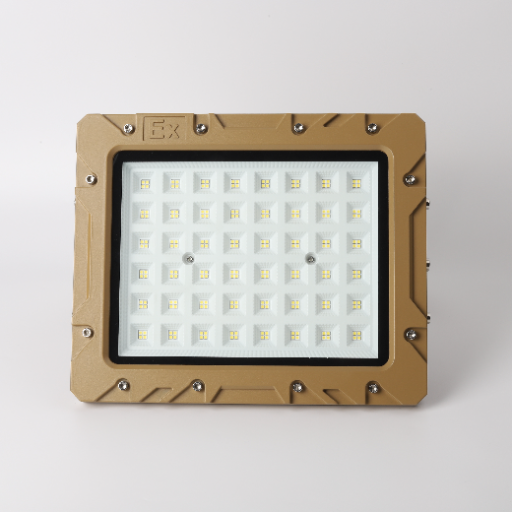
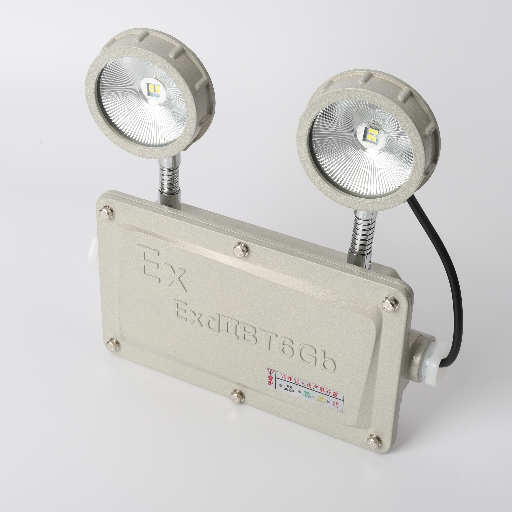
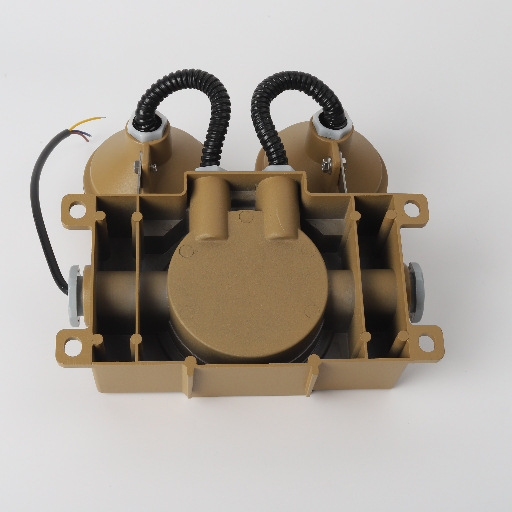
Explosion proof fixtures approved for Class I/II Division 1 & 2 hazardous locations. Flood lights (50W—200W), emergency exit lights (120-minute battery backup), architectural down lights/wall lights. IP66, aluminum alloy construction; oil & gas, chemical and mining approved.
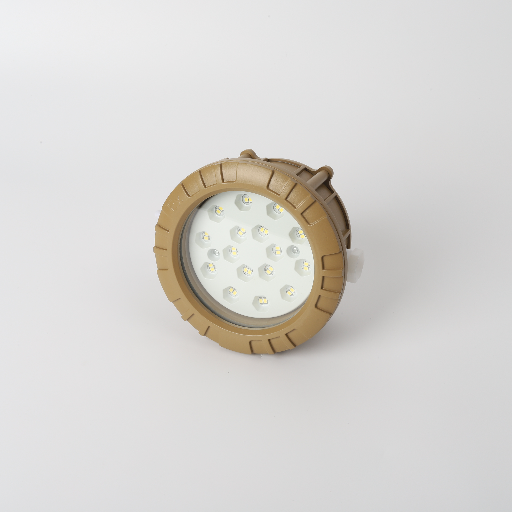
3W–200W
Power Range
IP66
Ingress Protection
15 Models
Flood / Emergency / Wall
50,000h
Rated LED Life
120 min
Emergency Battery
Aluminum
Die-cast Alloy Body
What Makes a Light Fixture “Explosion Proof” — Classification Guide
A explosion proof luminaire does not eliminate the explosion. It contains it. The luminaire enclosure is designed to contain the explosion of the pyrophoric gas mixture or combustible dust that has accumulated within. The enclosure is hardened to contain a blast from an internal explosion, and then cools the escaping gases to below the auto-ignition point of the surrounding area before they breach the enclosure through flame paths. This containment principle (defined by the NEC articles 500 through 503) is what differentiates explosion proof luminaires from typical industrial lighting fixtures.
Knowing the classification scheme is important because incorrect specification can result in hazardous condition safety issues and improperly installed fixtures that are in non-compliance with local code. Here is the scheme expressed succinctly:
NEC Hazardous Location Classes
| Class | Hazard Type | Typical Industries |
|---|---|---|
| Class I | Flammable gases or vapors | Oil refineries, chemical plants, paint booths, fuel storage |
| Class II | Combustible dust | Grain elevators, flour mills, coal handling, metal powder |
| Class III | Ignitable fibers or flyings | Textile mills, woodworking, cotton processing |
Division vs Zone System
| NEC Division | IEC/ATEX Zone | Hazard Frequency | Protection Level Required |
|---|---|---|---|
| Division 1 | Zone 0 / Zone 1 | Normal operations or frequently | Full explosion proof enclosure |
| Division 2 | Zone 2 | Abnormal conditions only | Non-sparking or explosion proof |
Class I is equipped by gas group, based on the specific fuel that can ignite under optimal conditions: A=acetylene, B=hydrogen (rare in field applications), C= other gases, D=propane, methane. Class I zones are also divided by climate zone into T-rating, from T1= 450C up to T6= 85C, which indicates the highest surface temperature of the fixture or luminaire and must be less than the auto-ignition temperature for the powder or gases.
Engineering Note
LED fixtures are easier to run cool in hazardous locations than comparable HIDs such as Metal Halide or HPS. Leading T ratings for a 200W LED flood are usually T4 (135C) on specific heat sink design, compared to T3 (200C) or higher for comparable HID lamps. The lowered operating temperature broadens the application scope for the luminaire.
Guangqi Explosion Proof LED Light Series
Explosion Proof Flood Lights
Heavy-duty flood lighting fixtures with high lumen output in hazardous locations. Suitable for illuminance levels over a 70-100 meter point to point coverage area. Aluminum alloy, sealed IP66 enclosure, finned heat sink for passive heat transfer.
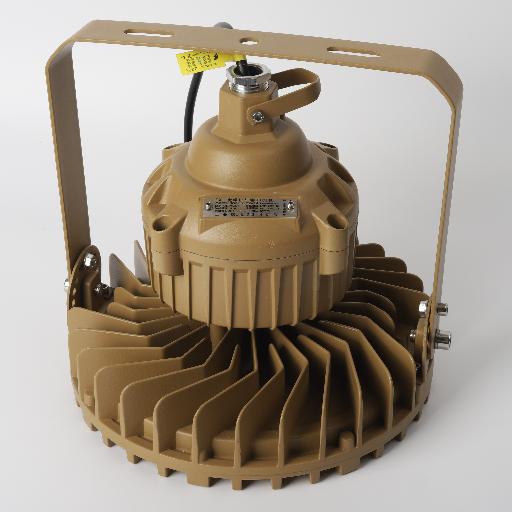
GQ-EP01 (50W)
- Lumens
- 6,500 lm
- Size
- 256×215×237mm
- Weight
- 4.9 kg
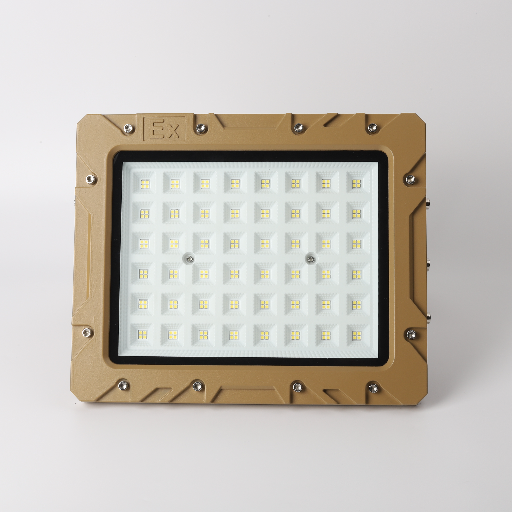
GQ-EP02 (100W)
- Lumens
- 13,000 lm
- Size
- 330×270×240mm
- Weight
- 6.9 kg
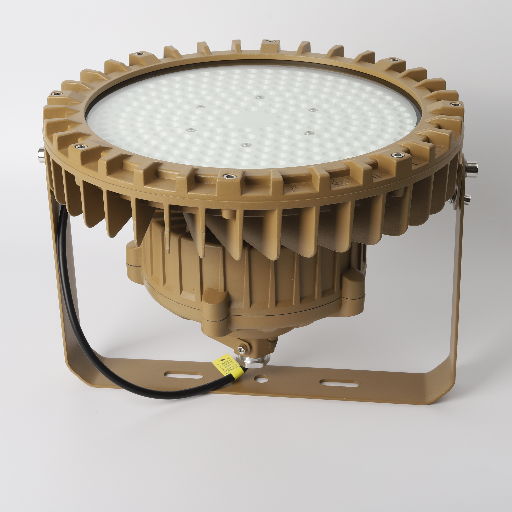
GQ-EP03 (150W)
- Lumens
- 19,500 lm
- Size
- 470×336×305mm
- Weight
- 11.6 kg
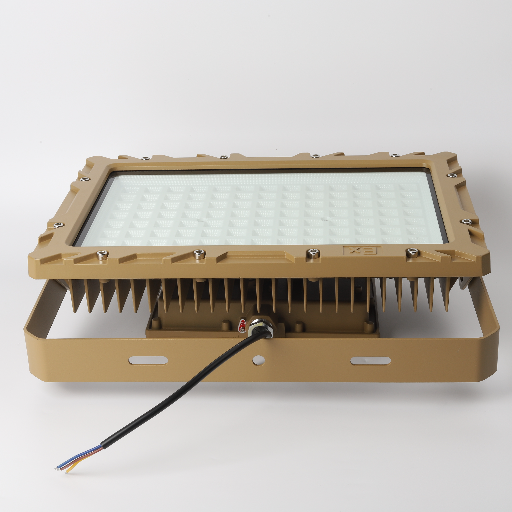
GQ-EP04 (200W)
- Lumens
- 26,000 lm
- Size
- 470×336×305mm
- Weight
- 11.6 kg
| Input Voltage | AC 100–265V / 50Hz |
|---|---|
| Luminous Efficacy | ≥130 lm/W |
| Material | Die-cast Aluminum Alloy |
| IP Rating | IP66 |
| Color Temperature | 5000K–6500K (Daylight) |
| Lamp Life | 50,000 hours (L70) |
| Certifications | CE, RoHS |
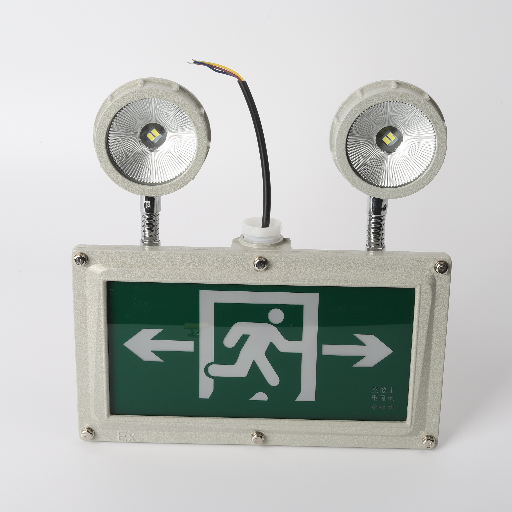
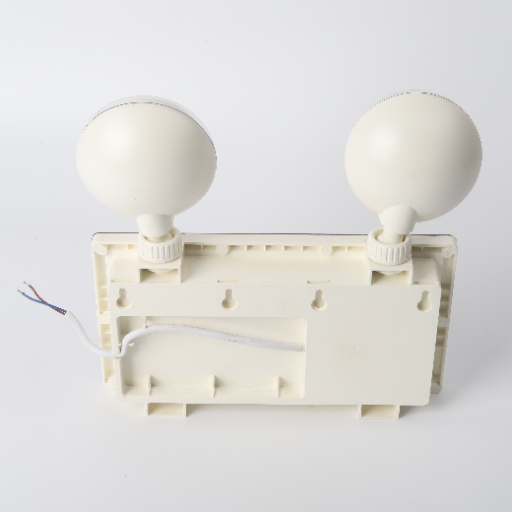
Explosion Proof Emergency & Exit Lights
Emergency lighting and safety signs with continuous battery back up in hazardous locations. Each energy-efficient LED sign maintains 120 minutes in emergency mode, well in excess of the 90 min building code minimum requirement.
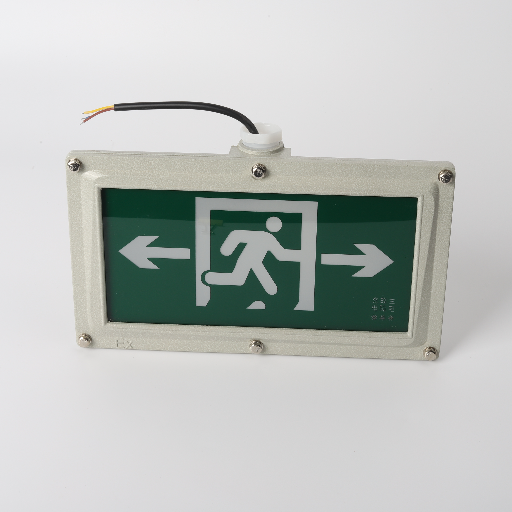
GQ-EP12 (Exit Sign)
- Power
- 3W
- Battery
- 3.2V 800mAh
- Time
- 120 min
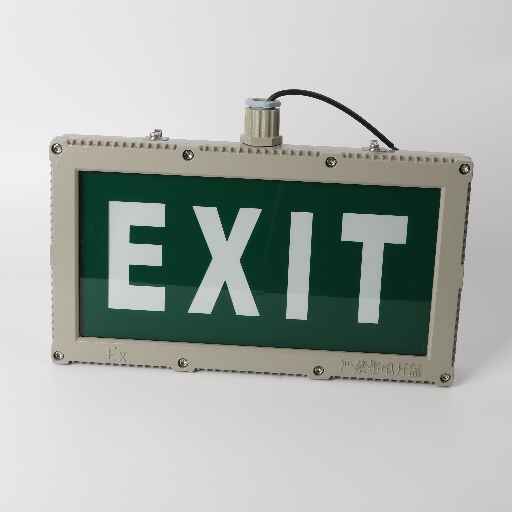
GQ-EP40 (Single-sided)
- Power
- 3W
- Battery
- 3.2V 1200mAh
- Time
- 120 min
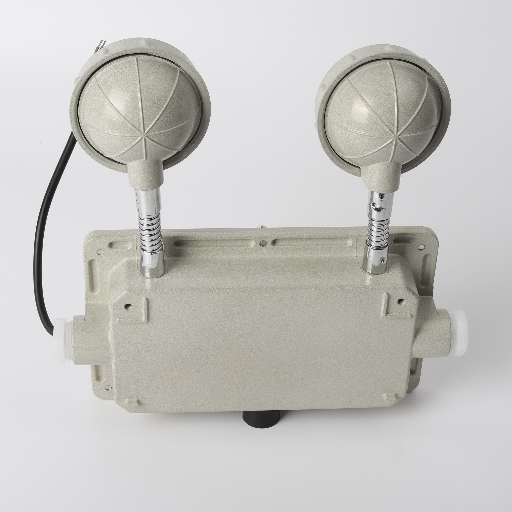
GQ-EP15 (Ceiling)
- Power
- 3W
- Battery
- 3.2V 1000mAh
- Time
- 120 min
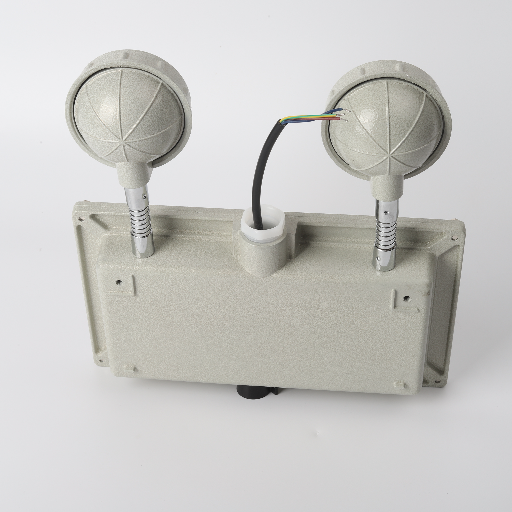
GQ-EP13 (Exit+Double)
- Power
- 3W
- Battery
- 3.2V 1200mAh
- Time
- 120 min
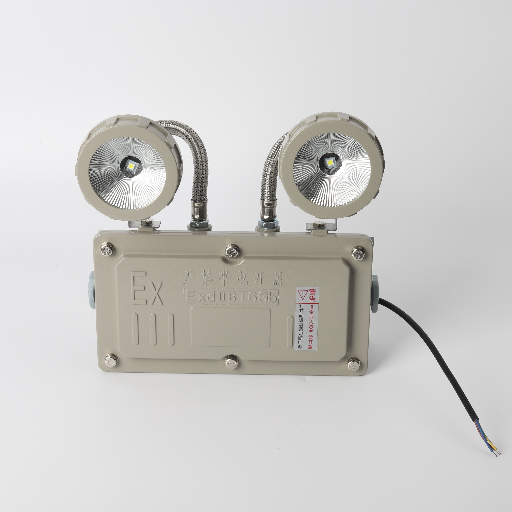
GQ-EP14 (Double-Head)
- Power
- 3W
- Battery
- 3.2V 1000mAh
- Time
- 120 min

GQ-EP27 (Double-Head)
- Power
- 3W
- Battery
- 3.2V 1000mAh
- Time
- 120 min
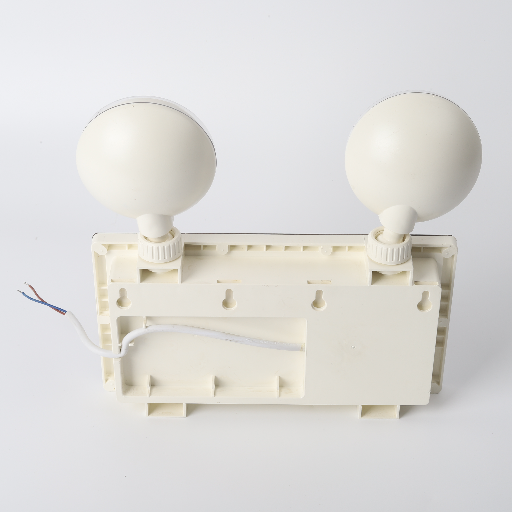
GQ-EP31 (Waterproof)
- Power
- 3W
- Battery
- 3.2V 1000mAh
- Time
- 120 min
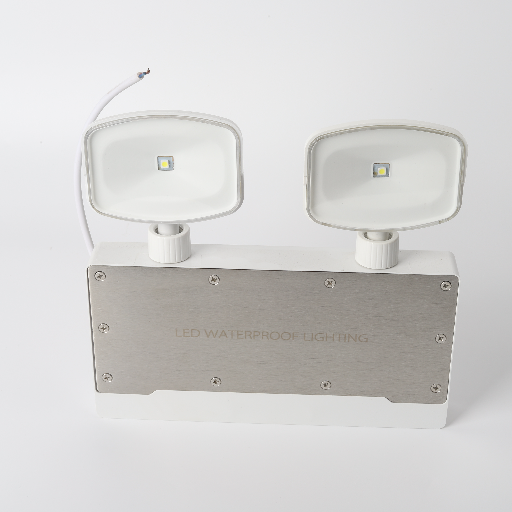
GQ-EP33 (Waterproof)
- Power
- 3W
- Battery
- 3.2V 1000mAh
- Time
- 120 min
| Model | Type | Material | Size (mm) |
|---|---|---|---|
| GQ-EP12 | Exit Sign | Aluminum Alloy | 263×50×150 |
| GQ-EP40 | Exit Sign (Single-sided) | Aluminum Alloy | 400×225×60 |
| GQ-EP15 | Emergency Ceiling | Aluminum Alloy | 250×54×250 |
| GQ-EP13 | Emergency Exit + Double-Head | Aluminum Alloy | 268×50×263 |
| GQ-EP14 | Emergency Double-Head | Aluminum Alloy | 260×65×240 |
| GQ-EP27 | Emergency Double-Head | Aluminum Alloy | 210×207×100 |
| GQ-EP31 | Waterproof Emergency | Stainless Steel + PC | 250×240×43 |
| GQ-EP33 | Waterproof Emergency | Stainless Steel + ABS | 260×245×35 |
Explosion Proof Down Lights & Wall Lights
14W low bay fixtures for high level corridors, enclosed spaces, or control rooms in hazardous locations.
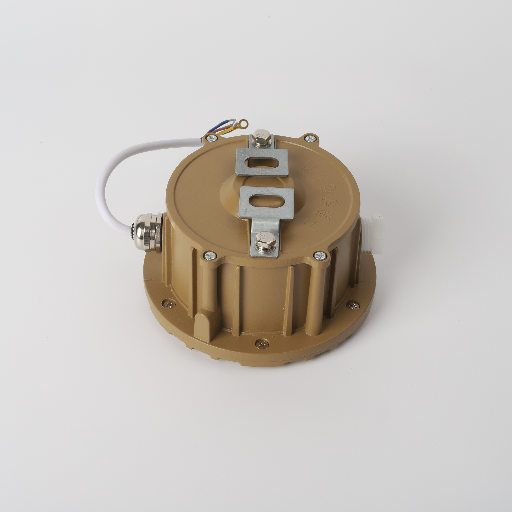
GQ-EP29 (Down Light)
- Power
- 15W
- Voltage
- AC 85–265V
- Size
- Ø140×82 mm
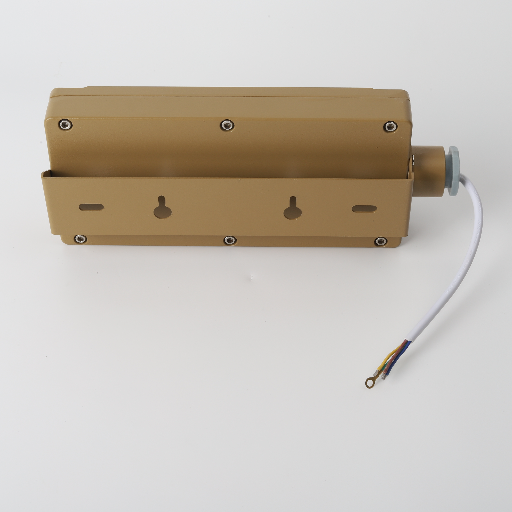
GQ-EP30 (Wall Light)
- Power
- 15W
- Voltage
- AC 85–265V
- Size
- 285×60×120 mm
| Model | Type | Material |
|---|---|---|
| GQ-EP29 | Recessed Down Light | Aluminum Alloy |
| GQ-EP30 | Surface Wall Light | Aluminum Alloy |
Selection Guide by Application
- Oil refinery / petrochemical GQ-EP02 (100W) or GQ-EP03 (150W) flood lights for process areas + GQ-EP13 emergency exit combos for egress paths.
- Paint spray booth GQ-EP01 (50W) flood lights — lower wattage reduces surface temperature for solvent-vapor environments.
- Grain elevator / flour mill GQ-EP03 (150W) flood lights for silo tops + GQ-EP29 down lights for control rooms + GQ-EP40 exit signs.
- Underground mine GQ-EP04 (200W) for main galleries + GQ-EP14 double-head emergency lights for escape routes.
- Marine / offshore platform GQ-EP02/03 flood lights (specify stainless steel hardware upgrade for salt-air corrosion resistance).
Explosion Proof LED Lighting vs Traditional HID/HPS
LED fixtures are a significantly safer and more cost-effective alternative to traditional HIDs, HPS fixtures when upgrading existing facilities or creating a new process plant or storage area in a hazardous location: energy savings, maintenance intervals, and safety factors. The following analysis examples are specific to the parameters experienced by field operators.
| Parameter | LED (Guangqi) | HID / Metal Halide | HPS |
|---|---|---|---|
| Luminous Efficacy | 130+ lm/W | 80–100 lm/W | 80–140 lm/W |
| 100W Equivalent Output | 13,000 lm @ 100W | 8,000 lm @ 100W | 9,500 lm @ 100W |
| Lamp Life | 50,000 hours | 10,000–20,000h | 24,000 hours |
| Start-up Time | Instant (<1 sec) | 5–15 min warm-up | 3–10 min |
| Re-strike After Loss | Instant | 5–15 min cooldown | 1–3 min |
| Operating Temp | T4 (135°C) | T3 (200°C) | T3 (200°C) |
| Mercury Content | None | Contains mercury | Contains mercury |
| Maintenance Interval | 5+ years | 1–2 years | 2–3 years |
| Vibration Resistance | Solid-state | Fragile | Fragile |
| Dimming | 0–100% smooth | Limited | Not practical |
The Re-strike Issue
The re-strike issue can be critical in hazardous areas. When power to an HID fixture is interrupted – during a planned outage, grid fluctuation, or emergency shut-off – the lamp cannot re-light until the arc tube cools down appropriately. In a Class I Division 1 environment, this can leave workers in darkness for as much as 15 minutes. LED fixtures exhibit full output within 1 second of power resumption, thus eliminating the safety factor altogether.
Total Cost of Ownership
From a total cost of ownership perspective, the initial premium for an explosion proof LED fixture is generally recovered in a period of 18-30 months through electricity savings and near-zero lamp replacement labor. Where the fixture must be accessed by hot work permit, scaffolding, and outage, the lamp change labor expense can be greater than $500, thereby making the LED’s 50,000 hour life an economic advantage.
50–70%
Energy reduction when replacing 400W HID with 200W LED at equivalent lumen output.
[QUALIFIED] Based on rated lm/W at initial output. LED lumen maintenance at 50,000h (L70) accelerates the real-world advantage over time.
Explosion Proof Lighting Application Profiles: Oil & Gas, Chemical, Paint Booth, Mining
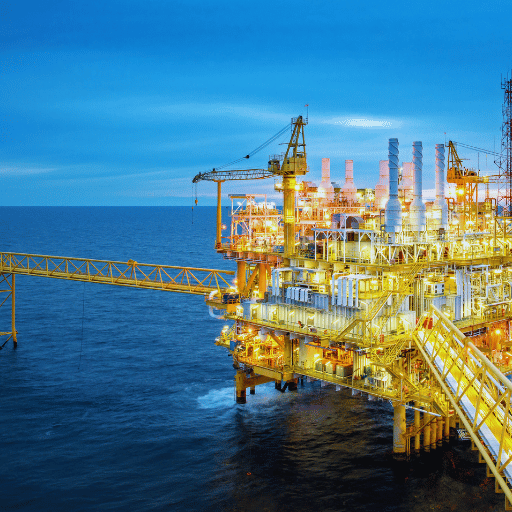
Oil Refinery / Offshore
Environment:
Continuous presence of hydrocarbon vapors. Ambient temps from -20C to +55C. Salt-air corrosion and equipment vibration.
Lighting requirements:
High-output flood lights for process areas. Emergency egress lighting. Fixtures must maintain T4 or lower temp classification.
Recommended fixtures:
GQ-EP03/04 (150W-200W) flood lights. GQ-EP13 combo emergency lights. Marine-grade stainless hardware.

Chemical Processing
Environment:
Flammable vapors during maintenance. Aggressive chemical atmosphere (acids, caustics). Indoor process areas with limited ventilation.
Lighting requirements:
Division 1-rated fixtures specified for extra safety margin. High corrosion-resistant finish is mandatory.
Recommended fixtures:
GQ-EP02 (100W) flood lights. GQ-EP30 wall lights. Epoxy-coated finish for chemical resistance.

Paint Spray Booth
Environment:
Solvent vapors from coatings. Low auto-ignition temperatures. Air circulation systems create positive pressure differentials.
Lighting requirements:
Uniform illumination (500 lux). Strict T-rating compliance to prevent vapor ignition. CRI 80+ for accurate color inspection.
Recommended fixtures:
GQ-EP01 (50W) flood lights. Lower wattage keeps surface temps within T4 limits. Multiple units provide uniform coverage.

Grain Elevator / Mill
Environment:
Combustible dust (grain, starch) accumulates and becomes airborne during operations. Dust layers create ignition hazards.
Lighting requirements:
Smooth enclosures to prevent dust buildup. Max surface temp below T3 ignition point. High-bay mounting for silo coverage.
Recommended fixtures:
GQ-EP03 (150W) for silo top lighting. GQ-EP29 down lights. Schedule quarterly cleaning to prevent buildup.
Procurement Guide for Explosion Proof Lighting Fixtures: Pricing Factors, MOQ & Lead Time
Guangqi manufactures explosion proof LED fixtures in our factory in Zhongshan, Guangdong. We have complete oversight of the production chain: alumnium die-casting and machining, LED assembly and wiring, sealing and testing.
What Affects Your Unit Price
- Comparison of wattage and fixture type: For example the GQ-EP04 flood light consumes three times the aluminum, vastly larger heat sinks, and higher current LED drivers compared with the GQ-EP01 50W version. Emergency fixtures include battery unit and charger circuitry.
- Order quantity: Discounted pricing applies at a minimum order of 50 units, 200 units, 500 units.
- Certification requirements: For specific certification standards (UL, ATEX, IECEx) additional third-party testing and documentation can be provided at the project level.
- Customization: For options outside the standard specifications such as alternative voltages (DC 24V, 480V), finishing treatments, integration of sensors, or structural modifications such as different mounting brackets additional tooling costs may be incurred.
Item Detail
Minimum Order Quantity
20 units (standard) / 50 units (custom)
Sample Order
1–3 units available for evaluation
Production Lead Time
20–25 business days (standard) / 30–35 days (custom)
Payment Terms
30% deposit, 70% before shipment (T/T). L/C for orders >$10,000
Shipping
FOB Zhongshan, China. Air freight for urgent orders.
OEM/ODM
Custom branding, voltage, mounting, finish, smart control integration
Warranty
3 years standard. Extended available for project volumes.
After-Sales
Replacement parts within 7 business days. Technical support via email/WhatsApp.
Engineering Tools for Explosion Proof LED Light Planning
Hazardous Location Fixture Selector
Select your hazard classification and application to get a recommended Guangqi fixture configuration.
Use Selector ToolLED vs HID/HPS Savings Calculator
Calculate your energy and maintenance savings by switching from HID/HPS to Guangqi LED explosion proof fixtures.
Calculate SavingsFrequently Asked Questions
How do you install an explosion-proof light?
AC or DC power must only be supplied by qualified electricians in classified locations.DO not attempt to correct wiring errors in hazardous areas. Consult NEC articles 500-503 and applicable local codes. Utilities must use explosion proof conduit fittings. All entries into the area must be sealed within 450 mm.84″ of the enclosure. Thread set screws should be checked to ensure minimum thread entry credentials. After installation checks should include gasket sealing and emergency power tests before energizing.
Is NEMA 7 explosion-proof?
Indeed. NEMA Type 7 enclosures are designed for indoor Class 1 Division 1 environments for the presence of flammable gases or vapors, NEMA 9 for Class 2 environment with combustible dusts and NEMA 10 for mine applications.
What is the T-rating for explosion proof lights?
T-rating = maximum fixture surface temperature during operation. Should be below auto-ignition temperature of any gas/dust mixture encountered. T rating scale: T1 (highest temp: 450C, minimally restrictive), through T6 (lowest at 85C, most restrictive). 20 years of industrial experience indicates native gas performance will tend towards T3 (200C), T4 (135C) territory. Wide-range LED fixtures tend to be rated T4 or better compared to HID lamps of similar light output as these exhibit radically reduced waste heat. For hazard usage all classes of activity can then be addressed with the same high-performance fixture design.
Can LED lights be used in hazardous locations?
Certainly – and LED fixtures are now the technology of choice for all new facilities. Benefits over conventional HIDHPS: lower operating temperatures (“T” rating), instant re-strike after power outage (important safety consideration), longer mean time before failure (“MTBF”: 50,000 hrs compared to 10-20,000 for traditional lamps), no mercury. It is critical that the LED fixture continues to use a certified explosion-proof enclosure. The technology of the light source has no bearing on this obligation.
What certifications are needed for explosion proof lighting?
Market-dependent. North America: UL 844 safety listing. Europe: ATEX per 2014/34/EU directive. International: IECEx: IEC 60079 specifications. OSHA code: (enforced via the NEC 500-503) standards. Guangqi fixtures have CE coding and specification to IEC 60079 illumination enclosure code.
Do you offer custom explosion proof lighting solutions?
Yes. We support custom power levels, source voltage variations (DC 24V: ideal for under water mining applications, 480 V: suitable for heavy-industry grid applications), custom enclosure mounting arrangements, specialized corrosion resistant aesthetics, integrated sensor or dimmable lighting control units. Minimum order quantity for custom projects: 50 fixtures. Typical prototype development process: 15-20 days from fixture model approval. Some custom developments already completed include: deep-sea rated hoods, DALI preset dimming.
Trending now