Get in Touch with GUANGQI


Commercial Lighting Control Systems — LED Drivers, DALI-2 Controllers & Dimming Solutions
Commercial lighting control systems from Guangqi: LED drivers, DALI-2 controllers, 0-10V dimming modules, and wireless control nodes, under one factory roof – in-house since 2010, used in 3,000+ commercial and industrial projects in over 50 countries.
3,000+ Projects
50+ Countries
CE / UL / DALI-2 / DLC
5-Yr Warranty
Factory Direct
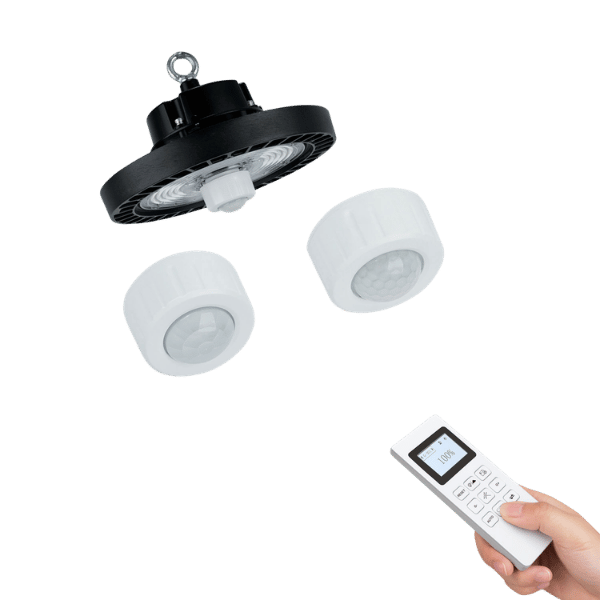
Guangqi Commercial Control Systems Portfolio
Our commercial lighting control solutions are organized around the four functional layers every installation needs: power conversion (LED drivers), protocol signaling (DALI-2, 0-10V), integration (relay panels, gateways, wireless nodes, room controllers), and sensing (occupancy sensors, vacancy sensors, daylight sensors, photocells). LED drivers ship from stock with the shortest lead times; the remaining categories – including wired lighting control and wireless lighting control variants – are delivered through our OEM/ODM engineering channel for projects that need private-label, custom firmware, or specific daylight harvesting profiles.
In Production · MOQ 100
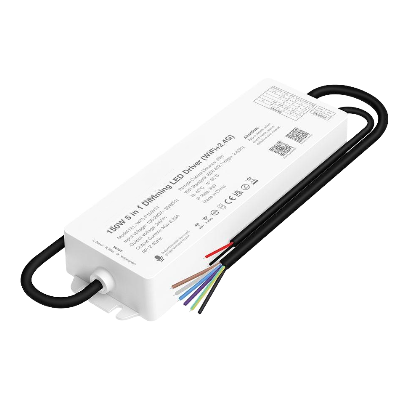
LED Drivers
Four series covering every LED load profile, from 10W downlights to 600W stadium fixtures.
- CC Series: 350–2100 mA, 10–240 W
- CV Series: 12 / 24 / 36 / 48 V DC, 20-600 W
- Dimmable: DALI-2, 0-10V, TRIAC, PWM
- Outdoor: IP65 / IP66 / IP67, 6kV surge
Decision Matrix — Matching Category to Application
| Feature | LED Drivers | DALI-2 | 0-10V | Wireless | Panels |
|---|---|---|---|---|---|
| Best For | Any LED load | Multi-zone office, healthcare | Warehouse, parking, outdoor | Retrofit, no control wiring | Centralized campus control |
| Output / Protocol | CC / CV / Dimmable / Outdoor | IEC 62386 (DALI-2) | 0-10V DC analog | Zigbee 3.0 / BLE mesh | 0-10V + latching relays |
| IP Rating | IP20 – IP67 | IP20 (indoor) | IP20 (indoor) | IP20 (indoor) | IP20 + emergency option |
| Dim Depth | 1–100% (if dim) | 0.1–100% | 10–100% typical | 1–100% | 1–100% per 0-10V ch. |
| Availability | In production | OEM 25–35 days | OEM 25–35 days | OEM 35+ days | Project configured |
| Typical MOQ | 100 pcs | 500 pcs (OEM) | 500 pcs (OEM) | 1,000 nodes (OEM) | Per project scope |
Control Protocols We Support — DALI-2, 0-10V, TRIAC, PWM, Wireless
The second question after what system we use is whether its value and performance will be worth it in the long run – priced against the baseline assumption of existing magnetic or phase-cut dimming systems. On an architect’s discussion board, an electrical engineer said of distributed occupancy controls “The traditional light switch in the hallway of a long corridor primarily operates the parking garage lighting with a switch on each end for operational convenience.” Another designer added that they “use occupancy sensor controls in many spaces to save energy in the long run”. This is sounding pretty familiar already. Saves long term investment? Or wasting money?
Cheva drivers and interfaces support the full spectrum of wired lighting control and wireless lighting control protocols commercial specifiers actually encounter – DALI-2, 0-10V, TRIAC, PWM, DMX, and Zigbee/BLE mesh. Below is a straight comparison, followed by the installation economics, integration path with occupancy sensors and daylight harvesting controls, and typical use case for each.
| Protocol | Wiring | Max Devices | Dim Depth | Bidirectional | Typical Use |
|---|---|---|---|---|---|
| DALI-2 | 2-wire bus, polarity-free | 64 per bus, unlimited via gateway | 0.1–100% | Yes (status feedback) | Office, healthcare, museums, hospitality |
| 0-10V | 2 extra control wires | Unlimited (parallel drop) | 10–100% typical, 1% with matched driver | No | Warehouse, parking, industrial, outdoor |
| TRIAC | Standard 2-wire line | 1 dimmer per circuit | 10–100% | No | Legacy hospitality, retrofit |
| PWM | Low-voltage DC | Per driver | 1–100% | No | LED strips, cove, signage |
| Wireless Mesh | None — RF mesh | 200+ per network | 1–100% | Yes (mesh health) | Retrofit, no-cable installations |
DALI-2 (Digital Addressable Lighting Interface)
2 Bus Signaling The current version of the IEC 62386 international standard for DALI is DALI-2, maintained by the DALI Alliance (DiiA). A single 2-wire non-polarized bus provides each of 64 addressable fixtures – drivers, sensors, keypad, gateway – with independent control, scene recall membership, and bi-directional reporting.
0-10V Dimming (Simple, Proven, Still Dominant)
In commercial projects where the architects and mechanical engineer have already specified an integrated building management system, DALI-2 gives you the dimmer Bank2light needed to fit into the existing control infrastructure; reveals the LED and driver failures expected by the BMS; recalls the programmed scene settings it is looking for. Guangqi supplies DALI-2 certified CC, CV, and enclosure-ready driver variants, plus DALI-to-BACnet and DALI-to-Modbus gateways in for integration with Honeywell, Johnson Controls, Siemens Desigo, or Schneider EcoStruxure head-ends. Valid project experience: Dubai luxury resort, 850 IP67 drivers networked through DALI-2 to the property’s BMS – zero driver failures across three years of 50C+ summer operation . Dimming using a pair of wires The standard go-to dimmer for all residential and hospitality retrofit projects using wall switches. Forward-phase and reverse-phase TRIAC-compatible driver variants allow hotels and restaurants to continue using their existing high-voltage wall switches – no new wiring, re-positioning, or re-specifying. Zone-open is less predictable than DALI-2 (roughly 10-100%), and TRIAC-wiring doesn’t scale to multi-zone commercial lighting as seamlessly. We stock TRIAC-compatible variants of our CC and Dimmable series to make every retrofit a slam dunk for your customer.
TRIAC Phase-Cut (Legacy-Friendly)
Switching a 0-10V control signal wired across two external conductors. No addressing, external gateway, or special control program required. Exactly why 0-10V wiring still accounts for the civilian install base: warehouse, parking garage, manufacturing floor, outdoor shopping mall. One installer caveat worth noting – the dimming depth of a 0-10V zone is entirely driver dependent; inexpensive drivers max out at 10% or 5%; matched pair-quality drivers dip cleanly to 1%. Our datasheets publish the low-end dimming specs for every 0-10V dimmable fixture so you don’t sweat a wrong choice during commissioning. 0-10V controlling channels are configurable as linear or logarithmic dimming curves at time-of-order – specify the curve your fixture and space demand.
PWM (LED Strips, Cove, Signage)
The standard residential-style wall dimmer. Forward-phase and reverse-phase, TRIAC-compatible fixtures allow hotels, restaurants, aging property updates to LED to keep exisitng wall controls in place – no new wiring or reengineering. Dimmable-CC and Dimmable-series variants in stock for your hotel and restaurant retrofit projects where the wall controls are to remain in place.
DMX and Architectural Dynamic Lighting
Tri-state switching between two DC sources, building lighting into the house-side of the integrator to control the LED back lights in the powered down planetarium projector house. 300 Hz (color-correct for retail and theatrical projection) and 2 kHz (video-recording flicker-free) are selectable. Standard for LED markers and linear perimeters in signage, channel letters, feature lighting. PWM controllers toggle directly on the standard 12 V/24 V/48 V output bus of our CV-series drivers.
Wireless Mesh (Zigbee 3.0 / BLE Mesh)
For some retrofits running new control wiring through a finished ceiling simply isn’t financially feasible. That’s where wireless lighting control is the solution – our wireless nodes build 200+ device self-healing mesh networks, with line-powered wireless keypads and battery free Pico style controls. Original Equipment Manufacturer partners may license our commissioning app for their proprietary branding and cloud integration, along with optional touch screen room-control user interfaces for conference rooms and executive offices. This is the fastest-deploying control available – ideal for control upgrades that are deployed parcel by parcel in occupied occupied building. For smart building, smart space, and fixture-integrated control applications, wireless mesh networks and advanced fixture controls combine so each fixtural luminaire can operate as it’s own network node in a distributed control architecture, without pulling wire. Wireless mesh networks also provide patchless, fleet-wide scene mode setup if centralized policy control is desired, and can include an in-line surge protective device (SPD) for mounting in an exposed outdoor environment. Driver lifetime with wireless control is on par with our wired series – the mesh network simply adds RF messaging, not added thermal load.
“We tested every DALI-2 driver in our 2024 product line against Honeywell WEBs-AX, Johnson Controls Metasys, and Siemens Desigo head-ends before signing off the firmware. A driver that passes an IEC 62386 conformance test in a lab doesn’t automatically behave on a real BMS bus – we verify both.” — Guangqi Engineering Team, DALI-2 Integration Lead
Commercial Lighting Control vs Traditional Systems — Performance Comparison
Once you’ve defined the protocol, the procurement question is how the electronic LED driver + modern control stack compares on economics to magnetic ballast + phase cut system it replaces. That delta isn’t hypothetical – it manifests directly in utility costs, maintenance visits, and occupant reports within the first year post retrofit.
| Parameter | Electronic LED Driver (Ours) | Magnetic Transformer / Ballast | Advantage |
|---|---|---|---|
| Efficiency | 90 – 95% | 75 – 85% | 10–15% energy savings |
| Power Factor | >0.95 (PFC built in) | 0.5 – 0.7 | Avoids utility penalty rates |
| Weight (100W unit) | 0.3 – 0.5 kg | 1.5 – 2.5 kg | 70% lighter — ceiling grid friendly |
| Lifespan @ Tc=75°C | 50,000+ hours | 15,000 – 25,000 hours | 2–3× longer service life |
| Dimming Support | DALI-2 / 0-10V / TRIAC / PWM | Limited phase-cut only | Full protocol flexibility |
| Flicker (depth of modulation) | <1% (IEEE 1789 compliant) | 15–30% at low dim | Flicker-free at all dim levels |
| Inrush Current | Controlled via NTC | Uncontrolled spike | Protects circuit breakers |
| Standby Power | <0.5 W | 3–8 W | 85%+ standby savings |
These figures have direct project implications. Saving 10-15% efficiency on a 200-fixture office running 12 hours/day can cut 12000+ kWh annually in typical commercial rates. Electricity accounts for 85-95% of lighting costs including pipe insulation and replacement bulb lamp bundles. The 0.95+ power factor obviates the utility billed surcharge for consumption below 0.9 power factor – long-term hidden savings your financing model ignores. Weighs sub-70 lbs is critical when the ceiling grid or fixture mount can’t support additional mass. And flicker – 1% electronic, up to 30% magnetic at low dim, is the biggest factors defining architectural space occupants’ subjective comfort levels, and the co-variance of headache and eye-drain symptoms it produces.
DALI-2 vs Legacy 0-10V — When the Extra Cost Pays Off
| Capability | DALI-2 | 0-10V |
|---|---|---|
| Individual device addressing | Yes — up to 64/bus | No — zone-level only |
| Bidirectional status (failure alerts) | Yes | No |
| Scene recall from keypad/BMS | Yes — 16+ scenes per device | Manual multi-level only |
| Commissioning | Digital, app-based | Wiring-based zoning |
| Cost per control point | Higher | Lower |
| Where it wins | Office, healthcare, museums, multi-zone | Warehouse, parking, outdoor, retrofit |
For projects with established specification of operating protocol, if the fixture count exceeds approximately 50-fixture per zone then DALI-2 lamp control payback exceeds initial purchase and installation labor. For open-platoon flatbed warehouse and parking garages where partial minimum fire mode control / lighting scene is all you need, 0-10V offers equivalent lighting code compliance at reduced hardware expense. Both belong in a complete control repertoire and both ship from our manufacturing line.
Lower Total Cost of Ownership
40%+
Commercial LED + control retrofits generally pay for themselves within 3-8 months and show a 40%+ reduction in 5-year present worth cost of ownership compared to traditional magnetic + phase cut systems.
Calculate Your 5-Year ROI
Specify your currently installed fixture count, wattage and tariff. Watch the projected annual savings, payback time, and 5-year net benefit.
Launch ROI Calculator →Project Results — Commercial Lighting Control at Scale
Numbers in datasheets are promises. Numbers from installed jobs are proof. Three recently completed commercial and municipal projects illustrate what our control systems can do once they’re installed, commissioned and running under actual load.
Shenzhen, China · 2024 · Commercial Office
12-Floor Office Complex — T8 Fluorescent to LED + 0-10V Retrofit
A property company managing a 12-storey office building in Nanshan, Shenzhen approached us after suffering from two chronic problems: lighting energy had exceeded budget by 35% for a building of that size, and internally-sited maintenance teams were burning through a man-day per month trying to track down failed fluorescent ballasts in over 3,000 fixtures. The existing T8 system was 14 years old, and replacement ballasts were becoming difficult to source.
We specified the use of our CV-series 24V constant voltage drivers (150W model) for the upgrade to the LED ceiling flat panels. The 24V DC bus facilitated overhead daisy-chaining of multiple LED panels on a single driver per zone – 18 drivers per floor rather than 250+ individual ballasts. The zone-level 0-10V dimming was wired up to occupancy sensors in open-plan areas, and to wall-mounted control keypads elsewhere.
42%
Energy Reduction
0
Driver Failures (18 mo)
28 mo
Payback Period
-92%
Maintenance Callouts
Eighteen months after installation the building consumes 42% less lighting energy compared to the old T8 system. No driver failures. Maintenance has shifted from monthly corrective ballast exchange to quarterly preventative maintenance – a schedule easily ingested by the internal operations team without OT.
Dubai, UAE · 2023 · Luxury Desert Resort
Landscape & Facade Lighting — 850 IP67 Drivers on DALI-2 BMS
This project required the most arduous advertised working environment for our outdoor driver series: ambient over 50C 365 days/year, sulphur-laden gales, maritime salt-borne atmosphere, sporadic sand storms. 850 landscapes and facade luminaires across the estate required DALI-2 control, being centralised against the property management system, with scene recall for the day-to-night-to-late-night variances, and scheduled dimming in accordance with the local solar calendar.
Outdoor series evolution: IP67 aluminium die-cast arrays, with potting into hermetic compounds. Every electronics module hermetically-sealed agains ambient pollution and particles. An extended thermal derating curve ensures the drivers are operating at a minimum of 87% of rated power at 55C ambient, well within the maximum dressed environment. DALI-2 control interfaces are linked directly to the estate BMS for scene recall, scheduling and day-length-responsive dimming throughout the estate.
850
IP67 Drivers
3 Yrs
Zero-Failure Record
DALI-2
BMS Integration
55°C+
Operating Ambient
3 years in, there have been no driver failures. Facilities management has negotiated an extended service contract, into 2027, to cover the proposed extension wing on the same IP67 + DALI-2 installation.
Northern Europe · 2024 · Municipal Street Lighting
City-Wide Driver Replacement — 220,000 Luminaires, 6kV Surge Protection
A northern European municipality completed an LED conversion across their streets two years previously with another supplier’s drivers. Following two years of thunderstorms and related electrical degradation, a sample set of the city’s overhead high-voltage distribution kit revealed a 15% failure rate. Electrical tests identified conductively-induced high energy transients waves in the 2.5-4.5 kV range in the grid, occurring with regularity; transient peaks could often be observed above 6 kV. The specified 2 kV MOV protection was beneath the measurements of the worst-case, and the final behavior was cascading failures to the output stage circuitry.
We replaced the bad units with our CC-series drivers with 6 kV differential-mode (L-N) and 8 k V common-mode (L-PE) IEC 61547-compliant surge protection circuitry. Each features two-stage SPD circuitry a gas discharge tube at the input for high-energy clamping, then a TVS diode array that quickly addresses any transient edge.
220,000
Luminaires in Service
0%
Failure Rate (14 mo)
6kV / 8kV
L-N / L-PE Surge
Phase 2
Approved (+4,000 poles)
After 14 months of a three-year field trial, the driver failure count is still at zero. City funds have been set aside to fund a Phase 2 expansion of 4,000 more poles to the same specification, taking until late 2025.
0%
Failure Rate (220k)
42%
Energy Savings
3 Yrs
Outdoor Zero-Fail
220k
Poles In Service
55°C
Ambient Proven
Want the full technical detail on any of these deployments?
— includes driver SKUs, surge-protection test reports, and commissioning notes.
Certifications & Compliance for Global Markets
The procurement of commercial lighting control is totally dependent upon the quality certificate stack. A missing UL listing breaks the best North American project at the plan review. A missing DLC listing cancels the utility rebate program. A missing CE declaration halts the EU customs clearance. So we ship every commercial driver series that way, and here are the exact standards that protect the project or the import against which risk.
CEEN 61347-1/2-13
RoHSDir. 2011/65/EU
UL ListedUL 8750
DLCQualified Products
IP65 – IP67IEC 60529
IEC 61347Lamp Controlgear Safety
IEC 62386DALI-2 Conformance
EN 55015EMC Emissions
EN 61000Harmonic + Flicker
IEEE 1789Flicker / Health
ENECEU Voluntary Safety
ISO 9001QMS
| Standard | Scope | Applicable Region |
|---|---|---|
| CE (EN 61347-1, 2-13) | LED driver electrical safety | EU + UK (UKCA through 2027) |
| RoHS 2011/65/EU | Restriction of hazardous substances | Global |
| UL 8750 | Light-emitting diode equipment for lighting products | US / Canada |
| DLC Qualified Products List | Required for US commercial utility rebate programs | US (all 50 states) |
| IEC 60529 (IP65 / IP66 / IP67) | Splashproof / jet / immersion ingress protection | Global outdoor standard |
| IEC 61347-1, -2-13 | Lamp controlgear general + DC/AC-supplied electronic | International |
| IEC 62386 (DALI-2) | Parts -101, -102, -207, -208 — bus, device, control gear | DALI Alliance verified |
| EN 55015 : 2013 | EMC emissions from electrical lighting equipment | EU |
| EN 61000-3-2 / -3-3 | Harmonic current + voltage fluctuation / flicker | EU |
| IEEE 1789 : 2015 | Recommended practice for modulating current in high-brightness LEDs — protects against health-impacting flicker | Global, health-sensitive |
| ENEC | Voluntary European safety certification, specifier-preferred | EU commercial specs |
| ISO 9001 | Quality management system certification — procurement audit requirement | Global B2B |
Regional Compliance Stack at a Glance
- USA – UL 8750 Listed, FCC EMC, DLC Qualified Products List for utility rebate funding. Title 24 (CA) and ASHRAE 90.1-2022 / IECC 2024 lighting-control requirement scenarios.
- EU – CE + ENEC + RoHS + EN 55015 / EN 61000 EMC. UKCA retained through 2027 changeover period.
- Middle East & GCC – GCC Conformity Certification enabled (see Dubai resort wiring specification above).
- International ordering – IEC test reports and CB declarations issued to order for any specifier or import-package.
Engineering Note — DLC Qualified Products List
For North American retrofits, DLC listing sometimes enables a 3-month or a 12-month payback period. Paid out by the utility, DLC-listed driver discounts equivalent 8-25% net project outlay reduction, with 30-60% fewer fixtures needed and a 30-60% smaller electrical closet footprint. Comparative specs for every product are linked from the QPL site, but we also publish our DLC ID numbers so this can be done automatically during quoting.
All our Guangqi commercial drivers arrive from the factory fully burn-in tested. Our quality-control management system validates incoming raw materials, documents in-process testing during assembly, and verifies every piece against IEC 61347 and UL 8750 standards for the printed circuit boards, star-wires, integrated circuits, and heatsinks before it leaves. Data sheets, CE certificates, and CB declarations are included with each shipment as part of the export package – no additional charge, no procurement-side chasing.
Procurement Guide — Pricing, MOQ, Lead Times, OEM/ODM
Transparent sourcing conditions are where many commercial lighting providers hold their tongue. We publish ours in advance: the driver specs which impact cost, the MOQ and lead-time levels we guarantee, how we handle OEM and ODM customization projects, and the warranty conditions too.
Procurement Tip
What to ask for on every commercial driver quoteAlways ask for the complete driver spec sheet, with the (1) derating curve, (2) device surge level/IEC 61547 statement, (3) IEEE 1789 flicker report, and (4) the part-load power factor curve (not only at 100% rated). It’s typical that a lower unit-price also delivers a higher five-year total-cost-of-ownership – the 10% driver cost benefits are quickly consumed when failure rate surges from 1% to 4% in a 10,000-fixture portfolio.
Pricing Framework
Unit pricing scales based on power level (10W to 600W), IP rating (IP20 to IP67), and dimming protocol (DALI-2 an added premium for addressable control over 0-10V). Volume discounts tier at 500+, 1,000+ and 5,000+ unit breakpoints. OEM/ODM pricing – custom output voltage, current, protocol or housing – is quoted on a project basis depending on NRE and production run size. Sample orders (1-10 units) can also be ordered for testing, priced separately and shipped by air within one week.
Lead Times
| Order Type | Standard Lead Time | Notes |
|---|---|---|
| Standard CC / CV / Outdoor drivers | 15–20 business days | Built from stocked components |
| Dimmable driver variants | 15–25 business days | DALI-2 conformance verification step |
| Custom / OEM orders | 25–35 business days | Firmware + PCB + burn-in cycle |
| Sample orders (1–10 pcs) | 5–7 business days | Air freight available as add-on |
| Expedited production | On request | Quoted per urgency and order size |
OEM / ODM Capabilities
The commercially available lighting brands who are selling in their own label can also order the drivers and controllers such as:
- Custom output voltage, current, and wattage specifications
- Private-label packaging with your logo and part-number scheme
- Altered housing sizes and types of connectors (Molex, Phoenix, Wago.. etc)
- Table 6.3 – Description of the firmware modifications for curves of dimming, power-on behaviours and the manufacturer specific DALI-2 scene profiles with some examples.
- Regional certification adds (FCC, SAA, CCC, KC as needed)
OEM typical development cycle from approved spec to first production lot time is 25-35 business days. Knowledged project engineer is assigned to your account during the period.
Minimum Order Quantity
- Series CC / CV / outdoor: 100 pcs por modelo
- Dimmable series: 200 pcs per model
- DALI-2 Controllers, 0-10V Modules, Wireless Nodes, Integrated Panels: 500 – 1,000 units par projet
Warranty & After-Sales
A 5-year standard warranty against component failure, solder-joint failures, and potting compound failures at rated ambient operating conditions (temperature, humidity, IP environment) is supplied with every Guangqi commercial driver (so a 7-year warranty can be available on a project basis for large volume orders). RMA replacements are shipped within 5-7 working days of acceptance of claim, with an account-level tech support engineer assigned during normal working hours (GMT + 8). Regional service agents and RMA logistics operators have been appointed in the Middle East, Europe and North America.
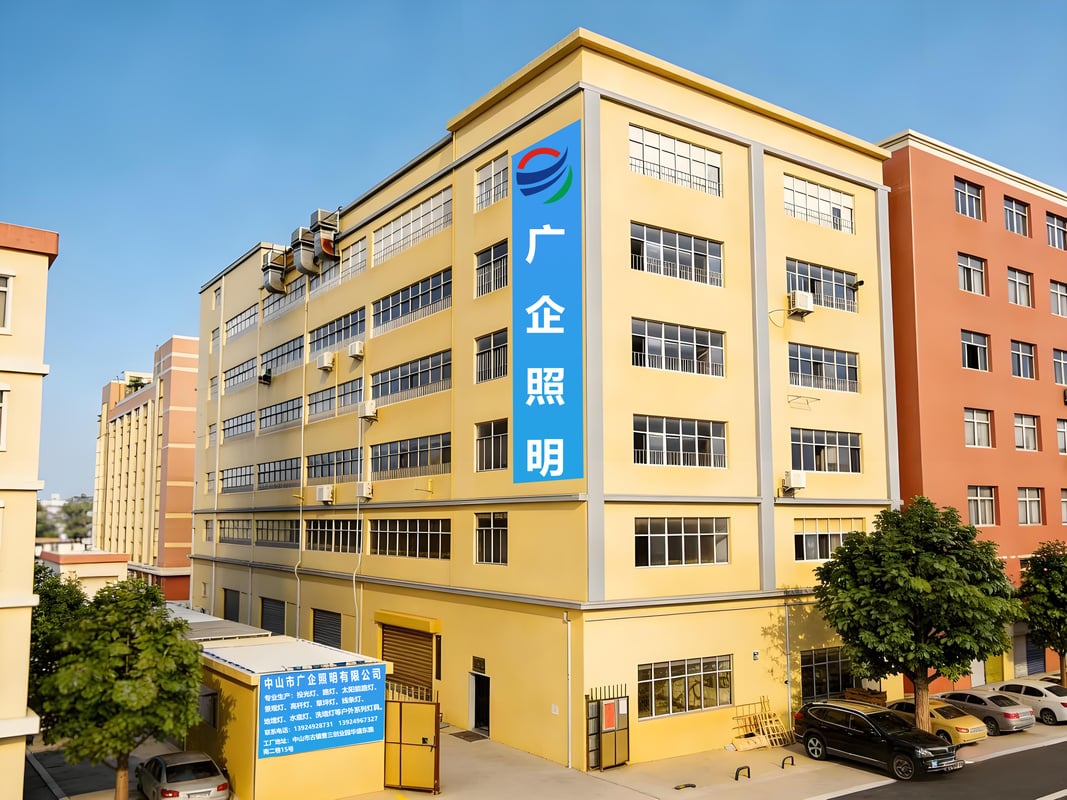
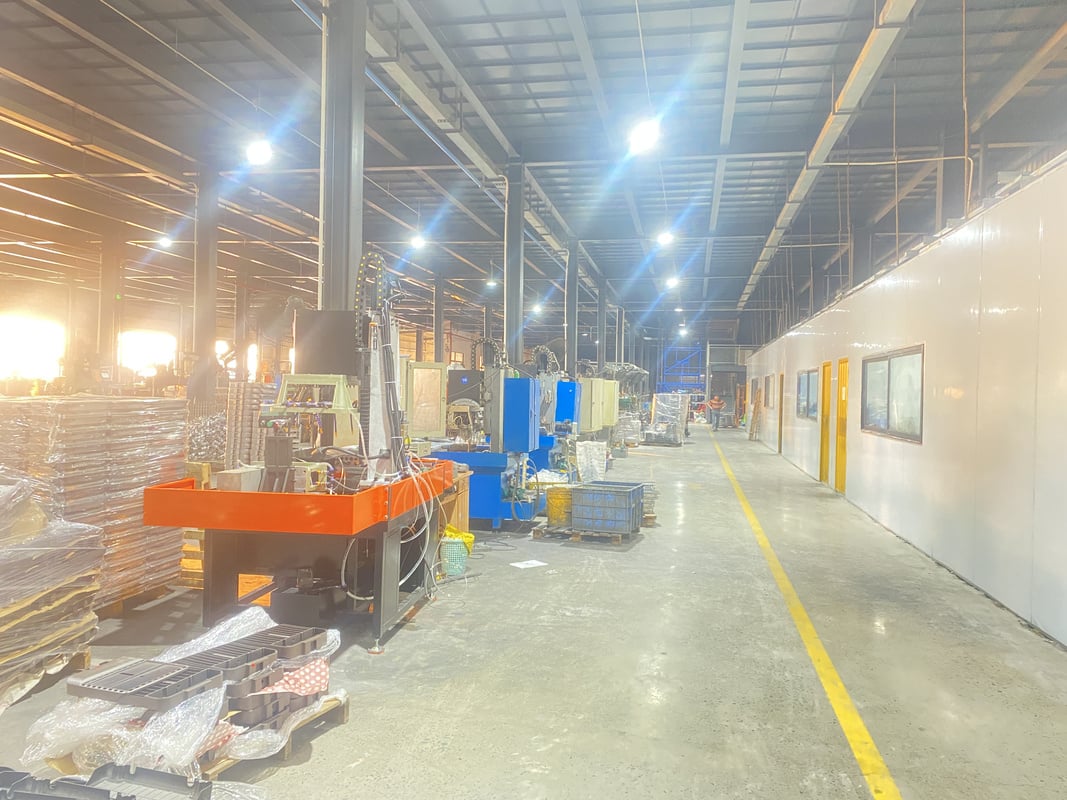
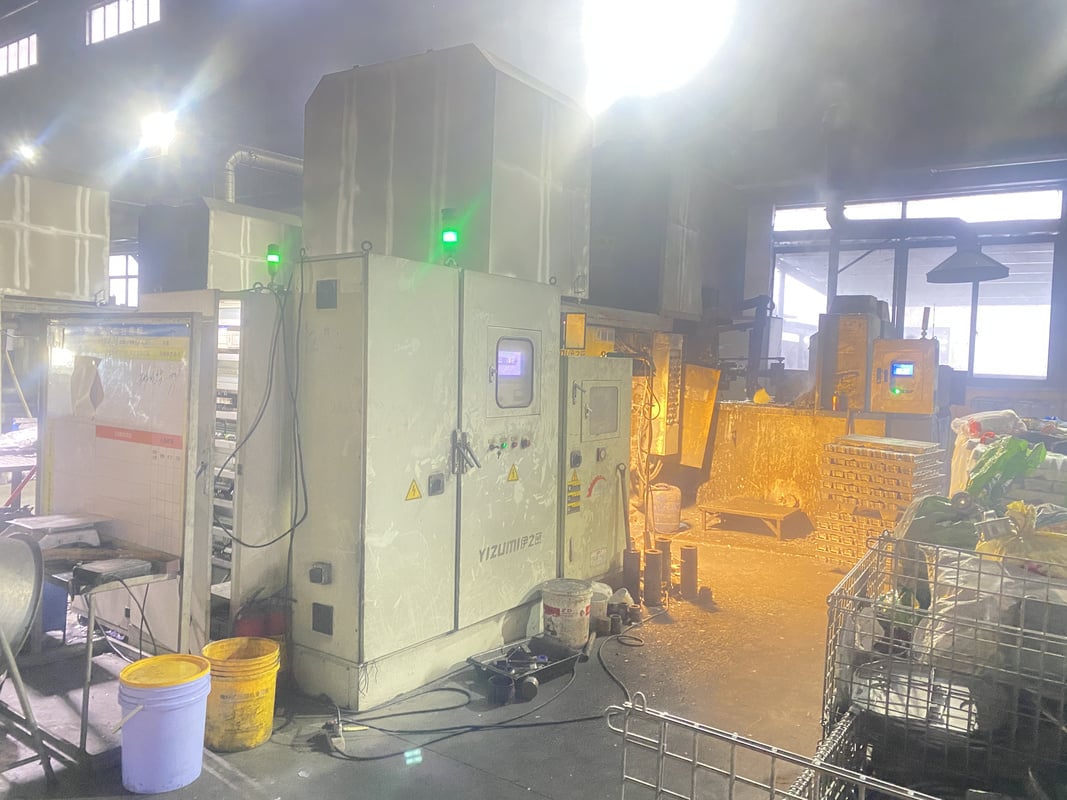
Guangqi Lighting Factory Tour — Industrial Lighting Manufacturing


Lighting Control Engineering Tools
Leverage our suite of interactive specification tools to accurately define protocols, verify local energy code compliance, and validate BMS integration parameters for your commercial projects.
Lighting Control Protocol Selector
Determine the optimal system architecture—DALI-2, 0-10V, or Wireless Mesh—by evaluating your specific building type, fixture density, and control depth requirements.
Open Selector
Energy Code Compliance Checker
Generate an instant compliance checklist outlining automatic shutoff, daylighting, and dimming mandates under ASHRAE 90.1, IECC, and California Title 24.
Check Compliance
BMS Integration Compatibility Checker
Validate DALI-2 gateway communication pathways and feature integration capabilities with Honeywell, Johnson Controls, Siemens, and Schneider head-ends.
Verify Integration
Ready to spec your next commercial lighting control project?
Would you like to get a quotation? Provide us with your fixture count, application types, and desired lead time. We will contact you with a quotation detail, sample availability, and your complete compliance package within 2 working days.
Request a QuoteFAQ — Commercial Lighting Control Questions
According to protocol: wired (DALI-2, 0-10V, TRIAC, PWM), and wireless (Zigbee 3.0, BLE mesh, KNX). According to architecture: stand-alone room controls, distributed (per-zone) control, centralized relay-panel control. According to integration scope: stand-alone lighting, or BMS connected, (BACnet, Modbus, DALI-to-BACnet gateway).
Yes. Our DALI-2 drivers are IEC 62386 conformance-verified with Honeywell WEBs-AX, Johnson Controls Metasys, and Siemens Desigo BMS head-end systems prior to firmware release. For projects that require translation of BACnet or Modbus protocol we ship DALI-to-BACnet and DALI-to-Modbus gateway options as OEM add-ons. Our Dubai luxury resort installation (850 IP67 drivers, 3 years operation, 0 failures) runs full DALI-2 to BMS integration.
Standard driver-series MOQ is 100 pcs per model (CC, CV, Outdoor) or 200 pcs per model (Dimmable). Standard order lead-time: 15-20 business days. OEM/ODM custom output, firmware, or housing orders: 25-35 business days post specification approval. Prototype orders (1-10 pcs): 5-7 business days.
Our Outdoor series rated IP65, IP66, or IP67 from 60VDC DC input still achieves 100% rated output at 50C ambient. Above 50C LED output linearly derates at 2.5% per C until reaching 75% of rated at 60 C (protects electrolytic capacitors from thermal runaway while maintaining useful lumen levels in high-temperature environments). Our Dubai luxury resort installation averages 55 C ambient every summer with zero driver failures over 3 years across 850 fixtures.
6 kV differential mode (L-N) and 8 k V common mode (L-PE), IEC 61547 conformance. Dual-stage surge protection: a gas discharge tube at the input banks high-energy events, then a TVS diode array that responds instantaneously along transient edges. Our northern European municipal installation (220,000 poles on exposed overhead grid with 4.5 k V+ storm surges) reports 0% failure at 14 months.
Yes. Linear, logarithmic, and custom dimming curves are supplied. DALI-2: custom fade times, power-on behavior, scene profile pre-loading. PWM frequency: 300 Hz to 2 kHz (factory selectable). 0-10 V: linear or logarithmic (factory specified). Firmware development (within existing software “envelope”) is 25-35 business days – same as standard OEM lead time.
Add total LED load wattage, then include 20% for start-up/surge, long-term de-rating. For constant current drivers: choose matching driver current (mA) with LED datasheet. For constant-voltage drivers: choose the correct I V for the module series (12 V, 24 V, 48 V). Verify given driver current supports parallel LED load. Use our LED Driver Sizing Calculator, or email fixture planogram for rapid driver recommendation.
Trending now