Get in Touch with GUANGQI



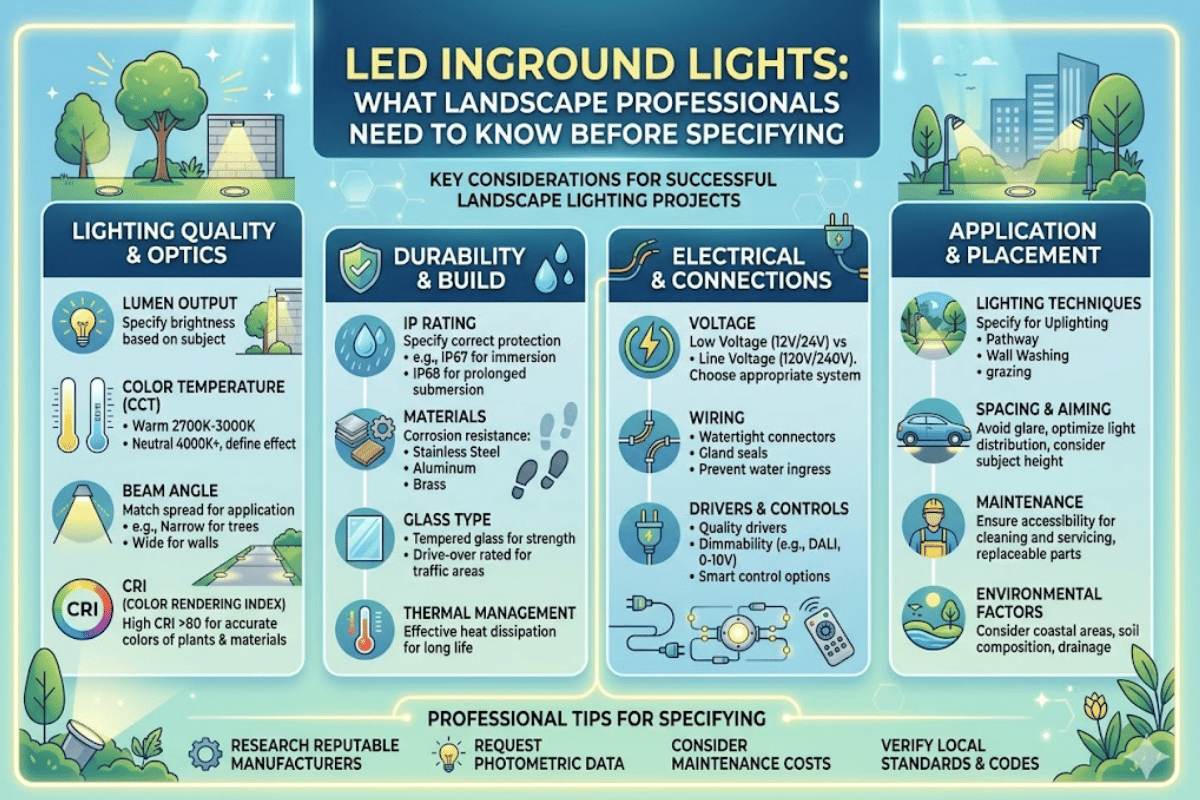
📐 Quick Specs — LED Inground Light
| Type | Recessed ground-level LED fixture |
| Wattage | 1W–48W |
| Lumen Output | 90–4,800 lm |
| CCT | 2700K–6500K (warm white to cool white) |
| IP Rating | IP67 (standard) / IP68 (submersible) |
| Materials | Brass, 304 stainless steel, die-cast aluminum |
| Voltage | 12V DC (landscape) / 120V AC (commercial) |
| Beam Angle | 10°–60° |
| Rated Life | 50,000+ hours (L70) |
Top quality outdoor lighting is meant to be imperceptible – until the sun goes down, and a walkway edge becomes illuminated under foot, a tree canopy is saturated by warm uplighting, or a building facade reveals new shadows and high lights. The luminosity of the LED inground lights that enable this invisible-source effect lies in their flush installation with no exposed fixture: guiding light upward while remaining visually unseen. For landscape architects, electrical contractors and property managers, specifying the best inground LED lights involves weighing ingress protection, fixture material properties, beam geometry and raceway drainage long before narrowing down a color temperature.
This buyer’s guide explores every specification decision that will lead to an invisible-source installation that lasts over a decade and minimizes maintenance: from selecting a watertight IP rating and reading salt-spray corrosion data, to choosing an application-appropriate beam angle. Whether your design project is a single residence or a university campus, the installer requires a reliable, long-lasting down light solution.
What Is an LED Inground Light — and How Does It Differ from a Well Light?
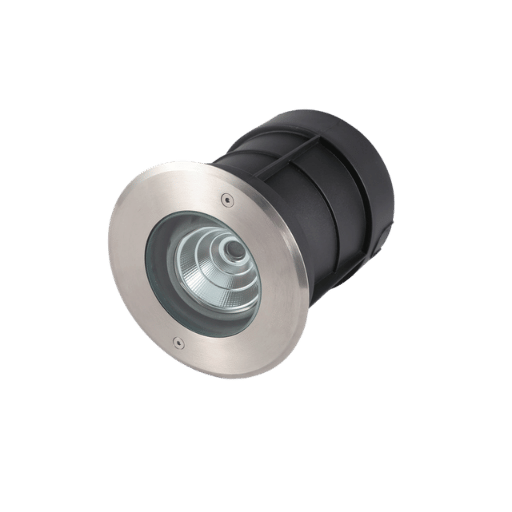
An inground light is a sealed integrated LED light installed flush with the ground surface, reflected in the following product description. The LED inground light, or inground well light, contains an integrated LED chip, sealed driver, heat sink, and both sets of power wires within a cylindrical or square housing, rated for insertion into dirt or concrete pavers.
Industry terms for upside-downdownlights cause many specification errors. Electrical load calculations, fixture location and lux level design are easier to perform if you avoid confusing which of these fixtures are inground, and which are LED well lights:
| Term | Typical Housing | Beam Direction | Common Application |
|---|---|---|---|
| Inground Light | Flush-mount cylinder, 60–200mm dia. | Fixed upward or gimbal-adjustable ±15° | Walkway edging, facade wash |
| Well Light | Below-grade canister, 150–300mm deep | Adjustable gimbal ±30° | Tree uplighting, sign illumination |
| In-Grade Light | Shallow recess, 40–80mm depth | Fixed upward | Hardscape, paver integration |
| Uplight (generic) | Surface-mount or buried | Upward, various angles | Architectural accent, uplighting |
The term inground is flexible. “Inground fixtures” encompass those drop-in fixtures that are not flush-mount and use the same housing design as higher-performance, deeper-well fixtures (150-300mm canister). They also include shallow-glass well lights, the inground fixtures with the broadest application and lowest cost. Distinguishing between inground, inground well lights and other well lights is essential to locating the correct fixture depths and selecting the recommended beam angles for different landscape lighting applications: pathway markers, building facades and uplighting for trees.
LED inground flood lights and accent lights span multiple lumen outputs, and can be purchased to match any watts-per-fixture target. Due to extremely efficient LED chips and carefully selected beam angles, 1W inground fixtures yield ~90-100lm, while 3W fixtures produce 270-300lm, and 6-8W fixtures push toward 600-810lm. The application drive—the number of fixtures, desired lux levels and beam angles—guides your lumen output choice.
Key Specifications That Determine Fixture Performance
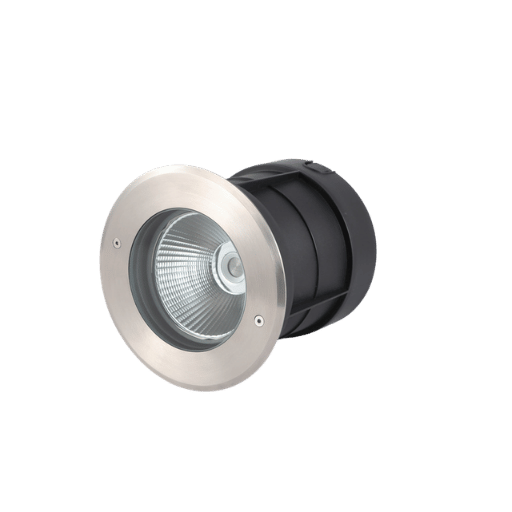
IP Rating — What IP67 and IP68 Actually Test
Though each inground LED light specification sheet has an listed IP code, they are often misunderstood. The IEC 60529 standard assigns a two digit Ingress Protection rating: the first digit defines solid dust protection (0-6), the second liquid protection (0-9).
For in-ground landscape lights, two ratings dominate:
- IP67. First digit- 6: dust-protected and dust-tight No ingress after two hours in a circulating dust chamber. Second digit- 7: protection from temporary immersion in 1m deep water over 30-minute test period.
- IP68. Same dust-rated performance. Second digit-8: protection from continuous submersion, depth and duration determined by manufacturer specs (usually 1.5-3m depths).
Field practitioners told us that IP67 applies for the overwhelming majority of installed landscape lighting out in the field—moisture from rain filling in, irrigation spray, and seasonal flooding. IP68 is worth the additional premium for fixtures located in fountains, ponds, swimming pool surroundings, and for those installations where standing water exceeds 30 minutes on a regular basis. The story is in the cost increase: IP67 fixtures typically add 10-40% to the cost of an IP65 or IP66, with IP68 fixtures adding 15-25% over IP67 fixtures.
📐 Engineering Note
Under IEC 60529, IP67 testing involves circulating the encapsulation in a dust chamber (talcum powder particles of diameter 75m) for 2 hours under a negative charge, then if the specimen is not cleaned it is immersed in 1meter of water for 30 minutes. Both the seals and cable glands have to prevent any infiltration. So manufacturers that omit the dust test and only test for water contact have not passed the IP67 test.
Lumen Output, CCT, and Beam Angle
Three parameters drive the visual appearance of any inground LED light: lumen output of that light, the color temp (CCT) of it in Kelvin (K) and the beam angle (deg.).
2700K
Warm residential tone
3000K
Neutral commercial standard
4000K+
Cool white, security focus
Industry leads us to believe 2700K is still the dominant color temperature for residential landscape lighting, providing the same sunny amber glow that brings out natural elements such as stone and cedar. Commercial properties and resorts generally opt for a cooler 3000K to provide a crisp, white light. Above 4000K, you’re in hospital-ward lighting region — too gaunt and blue.
Sure, it’s not a bad number to have in security applications, but for aesthetic purposes it’s usually inappropriate. Many newer fixtures go so far as to provide selectable CCT (typically 2700K/3000K/4000K), providing contractors with a field-changeability feature rather than an extra SKU.
Beam angles dictate the interaction of beam with the intended surface. Narrow beams (10-15) produce highly intense, concentrated columns of light, great for uplighting tall trees. Medium beams (25-45) work well on the standard accent light and landscape spot light.
Wide flood lights (45-60) spread the beam out for coverage of like walkways and patios. The CAST Lighting beam angle guide offers detailed calculations to determine fixture spacing based on the desired beam spread at different mounting heights.
Dimming, RGBW, and Control Options
Contemporary in-ground LED fixtures now feature dimming drivers, RGBW color-changing options and remote control interfaces. All dimmable versions use PWM or 0-10V input from a low-voltage transformer, which can dim the fixture from 100% brightness to 10% brightness smoothly with no flickering. Adding a simple white channel to the base red-green-blue spectrum permits fixtures to create each color as well as a clean white light, all through a single source.
For commercial applications, DMX512 control allows fixtures to be individually addressed—which is preferable for things like facades that have parts of the façade changing color or glowing at different intensities.
💡 Pro Tip
When ordering RGBW inground fixtures ensure the driver protocol is the same as the controller. Using a DMX512 controller with a PWM dimming fixture will produce either no response or flickering. Ask for driver datasheet and fixture spec sheet before ordering.
Material and Construction — Brass, Aluminum, and Stainless Steel Compared
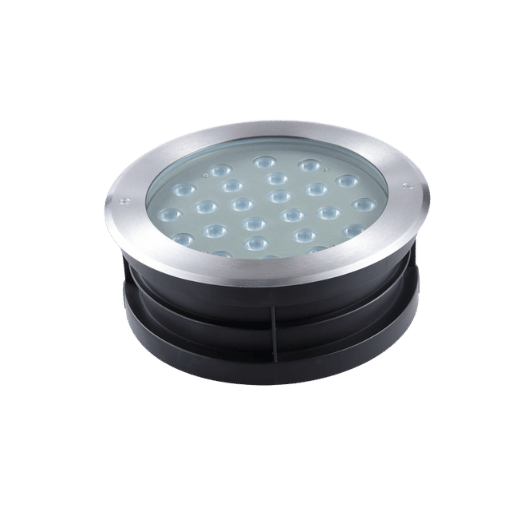
Housing material has more impact on an in-ground LED fixture’s longevity than anything else. How long will the fixture last if it has amazing optics and a 21+ IP rating if the housing rots out? ASTM B117 salt spray testing measures corrosion resistance and is the industry standard by which materials are rated against each other:
| Material | ASTM B117 Salt Spray Hours | Expected Outdoor Life | Relative Cost | Best Use Case |
|---|---|---|---|---|
| Solid Brass | 2,000+ hours | 20+ years | $$$ (3–5× aluminum) | Coastal, high-moisture, premium residential |
| 304 Stainless Steel | 1,500–2,000 hours | 15–20 years | $$ (2–3× aluminum) | Marine environments, pool areas, commercial |
| Anodized Aluminum | 1,000–1,200 hours | 10–15 years | $$ (1.5–2× bare aluminum) | Inland commercial, moderate climate |
| Die-Cast Aluminum (bare) | 336–700 hours | 5–8 years | $ (baseline) | Budget inland projects, dry climate |
⚠️ Important
The most common cause of early failure in outdoor landscape lighting LED inground fixtures is a die-cast aluminum housing. Many installer use inexpensive, bare die-cast aluminum fixtures and operate in coastal or humid subtropical zones, the 336 hours salt spray rating will develop visible white oxide corrosion in eighteen to twenty-four months. If the project is within 15 miles of salt water, use brass or 304 stainless steel for the housing, the additional thirty or more dollars realized in equipment savings will pale compared to the dozens of labor hours invested in replacing a failed hardscape light.
Another way lens material affects the lamp life is strength. Tempered glass remains the time tested choice for quality in ground fixtures because it does not yellow in the sun, tolerate thermal cycling from buried heats, and wears better under foot traffic. Polycarbonates can cost a few dollars less, but will will swell and haze in 3-5 years of UV exposure and reduce light output (photopic lumen delivery), by up to fifteen to thirty percent compared to the original factory output.
Application Scenarios — Matching the Right Fixture to the Right Space
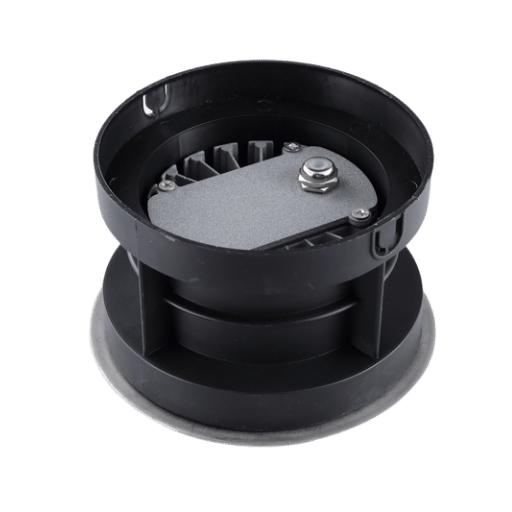
To choose the LED inground fixture that best suits an application, owners and designers must remember that different application scenarios require different beam angles, wattages, IP ratings, and internal or external housing amenities. The chart below, maps common outdoor LED lighting scenarios with corrosion protection attributes, beam spreads, and other fixture features. Drawing from manufacturers guidelines and internal installation data, the information guides the designer to the specifications most suitable for each outdoor LED lighting case:
| Application | Beam Angle | Wattage | IP Rating | Special Requirements |
|---|---|---|---|---|
| Driveway Accent | 30–45° | 3–9W (270–810 lm) | IP67 | Drive-over rated housing (≥2-ton load) |
| Tree Uplighting (tall canopy) | 15–25° | 6–12W (540–1,080 lm) | IP67 | Adjustable gimbal, tilt ±15–30° |
| Tree Uplighting (medium canopy) | 30–45° | 3–9W (270–810 lm) | IP67 | Adjustable gimbal, compact housing |
| Facade / Wall Wash | 10×45° elliptical or 60° flood | 6–24W (540–2,160 lm) | IP67 | Mounting distance 300–600mm from wall base |
| Walkway / Pathway | 45–60° | 1–3W (90–270 lm) | IP67 | Spacing 1.8–2.4m (6–8 ft) apart |
| Water Feature | 30–45° | 3–12W (270–1,080 lm) | IP68 | Submersible, 304SS or brass housing |
| Patio / Deck Recess | 30–60° | 1–3W (90–270 lm) | IP67 | Compact flush-mount, glare control lens |
Drive way light housings for back forward automobiles must be rated for vehicular traffic. Traditional inground LED fixtures will crack under the weight of car tires. Drive-over rated in-ground LED fixtures use thicker tempered glass (8-10mm versus 4-5mm for pedestrian rated fixtures) and reinforced stainless steel or cast iron trim rings designed to distribute the vehicle wheel loads through the housing.
Pay particular attention to beam angle choices with tree uplights. Field practitioners have observed that a narrow beam, fifteen spread from a well light just 300-600mm from the tree trunk can cast a dramatic pier-like column of light over a twelve meter plus tree, while the same fixture twelve meters from a four to six meter ornamental tree creates an overly lit bright hot-spot. For moderate aerial coverage, an aperture spread of thirty to forty-five degrees at lower wattage levels creates an effect more like sun penetration through a canopy. An adjustable landscape spot light teamed with a well light offers the best compromise for mixed-height canopies.
Installation Essentials — Wiring, Drainage, and Common Pitfalls
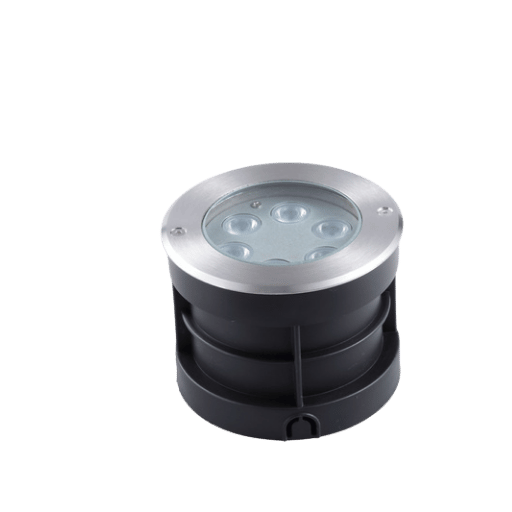
Wiring and Voltage
Most residential and small commercial in ground landscape lights operate on low voltage, 12V, DC power supplies, classified under NEC Article 411 for light fixtures operating at 30 V AC or 60 V DC maximum. This class of wiring makes the process of obtaining permits easier and may allow the installer to use direct burial cable rather than conduit in many jurisdictions, but local codes may take precedence.
Important electrical parameters for low voltage LED landscape lighting systems:
- Appropriate wire size: Minimum twelve gauge for runs up to thirty meters (a hundred feet). For runs of greater length, increase to ten gauge to maintain volt drop within 10% of total.
- Maximum volt drop: 10 percent or less: in a twelve volt system, this is no more than 1.2 volts at the furthest fixtures.
- Burial depth: minimum 150mm (6 inches) for direct burial low-voltage cable.
- Power supply: maximum 25A output per transformer circuit. Size the transformer to carry no more than 80% of rated capacity for durability.
- Pool proximity: NEC 411.5(B) says low-voltage fixtures and power supplies have to be kept at least 3m (10 ft) horizontally away from edge of pool.
📐 Engineering Note
Wire size selection depends on total run length and load. A 12V system carrying 10A, over 30m, requires 12 AWG cable to keep volts drops to 0.98V or 8.2%. That’s excellent specs. It is, however, impossible to keep under 10% with a load of 10A on 14 AWG cable- even a visible difference, in fixture brightness, at the furthest fixture. Calculate volts drop before selecting wire gauge.
Drainage — The #1 Failure Point
More inground fixtures fail from inadequate drainage than from electrical or optical failure. Water that runs around the underside of the housing in an IP67-rated fixture is subjected to hydrostatic pressure during freeze/ thaw cycles, stress cracks it over time and rots it from the outside in.
Field-proven drainage protocol for every in-ground LED light installation:
- Dig out 50-75mm (2-3 inches) deeper than the mounting sleeve requires.
- Backfill with at least 50mm (2 inches) of clean pea gravel (6-10mm aggregate). This creates a “drainage sump.”
- Set the fixture trim ring 2-3mm (1/8 inch) above finished grade. Surface water should run over rather than pond on the lens.
- Choose fixtures with a convex (domed) lens, rather than flat lens. Curved surfaces shed water, flat ones pond it.
⚠️ Important
Buried fixtures experience a “breathing effect”, as daytime heat causes the air inside the fixture to expand, then as the sun sets, the nighttime chill causes the air to contract, forming a slight vacuum. Moisture, associated with the vacuum, is sucked through any imperfections in the housing’s seal. This “breathing” causes even IP67 fixtures to develop internal condensation over time (if undrainable water is in the surrounding bed). Finely graded gravel provides a welcome path for accumulated moisture to run away from, rather than gel against the fixture housing.
Top 3 Installation Mistakes
Some tendencies in installation technique account for the lion’s share of warranty concerns. Field practitioners have identify thee major errors:
- No drainage bed. Skipping the gravel sump, turns the fixture cavity into an unintentional water trap, which promotes corrosion on brass fixtures, and get frozen and cracks lenses and mounting sleeves in cold-weather climate. Cost of fix: $5-10 in gravel per fixture; replacement fixture: $80-400+ labor included.
- No waterproof wire connection. Electrical tape and standard wire nuts degrade within 12-18 months of underground use. Moisture wicks into the connection, high-resistance welding point ensues leading to inconsistent shorts and electrical failure. Specify silicone-filled weatherproof connectors, heat-shrink splice kits with direct-bury rating.
- Running 12V cable just below the surface. Cheap, inexpensive, exciting… but vulnerable to damage from lawn trimming, aeration equipment and creeping roots. The minimum 150mm depth specified by code exists for physical protection, not merely legal compliance.
Inground Light vs Spotlight vs Bollard — When Each Type Wins
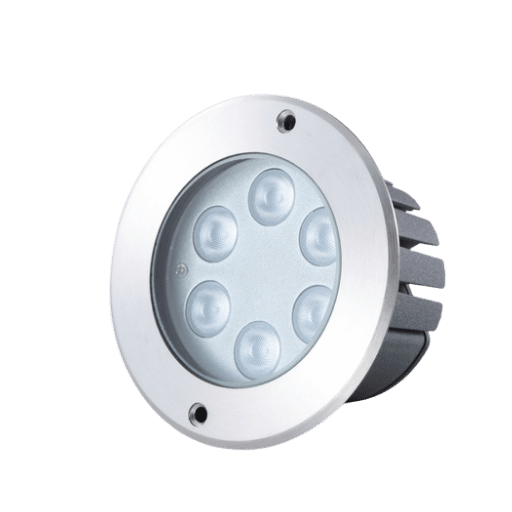
Fixture selection is not about which design is “better”, but which tool is best suited to accomplish the specific lighting task. Each type of fixture—each light tool—in the landscape garden lighting designer’s kit, fills a different need.
| Factor | Inground / Well Light | Spotlight | Bollard |
|---|---|---|---|
| Fixture Visibility | Invisible (flush with grade) | Visible on stake or mount | Prominent vertical element |
| Primary Function | Uplighting, accent from below | Directed accent, tree/wall focus | Path marking, ambient area light |
| Glare Risk (UGR) | UGR <16 (ground-level, indirect view) | UGR 16–22 (adjustable aim reduces risk) | UGR <19 (diffused optic, shielded) |
| Maintenance Access | Requires excavation or sleeve pull | Above-ground, tool-free lamp access | Above-ground, panel or top access |
| Vandal Resistance | IK08–IK10 (recessed, minimal exposure) | IK04–IK06 (exposed on stake) | IK08–IK10 (engineered housings) |
| Drive-Over Capability | Yes (rated models, ≥2-ton load) | No | No (impact-rated only) |
The application decision is simple- choose in-ground well lights when the fixture needs to be out of sight: when uplighting architectural elements, defining driveway boundaries or high lighting planting beds would be visually disruptive. Choose a landscape spot light when the fixture needs to be aimed at a specific object at some distance (a MR16 or integrated LED spotlight on a stake provides the most precise beam). Choose bollards when the fixture should also contribute to design aspects- path delineation, entry statement, or emphasis on vertical lighting quality more than directed accent.
It is very common for very successful lighting plans to use all three types. A residential front yard might have LED inground fixtures along the driveway edge, spotlights illuminating feature trees and the house, and bollards at the front entry. The trick is to design a plan so each fixture type performs its best rather than making one type do everything.
Frequently Asked Questions
How long do integrated LED inground lights last?
View Answer
Integrated LED inground fixtures are rated using the L70 method – the point at which lumen output drops to 70% of initial rated value. Most quality LED well lights hold an L70 life rating of 50-60,000 hours, which, at 10-12 hours of use a day, translates to 12-15 years. However, the real life expectancy depends heavily on thermal management: fixtures buried in dense, poorly draining soils run hotter than those in elevated gravel beds, and excessive junction temperatures over 85C hasten LED phosphor burnout. The driver will fail before the LED chip- select fixtures with replaceable or accessible driver modules whenever possible.
Are LED inground lights worth the investment for commercial projects?
View Answer
Yes. A 6W LED inground equivalent replaces a 35W MR16 halogen well light while providing similar lumen an 83% savings in fixture energy use. On a 40-fixture commercial project, 4,000 hours a year, that equates to approximately 4,640 kWh. Coupled with annual bulb changes (which are not needed with LED- a halogen MR16 lasts 2,000-4,000 hours vs. 50,000) commercial projects typically recover the LED premium in approximately 18-24 months.
What IP rating do I need for a driveway inground light?
View Answer
IP67 should be the minimum installed rating for a driveway in-ground LED light. This ensures the fixture is able to handle heavy rainfall and irrigation over spray, as well as short term pooling without water intrusion. Always remember a rating for liquid protection says nothing about resistance to mechanical load- a driveway fixture will need a drive-over rated housing and a much thicker tempered glass lens (8-10mm vs. 4-6mm) which is rated to hold a load of 2,000kg or more. These are separate ratings- factor both in your driveway fixture selection.
Can I replace flood lights with LED inground lights?
View Answer
No. Flood fixtures cast a broad downward pattern when mounted high above the area rather than projecting light upward from the ground like in-ground fixtures do. They serve different purposes and will rarely replace one another.
Do LED landscape lights work well in cold weather?
View Answer
LEDs are actually more efficient in cold weather than in heat. Unlike fluorescent or HID sources, LED chips have no warm up time and appear to be at full brightness immediately no matter what the outside temperature. Cold air also helps moves junction heat away from the diode potentially increasing longevity past the rated hours.
The important aspect is the driver – double check that the LED driver is rated for the expected temperature range (most quality drivers have a range of -40C to +50C) In climates with freeze-thaw conditions, drainage around the fixture housing becomes more important than LED temperature tolerance Ice buildup around a non-drained fixture housing puts a lot of mechanical stress on the fixture and may crack seals and lenses.
What is the difference between 12V and 120V inground lights?
View Answer
The main difference is classification of safety and installation requirements. 12VDC systems are classified under NEC Article 411 (low-voltage lighting). This classification enables less restrictive wiring methods; direct burial cable; and installation by a landscape contractor who is not licensed as an electrician in most states. 120VAC systems are classified under NEC Article 410. This classification requires conduit and junction boxes; GFCI; and installation by a licensed electrician.
From a practical point of view, 12V lighting systems are better suited for residential lighting and small commercial lighting applications where the run lengths are less than 45 m (150 ft). Large commercial lighting applications where the voltage drop on a long run is higher than 10%, or where the higher wattage lamps (24 W and above) require line voltage drivers, will necessitate the use of the 120 V lighting system.
Ready to Specify Your Next Project?
Explore Guangqi Lighting’s full selection of LED inground lights, well lights, and landscape fixtures with detailed spec sheets and IP/IK ratings across the board.
About This Guide: This guide draws on published industry standards (IEC 60529, NEC Article 411, ASTM B117), manufacturer technical data, and field installation reports from lighting practitioners. Product specifications referenced are representative of current-generation LED inground fixtures and may vary between manufacturers. Always verify specific product ratings against the manufacturer’s published datasheet before specifying for a project.
References & Sources
- NEMA/ANSI — IEC 60529 Degrees of Protection (IP Code)
- NEC Article 411 — Lighting Systems Operating at 30 Volts or Less
- ASTM B117 — Standard Practice for Salt Spray (Fog) Corrosion Testing
- DOE LED Lifetime — L70 Rating Methodology Explained
- CAST Lighting — Adjusting Beam Angles for Landscape Lighting Design
- EC&M — Code Rules for Low-Voltage Lighting (NFPA/NEC)
Related Articles
- LED Landscape Spot Light: Selection and Specification Guide
- Landscape & Garden Lighting Collection — Guangqi Lighting
- LED Underground Light — Product Catalog and Specifications
- LED Pool Light Selection for Underwater and Perimeter Applications
- LED Wall Washer Fixtures for Architectural Facade Lighting
- LED Garden Lights: Bollard, Path, and Area Lighting Solutions
![Industrial LED Bulbs: Bases, Voltage & Heat [Checklist]](https://gqlamp.com/wp-content/uploads/2026/10/industrial-led-bulbs-blog-featured-150x150.png)