Get in Touch with GUANGQI



Updated October 2026 · Guangqi Lighting
A smart street lighting system integrates management software and connects controlled luminaires and a communications network, which enables an operator to modify lighting schedules and access operating data. Sensors can add daylight or movement detection. The purchasing decision depends on the required control functions, field coverage, compatible interfaces, billable savings and a successful site pilot.
Your roads already have LED lighting. A supplier now offers integrated controllers and a dashboard. Before comparing control solutions, work through five buying checks: operating inputs, network performance, interfaces, economics and pilot acceptance. A socket marked smart-ready answers only part of that purchase.
How a smart street lighting system works
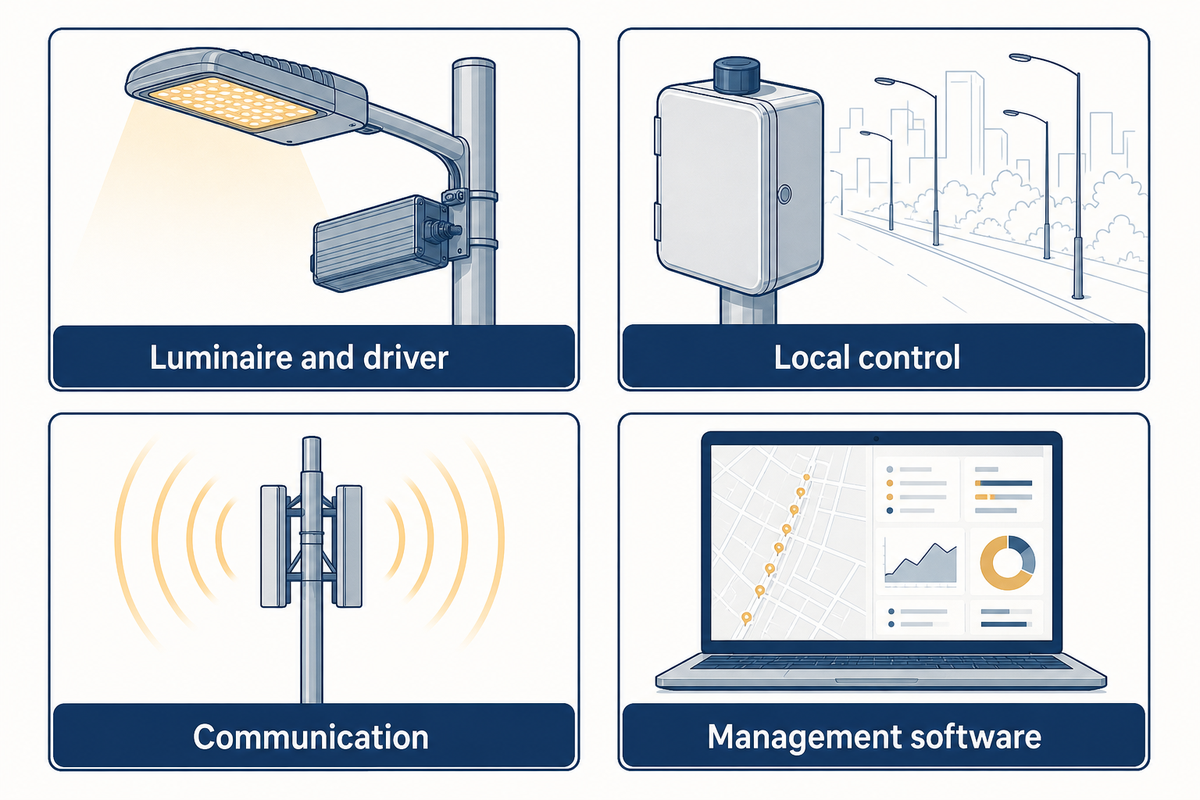
A connected outdoor lighting system has four functional parts: the controlled luminaire and driver, local control, communication and management system. Commands support control of street lights; IoT devices send data back to the operator, including available telemetry. Buying all four from one supplier can simplify responsibility, but each interface still needs a defined owner and a demonstrated function.
How does a smart lighting system work?
A controller receives a command or schedule and translates it into a driver input. The central management software organizes those Internet of Things devices into assets and groups. The controller then returns available status data through the communication network. An Internet of Things sensor can change a command based on ambient light or movement.
The U.S. Department of Energy model specification separates field devices, backhaul and central management for procurement. Ask who supplies which part. An internet dashboard alone does not establish that a failed lamp produces a useful maintenance alert.
For a smart street light system, the 0-10 V driver interface and the network application layer serve different functions. One is an electrical input; the other is a command/control path and a data path. Keep those responsibilities distinct when evaluating lighting systems, as a suitable driver does not establish end-to-end monitoring.
Choose the control functions you will actually use
Prior to implementing smart controls, define the operating problem (e.g., excessive burn hours, missed outages, costly inspections, changing traffic flow). One solution can provide automated scheduled dimming or activate/deactivate based on environmental conditions. Specify the required output and its operator before adding sensors, analytics or subscriptions that nobody has a process to use.
Automation without unnecessary sensors
Motion sensors support automatic control based on detection; they aren’t a prerequisite for remote scheduling. Other choices include cameras, temperature and humidity sensing, and AI analytics. An IoT-based street light need not capture personal pictures. Identify data collected, retention period, and access rights for each function to be provided.
Approve the actual road-lighting design conditions before calculating dimming savings. Archived FHWA adaptive-lighting research connects schedules with traffic, pedestrians and environmental conditions, and discusses special-event overrides. The 2014 guidance isn’t a current lighting code.
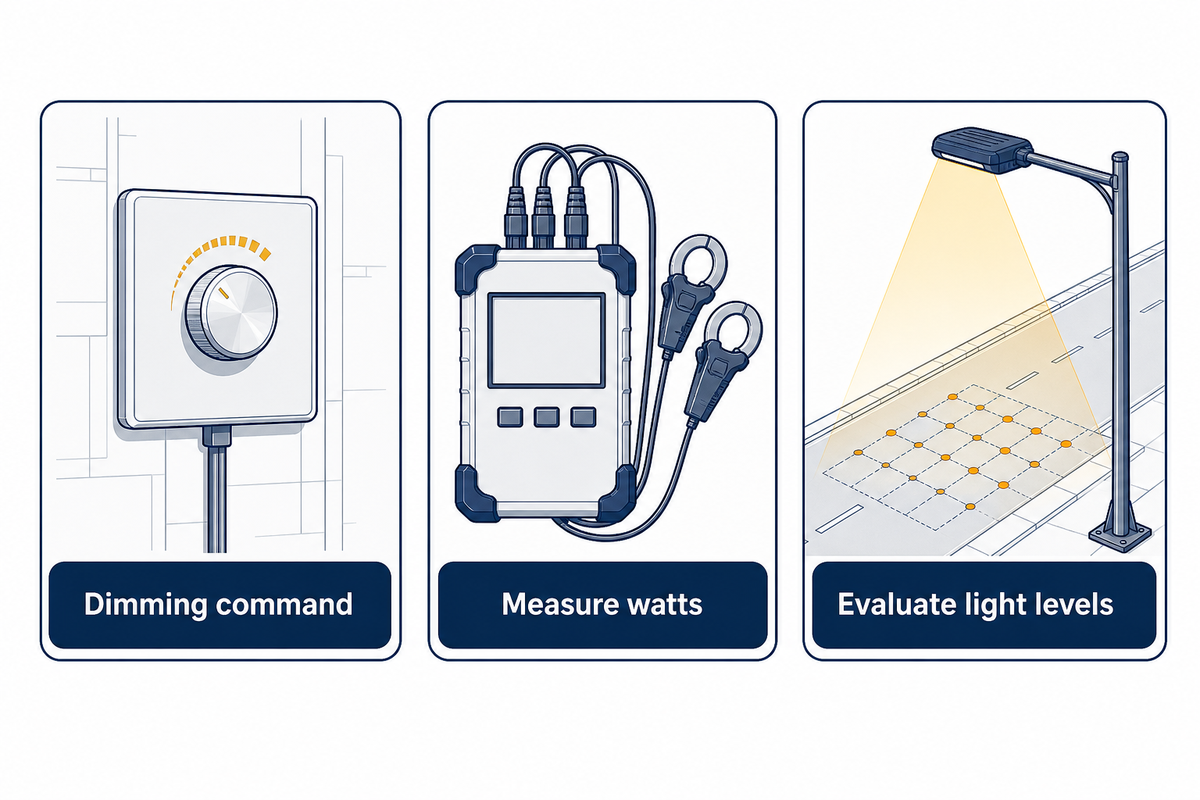
Power consumption deserves its own test. In a December 2023 report, PNNL characterized 23 luminaires representing 21 make/model combinations from 14 manufacturers. Their products predated ANSI C137.1-2022. A modeled part-night energy conservation strategy targeted an 18% reduction, but the characterized sample averaged 12%. Researchers were interested to know how 0-10 V input signals correlated to power and weren’t evaluating a Guangqi installation. A buyer relying on a nominal dimming command to assume wattage savings could be overstating savings. Measure the proposed driver and luminaire at the planned operating points, then check the resulting illumination against the project design. Results obtained for one sample or a percentage dimming command don’t guarantee performance on another sample.
PNNL-32949 supports a practical distinction: 50% on a control screen doesn’t necessarily mean 50% of full input power. Measure watts and evaluate light levels separately. The procurement team needs both results before treating an adaptive schedule as an energy-saving operating plan.
Decide whether connected controls justify their cost
Justifying connected controls is easier to accomplish if remote information changes an expensive operating decision. Local timers may already be providing the desired schedule of dimming. Remote controls then need to be justified based on other factors such as fault response, inventory accuracy, or maintenance, and with recurring service costs incorporated in the comparison.
What are the downsides of smart lights?
Smart lights add communications, software and commissioning functions to the already existing maintenance requirements of a luminaire. Recurring costs can become a significant cost, incomplete asset records can send crews to the wrong pole and a vendor change can reveal data export constraints. These costs are most pronounced when a local schedule already satisfies the lighting requirement, and the proposed remote functions have no operating owner.
Maybe the lighting manager values real-time fault alerts, and the finance people want fewer truck rolls. Remote monitoring can produce a financial benefit if it changes inspection or dispatch work. Name that workflow and evaluate its cost against the service fee. Treat a claimed reduction in maintenance as a testable assumption. Reducing energy costs is a separate billing question.
San Diego is another example where the electricity arrangement needs to be in the mix. The DOE Better Buildings partner case study covers a 2014 project with 3,600 lights and pilots in eight areas. The city merged its LED conversion with adaptive controls and worked with its utility on a usage-based pilot tariff. The city’s previous flat charge per pole couldn’t support the same financial purpose. This case study highlights the integration between lighting, procurement and billing, not a transferable savings percentage. As this was a combined effort, the impact of connectivity can’t be isolated from the impact of LEDs. A present-day buyer must obtain the applicable utility terms for its own accounts.
A 100 W LED with a local timer may follow the same lighting schedule as a networked unit. Compare equal lamp energy before crediting connectivity with extra energy savings. Generally, financing should support the additional network only if the operational benefits justify the additional cost of hardware, service and support.
Compare cellular, mesh and LoRaWAN on site
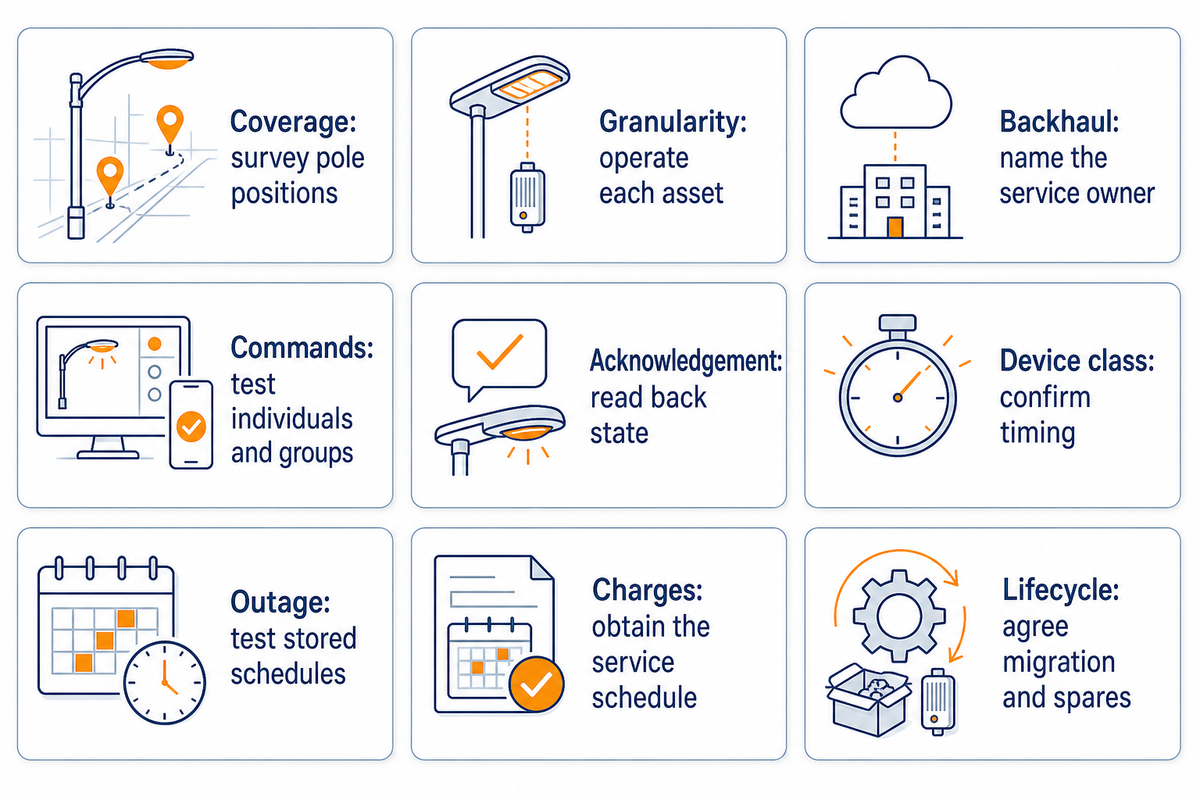
A wireless street light control system should be compared based on the actual pole layout and command schedule while keeping service responsibility constant. LoRaWAN, RF Mesh and Cellular networks put different loads on the system. A fair comparison of intelligent control bid prices keeps control granularity constant: circuit level switching isn’t comparable to lights that are individually addressable and have individual fault and energy records.
Wireless topology and LoRa terminology
LoRa defines radio modulation. A vendor’s LoRa product doesn’t imply LoRaWAN. The LoRaWAN link-layer specification describes a star-of-stars topology. RF mesh, on the other hand, relays through participating devices. Ask what protocol, device class, frequency plan and network service the suggested controller is using.
| Buying question | Network distinction | Evidence to request |
|---|---|---|
| Coverage | Cellular uses carrier coverage; mesh uses neighboring nodes; LoRaWAN uses gateways. | Survey at actual pole positions. |
| Control granularity | Cabinet and individual-lamp control are different offers. | Address and operate each required asset. |
| Backhaul | Mesh or LoRaWAN gateways still need an onward connection. | Named connection and service owner. |
| Commands | Response depends on configuration and message handling. | Individual and group command tests. |
| Acknowledgement | Sending a command is not proof of lamp state. | State readback and missing-node report. |
| Device class | LoRaWAN class affects receive opportunities. | Exact supported class and timing. |
| Outage behavior | Local operation depends on the controller. | Disconnect network; check stored schedule. |
| Recurring charges | SIM, network-server and platform charges differ by bid. | Complete service schedule. |
| Lifecycle | Carrier and private-network support have different owners. | Migration, spares and support terms. |
Source basis: Definition of the LoRa Alliance protocol; and Signify’s discussion on cellular/mesh networks (the latter is a supplier perspective). Acceptance questions are our synthesis, not published performance rankings.
LoRaWAN Class C offers more receive opportunities than Class A; however, a configuration label doesn’t mean an instant group response. Test a 100% command and the intended dimmed operating point on the proposed equipment. Record latency, missing responses and recovery rather than accepting a universal range claim. Ask whether redundancy covers backhaul and node failures.
Specify interfaces from pole to platform
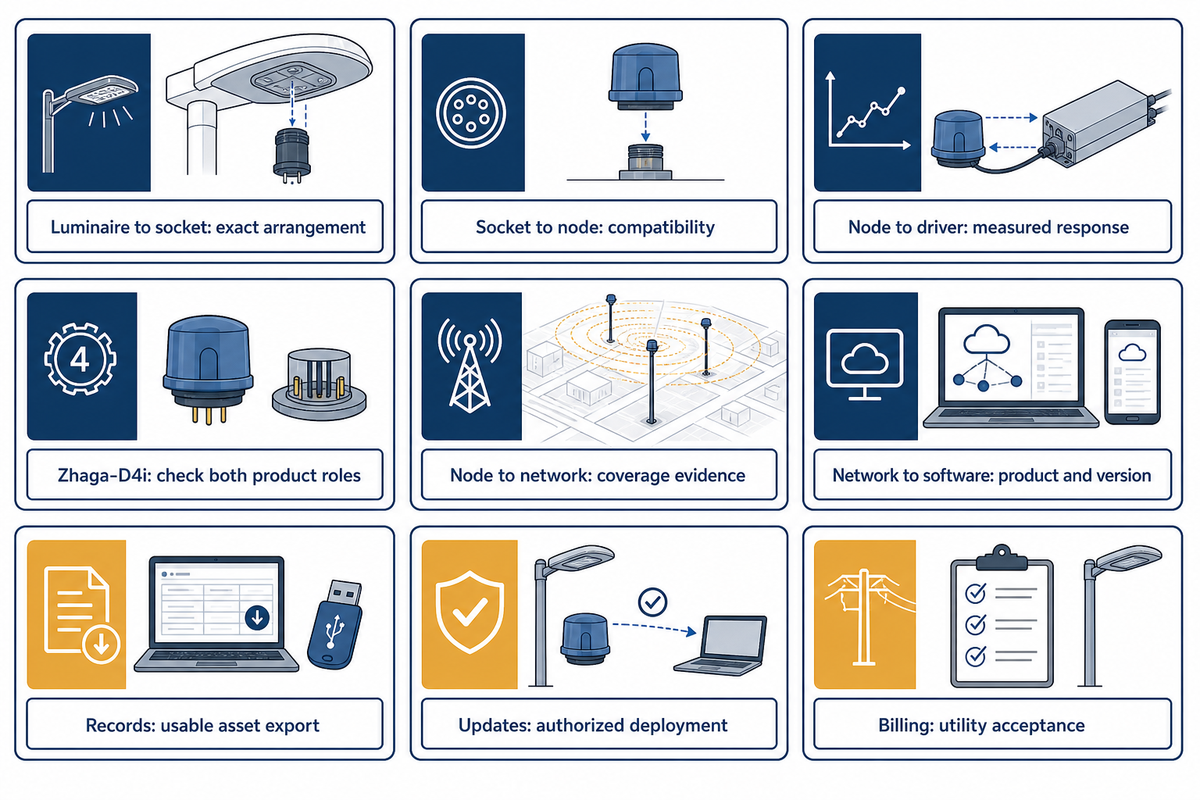
Separate the physical interface (whether it’s a NEMA or Zhaga arrangement) from the driver-control interface, radio-network interface and management interface in the quotation. An open protocol at one boundary does not establish compatibility at every other boundary. Exact product names, versions, supported functions and an integrated demonstration make competing offers easier to evaluate and responsibilities easier to assign.
Pole-to-Platform Proof Map
Evidence and decision columns of an evaluation should be copied to bid comparison sheets. Engineering can evaluate the functional integration, purchasing can identify product omissions and the operator can assess if the product can perform the function it’s intended for.
| Handoff | Required evidence | Buying decision |
|---|---|---|
| Luminaire to socket | Exact receptacle, supply and pin arrangement. | Include the matching installed hardware. |
| Socket to node | Mechanical and electrical compatibility. | Reject adapter-only assurances. |
| Node to driver | Supported control interface and measured response. | Price a demonstrated combination. |
| Zhaga-D4i pairing | Exact luminaire/node registry entries where specified. | Check both product roles. |
| Node to field network | Protocol, band, class and coverage result. | Include coverage remediation. |
| Network to software | Exact TALQ product/version/profile where specified. | Match required commands and records. |
| Records to operator | Asset export, identifiers and access rights. | Retain usable data on supplier change. |
| Software to device update | Authorized deployment and update-source verification. | Assign update and recovery ownership. |
| Energy data to bill | Utility acceptance and applicable tariff. | Credit only recognized savings. |
Sources: DALI Alliance certification scope, TALQ product register and NIST update capability guidance. The map combines their separate boundaries; it isn’t a new certification.
Zhaga Book 18 defines outdoor luminaire/control-device connections. Earning a D4i certification and performing the Zhaga mechanical check are separate processes. TALQ focuses on the interface between an outdoor device network and central management. Its logical gateway is more than just a radio box. Our DALI control explanation covers the driver-level details.
Request a matched luminaire and controller quotation
When discussing LED street-light configurations with Guangqi, send the road layout, lighting design, installed equipment, required functions and network plan. Stipulate the precise driver option and receptacle, as well as the controller. Identify who provides the platform, commissions and supports it. Website-level interfaces don’t ensure the certification or compatibility of all models quoted.
A 0-10 V input, Zhaga-D4i connection and TALQ software interface are three different procurement boundaries. Identify each required boundary for each product and function. A certificate or logo at one boundary cannot replace evidence for the remaining hardware, software and operator handoffs.
Build a control-only payback calculation
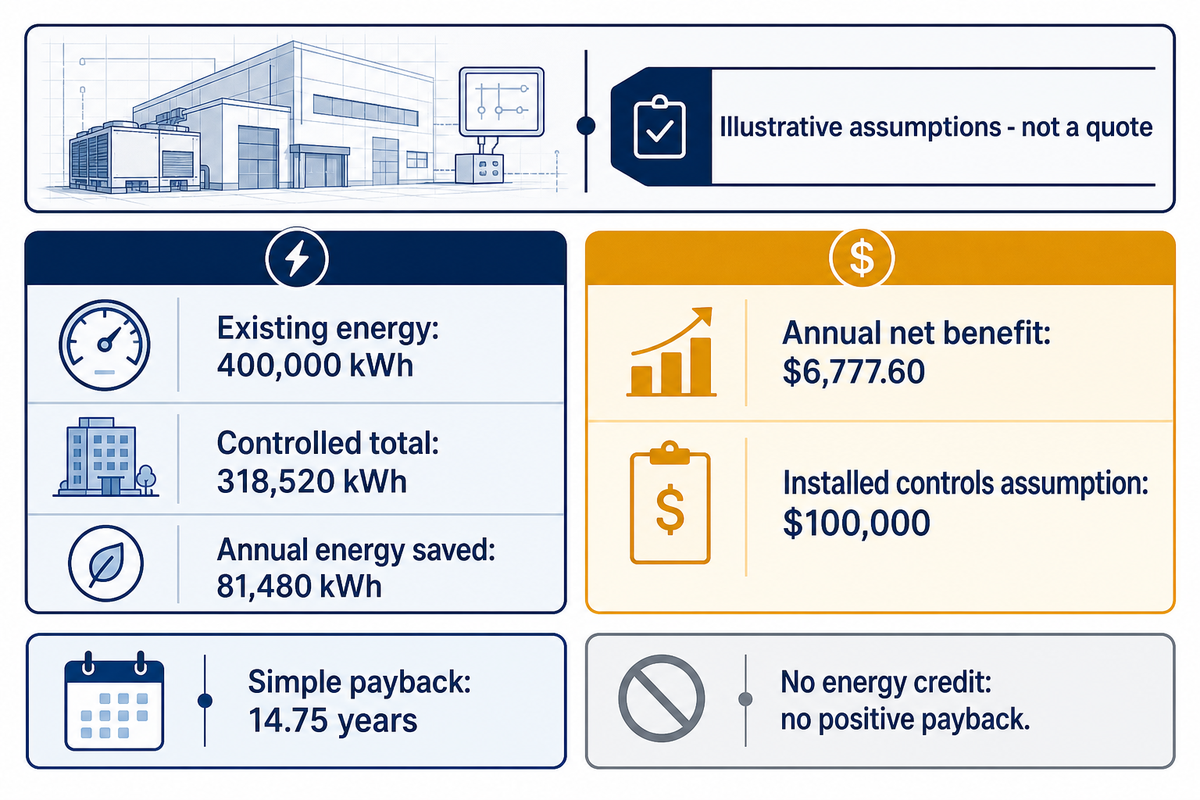
For lighting controls, calculate payback against the lighting already installed. Add controller and gateway energy, subtract recurring fees and credit energy only after the reduction is reflected on the utility bill. Keep savings for LED replacement outside the scope of a controls-only case. Compare a local dimming option independently, if it can provide the same lamp schedule.
What is the average cost of a smart light system?
A “reasonable average” requires definition of scope, geography, and service term. Fixture-only prices cannot be compared with installed controllers, network infrastructure and software subscriptions. Obtain prices for equipment, commissioning, connectivity, platform access and support. Then calculate the project economics using the appropriate tariff. The example below is purely illustrative arithmetic and doesn’t represent a price estimate or a Guangqi quote.
Control-only payback calculator
Change the four assumptions to compare control-system proposals. Use the same currency in every field; the default values are the illustrative example below.
Simple payback
years
Use one currency throughout. Defaults reproduce the illustrative example, not a supplier quote. Electricity savings must be billable and net of controller/gateway consumption. Compare against the same local lighting schedule. If benefits do not exceed fees, no finite simple payback exists and the result is a dash. Excludes financing, discounting, taxes, replacement costs and changes over time.
Use one currency throughout. Defaults reproduce the illustrative example, not a supplier quote. Electricity savings must be billable and net of controller/gateway consumption. Compare against the same local lighting schedule. If benefits do not exceed fees, no finite simple payback exists and the result is a dash. Excludes financing, discounting, taxes, replacement costs and changes over time.
Enter every value to see the result.
This entry is ambiguous. Use a comma only as the decimal mark, for example 1,5, and do not type thousands separators.
Control-Only Payback Bridge
Assume 1,000 existing 100 W LEDs operate for 4,000 hours annually. The proposed dimming schedule uses 100 W for 2,000 hours and 50 W for 2,000 hours. Those wattages are stipulated operating points, excluding controllers; they aren’t command percentages. A real project needs measured power and an approved road-lighting design.
| Step | Calculation | Annual result |
|---|---|---|
| Existing lamp energy | 1,000 × 100 W × 4,000 h ÷ 1,000 | 400,000 kWh |
| Controlled lamp energy | 1,000 × (100 W × 2,000 h + 50 W × 2,000 h) ÷ 1,000 | 300,000 kWh |
| Controllers | 1,000 × 2 W × 8,760 h ÷ 1,000 | 17,520 kWh |
| Gateway | Assumed annual consumption | 1,000 kWh |
| Controlled total | 300,000 + 17,520 + 1,000 | 318,520 kWh |
| Energy saved | 400,000 − 318,520 | 81,480 kWh |
| Energy value | 81,480 kWh × $0.12/kWh | $9,777.60 |
| Service cost | Assumed recurring charge | −$6,000 |
| Avoided maintenance | Assumed operational saving | +$3,000 |
| Net benefit | $9,777.60 − $6,000 + $3,000 | $6,777.60 |
Source: editorial worked example with all assumptions stated. At an assumed installed controls cost of $100,000, simple payback is $100,000 ÷ $6,777.60 = 14.75 years. Financing, replacements, price changes and taxes are excluded. If the tariff gives no energy credit, the assumed maintenance saving minus service is $3,000 − $6,000 = −$3,000 per year: there’s no positive simple payback.
Now compare local control executing the identical schedule. Its lamp energy consumption would also be 300,000 kWh before its own control overhead. The networking case can’t claim the entire dimming reduction as an incremental benefit over that alternative. Compare the two control systems’ actual overhead, installed costs and operational savings.
Key takeaway
The illustrative 81,480 kWh reduction becomes $6,777.60 annual net benefit only under the stated tariff, service and maintenance assumptions. Energy reduction, billing savings and networking value require separate calculations.
Run a pilot that proves operation and handover

Prior to deploying the fleet, a useful pilot tests the quoted system under representative site conditions and leaves records the operator can use. Demonstrate individual and group commands, failure reporting, offline schedules, restored communication and asset exports. Assign responsibility for accounts, authenticated updates and ongoing support before accepting a successful dashboard demonstration as completion.
Choose one acceptance metric per test
Let’s look at a simple 20-pole pilot example with a blocked location and a mixed driver group. The installer maps each controller to its corresponding pole. The operator sends group commands, compares returned states with observations, and records missed responses rather than counting a screen notification as success. During a planned network interruption, the agreed local schedule runs; reconnection then tests time, records and recovery. The maintenance lead replaces a node and verifies if history is retained with the asset. Finally, an authorized administrator carries out the documented update procedure. The project team sets its own limits on response times and recovery before the test; 20 poles is an example, not a standard sample size.
- Agree the test — record the condition, metric, limit and responsible party.
- Observe the hardware — compare commands and logs with physical operation.
- Transfer the records — retain asset exports, configuration and support contacts.
Electrical power checks should be separate from color-temperature selection and photometric acceptance. Achieving one successful 50 W operation point says nothing about permissions or update authenticity. Evidence should be produced for each, and the release of the rollout should be postponed until agreed upon failures are remedied. Check the actual states of the lamps in real time to show the dashboard.
What aligned data profiles change for buyers
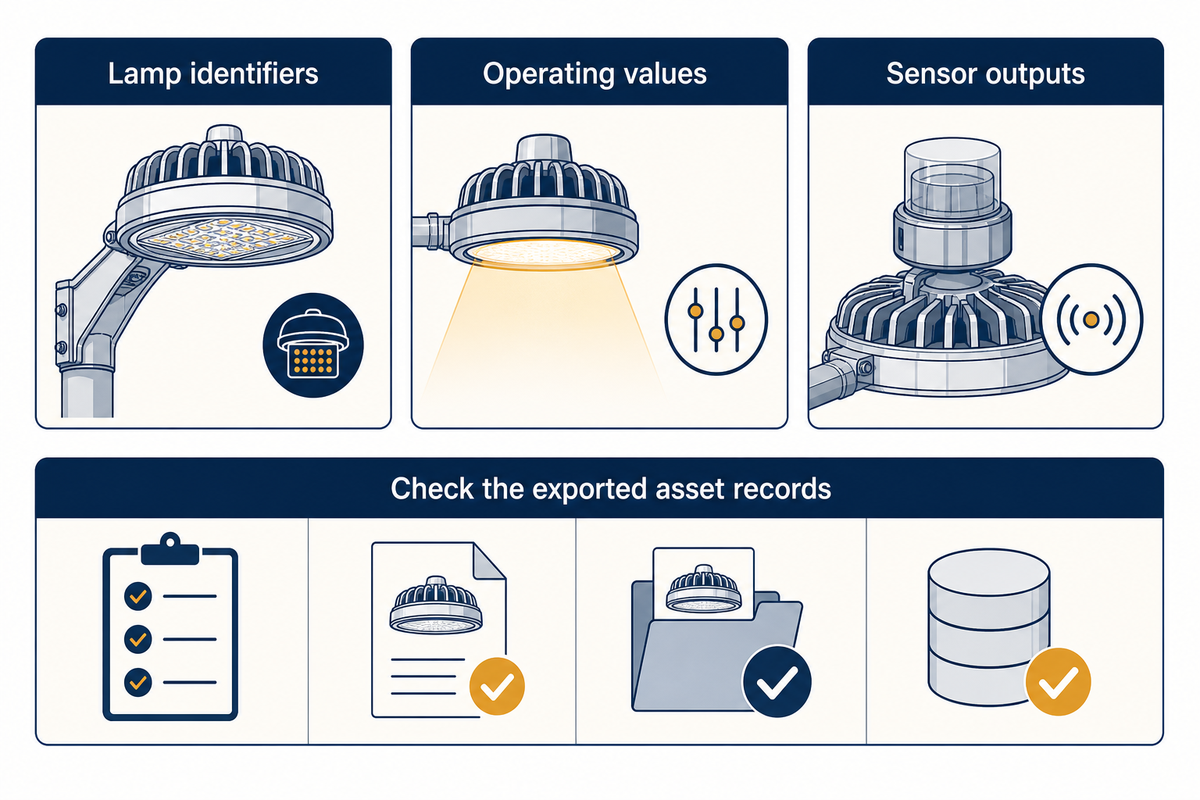
Recent standards work gives the buyers an option to request data continuity between the luminaire and management software. This improvement for smarter asset management is a set of supported information, not a guarantee that all products will work with each other. Ask which profiles the exact quoted products implement and which records survive a change of supplier.
On February 27, 2026, TALQ announced version 2.7.0 and two profiles connecting DALI D4i information with the TALQ/Zhaga framework: one for luminaires and one for sensors. According to the release announcement functions of the new profiles are mandatory. The announcement also states that the existing Lighting Profile for gateways is strengthened to require lamp actuation and monitoring functions.
“reducing fragmentation and fostering competition”
The statement describes the expected benefits of the consortium and not an independent assessment of a reduction in project costs. The live TALQ register checked for this Guide states that the most current specification is 2.7.1. Therefore, the release in February described the profile changes and 2.7.0 shouldn’t be presented as the latest version. A June 2026 TALQ announcement of the first certification of the new profiles is for a different supplier’s product, not Guangqi certification.
For procurement, explain the change as a data request: which lamp identifiers, operating values, and sensor outputs go through the proposed combination? Which are mandatory and which are optional? Request the product entry, software version and capability list. Then, show the information that the maintenance team actually requires, in the exported asset records.
Smart cities can gain from lighting infrastructure without buying every sensor. Adding data has a cost when nobody owns its interpretation, storage or maintenance response. Select the smallest useful information set first, then price the additional functions. The standards alignment helps focus the discussion; it doesn’t remove responsibility for networking commissioning, lighting design or service.
Smart street lighting questions buyers ask
Do I need to install a LoRa edge node on every single streetlight?
Individual nodes are needed when the specified architecture requires independent control at each light.
A cabinet controller can switch or monitor a circuit containing several lights, while a controller at each luminaire can support individual addressing when the rest of the system provides it. Decide which assets need independent commands, alarms and energy records before choosing hardware. Ask the supplier to demonstrate that granularity using the proposed network and actual controller configuration.
Can a smart controller work with streetlights that are not LEDs?
Some existing lights can be controlled, but switching compatibility does not establish dimming compatibility.
Compatibility depends on the lamp, ballast or driver and the control function required. A light-emitting diode source alone does not establish driver compatibility. Switching an existing circuit is different from dimming an individual light or reading its diagnostic data. Give the supplier the installed equipment details and request a supported retrofit arrangement. Do not assume a socket adapter alone makes an older fixture suitable for every function of a connected lighting system.
Which companies provide smart street lighting systems?
Suppliers provide different combinations of luminaires, controllers, networks and management software.
Compare their quoted product roles and supported interfaces before comparing company names. Use current official certification registers to check listed products and versions, then request a demonstration of the proposed combination. A certification held by one product does not establish that every product or service from the same company meets that specification. Assign one party responsibility for integration and resolve exclusions before ordering.
Does smart street lighting need cameras?
Lighting schedules and remote fault monitoring do not inherently require cameras.
Specify cameras only for an identified purpose with its own data-handling requirements. Ask which sensors the lighting functions use and whether movement detection produces images or only an occupancy signal.
How will LoRaWAN, NB-IoT and LTE-M adoption affect a purchase today?
A purchase should follow demonstrated coverage and support commitments, rather than a forecast about the winning network.
Ask the proposed provider which bands, device classes and services are available at the installation. Confirm who operates the network, who pays recurring charges and what happens if a carrier or platform changes its service. Private infrastructure also needs a named maintenance owner, replacement equipment and backhaul support. Preserve an exportable asset register and document the interfaces needed to change a component or service later. Test group commands, individual responses and outage recovery with the quoted configuration before expanding the fleet. A general claim that an LPWA technology is growing does not prove that a specific controller supports your required command timing. Compare the lifecycle obligations alongside the coverage results and the cost of keeping the existing lighting service operational through a future migration.
Can solar streetlights use smart controls?
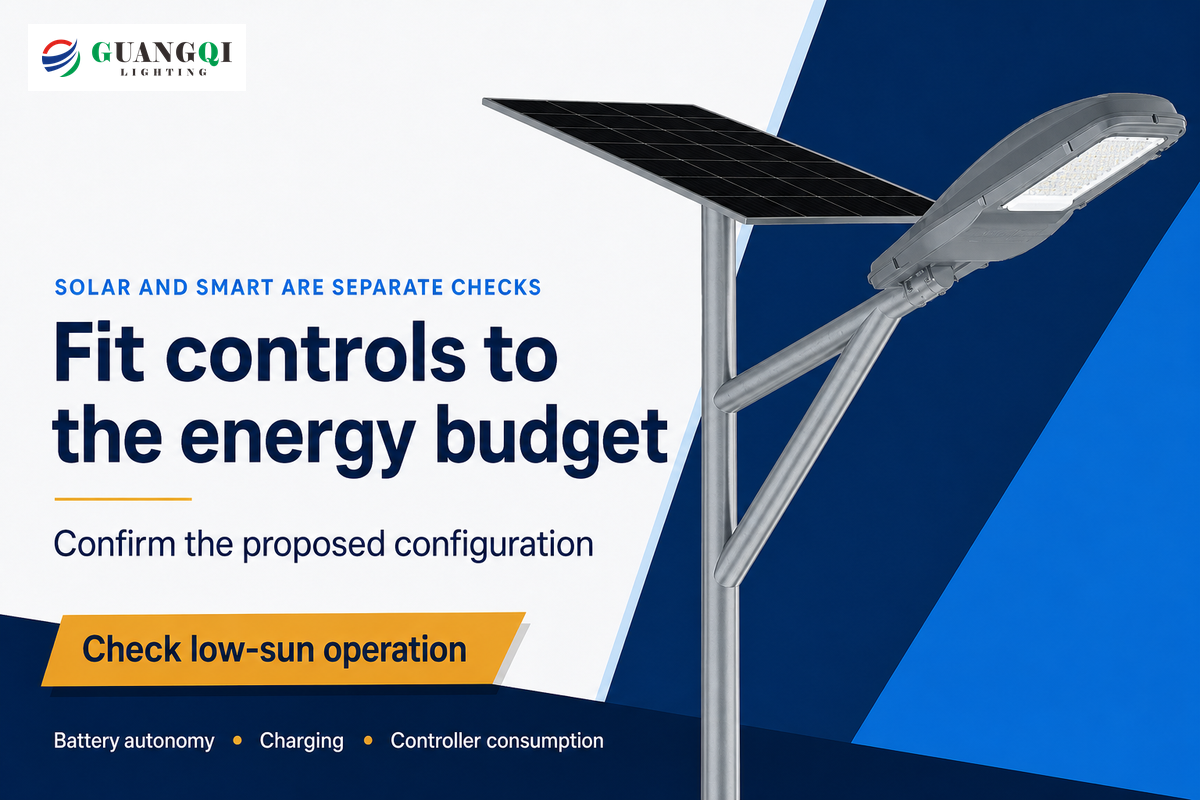
Solar streetlights can use compatible controls, but communications must fit the energy budget.
A solar street-light configuration needs separate checks for battery autonomy, charging and controller consumption. Confirm the proposed operating schedule during low-sun periods before adding continuous communications or extra sensors. Grid-powered examples do not establish off-grid endurance.
The scope behind this buying guide
This Guangqi Lighting guide combines public lighting control specifications, attributed research, and an illustrative example of payback period. It doesn’t showcase private road-test results. It also doesn’t imply that Guangqi has third-party certifications cited. Product selection begins with the required luminaire, driver and controller configuration; network integration, software and operating support need explicit project scope. Discuss those requirements alongside our lighting control options.
References & Sources
- Model Specification for Networked Outdoor Lighting Control Systems U.S. Department of Energy.
- Design Criteria for Adaptive Roadway Lighting, Chapter 4 Federal Highway Administration, archived 2014 research.
- Energy and Operational Impacts of Using 0–10V Control for LED Streetlights Pacific Northwest National Laboratory, December 2023.
- San Diego: More Efficient Street Lighting U.S. Department of Energy Better Buildings, historical partner case.
- LoRaWAN Link Layer Specification 1.0.4 LoRa Alliance; cited for topology and device classes.
- Zhaga-D4i certification DALI Alliance.
- Certified Products TALQ Consortium; live registry checked October 2026.
- Software Update capability catalog National Institute of Standards and Technology.
- Version 2.7.0 release announcement TALQ Consortium, February 2026.