Get in Touch with GUANGQI



By DD · Updated November 2026
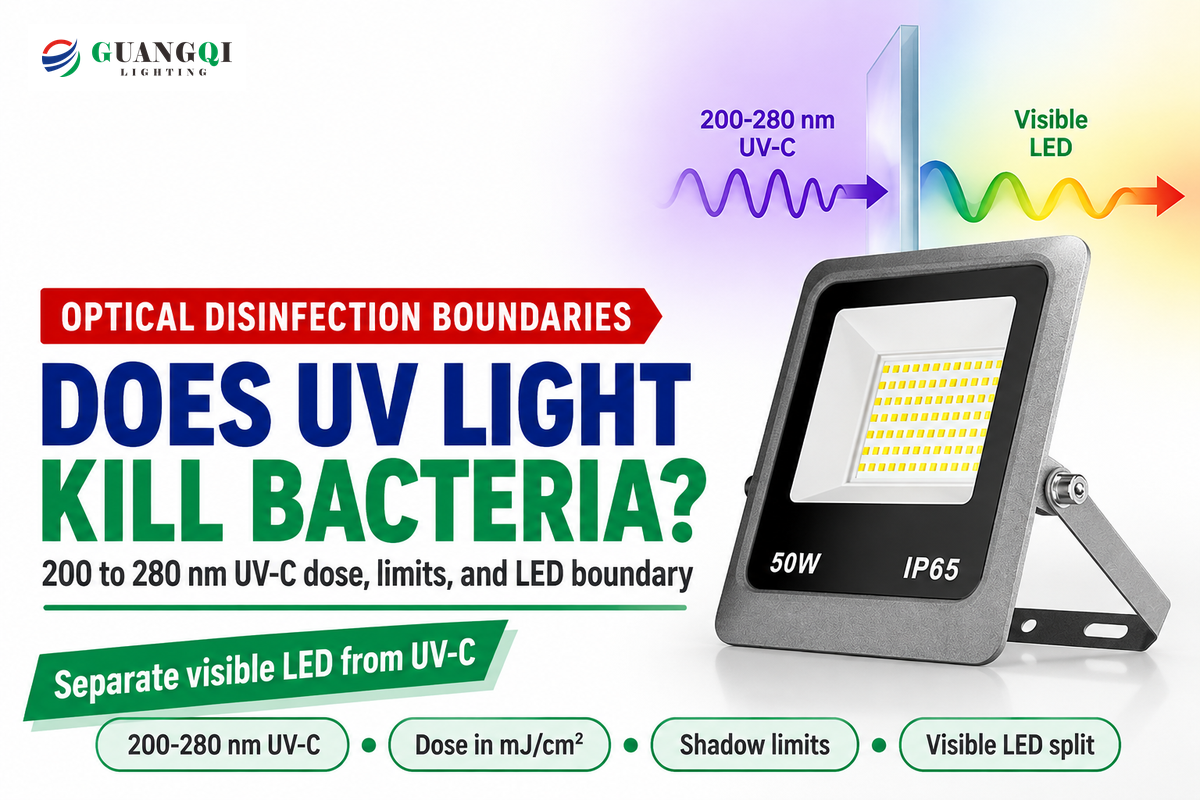
UV light is an optical disinfection method that can rapidly kill or inactivate bacteria when cells absorb UV-C photons between 200 and 280 nm. Longer UV-A and UV-B wavelengths inactivate bacteria much more slowly through oxidative damage. Ordinary room lamps, commercial white LED fixtures, and 365 to 395 nm blacklights don’t deliver rapid UV-C disinfection.
Facility engineers often ask how reliably does uv light kill bacteria across water lines, air ducts, and worktables. Delivered UV dose is calculated as surface irradiance multiplied by exposure time, with wavelength and direct line of sight verified. Guangqi Lighting manufactures commercial, industrial, road, and outdoor visible LED luminaires rather than medical UV-C sterilizers. This guide separates general illumination fixtures from germicidal subsystems.
Key engineering boundaries before specifying hardware
- Germicidal action peaks near 260 to 265 nm in the UV-C band, not in visible or UV-A lighting.
- Delivered UV dose equals surface irradiance multiplied by exposure time (mJ/cm² = mW/cm² × seconds).
- Standard glass, clear polycarbonate, dust films, and geometric shadows block germicidal photons.
How Does UV Light Kill Bacteria? DNA Inactivation Explained
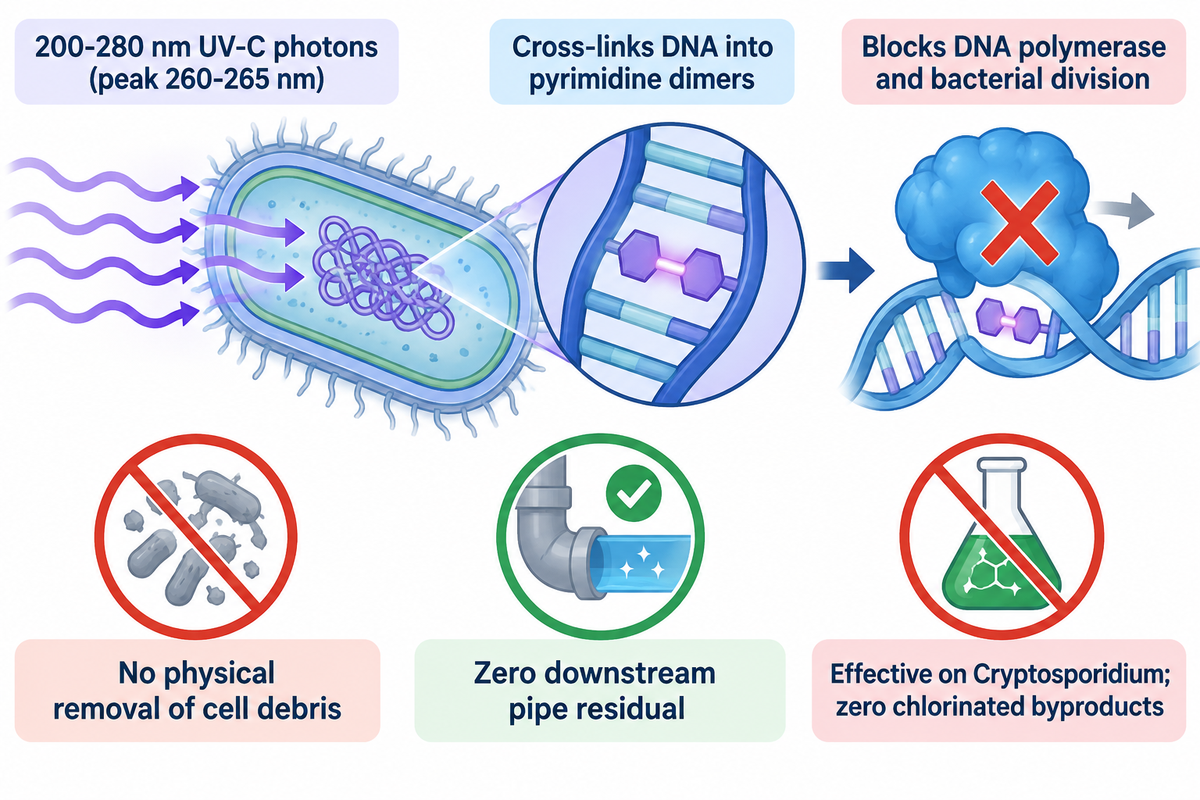
UV-C radiation kills bacteria by damaging cellular nucleic acids rather than bursting cell walls or filtering biomass out of water. Photons between 200 and 280 nm cross the cell envelope and fuse adjacent DNA bases into covalent dimers. Once replication is stopped, the bacterium can no longer divide or establish an infection.
Peak nucleic-acid UV absorption occurs between 260 and 265 nm. Low-pressure mercury lamps emit strongly at 254 nm, right beside that peak. Absorbed light energy forms covalent bonds between neighboring thymine or cytosine bases in DNA or RNA strands. Microbiologists call this mechanism uv inactivation: sufficient uv irradiation removes reproductive viability, while sub-lethal doses can leave repairable DNA damage.
US Centers for Disease Control and Prevention home water advice notes that ultraviolet treatment disinfects water against bacteria, viruses, and parasites when paired with pre-filtration. Inline uv radiation removes zero dissolved heavy metals and/or chemicals.
| Attribute | UV-C Inactivation (200 to 280 nm) | Mechanical Filtration | Free Chlorine Disinfection |
|---|---|---|---|
| Primary mechanism | Photochemical pyrimidine dimer formation in DNA or RNA | Physical size exclusion across a porous membrane | Chemical oxidation of cell membranes and enzymes |
| Dead biomass removal | No physical removal of cell debris | Retains suspended cells and sediment | No physical removal of suspended solids |
| Downstream pipe residual | None outside the illuminated chamber | None past the filter housing | Maintains measurable free residual in piping |
| Cryptosporidium efficacy | Effective at validated Class A UV doses | Effective with absolute 1-micron rated cartridges | Poor inactivation at normal drinking-water levels |
| Chemical byproducts | Zero chlorinated disinfection byproducts | Zero added chemicals | Can form trihalomethanes with organic matter |
Can UV destroy DNA?
Yes, germicidal UV-C photons chemically cross-link bacterial DNA at wavelengths peaking at approximately 260 to 265 nm. Absorbed photons create cyclobutane pyrimidine dimers and 6-4 photoproducts on the genetic strand. These lesions block DNA polymerase from copying the genetic material, stalling bacterial replication.
The germicidal effect of uv-c varies dramatically across the microorganism classes. Vegetative cells such as Escherichia coli and Legionella pneumophila have exposed genetic material and are destroyed at low doses. Endospores such as Bacillus subtilis, however, shield their DNA in a calcium-dipicolinate coat and are destroyed at higher fluences. Some bacteria also use photolyase enzymes to repair dimers if sub-lethally treated cells enter visible light.
Which UV Wavelengths Kill Bacteria? UV-C vs UV-A and UV-B
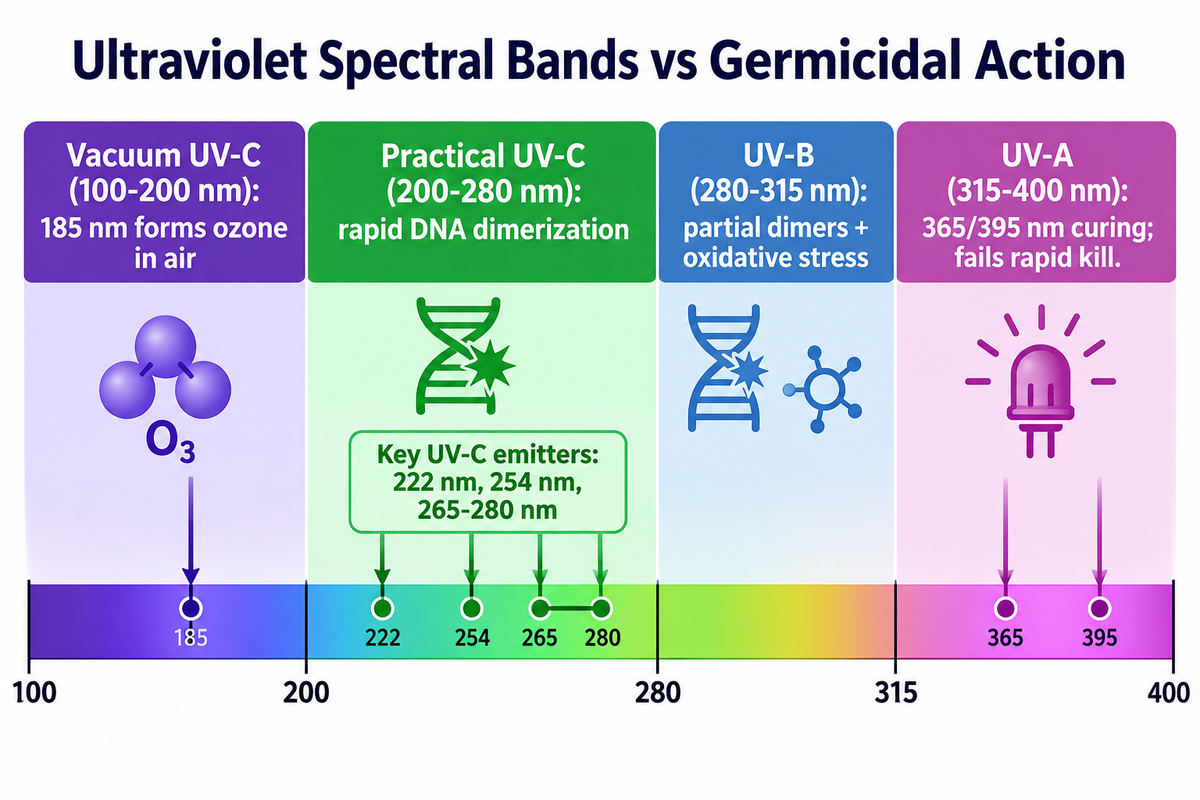
Practical bacterial disinfection occurs in the terrestrial UV-C band from 200 to 280 nm. Shorter wavelengths directly cross-link microbial DNA and RNA. Longer UV-B (280 to 315 nm) and UV-A (315 to 400 nm) bands rely on slow oxidative stress and need far higher doses.
The absorption of nucleic acids sets strict spectral limits for buyers assessing lamp submittals. The International Commission on Illumination (CIE) UV-C band extends from 100 to 280 nm. Vacuum-UV wavelengths below 200 nm are strongly absorbed by air over short paths rather than propagating across rooms. Facility uv disinfection systems therefore operate inside the 200 to 280 nm band.
Mislabeling remains common in catalogs that group every purple bulb under one “UV” label. Technical notes from Waveform Lighting on UV-A versus UV-C emitters show that commercial blacklights emit at 365 nm or 395 nm. That type of uv source cures adhesives and excites fluorescent dyes, but it fails rapid germicidal tasks.
| Spectral Band | CIE Wavelength Range | Cellular Action on Bacteria | Solar Presence at Ground Level | Primary Industrial Role |
|---|---|---|---|---|
| UV-A | 315 to 400 nm | Slow reactive-oxygen protein and membrane stress | Reaches ground freely | 365/395 nm curing, NDT inspection, insect traps |
| UV-B | 280 to 315 nm | Partial dimerization mixed with oxidative damage | Partially transmitted through atmosphere | Medical phototherapy, polymer weathering chambers |
| Practical UV-C | 200 to 280 nm | Rapid direct pyrimidine dimerization (peaks 260 to 265 nm) | Blocked by stratospheric ozone | Water reactors, HVAC air ducts, surface chambers |
| Vacuum UV-C | 100 to 200 nm (including 185 nm line) | Photolyzes oxygen into ozone gas in air | Strongly absorbed by air over short paths | TOC water oxidation and industrial odor oxidation |
What UV light kills bacteria?
Short-wavelength UV-C light between 200 and 280 nm kills bacteria at commercial speeds. Common sources include 254 nm low-pressure mercury lamps, 265 to 280 nm UV-C LEDs, and optically filtered 222 nm krypton-chloride excimer modules. Buyers verify spectral charts showing peak output below 280 nm before ordering.
UV-A and UV-B uv rays are present in natural sunlight at ground level, and the stratospheric ozone absorbs solar UV-C completely. Surface microbes on outdoor objects are reduced by daylight over a period of hours. Industrial disinfection products use artificial uvc radiation to treat flowing water or moving air rapidly. Reject any vendor datasheet that says “UV LED” without stating the nanometer peak.
UV-C Dose and Exposure Time Needed to Inactivate Bacteria
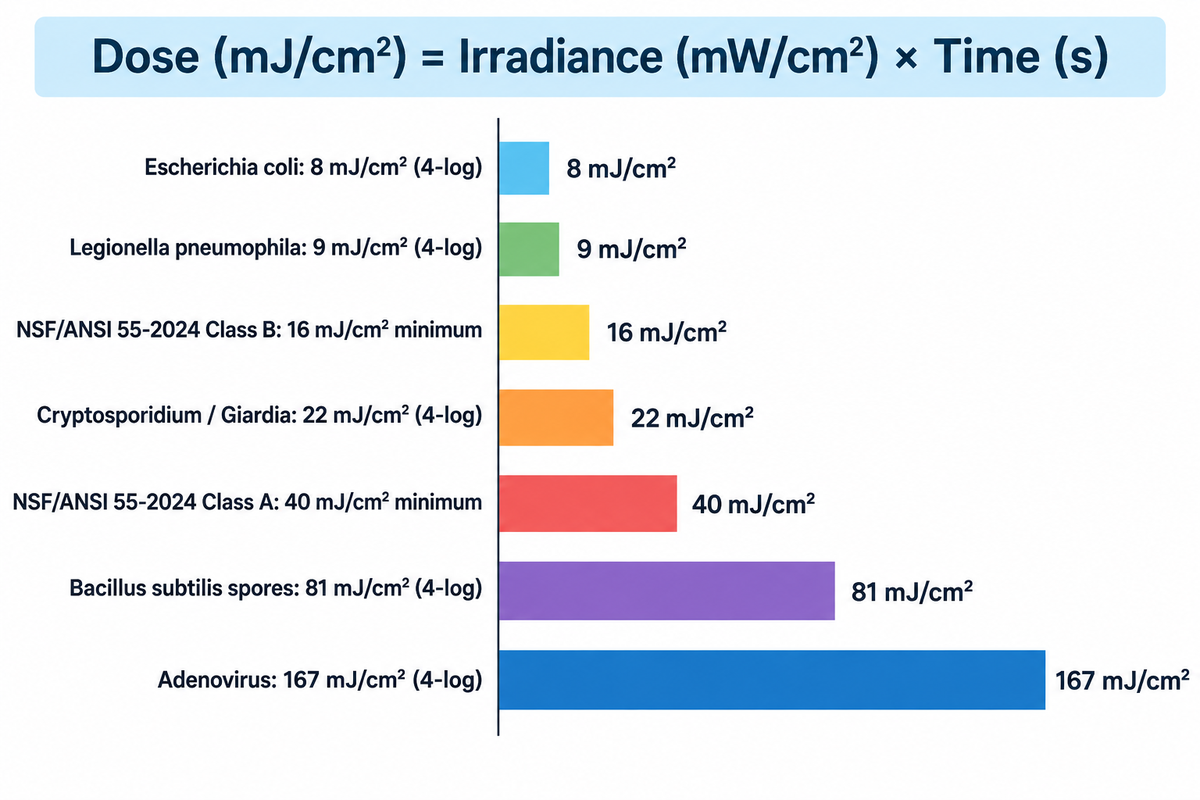
UV-C disinfection uses 200 to 280 nm light (peaking near 260 to 265 nm) under Dose (mJ/cm²) = Irradiance (mW/cm²) × Time (s). UV dose is measured in mJ/cm². Clear-water 254 nm 4-log fluences span 8 mJ/cm² for Escherichia coli to 81 mJ/cm² for bacterial spores, while surfaces require unshadowed radiometer-verified dose and NSF/ANSI 55-2024 specifies 16 or 40 mJ/cm².
Once the germicidal band below 280 nm is verified, engineers specify delivered doses of uv rather than bulb watts. Standard updates from the American National Standards Institute on NSF/ANSI 55-2024 define two drinking-water classes. Class A uses a 40 mJ/cm² (400 J/m²) design minimum for primary treatment of contaminated water. That scope covers validated bacteria and viruses alongside Cryptosporidium and Giardia, while adenovirus requires higher fluence. Class B systems are designed around a 16 mJ/cm² minimum for supplemental treatment of already disinfected public drinking water.
| Target Microorganism or Standard | Microbe / System Category | 254 nm Reference Fluence | Scope Condition |
|---|---|---|---|
| Escherichia coli | Vegetative Gram-negative bacterium | 8 mJ/cm² (4-log) | Collimated clear suspension (Opsytec compilation) |
| Legionella pneumophila | Waterborne vegetative bacterium | 9 mJ/cm² (4-log) | Unshielded planktonic cells; excludes amoeba hosts |
| Cryptosporidium parvum / Giardia | Protozoan cysts and oocysts | 22 mJ/cm² (4-log) | Basis for UV water treatment adoption over chlorine |
| Bacillus subtilis spores | Bacterial endospore biodosimetry surrogate | 81 mJ/cm² (4-log) | Dormant spore coat elevates UV resistance ~10× |
| Adenovirus | Double-stranded DNA non-enveloped virus | 167 mJ/cm² (4-log) | Exceeds single 40 mJ/cm² Class A UV pass |
| NSF/ANSI 55-2024 Class B | Supplemental public drinking water | 16 mJ/cm² design minimum | Supplemental treatment of already disinfected public drinking water |
| NSF/ANSI 55-2024 Class A | Contaminated point-of-entry water | 40 mJ/cm² design minimum | Primary treatment of contaminated water; adenovirus exceeds 40 mJ/cm² |
Chamber irradiance explains differences in time to react across water chambers and open rooms. Opsytec’s radiometry guide shows that 10 mW/cm² delivers 40 mJ/cm² in 4 seconds, while at 85 mW/cm² that dose takes under half a second. Intensity falls off significantly in open-air conditions. LightSources specifications for a bare G36T5L 41 W tube list 150 µW/cm², or 0.15 mW/cm² at 1.0 m.
Hypothetical mounting-distance irradiance-to-time walkthrough (assumed point-source scaling)
Assume a reference irradiance of 0.15 mW/cm² at 1.0 m and a 16 mJ/cm² target dose under idealized inverse-square scaling:
- At 0.25 m assumed distance: 2.40 mW/cm² assumed irradiance delivers 16 mJ/cm² in ~6.7 seconds.
- At 1.0 m reference distance: 0.15 mW/cm² delivers 16 mJ/cm² in ~107 seconds (1.8 minutes).
- At 2.0 m assumed distance: 0.0375 mW/cm² delivers 16 mJ/cm² in ~427 seconds (7.1 minutes).
Handheld wand claims tested at 1 cm mislead operators who sweep counters from arm’s length. Effective disinfection across commercial disinfection uses requires measuring surface irradiance at the furthest corner of the target using a calibrated 254 nm or a 265 nm radiometer, and then setting cycle timers.
Do Regular White LEDs, Blue Lights, or Blacklights Kill Bacteria?
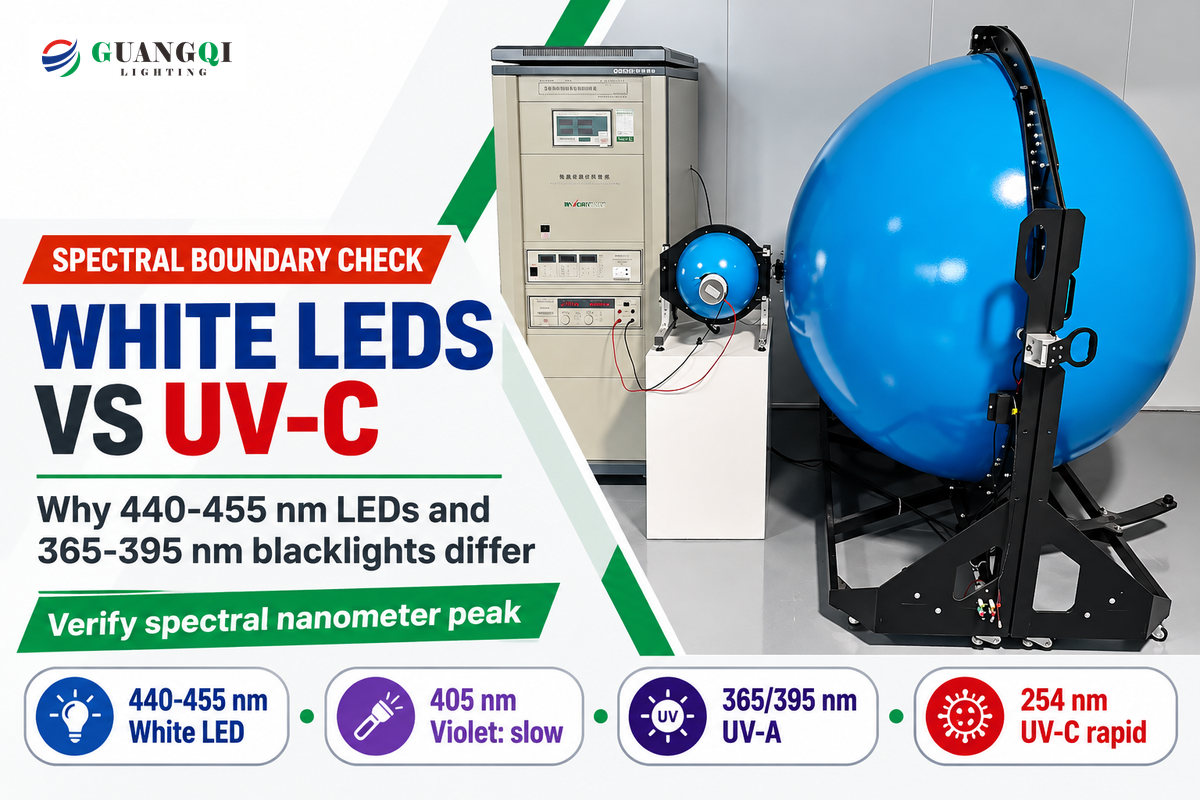
Standard commercial white LED fixtures and blue-pump phosphor packages don’t provide rapid UV-C disinfection, 365 nm or 395 nm blacklights fail rapid germicidal tasks, and narrowband 405 nm violet-blue luminaires suppress surface bacteria only slowly.
In facilities beyond the laboratory, managers separate visible light technology from germicidal hardware. Peer-reviewed optical biofilm irradiation research reports that 405 nm violet-blue light requires 200 to 300 J/cm² (200,000 to 300,000 mJ/cm²) against Pseudomonas aeruginosa biofilms, with results varying across setups. That violet light emits visible photons that excite bacterial porphyrins into reactive oxygen species. It takes thousands of times more radiant energy to achieve the same log reduction as with 254 nm UV-C.
Trade reporting in LEDs Magazine notes a similar shortcoming for 360 to 370 nm UV-A air purifiers using titanium-dioxide (TiO2) catalysts rather than direct DNA damage. CDC Stacks occupational photobiology research also evaluates acute skin hazards from far-UVC exposure. For information about lighting for warehousing alongside street and high-bay lighting, see our industrial LED lighting guide and our spectral note on whether white LED lights emit ultraviolet wavelengths.
| Light Source Family | Peak Wavelength | Typical Bacterial Dose Scale | Germicidal Role |
|---|---|---|---|
| Phosphor-converted white LED | 440 to 455 nm pump + broad visible | Not applicable (no germicidal action) | General task, road, and industrial illumination |
| 405 nm violet-blue LED | 405 nm visible violet | 200,000 to 300,000 mJ/cm² (200 to 300 J/cm²) | Continuous background suppression over hours |
| UV-A blacklight / TiO2 module | 365 nm or 395 nm UV-A | Tens to hundreds of J/cm² without catalyst | Curing, fluorescence, or slow photocatalytic filter aid |
| Germicidal UV-C lamp or LED | 222 nm, 254 nm, or 265 to 280 nm | 8 to 40 mJ/cm² for vegetative bacteria | Primary water, duct, and chamber disinfection |
Supervisors of building maintenance also must control shared G13 bi-pin holders. While some 254 nm quartz tubes are the same G13 bi-pin size as standard T8 fluorescent and LED tube sizes, germicidal lamps require UV-C-rated shielded fixtures and compatible ballasts. Putting an unshielded germicidal tube in an open ceiling troffer exposes workers below to serious eye and skin burns.
How UV Disinfection Works Across Water, Air/HVAC, and Surfaces
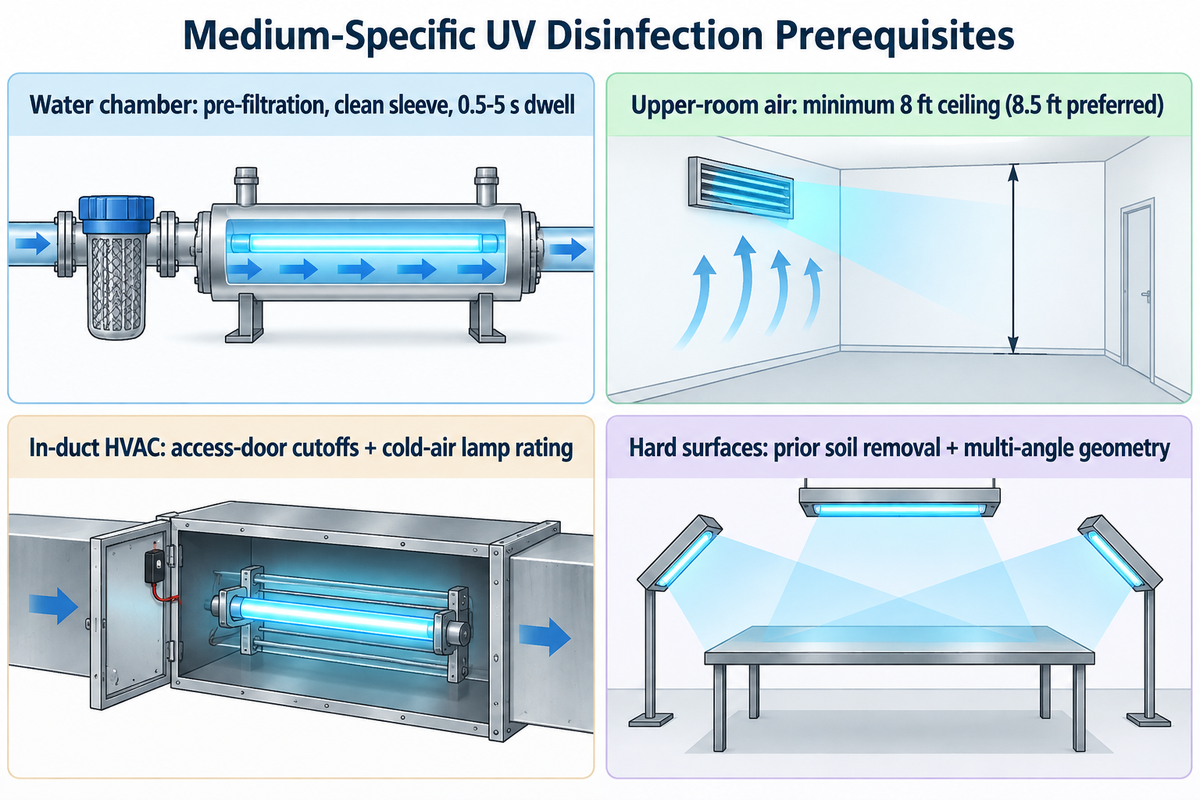
Water chambers use pre-filtration and clean quartz sleeves when source solids lower transmittance; HVAC ducts and upper-room fixtures rely on controlled airflow and ceiling height, while hard-surface enclosures require multi-angle geometry to disinfect surfaces without shadows. Each medium sets its own optical and exposure controls.
Unlike visible ceiling troffers, applying uv light to air and surface targets requires medium conditioning first. For upgrading indoor air quality, CDC/NIOSH germicidal ultraviolet ventilation guidance states a strict rule:
“GUV is a supplemental form of ventilation intervention and does not replace code requirements for outdoor air delivery or filtration.”
According to NIOSH, upper-room fixtures used to disinfect air are allowed only where the ceiling height is at least 8 ft, with 8.5 ft preferred. Low-speed fan mixing moves room air through a louvered upper zone, where the fixture that disinfects the air is placed above occupant head height. Tuberculosis (TB) bacteria are less UV susceptible compared to influenza or SARS-CoV-2. In clinical settings including hospitals, engineers pair upper-room GUV with HEPA air purifiers and mechanical air purification.
| Application Medium | Governing Design Variable | Mandatory Pre-Condition | Disqualifying Field Condition |
|---|---|---|---|
| Drinking and process water | Flow rate, UV254 transmittance, sleeve cleanliness | Pre-filtration and hardness or iron control where source water fouls sleeves or lowers UVT | Turbid water shielding bacteria inside particles |
| Upper-room indoor air | Louvered ceiling zone irradiance and vertical air mixing | Minimum 8 ft ceiling (8.5 ft preferred) and eye-level verification | Low ceilings or glossy reflective overhead ducts |
| In-duct HVAC coil / airstream | Duct velocity, air temperature, and dwell length | Access-door cutoff switches and cold-air lamp rating | Unshielded polymer drain pans or wiring insulation |
| Hard equipment surfaces | Direct incident angle, distance, and surface smoothness | Prior soil removal and multi-position emitter geometry | Porous textiles, grease layers, or occluded undersides |
Decorative water features maintain disinfection and illumination separately as well. Basin fixtures use submerged IP68 underwater pond lights to light basins with visible LEDs. External clarifiers, where uv-c is used on pumped water, are shielded.
How long does it take for UV light to kill bacteria in water?
Water flows through a sized inline UV water disinfection chamber and receives a 16 to 40 mJ/cm² germicidal dose in 0.5 to 5 seconds. The actual residence time depends on the irradiance, lamp wattage, quartz sleeve clarity, and the flow rate.
Different types of water change optical transmission within their steel shells. Iron, tannins, and suspended silt scatter 254 nm photons before they reach microbes. CDC home water treatment guidance notes that UV water units with pre-filtration work better than units without pre-filtration. Still, safe water is dependent on source water quality. Large municipal water process plants also install medium-pressure uv polychromatic reactors for high-flow channels.
Why UV Disinfection Fails: Shadows, Biofilm, Regrowth, and Material Aging
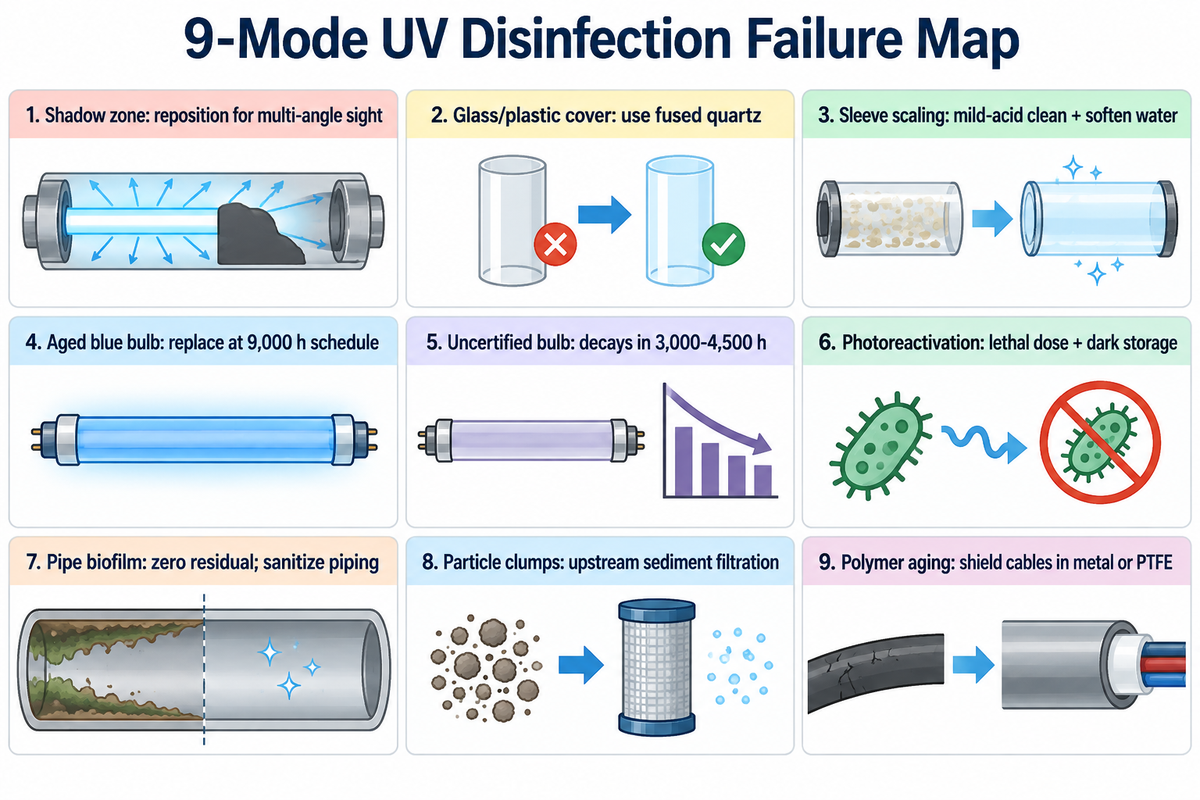
Ultraviolet disinfection units fail swab and coliform audits for nine repeated physical and biological failure modes. Straight line shadows mask crevices; ordinary glass or scaled quartz attenuates beams; attached biofilms and photoreactivation restore counts; and aged and/or uncertified bulbs glow blue after losing the 254 nm output.
Across water and air-handling units, field failures are often a result of optical barriers or microbial repair despite proper implementation of pre-filters and air flow. Designs in US Patent US12070525B2 use ordinary glass or plastic as UV-blocking shields for operator safety. Standard window glass and most polycarbonate covers strongly attenuate 254 nm rays, so delivered dose behind any barrier must be verified.
Downstream pipe biology creates a second blind spot for drinking water quality teams. Data from peer-reviewed biofilm studies show that 40 mJ/cm² inline UV treatment leaves attached biofilms on PVC, PE, stainless-steel, and copper pipes. Opsytec’s photobiology notes state that reciprocity of Bunsen-Roscoe doses fails when photoreactivation enzymes repair UV-induced damage in the presence of visible light. Field data from Alpha UV also state that blue mercury glow is only a visible by-product. Genuine Philips TUV water lamps are rated for 9,000 operating hours (~12.3 months continuous) at 80% UV-C output, while generic bulbs decay in 3,000 to 4,500 hours.
| Failure Mode | Physical Root Cause | Field Symptom | Verification and Fix |
|---|---|---|---|
| 1. Geometric shadow zone | UV-C travels in straight lines with low wall reflectance | Undersides and crevices fail ATP or plate swabs | Reposition emitters for multi-angle line of sight |
| 2. Glass or plastic cover | Soda-lime glass and polycarbonate absorb 254 nm rays | Lamp lights up, zero target irradiance measured | Replace barrier with high-purity fused quartz |
| 3. Quartz sleeve scaling | Calcium, magnesium, or iron film coats warm sleeve | Gradual UV sensor alarm despite new bulb | Clean sleeve with approved mild acid and soften water |
| 4. Glowing-blue aged bulb | Quartz solarization blocks 254 nm while visible lines persist | Positive coliform test past rated lamp hours | Log run hours and replace on rated lamp schedule (e.g., 9,000 h Philips TUV water spec) |
| 5. Uncertified replacement bulb | Soft glass or poor amalgam decays in 3,000 to 4,500 h | Mid-year dose collapse well before annual service | Purchase OEM lamps matched to ballast current |
| 6. Photoreactivation regrowth | Sub-lethal UV dose followed by visible light exposure | Treated water counts rebound in clear storage tanks | Deliver organism-validated lethal fluence and shield treated water from light |
| 7. Downstream pipe biofilm | UV disinfection of water leaves zero pipe-wall residual | Reactor outlet tests clean, distal taps test positive | Sanitize downstream piping and maintain residual control |
| 8. Particle clump shielding | Suspended solids harbor embedded live bacteria | Non-linear tailing survival after storm turbidity spikes | Install upstream sediment filtration sized for source turbidity and reactor UVT |
| 9. Polymer and room aging | Direct UV-C cleaves plastics, fades finishes, harms plants | Brittle cable jackets, yellowed housings, damaged foliage | Shield wiring in metal conduit or PTFE sleeves |
What are the advantages and disadvantages of UV light?
The major benefits of uvc disinfection include rapid, chemical-free inactivation of vegetative bacteria, covered viruses, and chlorine-resistant Cryptosporidium. Disadvantages include zero downstream pipe residual, strict shadow sensitivity, and regular quartz sleeve cleaning, as well as acute injury to eyes and skin from unshielded tubes.
Because uv light can help reduce pathogen counts only in the illuminated zone, engineers pair UV chambers with filtration and pipe hygiene. CDC/NIOSH facility guidance also states that stray UV-C fades wood and wallpaper and damages indoor plants. Shielded housings protect adjacent room finishes and wiring.
Human Safety, Exposure Limits, and Commercial Interlock Standards
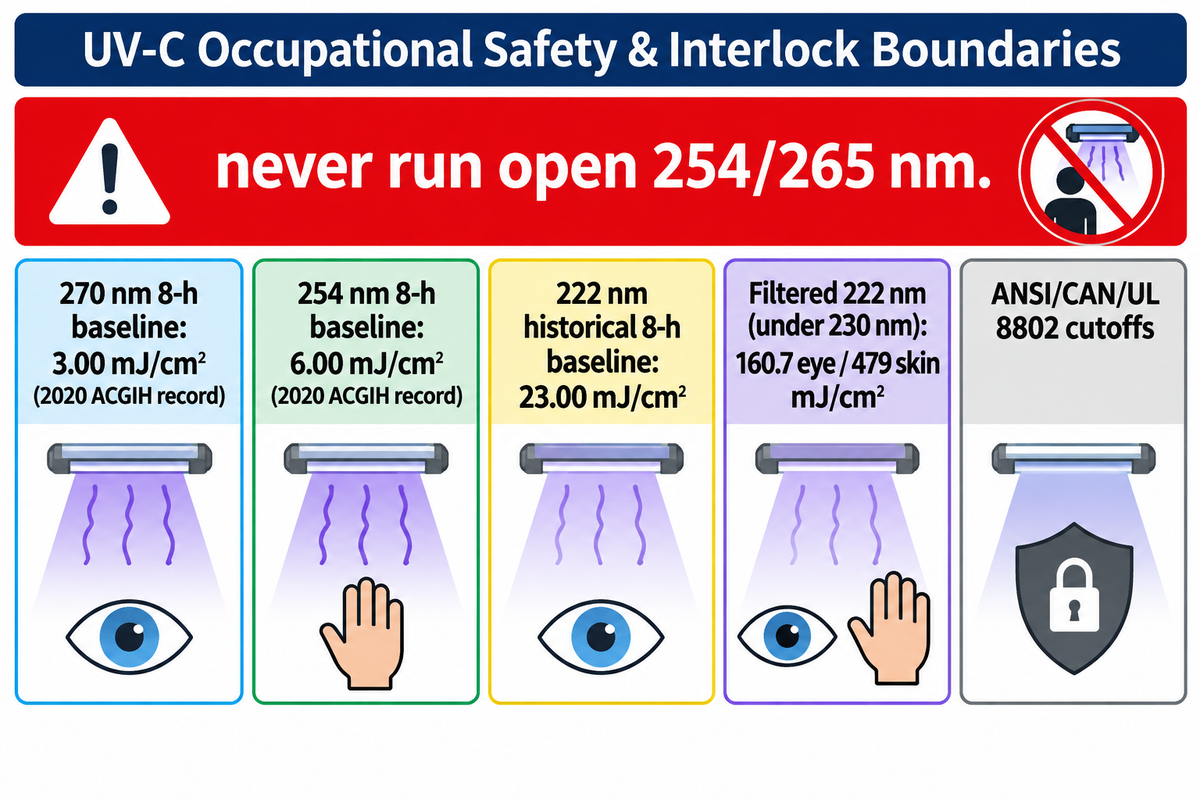
Unshielded germicidal UV-C injures human skin and eyes rapidly. A 2021 photobiology review recorded historical 2020 ACGIH 8-hour baselines of 6.00 mJ/cm² at 254 nm and 3.00 mJ/cm² at 270 nm alongside separate eye-and-skin proposals. Engineers verify current ACGIH TLV editions and ANSI/CAN/UL 8802 equipment controls before commissioning.
Because direct exposure to short-wavelength photons can damage the cornea, hazards associated with uv emitters are subject to room-specific regulations. Risks from short-wavelength photons are well documented. The 2021 peer-reviewed UV-C photobiology paper by Sliney and Stuck cites historical 2020 ACGIH 8-hour Threshold Limit Value (TLV) baselines of 6.00 mJ/cm² at 254 nm and 3.00 mJ/cm² at 270 nm. That review also notes 254 nm proposals of 6.00 mJ/cm² for eyes and 10.0 mJ/cm² for skin, while active designs verify current official ACGIH editions. Bare-eye doses as low as 4 to 6 mJ/cm² at 270 nm trigger painful photokeratitis 6 to 12 hours after uv exposure, clearing in roughly 48 hours.
Safety Requirement: Never operate unshielded 254 nm or 265 nm lamps in occupied rooms
Workers exposed to ultraviolet light or directly exposed to uv-c from open tubes suffer eye and skin burns before feeling warmth. Open-beam surface units rely on manufacturer-specified engineering controls such as access cutoffs, lockable switches, and warning labels rather than one universal interlock circuit. Occupied areas require shielding or geometry keeping exposure within applicable TLVs, whether through enclosed housings, verified upper-room louvers, or filtered far-UVC fixtures.
At 222 nm, published photobiology reviews and CDC 2024 far-UVC assessments contrast the historical 2020 ACGIH 8-hour baseline of 23.00 mJ/cm² with updated filtered limits. Sliney and Stuck’s 2021 review documented proposed 222 nm limits of 160.7 mJ/cm² for eyes and 479 mJ/cm² for skin when bandpass filters block emissions above 230 nm. In North America, Intertek Standards Update Notices note that ANSI/CAN/UL 8802 covers UV-C germicidal equipment alongside luminaire standards UL 1598, UL 153, and UL 2108 where applicable. Keep UL 8802 separate from explosion-proof NEC hazardous location lighting classifications for visible LEDs.
Choosing UV Hardware: 254 nm Mercury vs UV-C LED vs 222 nm Far-UVC
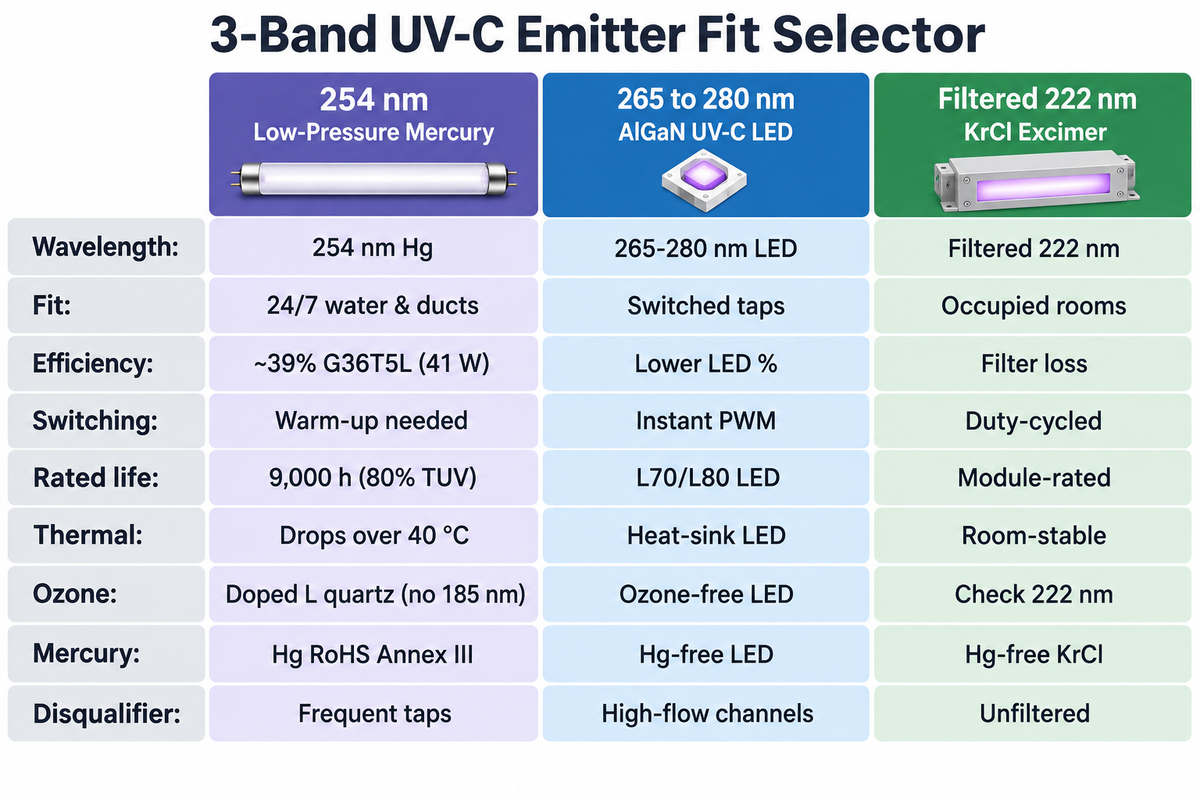
Commercial disinfection divides into three UV-C emitter families. Low-pressure 254 nm mercury tubes fit continuous high-flow water and HVAC ducts. Solid-state 265 to 280 nm UV-C LEDs suit switched point-of-use water, while optically bandpass-filtered 222 nm KrCl excimer fixtures serve occupied rooms.
Due to exposure limits and interlock rules, specific uvc technology models have distinct thermal and electrical limitations. Optical efficiency varies by lamp model rather than following one universal figure. A G36T5L low-pressure mercury lamp example for uvc lamps rated at 41 W input (425 mA, 843 mm length) emits 16 W at 254 nm, or roughly 39% under stated operating conditions. Standard quartz output drops above 40 °C. Specify titanium-doped “L” quartz to block 185 nm ozone, because clear “VH” quartz emits 185 nm rays that generate toxic indoor ozone.
Instant-on solid-state 265 to 280 nm UV-C LEDs are mercury free and switch on via pulse-width modulation, as shown in US Patent US12070525B2. Filtered 222 nm KrCl excimer modules trail 254 nm mercury in wall-plug efficiency. Published spectral weighting guidance warns that unfiltered KrCl bulbs leak longer UV-C wavelengths and breach occupied room TLVs.
| Decision Parameter | 254 nm Low-Pressure Mercury / Amalgam | 265 to 280 nm AlGaN UV-C LED | Filtered 222 nm KrCl Excimer |
|---|---|---|---|
| Primary wavelength | 253.7 nm (254 nm) monochromatic line | Tunable package peak 265 to 280 nm | 222 nm narrowband with >230 nm cutoff filter |
| Best deployment fit | 24/7 municipal/industrial water and HVAC ducts | Intermittent point-of-use water and compact boxes | Occupied high-traffic rooms with ceiling limits |
| Conversion efficiency | Model-specific (e.g., ~39% on G36T5L at 41 W input; not universal) | Lower wall-plug %; requires thermal heat sinking | Lower net system efficiency after optical filter loss |
| Warm-up and switching | Needs warm-up minutes; frequent cycling shortens life | Instant full output; unlimited on/off flow switching | Instant strike; duty-cycled to stay under 8-hour TLV |
| Rated emitter life | 9,000 h at 80% output (Philips TUV water spec) | Model-dependent L70/L80 hours; high cycle life | Module-dependent; filter and excimer life tracked |
| Thermal sensitivity | Standard quartz drops >40 °C or in cold airstreams | Works in cold water; LED junction heat drops output | Stable across normal conditioned room temperatures |
| Ozone control check | Specify “L” doped quartz; reject 185 nm “VH” indoors | Zero 185 nm emission; inherently ozone-free | Verify trace ozone in small unventilated enclosures |
| Mercury content | Contains mercury; EU RoHS Annex III exemptions are category-specific and time-limited | Mercury-free solid-state semiconductor | Mercury-free noble-halogen gas discharge |
| Disqualifying use case | Glass-free food lines or frequent on-demand taps | High-volume municipal channels needing tens of UV watts | Any uncertified module lacking a >230 nm bandpass filter |
Across those nine parameters, 254 nm mercury tubes serve continuous water and ducts, while 265 to 280 nm UV-C LEDs fit switched point-of-use taps. Where bandpass filtering is confirmed, filtered 222 nm KrCl excimer modules serve disinfection needs in occupied rooms.
What Is Changing in Germicidal UV and Facility Lighting Procurement (2025–2026)
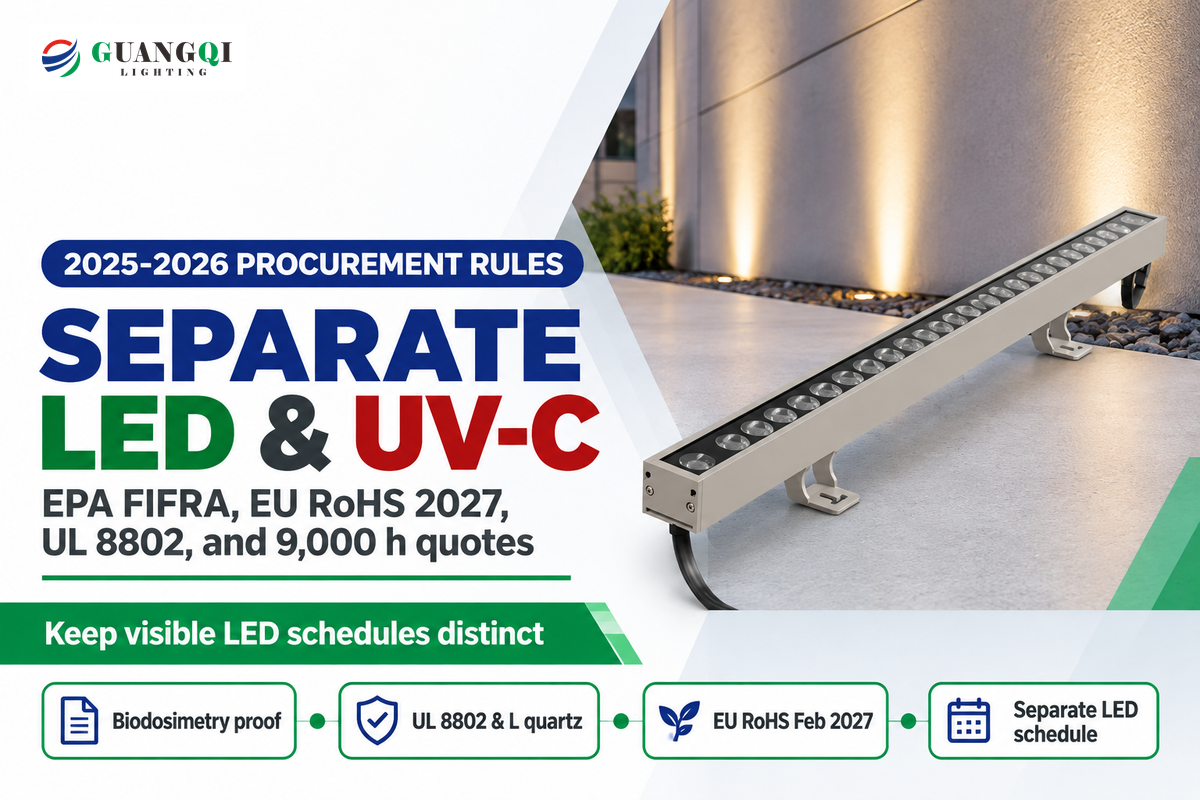
From 2025 through 2026, procurement rules tighten the boundary between general LED lighting and germicidal UV hardware. Buyers verify US EPA FIFRA pesticidal device labels, EU RoHS Annex III mercury exemptions listed to February 2027, ANSI/CAN/UL 8802 interlocks, and independent biodosimetry test reports.
Based on these emitter trade-offs, buyers assess regulations rather than trust box slogans. Under FIFRA device rules, a UV unit making pesticidal or antimicrobial claims is deemed a pesticidal device and is regulated by the EPA. The outer carton may list the factory’s EPA Establishment Number, but that number does not prove efficacy. UV devices receive no EPA Registration Number or premarket efficacy approval, and false claims face enforcement under FIFRA Section 2(q) (40 C.F.R. Part 156).
In Europe, Opsytec’s EU RoHS Directive 2011/65/EU briefing notes that general fluorescent lamp exemptions have expired. Annex III UV-C exemptions such as 4(a)-I (up to 15 mg mercury per uncoated low-pressure lamp) list 24 February 2027. Those exemptions stay valid during the European Commission Pack 29 review under Article 5(5), with a 12-to-18-month transition under Article 5(6) if revoked. Replacement bulb, quartz sleeve, and sensor prices require model-specific vendor quotes.
Facility Buyer Submittal Verification Checklist (Keep UV-C and General LED Lighting Separate)
- Independent dose verification: Require third-party biodosimetry for flow reactors or calibrated irradiance mapping at target distance. Irradiance maps verify optical flux only, and an EPA Establishment Number proves neither.
- Safety and ozone documentation: Verify ANSI/CAN/UL 8802 listing, IEC 62471 risk group labeling, titanium-doped “L” ozone-free quartz, and optical bandpass certificates for 222 nm units.
- Consumable lifecycle quote: Request itemized vendor quotes for replacement lamps, quartz sleeves, O-rings, and calibrated UV reference sensors over 9,000-hour intervals.
- Separate visible LED lighting schedule: Keep commercial warehouse, street, facade, and IP65/IP68 visible LED luminaires on a dedicated electrical lighting schedule with independent photometric files.
Guangqi Lighting offers visible LED luminaires for commercial, industrial, road, architectural, and landscape lighting designs as well as for other lighting applications. The Guangqi Lighting catalog does not list any UV-C disinfection reactors. Contact the Guangqi Lighting engineering team for IES photometric files based on your fixture schedule and wattage as well as for driver specifications.
Request a Commercial Visible LED Lighting Quote
Frequently Asked Questions About Killing Bacteria With UV Light
The frequently asked questions below cover lamp aging checks, microbe doses, aquarium clarifiers, food vitamin stability, drinking water radiation myths, glass barriers, disinfection terminology vs. sterilization, and more field checks. Be sure to pair each maintenance action with the reactor manual and a calibrated sensor of the same model.
What is an ultraviolet sterilizer, and does it sterilize or disinfect?
Commercial units sold as “ultraviolet sterilizers” perform microbial disinfection or log inactivation rather than absolute clinical sterilization.
Clinical sterilization destroys every viable organism, including dense bacterial endospores, inside validated steam autoclaves or gamma chambers. Practical uv light systems instead specify a validated log reduction for target viruses and bacteria, while NSF/ANSI 55-2024 sets a 40 mJ/cm² Class A design minimum. Buyers often call inline reactors units used to sterilize water, yet engineering submittals specify log-reduction fluences.
What does UV-C do to bacteria compared with viruses and mold?
UV-C photons create pyrimidine dimers and nucleic-acid lesions; reported 254 nm 4-log fluences are organism- and condition-specific, near 8 to 9 mJ/cm² for vegetative bacteria, 167 mJ/cm² for adenoviruses, and higher exposures for mold.
Vegetative cells including bacteria such as Escherichia coli and Legionella lack thick outer shields and succumb quickly in clear water. Enveloped respiratory viruses also inactivate at low fluence inside validated air or water chambers. Bacterial endospores and dark-pigmented mold spores carry protective protein coats or melanin pigments that attenuate UV photons, requiring higher light exposure to kill pathogens on damp coils.
Does UV light kill bacteria in an aquarium without harming fish?
Yes, an enclosed inline aquarium UV clarifier inactivates free-floating waterborne bacteria and green algae without exposing fish.
A water pump circulates tank water through an opaque housing where a clean quartz sleeve surrounds the uvc light source. Germicidal photons stay confined inside the shielded shell while treated water returns directly to the display tank. Fish, corals, and beneficial nitrifying biofilms attached to biofilter media or gravel remain unharmed. Never mount a bare germicidal bulb over open tank water.
Can you eat food exposed to UV light, and what vitamin is destroyed?
Yes, food and beverages treated with controlled UV-C surface disinfection remain safe to eat with zero residual radiation, though prolonged exposure degrades riboflavin (vitamin B2) and vitamins A, C, and E.
UV-C photons are non-ionizing optical energy that vanish upon absorption without making food radioactive. Processors still limit exposure time on milk and clear juices because excess ultraviolet energy breaks down photosensitive nutrients and alters flavor. Commercial tunnels control liquid film thickness and dwell seconds to protect product quality.
Does UV-treated drinking water cause cancer or leave radiation behind?
No, UV-treated drinking water carries zero residual radiation and forms no carcinogenic chlorinated byproducts.
Germicidal lamps emit non-ionizing optical photons rather than radioactive particles, preserving water safety immediately past the chamber.
Can UV-C light disinfect through glass, clear plastic, or dusty covers?
No, ordinary soda-lime window glass, clear polycarbonate or acrylic sheets, and dusty covers strongly block 254 nm UV-C radiation.
Reactors require clean fused-quartz sleeves or thin fluoropolymer windows so germicidal photons reach target water and surfaces.
How can maintenance teams tell if an older UV lamp is still killing bacteria?
Maintenance teams check older lamps using run-hour meters, calibrated 254 nm UV-C sensors, and downstream coliform tests.
Understanding uvc lamp aging prevents false confidence when quartz solarization reduces 254 nm output over time. Technicians replace bulbs at the rated limit (such as 9,000 hours on Philips TUV water lamps), clean mineral scale off quartz sleeves, read a calibrated reference sensor, and verify microbial counts downstream.
References & Sources
- Germicidal Ultraviolet (GUV) Ventilation Guidance – US Centers for Disease Control and Prevention (NIOSH), updated October 28, 2026.
- About Home Water Treatment Systems – US Centers for Disease Control and Prevention.
- Extending the Acute Skin Response Spectrum to Include the Far-UVC (Record 208484) – CDC Stacks Photobiology Repository (NIOSH).
- New Occupational and Public Health Aspect of UV-C Photobiology (Sliney & Stuck, 2021) – National Library of Medicine, PubMed Central (PMC8252557).
- Pesticide Devices: A Guide for Consumers (FIFRA Compliance) – US Environmental Protection Agency, updated September 29, 2026.
- NSF/ANSI 55-2024: Ultraviolet Microbiological Water Treatment Systems – American National Standards Institute (ANSI).
- US Patent US12070525B2: Systems and Methods for Disinfection – United States Patent and Trademark Office via Google Patents, granted August 27, 2024.
- Optical Biofilm Control and Inline UV Water Disinfection Limits (2025, 13(9):2048) – MDPI Microorganisms (Peer-Reviewed Open Access).
- Standards Update Notices for Germicidal Equipment Transition to ANSI/CAN/UL 8802 – Intertek Testing Services (2024-04-19 and 2025-08-05).
- UV Disinfection Radiometry, Dose Fluence Tables, and Reciprocity Limits – Opsytec Dr. Gröbel GmbH.
- EU RoHS Directive 2011/65/EU and UV-C Lamp Mercury Exemptions – Opsytec Dr. Gröbel GmbH.
- UV-A Photocatalytic Purifiers Contrasted With Short-Wavelength UV-C – LEDs Magazine.
About this germicidal UV and facility lighting guide
DD prepared this technical reference for Guangqi Lighting (Zhongshan Guangqi Lighting Co., Ltd.) to help facility managers, plant engineers, and lighting buyers separate germicidal UV-C equipment from commercial and industrial visible LED luminaires. All microbial fluence values, ACGIH exposure limits, and regulatory dates come from cited public health, standards, and radiometry records. Reactor sizing, safety interlocks, and electrical installation belong with qualified engineers responsible for the site.