Get in Touch with GUANGQI



![Stadium Lighting Compliance & Commissioning Playbook [2026]](https://gqlamp.com/wp-content/uploads/2026/04/1-24.png)
It is certainly not the LED stadium lights’ design that fails at the drawing board; rather, it is somewhere along the authority approval process, the bid substitution, the uncommissioned grid, the warranty clause a Facility Owner reads for the first time three years after installation. This playbook encapsulates the delivery and operations of the stadium and sports lighting project, from Small Tennis Court to Premier League Stadium, documenting the permits, broadcast specifications, bid language, commissioning tests, failure-mode diagnostics, maintenance discipline, international compliance questions that determine whether a technically solid light solution will still deliver over twenty years in service. If the scope targeted is Tennis Court or Regional Football Field or Multi-Sport Arena, the engineering decisions documented herein will apply.
If you need assistance with pole height, uniformity ratios or photometric planning itself, our associated sports lighting design manual covers this engineering phase. This guide begins at the point the design is locked and takes you through to handover and operation.
Quick Specs
| Permit lead time (municipal) | 6–18 weeks, parallel approval tracks |
| DarkSky OSL fee (Phase 1) | US$1,000 for up to 4 fields; US$200 per extra field |
| DarkSky BUG rating target | B2-U0-G2 (non-aerial sports) |
| Broadcast TLCI threshold | ≥85 (EBU R 137) |
| Commissioning grid | ≤3 m (10 ft), 1.5 m height, Class A luxmeter |
| Acceptance tolerance | ±10% of photometric plan average |
| LED driver MTBF target | ≥50,000 hours |
| Dominant failure mode | Driver electronics (>70% of field events) |
Permit, Zoning and Dark-Sky Approval — The Pre-Construction Compliance Path
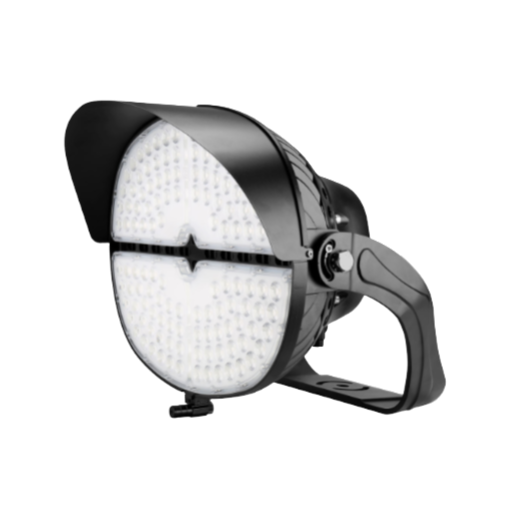
Municipal approval is the one process most facility operators find out about—usually in the form of a planning-board letter requesting a BUG rating analysis, a property-line trespass projection, and a curfew policy—all of which are neither mentioned in any of the bid documents nor the project description. Approval is not one gate; it is three parallel tracks that all must cross to allow a single pole foundation to be poured, and each track has its own independent review clock.
First track is the municipal building permit: electrical plans, pole structural engineering for foundation loads and lighting-design review. Lead time is six to eighteen weeks depending on jurisdiction. Second track is the planning board or zoning track where the neighborhood-impact conversation takes place HOA sign-off for residential-adjacent sites, photometric spill projection at the property line, and more and more the documentation that supports a variance if pole heights exceed zoning limits.
The third is dark-sky compliance, which was an advisory process and is now codified in thousands of municipal codes and statutes based on the DarkSky International model ordinance.
What DarkSky Certification Actually Requires
To receive the DarkSky International mark (and the regulatory protection that accompanies it if a complaint arises) venues must go through an official two-step certification program, as outlined in the DarkSky Outdoor Sports Lighting Guidelines v1.3. Step 1-Design Compliance must be applied for online and involves an initial review of the proposed lighting design by dark sky lighting experts prior to any construction commencing. Subject to review, cost according to us$1,000 for up to four contiguous fields, USolovad for additional fields.
Step 2-Installation Certification is a field inspection conducted at night with the entire control system activated.
The numeric standards are readable as engineering spec sheets because that’s what they are—written by the DarkSky Technical Committee using measurements taken from an approved installation at Sahuarita, Arizona. Sports other than those played in the air are allowed to produce 0 lumens of light above the horizontal plane; above-the-horizontal Sports—baseball, softball, cricket, American football—may produce up to 8 percent of the total lumens, but only from fixtures for ball-in-flight visibility, which must be switched on a separate circuit. Lights at the glare evaluation offset angle (GEOD) can produce up to a maximum of 1000 candelas of luminance—measured on a 3 meter grid circumscribing the field, at 1.5 meters from the pavement—local time curfew should be no later than 11:00p.m.
⚠️ Important
1.1-1.3 are requirements mandatory during design, but not during construction. If you build first and submit for certification later, and have a non-compliant installation, there is no way to mitigate by re-aiming fixtures, adding shields, or replacing luminaires. Sahuarita’s project project was successful in large part because the design team of record, the booking agent, the league representatives, the general manager, the mayor, and the sanitary district spent time with managers of the geophysical observatories before publication of the lighting plan details—not when, after they ordered the fixtures, the poles, and the wiring.
The Neighborhood Engagement Playbook That Prevents Appeals
The biggest reason projects lag at glare-approval is residents aren’t happy; it’s not because the planning commission detects technical deficiencies. Movements one, two, and three can make the difference between winning and losing your argument: host an open, pre-applications information session with sample spill-spots, document an in-kind proposal to employ an ATM-style astronomical timer configured to activate the permanent curfew as a sign of solid good faith, and adhere in writing to property-line illuminance 0.5 foot candles or less (a default threshold for many dark-sky ordinances). Of these, the last one costs nothing to implement and removes the single most common fly-it-in-the-door-early-season problem—that owners fail to shut off the diesel, lights-on-and-used-by-the-team tarmac light system after everyone has gone home.
Remember: Darksky approval register is not a necessary step. Consider your planning, zoning, and dark-sky approval knowledges as three additional layers of technical review; start each three before firing the corporate consultant.
Specifying Broadcast-Grade Stadium Lighting — Beyond CRI
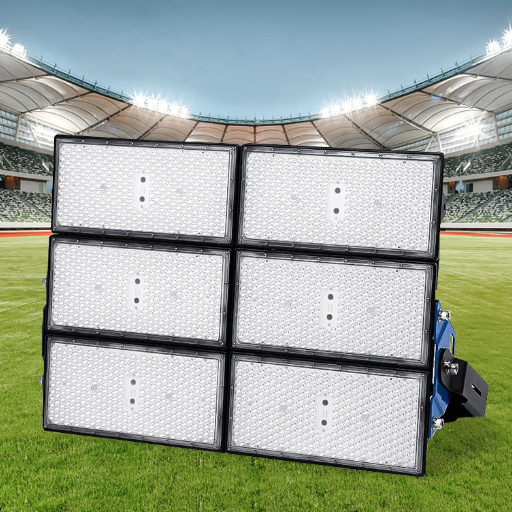
The stadium lighting spec tells you what the Color Rendition Index (CRI) is. Most ballparks most often specify CRI 80—recreation, or CRI 90—television. Few such specs specify—so and what pros’ use—that you need to know is the TeleVision Lighting Color Consistency Index, the TLCI. If your athletics will look better on NBC than Timmy’s on the 9-man-hockey rink, the TLCI number will do a better job telling you that than the CRI value ever will.
CRI was developed to measure how incandescent and fluorescent light sources rendered color to the human eye, using a blackbody reference. It pre-dates digital camera sensors. Pixels did not see the world in the same manner that human retinaes did, since each RGB silicon pixel has its own spectral response curve that peaks at a certain spectral range. A white-LED spectrum that has the very same CRI 90 rating as the yellow sodium lamps didn’t can still conspicuously have a bell, or even notch, somewhere somewhere, that mismatched a Bayer-Matrix camera’s response—lighting up the screen with shifts in color that only the human’s eye can interpret.
The European Broadcasting Union has published EBU R 137 to come to terms with this issue. The measurement procedure is described in EBU Tech 3355. The TLCI measures the 18-patch colour target and models a camera sensor response and arrives at the score out of 100.
The recommended limit for broadcast luminaires is 85+ and the criterion for excessive color rendition is less than 65, requiring color correction post-production at every broadcast – a running cost not a specification check.
CRI was created for incandescent reference illuminants and for many years that was sufficient. An advent of digital sensors has impacted on this. An output from a luminaire with a CRI 92 and a TLCI 62 will reproduce skin tones and turf colors very differently once it reaches the signal processing in the camera.
For any broadcast venue specify both metrics – and ignore the TLCI value at your peril
TLCI vs CRI Comparison for Sports Broadcast Lighting
| Parameter | CRI (Ra) | TLCI |
|---|---|---|
| Reference observer | Human eye (photopic) | Modeled digital camera |
| Color samples tested | 8 pastel patches (R1–R8) | 18 patches (camera-relevant) |
| Recommended threshold | ≥80 (general), ≥90 (premium) | ≥85 (broadcast), ≥90 (4K) |
| Governing standard | CIE 13.3-1995 | EBU R 137 + Tech 3355 |
| Use case | Visual inspection, retail | Broadcast, cinematography, still photography |
How Many Frames Per Second Does Your Venue Actually Capture?
Shutter speed and frame rate make the specification table more demanding. Premier broadcast shutter speed at 1/120 s, 1/500 s, calls for flicker indexes below 5% in LED fixtures per IES TM-24. Film-style super slow-mo viewed on a football field, tennis court and baseball field broadcasts at 1,000 to 2,000 fps, revealing flicker not otherwise noticeable by the human eye.
At those rates, pulse-width-modulated dimming create visible banding, and DC-driven or analog 0-10 V dimmed drivers are necessary. Any venue expecting to shoot slick super slow-mo should specify that requirement at the level of the driver, not just the luminaire. CCT specs get tighter as well: 5000K is the recommended for recreational use, but is significantly outperformed by the 5700K-6000K CCT range with the latest image sensors on a typical broadcast arena installation.
Writing a Bid-Ready Technical Specification for Stadium Lighting
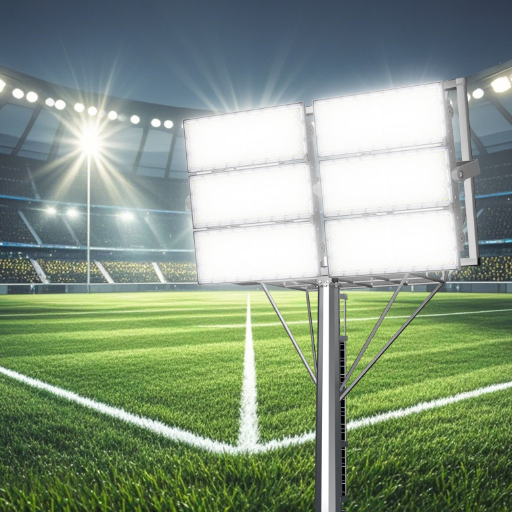
Weak specs beg for substitution. An electric bid that states “150 lm/W LED flood luminaire or equivalent” is an open invitation for a contractor to “win” the bid then substitute the specified stadium light for an (inferior) luminaire that states its performance rating as “equivalent” on the datasheet yet produces less lumens or lower TLCI or a driver MTBF rating of 20000 hours or less. Specification is the way to lock-in the quality at the tendering point – before substitution renders the project uneconomical.
This applies equally whether the scope is 600 W LED recreational field lighting or 1000 W LED professional stadium installation.
The 12-Item Bid-Ready Specification Checklist
Specification items that close substitution loopholes
- Photometric data: IES file(.ies) available and tested according to IES LM-79-19 in an approved laboratory.
- Lumen maintenance:. LM-80 report with 6,000 hours of in situ data of the package used
- DLC QPL listing: fixture model must be listed on the DesignLights Consortium Qualified Products List for US rebate qualification
- Efficacy floor: 150lm/W delivered (not chip level) has now become an instant disqualifier in specification-rigorous markets
- —Driver MTBF: about 5. 106 hours. Series-connected protection base of 10 KV / 10 A as specified.
- TLCI: 85 for any venue expecting to be covered by a broadcast feed (see above)
- Warranty: at least 5 years LED module; driver; 7~10 years shows manufacturer good confidence to thermal, electrical design.
- IP rating: IP66 for (near) coastlines, high humidity, high pressure wash. It should be IP65 minimum.
- IK rating: IK08 minimum; IK10 for ball-sport venues exposed to direct fixture impact
- Certifications: region-specific-CE plus RoHS for the EU ETL or UL 1598 for North America SASO for Gulf states
- Documentation: factory test reports, QC photo records, and serial traceability for every fixture delivered.
- Performance guarantee: remedy clause triggered if post-commissioning measurements miss the photometric plan by more than 10%
Two additional anti-substitution clauses pay for themselves the first time a contractor tries to value-engineer the bid: a “no substitution without written approval” clause that names the exact fixture model and requires a fresh photometric simulation for any substitute, and a “failure-mode blackout prohibition” clause that specifies the failed fixture shall fail to off, not to flashing – a pain point reported repeatedly on industry forums after value-engineered drivers enter live installations.
For owners writing a request for proposal, the LED flood lights that meet IES RP-6 specifications should be documented with manufacturer-supplied IES files, LM-79 and LM-80 test reports, and DLC listing numbers before the tender closes. A usable specification sheet referenced above can be adapted as a direct paste into Division 26-56-68 (Exterior Athletic Lighting) of a CSI MasterFormat specification.
Commissioning Protocol — On-Site Acceptance Testing for Stadium Lighting
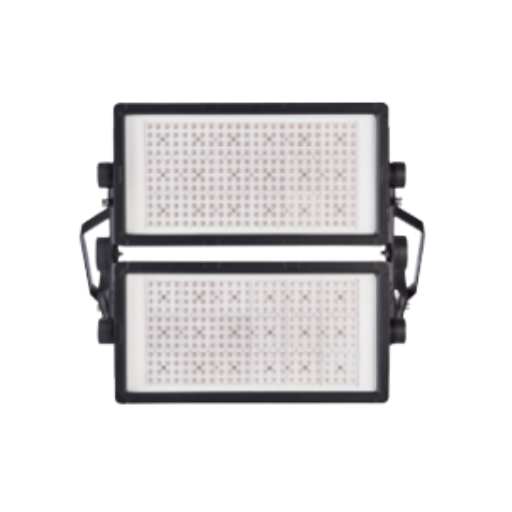
Commissioning is where a well-designed stadium lighting system either proves itself or quietly under-performs for twenty years. A system that meets photometric simulation on paper can miss the real-world target by 15-25% if fixture aiming was off by a few degrees, if LED thermal stabilization was skipped, or if light-loss factors were applied inconsistently. Commissioning measurements document reality across every sports facility type-football field, baseball field, tennis court, or multi-use arena-and verify that illumination reaches the specified light levels on the playing surface. They also protect the owner’s warranty position: without a commissioning report, no supplier can be held accountable for below-spec performance five years later, whether the installation uses 1000W LED fixtures or smaller 600W LED sports light units.
What You Need Before the Measurement Night
- A calibrated Class A luxmeter (Konica Minolta T-10A or equivalent), calibration certificate within 12 months, cosine- and color-corrected per IES LM-5-04
- A laser distance meter for grid-point confirmation at 3-meter spacing
- A digital inclinometer for fixture aiming verification against the photometric aiming diagram (tolerance 2)
- Light Loss Factor worksheet with IES RP-6 guidance-outdoor LLF typically runs 0.72 to 0.85
- The photometric plan from the design stage, printed with grid coordinates for overlay
The 7-Step Stadium Lighting Commissioning Protocol
This protocol assumes a standard sports field with perimeter pole-mounted fixtures. Adapt step 1 for high-mast or catwalk installations.
- Fixture aiming verification. Before any light meter reading, walk every pole with the inclinometer against the photometric aiming diagram. A single fixture aimed 3 off target can move a grid points reading by 8-12%.
- Warm-up stabilization. Power on the full array and wait 15 minutes for LED thermal equilibrium. Readings taken inside this window will read high and invalidate the acceptance data.
- Grid measurement. Install measurement points on a 3-meter grid across the width of the hard surface, each 1.5 meter above grade. Document horizontal and vertical illuminance at each point. This replicates the DarkSky OSL measurement procedure, and exceeds the minimum requirement in the IES RP-6 parking lot verification grid.
- Uniformity calculation. Calculate Emin/Eavg and Emin/Emax. Make sure both ratios satisfy target class (Class I 0.70; Class II 0.60; Class III/IV 0.50).
- Glare evaluation. Measure luminance at ten spectator locations, four athlete locations. Calculate Glare Rating (GR) consistent with EN 12193 or observer luminance consistent with IES RP-6. Target GR 50 for Class I; 55 for Class II.
- Property-line trespass survey. Make five horizontal illuminance measurements at each property line. Possibility of direct view: 0.5 foot-candles (5 lux) to comply with other dark-sky ordinance.
- Control system for verification. Run through the schedule of remaining light levels, publish- mode preset changes, and DALI or 0-10 V dimming curves while watching the expected lighting policy, submitted in the Phase 1 application, follow the illumination pattern.
📐 Engineering Note
Acceptance criteria should be established in the contract before any construction begins. Pass: “All readings within 10% of the photometric plan, all uniformity ratios satisfy the class requirement.” Conditional pass: “All readings within 15% of the photometric plan, the contractor re-aims fixtures and retests.” Fail: “All readings outside 15% of the photometric plan or a failure in the uniformity ratios” the contractor corrects or retuning is withheld according to performance guarantee language.
This commissioning documentation package is the owner’s insurance policy for the next twenty years: commissioning report, CSV file with all grid readings, fixture serial number log matched with pole position, time-stamped aiming photos for each LED light, copy of the control system configuration. Mounting height decisions made at the design stage (ordinarily 12-25 meters for semi-professional, 25-40 meters for broadcast) should also be tracked to the aiming geometry- a pole that kinks 2-3cm during foundation setting may shift the effective mounting height far enough to change the distribution pattern on the court surface. One Middle Eastern tennis facility documented an measured GR of 42 against the EN 12193 Class II ceiling of 50 over all six courts- the mere documentation allowed the venue to confirm its tournament compliance the next season without a new field survey.
For venues in preparation for a light-focused grid exercise, the stadium fixture number calculator can provide a starting point. A complete commissioning test can be expedited if the baseline condition is reasonable.
LED Stadium Lighting Failure Modes and Warranty Claim Playbook
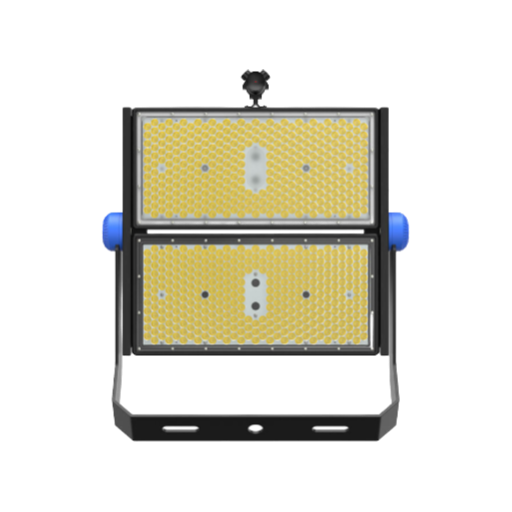
Most manufacturers use the “80,000-hour end-of-life” headline to promote their LED stadium lights. That number is real, but based on the LED chip’s L70- the lumen-output point at which 70 percent of initial luminance is lost. It is not the guarantee period, and it is not the time in which the unit is expected to serve you. It turns out that the reason most LED stadium lighting fails is that the drivers- not the LED chips- break down long before the LED reached L70. This applies to the market-leading LED sports light units on recreational pickleball courts, as well as to the high-end professional-grade flood lighting systems on the NBA stadiums.
The Four Dominant Failure Modes
Driver failure (~70% of field events)
Electrolytic capacitor aging, voltage spike damage, heat stress on driver electronics. Symptom: fixture dark, LEDs functional. Investigation: voltage test on input and scan temps in driver compartment.
Field data from several failure analysis shows driver failure is present in >60-80% of LED luminaire failures, vs. <5% LED chip failures.
Premature lumen depreciation (~15%)
NoLED: LM-80 or L70 not attained because of sub-spec LED binning or poor thermal design. Characteristic: slow 20-30% drop in brightness over 2-3 years of operation, generally patchy within the same batch of fixtures. Detection: annual luxmeter grid repeat of original commissioning survey.
Connector and seal corrosion (~10%)
Failures at the cable entry or gasket deterioration of the driver-compartment results in intermittent during rain events, then ultimately permanent driver water damage. Fairly commonly encountered on coastal sports facilities, or facilities with high-pressure wash cleaning regimes, a short copy cycle of a metal halide fixture was ~two years; a compromised LED stadium light fixture could drag on in failed mode for months before the driver finally conk outs.
Optical degradation (~5%)
Polycarbonates-yellowing due to UV or oxidation of internal reflector. Symptom-yellowing towards amber, quantifiable drop in CRI. Can be observed well before failure, unlike other failure modes where planned anual replacement trumps reactive replacement.
What a Warranty Claim Evidence Packet Looks Like
All warranties include an exclusions section. Among them, the top three reasons that warranty service is denied are voltage surges exceeding driver’s surge-protection ratings, mis-installation, and operation outside rated ambient-temperature ranges. A proper defense against all three is recorded evidence — a lesson every warranty administrator will tell you, and one few owners plan for until their first claim.
An accepted warranty claim normally requires 5 pieces of supporting evidence: the purchase documentation (invoice and serial log); commissioning report from the installation (see above) verifying system installed according to specification; the maintenance record verifying owner maintained duty-of-care; evidence of failure (date/time photographs, electrical drawing data, luxmeter readings verifying lumen loss over commissioning baseline; environmental site data – ambient temperature logs, voltage fluctuation records, surges recorded on the electric infrastructure).
Guangqi backs its warranty response with a 48-hour technical response commitment and a 5-year premium project level warranty option, on eligible orders, in addition to the standard 2-year SPMD-series and 3-year FL09-series warranty coverage. More about our specific warranty terms can be found in the companion metal halide to LED retrofit guide, which addresses the warranty qualification of the DLC-listed fixture in depth.
The 20-Year Stadium Lighting Maintenance Playbook
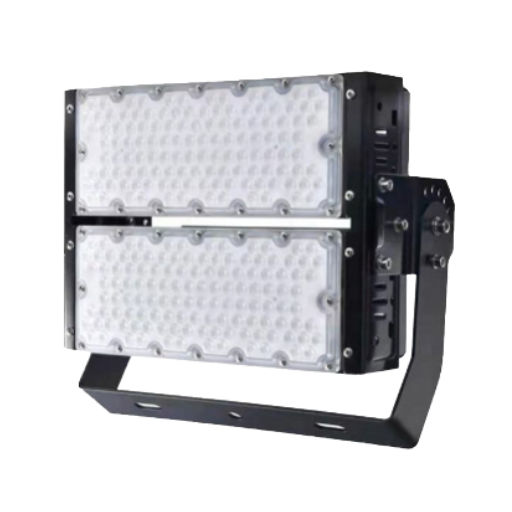
The “LEDs are maintenance free” is the nation’s highest cost facility myth. Though LEDS do not require re-lamping as a metal halide fixture did, they do require cleaning, electrical inspection, thermal monitoring, aiming verification, and periodic lux re-surveys to monitor the lighting uniformity and identify unintended light spill into neighboring yards-and the result of neglect of tasks compound through two full decades of service. A maintenance program that considers stadium light fixtures a one-time purchase will result in a premature full-system replacement in the year-of our-lord 12 instead of 20.
The Four-Tier Maintenance Schedule
| Interval | Duration | Activities |
|---|---|---|
| Monthly | ~15 min / pole | Visual inspection from ground, control panel alert check, energy-consumption log review |
| Quarterly | ~1 hr / pole | Lens wipe-down (dust and insect buildup drops output 8–12%), connector inspection, driver-compartment temperature check |
| Annual | ~3 hrs / pole | Full luxmeter grid survey (replicate commissioning grid), IR thermal scan of fixtures and junction boxes, mounting-fastener torque check |
| 5-Year | Crane access | Driver component health check, lens condition assessment, aiming angle verification (poles shift 1–3° over 5 years under wind load), lumen maintenance projection update |
Proactive Diagnostic Signals Between Scheduled Visits
Three signals forecast failure weeks before a fixture goes dark. Energy consumption drift of > 5% on a single circuit identifies aging drivers or failed LEDs. Correlated color temperature shifts on a single fixture compared to others predicts that fixture is approaching L70 faster than batch mates. User reports of flicker by athletes or broadcasters for the most part indicates an end-of-life driver—not failed LED chip.
A on-site spare inventory pays back the first time a playoff-game fixture fails at 1800 on game day. A pareto-efficient spare inventory target is 5% of total drivers (drivers account for 70% of failures), a universal connector and gasket replacement kit and 2% of LED module inventory for modular fixtures only. Add an IoT monitoring layer – DALI2 with a Casambi or equivalent wireless mesh – and the 15-25% premium pays back in fault detection savings the first time predictive maintenance identifies a failing driver prior to game night. For venues with 5-year warranty coverage for the stadium flood lights, the spare parts inventory is what protects the warranty.
International Compliance Differences for Stadium Lighting Specifications
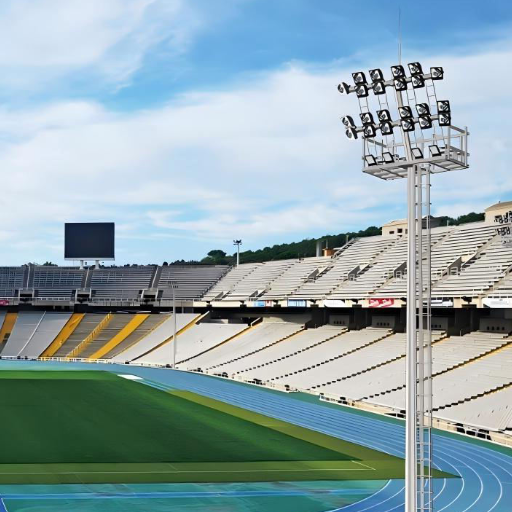
A stadium lighting spec that passes a US permit review can walk line-by-line through a European import inspection, or fail a Saudi SASO pre-shipment audit. The reason is not that one jurisdiction is more rigorous than another – it is that the overlapping-but-not-identical regulatory frames require different paperwork, different test reports, and different certifications for the same fixture.
Regional Compliance Matrix for Six Major Markets
| Region | Mandatory certifications | Photometric standard | Safety standard |
|---|---|---|---|
| European Union | CE (LVD + EMC), RoHS, ErP Directive Lot 37 | EN 12193:2018 | IEC 60598-2-5 |
| United States | ETL or UL 1598, DLC QPL for rebates | ANSI/IES RP-6-20 | ANSI/UL 1598 |
| Canada | cETL or cUL, CSA | ANSI/IES RP-6-20 | CSA C22.2 |
| Gulf States (KSA) | SASO IECEE + G-Mark per SKU | — (EN 12193 often used) | IEC 60598 |
| Australia / NZ | RCM (SAA + EESS), supplier registration | AS/NZS 2560 | AS/NZS 60598 |
| China | CCC + CQC | GB 50582 | GB 7000 |
The “EU-Compatible” Claim Trap
CE marking is self-certification, not an independent certification. An OEM can affix the CE badge after self-approval against the low-voltage and EMC directives—and ship that fixture into the EU single market. For a stadium owner this does not necessarily guarantee EN 12193 conformance, which requires an independent test report. A knowledgeable EU buyer requests both; less practiced buyers sometimes discover the murky difference after a post-acceptance snagging inspection.
SASO registration for Gulf export adds its own timeline: each sku is registered separately, typical lead time six to twelve weeks, with a G-Marker identifier code needed for each fixture that is identical to other fixtures of same or similar construction. Australia’s EESS (Electrical Equipment Safety System) requires supplier registration on the EESS registry in addition to the RCM self-decodation—a direct importer without a registered supplier is not compliant, even with an identical fixture.
Bottomline: treat non-US international standards and compliance regimens as project-timeline considerations, not an ordering-afterah-thing to procure in the final stages. Build certification lead times into the construction schedule the same way you build in pole-foundation cure time.
Frequently Asked Questions
Q: What permits are required to install stadium lighting?
View Answer
The three parallel tracks are: a building permit from the town or city for electrical and structure, 6 to 18 weeks; neighborhood-impact review from a zoning or planning board, for variance on a non-standard pole height; dark-sky compliance, under the town or city ordinance or a voluntary DarkSky International committee of compliance: any venues adjacent to or overlapping observatories, migratory-bird corridors, or habitat-protection areas will also initiate an EIA. All three tracks start in parallel preceding the fixture order.
Q: How is stadium lighting commissioning different from a standard lighting inspection?
View Answer
A paper check of fixtures for operation and matching the submittal will do. Commissioning will demonstrate that the installed system operates within 10% of the photometric plan for reference after grid readings post 15-minute LED thermal stabilization: uniformity ratio calculation against IES class targets, glare rating measurement, property-line trespass test, and full control system walkthrough with dimming function checks, portable remote operation, and curfew photometry analysis. This produces a hand-over-package audit-proof against warranty positions and records of DarkSky or EN 12193 compliance.
Q: What happens if my commissioning readings miss the photometric plan targets?
View Answer
Fixtures that maintain within 15% of intended values generally need only an aiming adjustment pass and re-test in performance. Anything over 15% means performance investigation and remedial work—drivers falling short, fixtures misdirected, or errors in installation—must be completed to meet performance-guarantee language before the second performance test pass can release payment. Contract language at the procurement stage should explicitly consider comissioning a performance-dependent release of payment.
Q: Are CE markings sufficient for exporting stadium lights to Europe?
View Answer
A CE marking confirms the product conforms to the Low Voltage Directive and the EMC Directive for EU single-market access, but it does not certify photometric compliance with EN 12193:2018. An experienced EU-market stadium or sports-lighting buyer therefore requests both the CE Declaration of Conformity and an independent EN 12193 test report, alongside RoHS and ErP Directive Lot 37 energy compliance paperwork.
Q: Why does my LED stadium light fail even though LEDs are rated for 80,000 hours?
View Answer
With LEDs, “80,000 hours” refers to 70% of initial lumen output (the L70 rating), not the driver lifetime (longer MTBF). User data shows that driver failures comprise greater than 70% of LED fixture failures, while LED chip failures account for less than 5%. The clearer conclusion: fixture lifespan limits are driven by the driver MTBF, not by LED chip ratings. Bid specifications that require only a nominal “80K hour LED” rating without a driver MTBF requirement are incomplete.
Q: Do utility rebates apply to commissioning and maintenance costs, or only equipment?
View Answer
Most US energy provider rebate programs listed in the DSIRE database cover thefull cost of lamp and driver eqpt. Growing numbers of rebate programs also recognize photometric-design fees for rebate when passed in performance contracts, but rarely provide for any commissioning work post-install. An exception here: performance-contracting systems purchased with federal ESPC agreements may include a line item for commissioning and measurement-and-verification for the entire system that is eligible for inclusion in the financed amount when the project meets the criteria of the DOE FEMP.
Planning Your Stadium Lighting Project
As a general proposition, most of the differentiation of a twenty-year-performing stadium lighting project verses a remediation at year five comes down to, not the choice of fixture itself, but whether the approval path, the bid specification, the commissioning grid, and the maintenance discipline were strongly given the highest level of consideration—before design rather than after. For qualified stadium lighting projects, Guangqi offers free photometric planning, IES File delivery, and commissioning documentation services.
The Team Behind This Report
This compliance and commissioning guide is based on 14 years of Guangqi Lighting project delivery across Asia, Europe, North America and the Middle East -including the Middle Eastern tennis complex which measured GR 42 against the EN 12193 Class II ceiling of 50, and the South East Asian football stadia commissioned at 580 lux average illuminance. All measurement methodology and permit-path guidance is cross referenced through the DarkSky OSL Guidelines v1.3, ANSI/IES RP-6-20 and EBU R 137. This commissioning protocol series is written from on site learned practices drawn from over 100 sport venue installations, readers shall be responsible for local code adaptation.
References & Sources
- Outdoor Sports Lighting Guidelines v1.3 — DarkSky International
- DarkSky Recognized Municipal Codes and Statutes — DarkSky International
- EBU R 137: Television Lighting Consistency Index — European Broadcasting Union
- ANSI/IES RP-6-20: Sports and Recreational Area Lighting — American National Standards Institute / Illuminating Engineering Society
- Research: LED Driver Useful Life — Illuminating Engineering Society
- Solid-State Lighting Program — U.S. Department of Energy
- Commissioning and Government Acceptance Guidelines — U.S. DOE Federal Energy Management Program
- DesignLights Consortium Qualified Products List — DesignLights Consortium
- Database of State Incentives for Renewables & Efficiency (DSIRE) — N.C. Clean Energy Technology Center
Related Articles
- Sports Lighting Design Guide — IES Standards, Pole Height & Photometric Planning
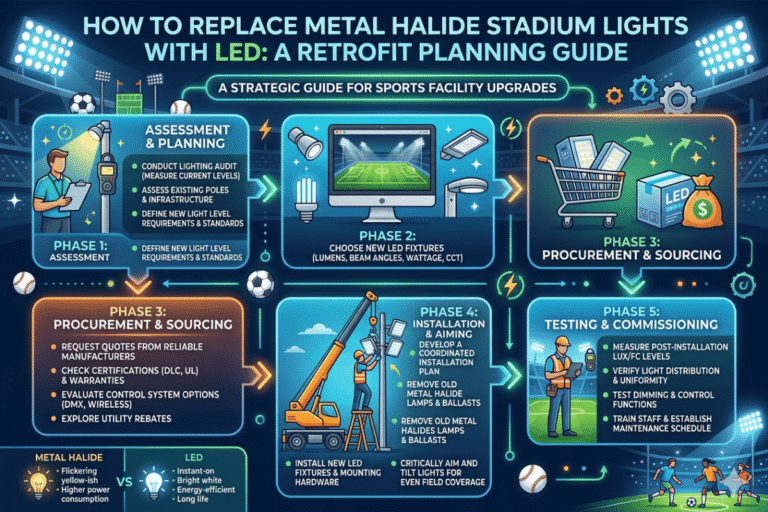
- How to Replace Metal Halide Stadium Lights with LED — A Retrofit Planning Guide
- LED Driver Guide — Selection, MTBF and Reliability Engineering
- Sport Lighting Recommender — Match Venue Class to Fixture Series
- LED Stadium & Sports Flood Lights — Complete Product Range