Get in Touch with GUANGQI



Updated November 2026
Why is CRI important when two LEDs with the same color temperature make a finish look different? Two LED fixtures can both read 4000 K on a submittal and still make the same red upholstery look different. When a finish is part of what a customer buys, even slight differences in color perception can complicate approval. Understanding CRI helps you compare fixtures before ordering so a finish looks consistent from the sample counter to the installed room.
Color rendering index (CRI) measures how closely a light source renders test colors compared with a reference of similar color temperature, a starting point when a job calls for precise color rendering. The average of eight sample scores gives the general CRI, Ra. Check the individual R9 score when saturated reds matter.
Quick Specs
- The general index (Ra) shown on many LED datasheets has a maximum score of 100.
- Look up R9 for the saturated red test sample.
- Start at 90 CRI or higher for close color judgments and around 80 CRI for general indoor lighting, subject to the project requirements.
- Match the test report to the luminaire, then compare actual material samples under the proposed light before approval.
What Is CRI in Lighting?
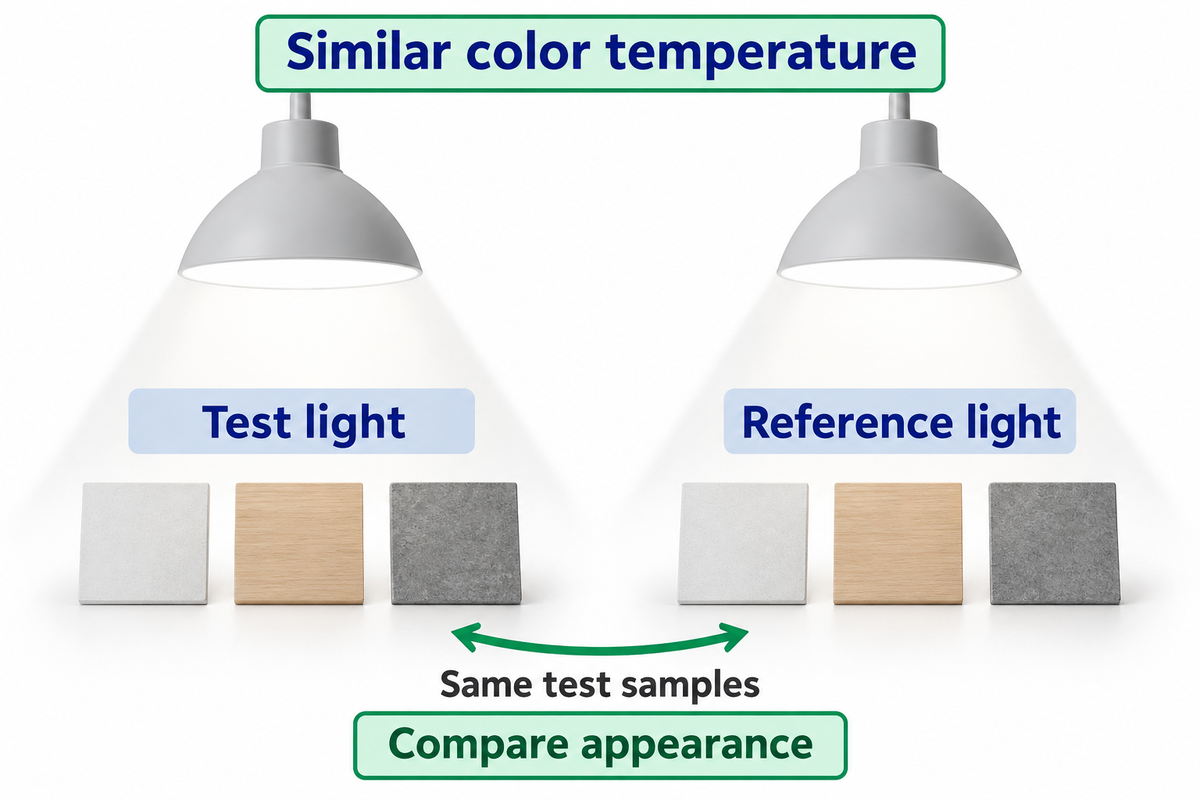
CRI is a measure of fidelity of color reproduction for a light source. It compares how standard color samples appear under the test light to their appearance under a reference light. On a specification sheet, CRI usually means Ra, the CIE method’s average of eight sample scores.
Start with what people need to see. The CRI definition is useful when there are two options that are evenly matched. The score estimates how closely the colors of objects under artificial light match their appearance under a reference light. Employees matching fabric or paint swatches have a different task from employees pulling stock from a stockroom. A lower Ra indicates a larger average color shift from the reference across the first eight samples, with close matches indicating better color rendering capabilities for those samples. Since an average obscures differences between individual sample scores, a physical color reference sample should be provided if small color differences affect the judgment.
To understand the importance of CRI in a particular room, name the judgment people need to make and ask whether the quality of light affects that judgment. That might be a precise color match or something as simple as distinguishing two bins, two tasks that can lead to different CRI requirements even within one building.
How Is CRI Calculated?
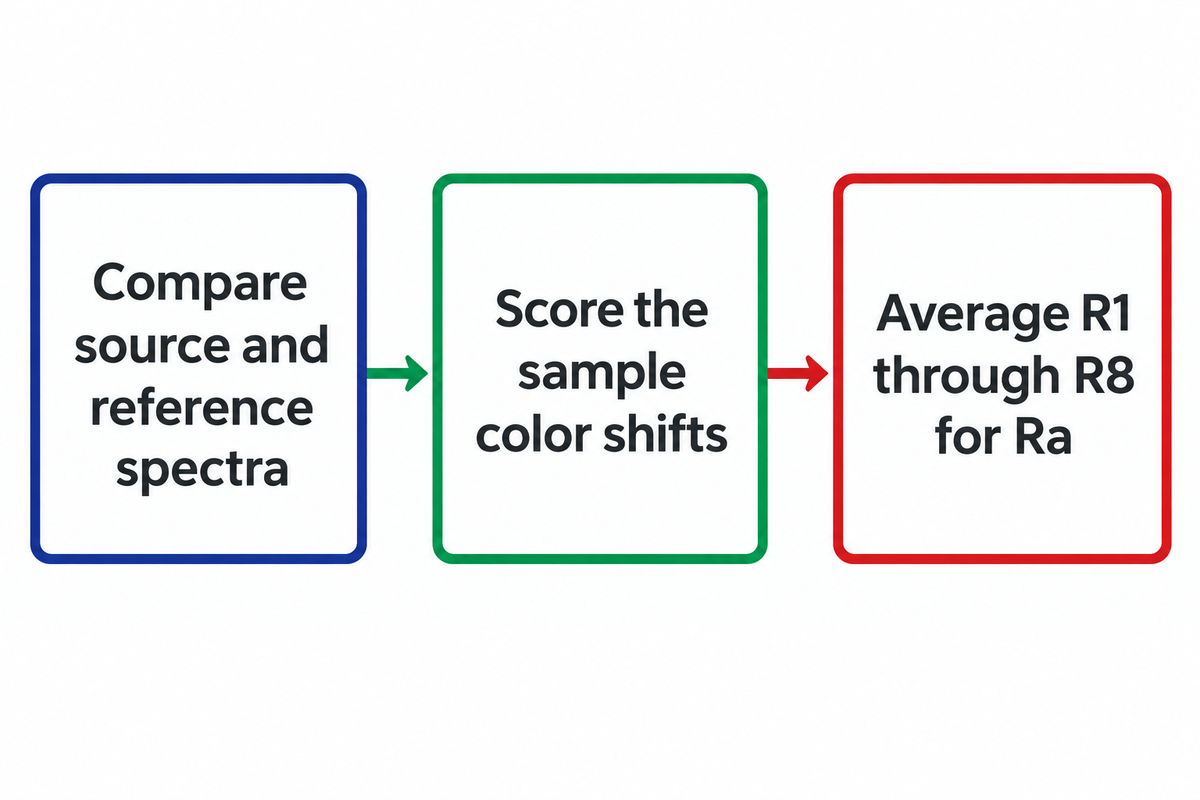
CRI is calculated by comparing a light source with a reference selected for its color temperature. It relies on the spectral power distribution of both. It compares calculated color shifts for standard samples, converts those shifts to individual scores and averages R1 through R8 to give Ra. Smaller shifts yield higher scores.
The spectrum describes the energy emitted at various wavelengths by a source. Two LED products may produce different spectra, and surfaces may reflect those spectra differently even if the white light of the two products appears similar. A general CRI of 100 means the first eight sample colors in a given calculation match the reference. The concept of CRI relies on test color samples to make the comparison repeatable across lighting technologies. The method is applicable to spectra from most general-purpose lighting sources that use LED technology or other lighting technology, with exceptions for sources that are predominantly monochromatic. For the cooler test sources, it takes a defined daylight spectrum as its reference. A window is a natural light source, but the natural daylight there can change with the weather and time of day. If you want a test to be repeatable, define a source spectrum. A sample compared to natural sunlight gives you a visual impression under those particular conditions. Large enough changes can yield a negative score.
A catalog can show only the average. When selecting the right fixture for proper lighting at the work surface, look for the actual value on the test report if the catalog calls it a high CRI light source. That label tells you less than the reported Ra and individual sample scores. If you need an exact value for a particular color sample, look at the individual score in the report. There is also a practical limit to judging CRI by eye from a photograph. The camera and its white balance affect how it captures color, and the display affects what you see.
Why Two Lights With the Same CRI Can Look Different
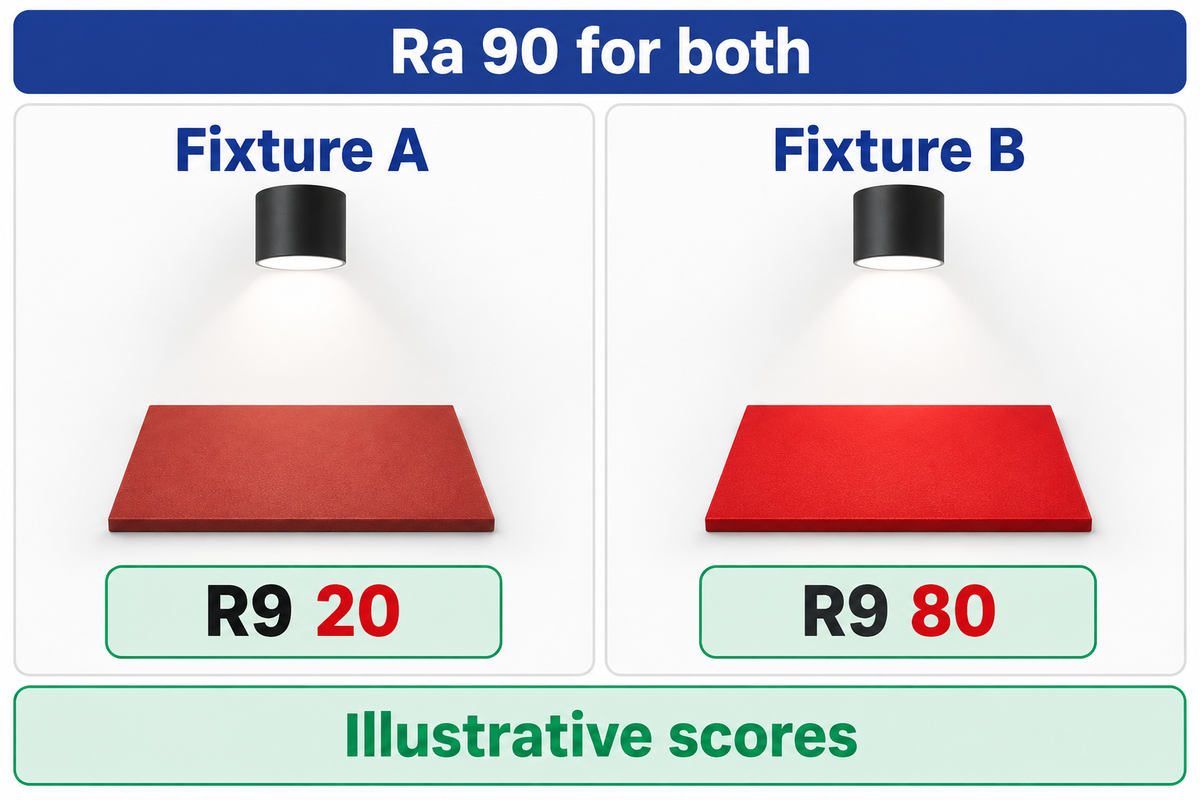
Two light sources with a CRI of 90 can each arrive at that average with different sample scores. R9, the score for saturated red, sits outside the eight scores that make up Ra. That matters when you compare a red coating or a deep red textile. An adequate Ra value can mask a low score for saturated red.
Low CRI lighting can shift several colors. Always check the color that’s important for the job separately.
| Illustrative rating | Fixture A | Fixture B |
|---|---|---|
| Color temperature | 4000 K | 4000 K |
| R1 | 88 | 94 |
| R2 | 90 | 88 |
| R3 | 92 | 91 |
| R4 | 91 | 89 |
| R5 | 89 | 92 |
| R6 | 90 | 86 |
| R7 | 90 | 90 |
| R8 | 90 | 90 |
| Ra | 720 ÷ 8 = 90 | 720 ÷ 8 = 90 |
| R9 | 20 | 80 |
The invented scores above illustrate how the average works. Given those two R9 values, the higher score would give you a reason to sample that fixture first for a red finish. Put both fixtures over the same material at comparable light levels so the approver can decide whether the difference matters for the task.
CRI vs. Color Temperature and Brightness
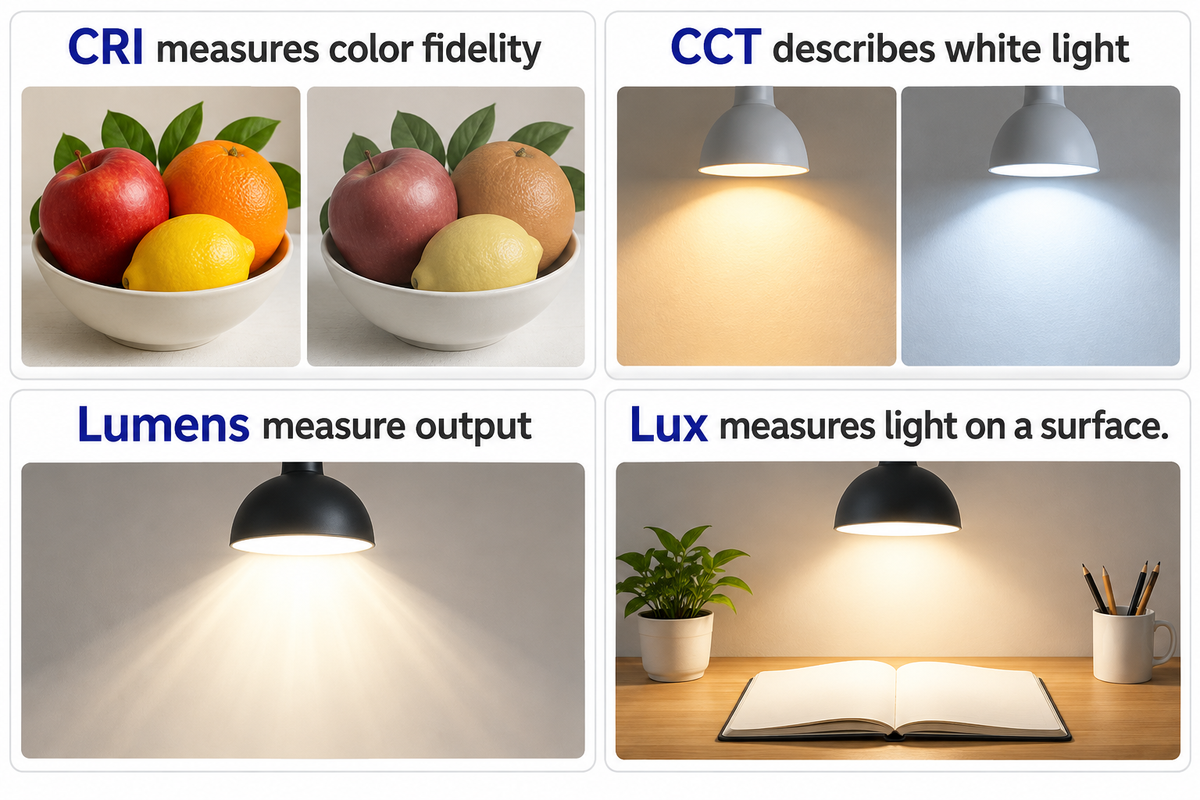
CRI measures color fidelity. It describes the ability of a light source to reproduce the test colors as they appear under the reference. Correlated color temperature, or CCT, is given in kelvin and describes how warm or cool the white light appears. A source’s total visible light output is measured in lumens, and lux measures the light falling on a surface per unit area.
In a mock-up or on a light box, keep the CCT of the light and viewing distance as consistent as possible. Keep the light level at the material as consistent as possible under both fixtures. Otherwise a warmer fixture or a brighter patch on the material can sway the comparison. Look at how the colors appear under both fixtures to determine which differences matter for the task. For outdoor planning, the street light color temperature guide covers decisions specific to white light appearance.
What Is the Difference Between 80 CRI and 90 CRI?

A light with a CRI of 90 has a higher average fidelity score across the eight CRI samples than a light with a general CRI of 80. Around 80 is a common starting point for general indoor lighting. For work that requires accurate color rendering, compare 90 and above, then use individual CRI sample scores and a mock-up to check the colors that need to be differentiated.
Start with Ra 90 or higher for matching a swatch to a finished piece, then assess the match under the proposed fixture. In the stockroom, use the project specification and the visual task to narrow the lighting choices. When staff sort returns by subtle color differences, the importance of color rendering shows up in whether they can distinguish the items under the proposed fixture at the returns bench. If the project specification allows it, a lower CRI may be sufficient to read labels.
Where color accuracy is paramount, compare actual materials under the high CRI LED fixture and note which differences could affect approval. Set the criteria before asking vendors to bid so a substitution on the shared fixture schedule won’t put a general-purpose model over the showroom’s sample counter.
Does Higher CRI Cost More?
Higher CRI can cost more, but there’s no set difference in price between 80 and 90 CRI fixtures. For your project, compare the installed price of fixtures that have the same level of light and the same color temperature. Consider the driver, optics, quantity, and input watts. A change in efficacy or fixture count can impact the annual operating cost, even if two products meet the same lighting requirements.
| Ask for | Why it changes the comparison |
|---|---|
| Exact catalog code and options | Keep the fixture family, CCT, optic and driver identifiable. |
| Delivered light and input watts | Check the design’s target light level and coverage using the correct photometric file. |
| Fixture count and installed price | Compare the totals for the two designs, with the same installation scope. |
| Operating hours and electricity rate | Use the facility’s own schedule and tariff to calculate annual energy cost. |
Let’s say both designs use 30 fixtures and both meet the same light delivery requirements. If each fixture in one design draws 8 W more and the lights run 3,000 hours a year, that design uses 720 kWh more per year. Multiply that energy difference by the rate per kWh on the facility’s electricity bill to estimate the annual cost difference. Once the layout is finalized, use the measured or specified input watts, keep the electricity rate consistent and adjust operating hours only if the control schedule changes. For HPS conversions, the retrofit discussion on energy costs and controls can help you compare conversion options. Request R9 as a separate CRI result alongside any TM-30 metrics.
When CIE Rf and TM-30 Help
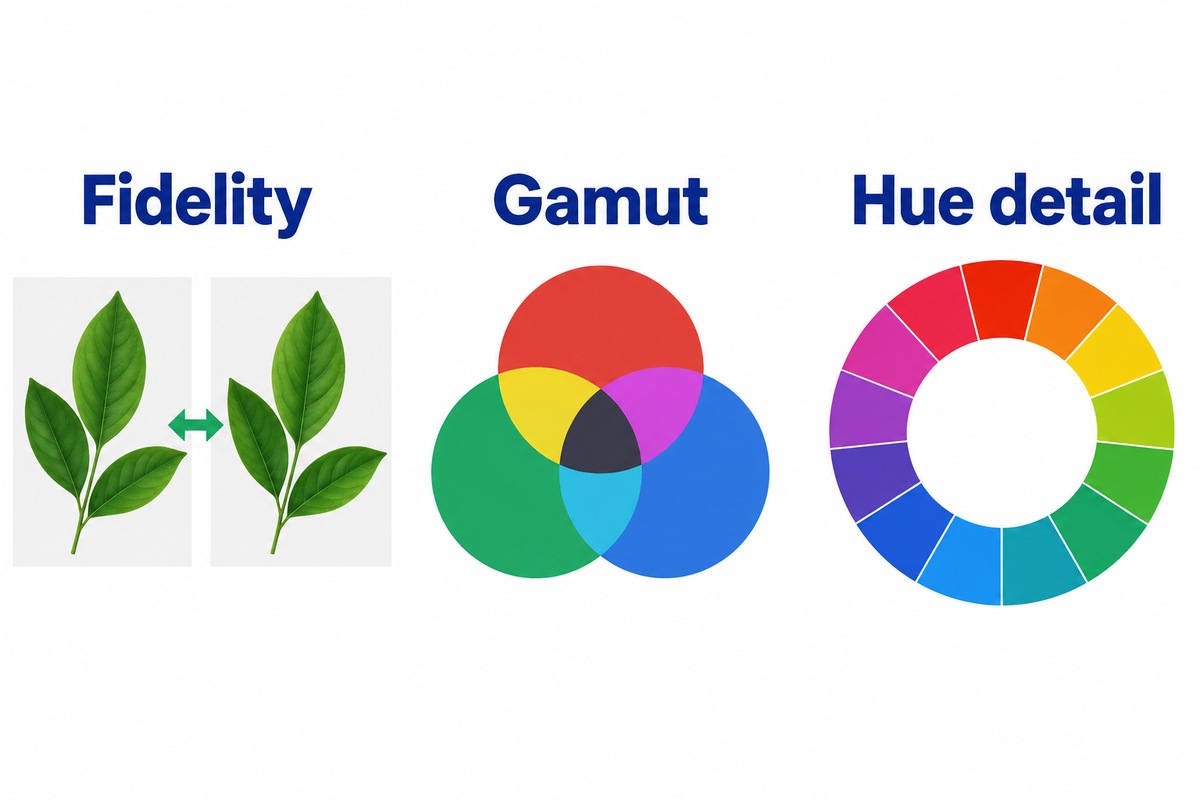
For color-matching decisions, CRI plays a role in screening fixtures, and CIE Rf and ANSI/IES TM-30’s hue detail help when the average leaves questions. Accurate color representation at a matching station can depend on one hue, so assess the finish’s hue region in rooms requiring accurate color judgments. In its 2025 position statement, the CIE recommends reporting general CRI and its general color fidelity index, CIE Rf, in parallel until CIE Rf is widely established. The statement’s designation is CIE PS 002:2025, CIE Position Statement on Colour Quality Metrics, 2nd Edition.
ANSI/IES TM-30 also provides a fidelity index, an average gamut index (Rg) and detail by hue region.
Fidelity describes similarity to the reference, which gives the test a defined baseline for what viewers call the sample’s true colors. Where CRI ranges leave questions about a specific finish, gamut describes shifts in the overall color range and hue detail shows where shifts occur. In a fabric showroom, a buyer could use the hue detail to shortlist fixtures for a viewing trial, then approve the lighting while looking at the fabrics that will actually be sold. Consistent lighting is essential to a fair comparison, so have the same person evaluate both fixtures in the same room when judging precise color matches.
How to Verify a Quoted Fixture
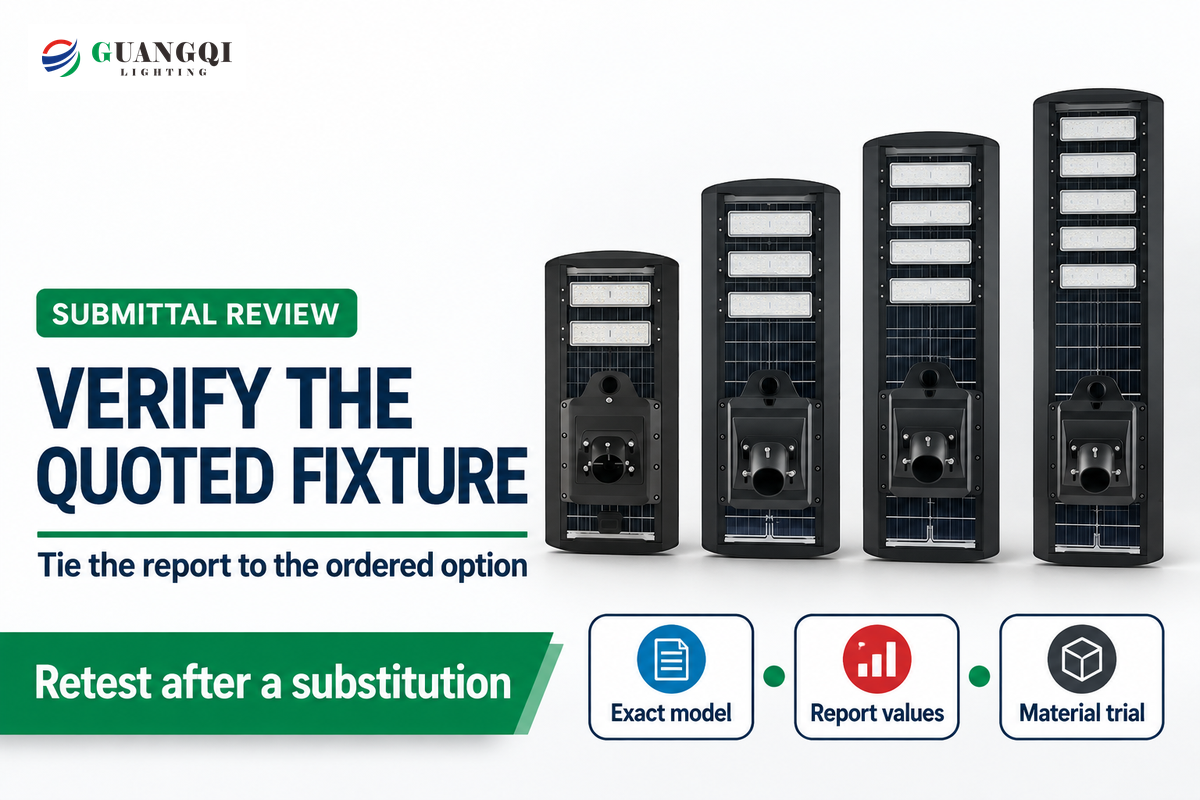
Before approving the quote, compare the project’s required scores with the reported values for the exact finished luminaire, CCT and options on the order. A report on a high color rendering index LED package describes the component, so evaluate the finished luminaire at the color temperature and options quoted. Even with a high-quality LED package, ask for a finished-luminaire report for fixture approval. Use one set of labeled materials in the field so the designer, buyer and final approver judge the same samples.
For example, GQLamp’s GQ-TKJ-B LED street light specification table lists Ra >70 for the 30 W, 50 W, 80 W and 100 W options in the REF.01 table. That’s the manufacturer’s published value for those listed options. GQLamp lists 2700K-6000K CCT options for roadway and community lighting in the Commercial Street Lights subsection of its category overview. The table gives no R9 value. It shows the role of CRI in a submittal alongside separate checks such as whether the luminaire provides the required light distribution. Add a separate R9 result to the report request for the quoted configuration whenever the tender requires it.
| Record category | What to enter |
|---|---|
| Quoted configuration | Model, CCT, optic, driver and any dimming setting used for evaluation. |
| Reported results | Report ID and date, Ra, and R9 or TM-30 results if the specification calls for them. |
| Visual comparison | Label two project materials, record the fixtures and light levels used, and note the viewing distance and task. |
| Decision and retest | Name the approver, record what they accepted and check again if an option that affects light output or color changes. |
| Application | Record the room, who works under the light and the color judgment they need to make. |
| Comparison reference | Identify the approved light source and how it is set up for the trial. |
| Matched viewing conditions | Record distance, angle and measured lux at the material for each fixture. |
| Control state | Record whether the fixture was at full output or dimmed during the test. |
| Substitution check | Flag changes to model, CCT, driver or optic that need another trial. |
When an installation will be filmed, include the production camera and its normal white balance in the test, as a visual assessment can’t determine what a given camera will capture. Use the actual material lot, if available. The ability to accurately distinguish a pair of similar finishes is what you are testing here. Those checks address questions a luminaire rating alone won’t answer. Use the project samples to ensure that colors can be judged consistently under the proposed setup.
Comparing street lights for a project? Send GQLamp the model, target color temperature and any required color rendering values so the team can check what data are available.
Frequently Asked Questions
What is a good CRI rating?
To choose a CRI for your specific needs, start around Ra 80 for general lighting if the project specification allows it. Compare options with Ra 90 or higher when choosing the right CRI for tasks such as judging paint or fabric colors. If saturated red matters, review the R9 score and the actual material under the proposed fixture. For lighting with a high CRI, include this separate assessment of red in the task criteria.
Which LED lights have the highest CRI rating?
The maximum general CRI score is 100. To find the highest rating for the fixture type you need, compare finished-luminaire Ra results from specialist studio, museum or retail models. Keep in mind there’s no general ranking. Make sure the rating covers the color temperature and options on your quote. Note that a high chip rating doesn’t necessarily mean the fixture will score high overall. This is especially important for comparing fixtures used with cameras. Check the metric the production team uses and test the camera with the actual fixture.
Which is whiter, 4000K or 6000K?
At comparable tint and viewing conditions, 6000 K usually looks more bluish and cooler than 4000 K. Both describe the appearance of white light. A low CRI LED and a high CRI LED can have the same CCT. Make sure to keep the target color temperature consistent when comparing two fixtures so that variation in the warmth of white light does not overwhelm your material comparison.
Can CRI be negative?
Yes. Large color shifts can yield negative values, including sample values. Ra reaches 100 at the top of the legacy index, so saying it’s a scale from 0 to 100 leaves out the possibility of negative values.
Can you calculate CRI from lumens and Kelvin?
No. The calculation requires spectral information to determine the color shifts of the test samples. Light output is measured in lumens, and kelvin describes the apparent color of the white light.
References & Sources
- CIE method for measuring color rendering properties
- NIST overview of color rendering of light sources
- U.S. Department of Energy guide to LED lighting
- CIE 2025 position statement on color quality metrics
- U.S. Department of Energy TM-30 frequently asked questions