Get in Touch with GUANGQI



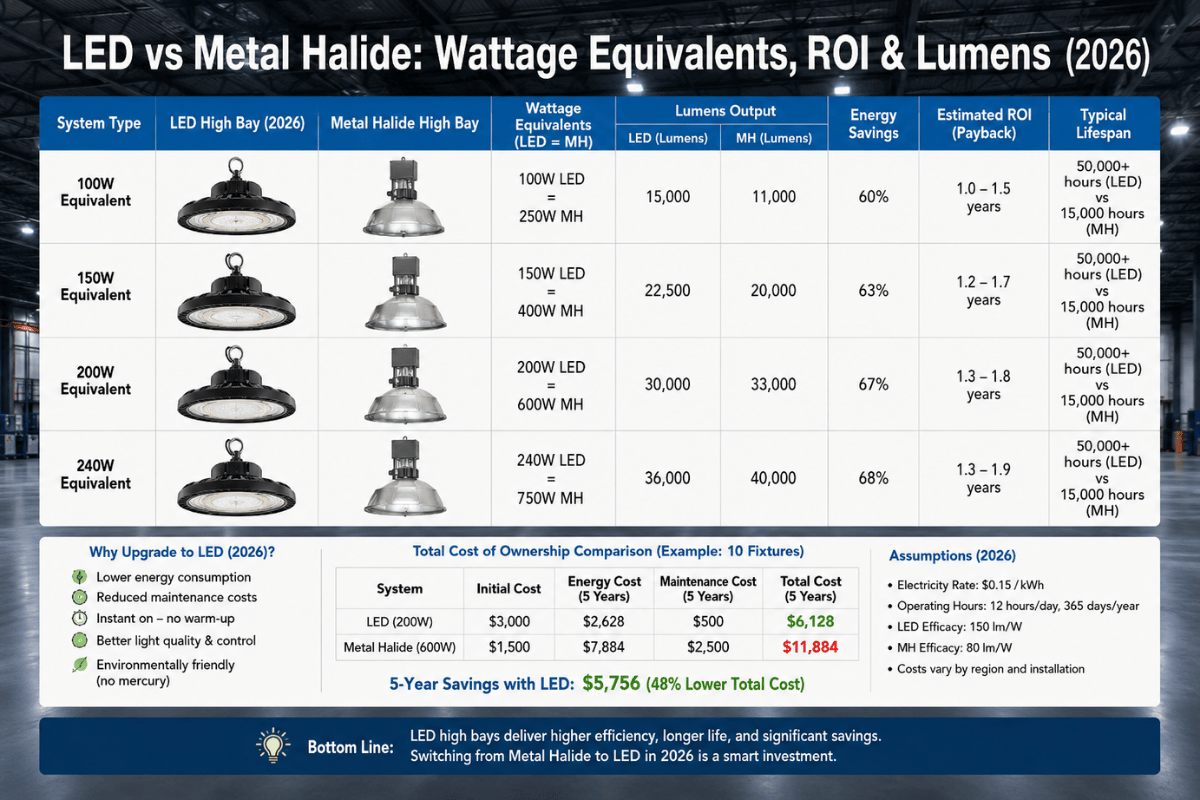
When you compare LED vs metal halide lighting for an industrial warehouse illumination project, parking lot, or municipal street project, three numbers decide everything: the LED wattage equivalent for your existing metal halide bulbs, the lumen depreciation curve over the system’s working life, and the payback period post-utility rebate. The numbers below work off cross-validated data from the U.S. Department of Energy, IES LM-80 testing standards, and real world field data from finished industrial retrofits.
Quick Specs: LED vs Metal Halide
| Luminous Efficacy | LED 130–200 lm/W | Metal Halide 60–100 lm/W (system, w/ ballast) |
| Rated Lifespan | LED 50,000+ hrs (L70) | Metal Halide 10,000–20,000 hrs |
| Mid-Life Lumen Drop | LED < 30% at L70 | Metal Halide ~50% at half-life (4,000–10,000 hrs) |
| Warm-Up to Full Output | LED < 1 second | Metal Halide 5–15 minutes (cold) / 10–20 minutes restrike |
| Color Rendering (CRI Ra) | LED 70–95 | Metal Halide 65–75 |
| Mercury Content | LED None | Metal Halide Yes (EPA Universal Waste regulated) |
| Typical Payback Period | 1.5–4 years (12 hr/day operation, $0.16/kWh, with DLC rebate) |
How LED and Metal Halide Differ at the Physics Level
LED and metal halide light operate by completely different physical processes, and that is what determines every other factor in the comparison. An LED (light-emitting diode) is a solid-state semiconductor device. When forward voltage is applied, electrons cross a p-n junction and recombine with holes, releasing energy as photons. there is no gas, no filament, no warm-up cycle, and no ballast for the lamp itself, only a stable-current driver to deliver consistent input.
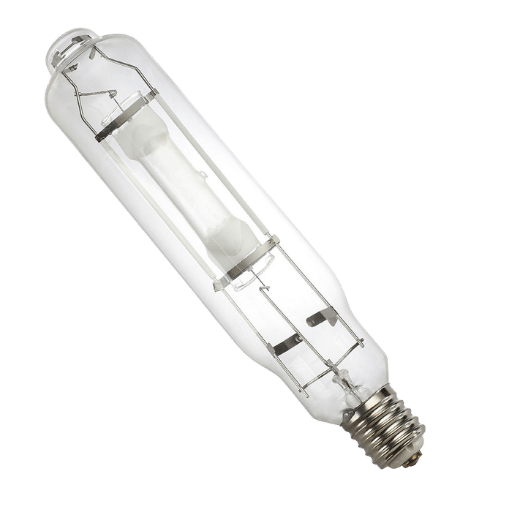
A metal halide lamp is an electric gas-discharge luminaire. Inside the arc tube, an electrical current ionizes a mixture of mercury vapor and metal halide salts (usually iodides of sodium, scandium, and rare earths). The ionized gas emits visible light, but the lamp requires a magnetic or electronic ballast to start and sustain the arc, and the gas mixture must reach hot operating temperature before reaching full brightness.
This physics mismatch accounts for the operating figures. Solid-state LED emission converts approximately 30–50% of input power directly into visible light — the energy efficiency advantage. Gas-discharge metal halide loses 60–80% of input power as heat and ultraviolet/infrared radiation outside the visible spectrum. According to the U.S. Department of Energy LED Lighting Program, this efficiency discrepancy is the single most important factor driving the long-term cost differential between the two technologies.
The 50W–1000W Wattage Equivalent Chart
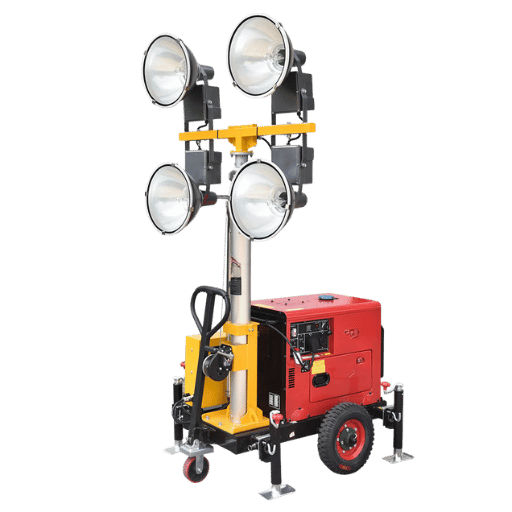
The most common mistake in metal halide to LED conversion is to assume a watt-for-watt swap. Watt-for-watt swaps over-spec a project by 30–40%; a 400W metal halide delivers roughly the same useful output as a 150W LED, not a 400W LED. The table below maps standard metal halide watts to LED replacements for typical industrial settings (warehouse, parking, street, general area lighting). It includes ballast factor losses and uses the maintained-lumen output that is relevant at the work plane, not the often- inflated initial-lumen specification printed on the bulb.
| MH Lamp Watt | System W (w/ Ballast) | LED Replacement | LED Lumen Target | Typical Application |
|---|---|---|---|---|
| 50W | ~70W | 15–25W LED | 2,000–3,500 lm | Pathway, accent, small canopy |
| 70W | ~95W | 25–35W LED | 3,500–4,800 lm | Wall pack, post-top |
| 100W | ~125W | 35–50W LED | 5,000–7,000 lm | Parking lot pole (low mount), barn light |
| 150W | ~180W | 50–70W LED | 7,000–10,500 lm | Low bay (12–18 ft ceiling) |
| 175W | ~210W | 60–80W LED | 8,500–12,000 lm | Wall pack (commercial), shop floor |
| 250W | ~295W | 80–110W LED | 11,000–17,000 lm | Mid-bay, parking pole (medium), area light |
| 400W | ~458W | 120–180W LED | 18,000–28,000 lm | High bay warehouse, parking lot, street |
| 1,000W | ~1,100W | 300–400W LED | 42,000–60,000 lm | High-mast, large warehouse, sports field (entry) |
The “system W” column reflects the total wall draw including ballast losses (the magnetic ballast on a 400 W metal halide adds 40-60W of overhead). LED drivers add no more than 3-5% of rated load. A 400 W metal halide lamp drawing 458 W on the wall can be successfully replaced with a 150W LED drawing 158 W, a 65% reduction in energy use, not 62% if we simply looked at lamp wattage.
Q: What LED is equivalent to 400W metal halide?
For most warehouse, parking, and area-lighting applications, a 150W LED high-bay delivering 19,500–24,000 lumens is the standard 400W metal halide replacement in warehouse, parking, and area lighting applications. The math: at 130-160 lumens/watt for a quality LED high-bay, 150W is directional 19,500-24,000 lumens. A 400W metal halide bulb is rated at 36,000 initial lumens and roughly 70 lm/W system efficiency, but depreciation pre- and mid-way through “mid-life” as the reflector dims reduces the usable lumens at the working plane to ~18,000-22,000. That crosses. For high-CRI and/or high-mounted applications (> 30 ft), step up to 180W LED. For lower-bay or 15-20 ft mounting heights, 120W LED is often enough. Run a photometric simulation with the manufacturer’s IES file before bulk buying – the optical distribution pattern counts for more than raw lumens for uniformity.
📐 Engineering Note
Our thresholds at Guangqi engineering: required maintained lumens 130 lm/W = LED wattage starting point. Then check with an IES photometric simulation in DIALux or AGi32 at your actual mounting height.
Lumen Output, Efficacy, and the L70 Depreciation Curve
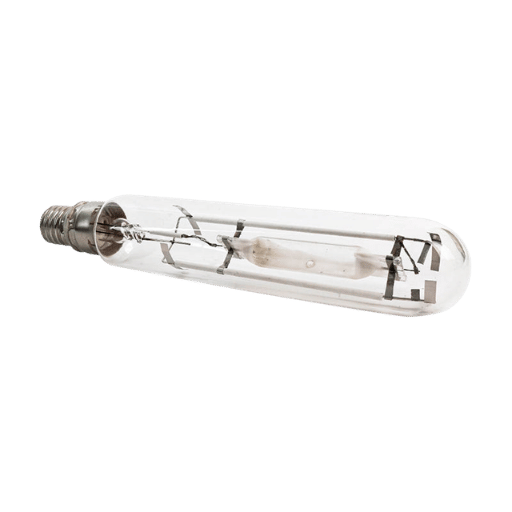
Initial lumens – the number on the lamp box – are not the numbers that matter for lighting design. What matters is maintained lumens: how much light reaches the working plane after the lamp ages, the optics dim, and the mid-life depreciation curve flattens. The gap between initial and maintained lumens is where metal halide loses to LED much more dramaticaly than any wattage chart suggests.
The LED lifespan rating uses a metric called L70: the number of operating hours at which the fixture’s lumen output has declined to 70% of its initial value. The DesignLights Consortium (DLC) Qualified Products List requires LM-80 lumen-maintenance test data from accredited labs, and high-quality industrial LED fixtures regularly show L70 ratings of 50,000-100,000 hours.
Depreciation of metal halide is steeper and earlier. IES LM-80 testing methodology applies to LED solid-state sources, not HID lamps so metal halide lumen-maintenance data comes from manufacturer specifications and IES lamp life-test data rather than LM-80. According to those sources, a typical 400W metal halide delivers about 36,000 initial lumens at start-up, but at the halfway point (4,000-10,000 hours of its 15,000-hour rated life), output has dropped to about 18,000-22,000 lumens – roughly halved. The fixture continues to draw full wall power throughout this decline. From the facility manager perspective, the lamps are “still working” even after they have lost most of their useful output, which is why mid-cycle relamping ahead of failure is a standard maintenance practice in older HID installations.
The 70/30 Reality Check — 1 Lumen Truth Most Facility Managers Miss
Here is the figure most facility managers miss — call it the 70/30 Reality Check. By the operating hour where LEDs last at 70% of their initial output, a metal halide lamp delivers only about 50% — and that drop occurs before you account for 15–30% additional reflector and optical losses. Delivered lumens at the work surface tell the real story. A 400W MH system that nominally produces 36,000 initial lumens puts about 12,000–14,000 lumens onto the floor at mid-life. An equivalent 150W directional LED puts 18,000–22,000 lumens exactly where you need them. On-floor efficiency works out closer to 2.0×, not the 2.7× you would assume from rated wattage. That is the figure that decides retrofit ROI.
Lifespan, Maintenance Cost, and Real-World Reliability
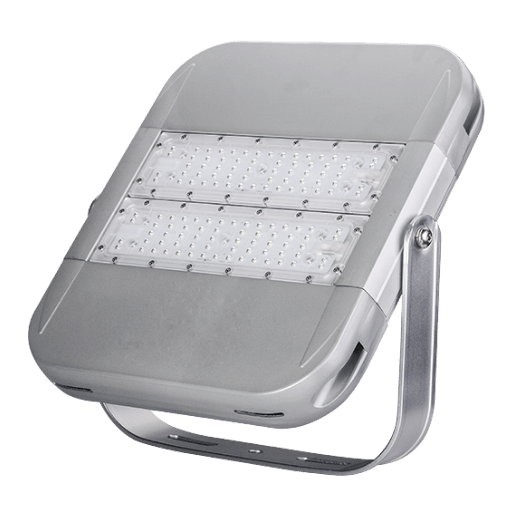
Lifespan is where the smart maintenance managers can differentiate their budgets from what’s hiding in the lamp catalog. A typical commercial MH lamp is rated for 15,000 hours; running 12 hours per day, that yields roughly 5–6 years of service before scheduled relamping, but mid-life lumen depreciation forces many facilities to replace lamps every 3–5 years to maintain illuminance levels. High-quality industrial LEDs last roughly 50,000 hours at L70, providing 16+ years of useful light on the same schedule, saving on supply and labor. One caveat for procurement: the LED source life cycle refers to the LED package itself, not the full luminaire. In outdoor or high-temperature environments, driver-electronics failure or LED visible color shift can sometimes occur prior to the LED package reaching its L70 lifetime, so full warranty packages (10-year DLC Premium typical) will become a far more important factor when selecting a package.
Q: Can I replace metal halide with LED?
Yes – but the smartest choice depends on your existing condition. There are three retrofit paths. Type B (ballast bypass) LED lamps either screw into the existing E39/E40 mogul socket after the ballast is bypassed; this is the speediest transition, but keeps fixtures optics from being optimized. Type A (ballast-compatible) LED lamps fit your existing magnetic or electronic ballasts, but wastes some energy in the ballast, as well as adding a potential point of failure. Full fixture replacement replaces your existing fixture with a purpose built LED housing with optimized optics, integrated thermal management, and DLC-eligible drivers– offering the highest available performance, and the longest warranty. For stadium-specific retrofit planning with photometric study and IES RP-6 compliance, see our stadium light retrofit guide. For warehouse and high-bay applications, our UFO LED high bay series replaces 250W to 1,000W metal halide fixtures with 80–400W LED equivalents.
The maintenance cost can easily overshadow the energy savings. Now to come around and change each and every one of these… you have to consider bulb cost (around $30-$80 per lamp), electrician labor (usually 1-2 hours per fixture to change high mounted lamps), and either lift rental or scaffolding needed for tall installation. A senior facility electrician on Mike Holt’s industry forum summed it up perfectly in one sentence.
Replacing aging metal halide fixtures is “extremely labor intensive,” particularly in high-bay applications where a single lamp replacement can take as long as a half day on a scissor lift. When considering the labor and bulb costs of 3-5 metal halide relamping cycles over 10 years for a 100 fixture warehouse, this is likely to add up to more than the entire cost of a LED retrofit project.
Energy Cost, ROI, and Payback Period
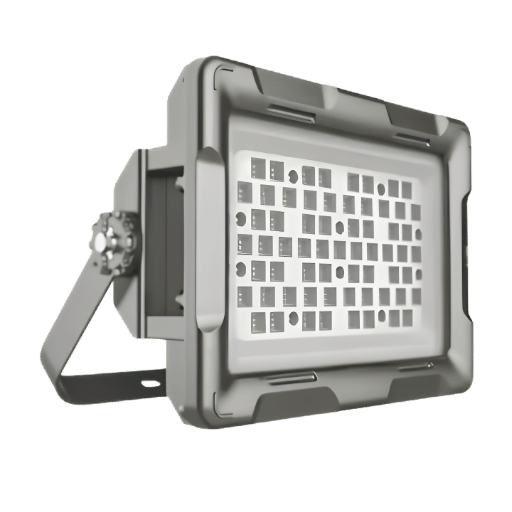
This is where the retrofit business case is assembled. The calculation is simple: LED consumes about 1/3 the wall power of equivalent metal halide, and the savings continues to build up every hour of operation. The following table presents three cases for ROI when the facility is run with average U.S. commercial electricity price, 12 hours each day, and 250 days a year—similar to a warehouse, parking lot or city/municipal operation.
| Scenario | 10 Fixtures | 40 Fixtures | 100 Fixtures |
|---|---|---|---|
| Old MH system draw (400W lamp, 458W system) | 4.58 kW | 18.32 kW | 45.8 kW |
| New LED system draw (150W LED, 158W system) | 1.58 kW | 6.32 kW | 15.8 kW |
| Annual energy savings (3,000 hr/yr × $0.16/kWh) | $1,440 | $5,760 | $14,400 |
| Annual maintenance savings (lamp + labor) | $420 | $1,680 | $4,200 |
| Total annual savings | $1,860 | $7,440 | $18,600 |
| Project cost (fixture + labor, full replacement) | $4,500 | $18,000 | $45,000 |
| Simple payback (before rebate) | 2.4 yr | 2.4 yr | 2.4 yr |
| With 30% DLC rebate | 1.7 yr | 1.7 yr | 1.7 yr |
Payback math goes well beyond the energy line. Buyer-EBs often times neglect to factor in the HVAC load savings driven by LED-based reduction in conditioned space (mid-summer cooling of warehouse(s)) as an additional 5-10% of the utility benefit on the cooling side of the equation that does not show up in lighting-only ROI reports.
The DSIRE database run by the N. C. Clean Energy Technology Center lists hundreds of state, local, and utility efficiency programs across the US.
Most of the lighting rebates requiring fixtures to be on the DLC Qualified Products List also provide applications for awards of DLC Premium qualification (which has an even higher efficacy threshold, generally in the 130+lm/W range for many outdoor area and flood classifications as set forth in the SSL Technical Requirements V5.1), which provides 25-50% higher rebate levels relative to the standard DLC, such that the modest premium for higher-efficacy fixtures is offset in the rebate dollars. For project-specific savings calculations, our Custom TCO Analysis tool models your fixture count, electricity rate, and operating hours against utility rebate eligibility in your ZIP code; for warehouse-specific savings, the warehouse LED vs HID savings calculator handles the kWh math directly.
Our team at Guangqi has recently finished an industrial warehouse retrofit in Europe that proved the math in action- 18 month full payback on a high-bay LED retrofit replacing aging metal halide fixtures with the addition of an occupancy-sensor dimming.
Color Rendering, Color Temperature, and Light Quality
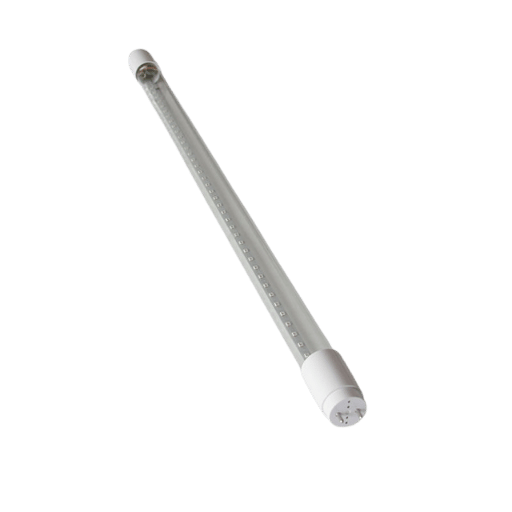
Color rendering is the category where the metal halide spec sheet has tended to shine, until you test the rendering conditions at end-of-life rather than commissioning. The color rendering index (CRI Ra) between 0 and 100 expresses how faithfully a spectrum shows the real colors of an object. Metal halide lamps generally score between 65-75 Ra in the initial run; LED fixtures range from 70 (warehouse-grade) to over 95 (retail and inspection-grade).
The larger concern is that color will change over life. Purchase a single 4,000K color temp metal halide lamp before changing to a new batch, and it will be noticeably different after just a few hundred hours – as the salts are depleted in the lamp and the arc tube blackens, the color gradually drifts toward yellow-green (an orange-shift of 300-500K is typical over the lifetime of the lamp, and the variations from batch to batch can go too far for many facilities to modernize around the new correction filters). Installing a work space with mixed-batch metal halide lamps installed over years creates a floating patchwork of color temperature that cannot be color-balanced for inspection work, retail display, or broadcast video.
Consistently binned LED fixtures all from the same pack of LEDs will provide consistent color temperature from batch to batch. Guangqi engineering batch-testing confirms every fixture to 3-step MacAdam ellipse before shipping – the level of color fidelity required for retail and architectural applications where every existing shelf or clothing store has one lot of finish, one lot of raw materials, and their color must match 12 months apart every time.
In spaces requiring perfect color performance (restaurant food service, retail apparel, art conservation, medical inspection) SS- or RA-listed CRI alone is no longer the right selection metric. The IES TM-30 color-rendering index states fidelity (Rf) and color course (Rg) all 99 test colors and will identify the over saturated-red-rendering (R9) factor that Ra averages out. For spaces with oversaturated-red signage or products, ask the LED manufacturer for TM-30 Rf/Rg + R9 values, not just a single Ra.
Warm-Up Time, Heat Output, and Mercury Hazard
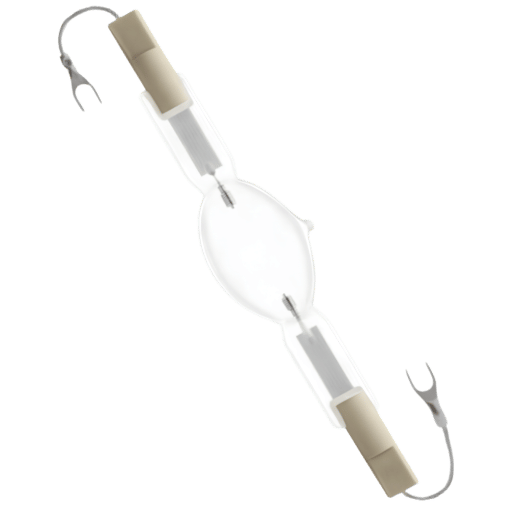
Three operational properties of metal halide that LED does not share: cold-start delay, heat dissipation overhead, and mercury content. Each one carries a hidden cost that wattage and lumen comparisons fail to capture.
Warm-up time: Metal halide takes 5-15 minutes when cold to accelerate to its nominal output, and in a power-failure takes 10-20 minutes to restrike when hot (most metal halide lights are hot when the power returns). During a Friday-night warehouse crew change, this means working in semi-darkness due to a utility anomaly while the metal halide relamps respond. LED fixtures respond one way, no matter what the cycle voltage or event is: in a second to full light. This single process factor without a thought suddenly removes metal halide from any motion-control led, daylight-controlled, time-of-day applications, because the cycle time destroyed lamp and ballast life by orders of magnitude.
Heat: a 400W MH lamp dissipates 250-320W as heat, increasing the chiller loads in the introduced air of a conditioned warehouse or grocery store and creating the work/relamp time burn-from-the-metal halide hazard. A 150W LED equivalent produces only 90-110W of waste heat, and that heat is concentrated at the heat sink rather than radiated through the entire fixture body.
Q: Is 1000 watt metal halide equivalent to LED?
A 300-400W LED luminaire now typically replaces a 1,000W metal halide in high-mast and other large-area applications. At 130-160 lm/W, the 350W LED will produce a forward-directed luminous flux of 45,000-56,000 initial lumens, equivalent to a 1,000W MH system at mid-life (after a ballast loss of 60W and a reflector loss of 30%). The wall power is 350W to 1,100W (system, with ballast), representing a 68% reduction in energy use.
Like the 400W replacement, success is best when running a photometric simulation at the desired pole height and spacing; the optical distribution pattern of a LED flood light is more directional than the omnidirectional output of a 1,000W MH, which means potentially fewer fixtures need to be aimed more precisely.
Mercury hazard: every metal halide lamp contains 5–50 mg of mercury, and disposal is regulated under the U.S. EPA Universal Waste Rule (40 CFR 273). For a commercial facility, that means accumulating used lamps in proper storage, contracting an EPA-registered universal waste handler for transport, and documenting chain-of-custody for the lamps until they reach a permitted recycling facility. LED fixtures contain no mercury and follow ordinary electronic waste disposal rules. Across a 100-fixture installation that goes through 4–5 metal halide relamping cycles in a 15-year window, the mercury compliance burden alone often justifies LED conversion before any energy or maintenance savings are factored in.
When LED Wins, When Metal Halide Still Has a Role
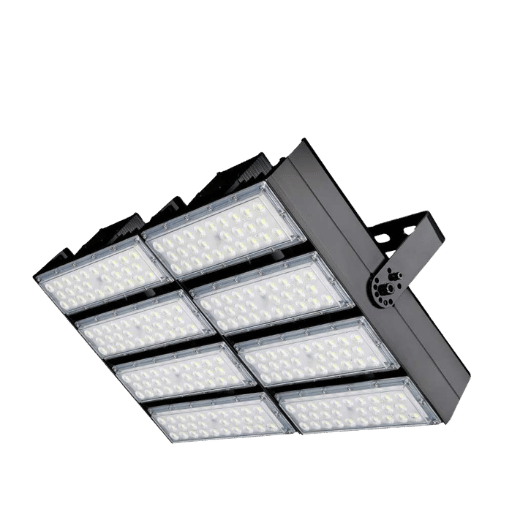
As of 2026, the application decision question has moved from Should I switch to LED? to Is there any application where metal halide still wins?
The honest answer (in the led vs. metal halide application battle) is never. The matrix below plots ten of the most common commercial/industrial lighting applications versus the LED vs. Metal halide decision.
The pattern is what we call the 9-vs-1 Application Reality: In nine of ten common applications, LED is the obvious answer, and even the tenth is a narrowly defined legacy application rather than an example of forward planning.
| Application Type | Recommended Type | Primary Reason |
|---|---|---|
| Warehouse high bay (15–40 ft) | LED | Motion-sensor compatibility + 60–70% kWh reduction |
| Parking lot pole | LED | Photocell + dusk-to-dawn cycling kills MH ballast life |
| Municipal street (Type II–V) | LED | Dark-sky compliance + DLC rebate + 50K hr maintenance window |
| Sports stadium (NCAA D-I and below) | LED | Instant restrike eliminates broadcast blackout risk |
| Architectural facade (RGB) | LED | DMX/DALI control + dynamic scenes impossible with HID |
| Indoor horticulture | LED (full-spectrum) | Tunable spectrum + lower canopy heat load |
| Emergency / egress lighting | LED | Instant-on (MH 5–15 min warm-up violates code) |
| Cold-storage (–10°F to 35°F) | LED | LED gains efficacy in cold; MH starts unreliably |
| Explosion-proof / hazardous location | LED (Class I Div 1/2) | Lower surface temperature classification |
| Specialized broadcast / legacy spectrum | MH (narrow legacy) | Specific spectrum match for older film stocks (rare today) |
⚠️ The single most expensive selection mistake
Most facility managers select a watt-for-watt LED replacement, (i.e. 400W MH 200W LED assuming 200W is “half”) and are actually overdriving by 30-40%. A senior lighting reseller on Earthtronics simply explained it: “Assuming 400W metal halide = 400W LED-it doesn’t. Metal halide loses light output.” The accurate 400W MH equivalence is 120-180W LED.
Overdriving wastes money in the fixture, energy, and the glare complaints from the floor team during the first month of operation.
How to Plan a Metal Halide-to-LED Retrofit (Overview)
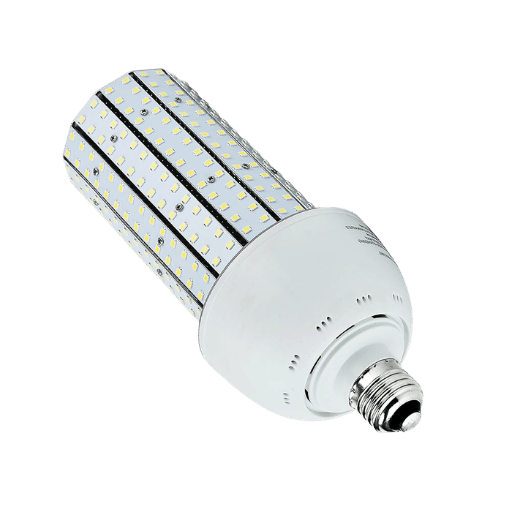
Retrofit logic is short. Inspect each fixture: is the housing structurally sound (no corrosion, intact gaskets, lens not yellowed)? If yes, a Type B ballast-bypass LED retrofit kit at $200–$600 per fixture is the fastest and cheapest path. If no, full fixture replacement at $800–$2,500 per fixture is the only reliable option — dropping a new LED engine into a deteriorated housing wastes the LED’s directional optics on a compromised reflector.
- ✔
Step 1 — Audit existing fixtures: Count fixtures per area, record metal halide system wattage (lamp + ballast), and inspect each housing for structural integrity.
- ✔
Step 2 — Calculate target lumens: Use IES recommended foot-candles for your space type, then back-solve to LED wattage at 130 lm/W minimum.
- ✔
Step 3 — Run photometric simulation: Request manufacturer IES files, model in DIALux or AGi32 at your mounting height. Verify uniformity ratio and avoid hot spots.
- ✔
Step 4 — Specify DLC-listed fixtures: Required for most rebate programs; DLC Premium for highest rebate values.
- ✔
Step 5 — Submit rebate paperwork before installation: Most utility programs require pre-approval; installing first usually voids rebate eligibility.
For stadium-specific retrofit planning with photometric study, IES RP-6 footcandle requirements, and pole-loading structural assessment, see our dedicated stadium light retrofit guide.
The Phase-Out Timeline: Why Metal Halide Is Disappearing
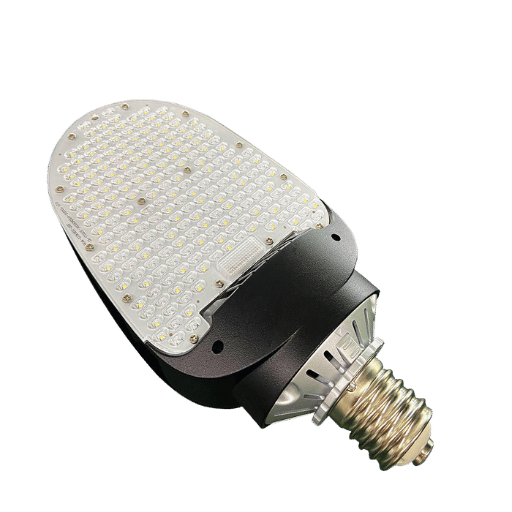
Nothing is disappearing on a single regulatory ban—the phase-out is market driven, and regulation and manufacturer product-line decisions support it. How quickly is it happening?
The change in the last 24 months means a procurement decision in 2026 has a different supply-chain risk than one in 2022.
On the U.S. regulatory front, the signs are somewhat ambiguous. On its 2026 final determination for MHLFs, the U.S Department of Energy said there would not be any cost-effective benefit associated with more-stringent MHLF efficacy standards, and decided not to set any new standards on MHLFs, so metal halide is not being legislated out of the U.S. by any federal efficacy rule. It’s utility rebate programs, expanded availability of DLC-listed LED products, and the California government’ Title 20 Appliance Efficiency Regulations that are putting pressure on the U.S. metal halide market.
Europe is more aggressive with regulator pressures on the lamp side. The EU EcoDesign Regulation 2019/2020 has increased the minimum efficacy for light sources on the EU market and has dosing rules that impact HID type lamps. As stepped efficacy barriers close in subsequent regulations, several wattage bands (categories) of metal halides are disappearing from the EU compliant stocks, so facility managers in EU dependant regions should confirm supply of a particular MH lamp over 20-22 weeks prior to placing large, long lead time requirements.
The supply side is providing a more rapid response than regulators. Leading lamp manufacturers (GE Lighting, Signify/Philips, OSRAM/Sylvania) have subdued commercial metal halide product lines over the last five years, with replacement lamps supplied from a shrinking pool of manufacturers, prices on existing inventory climbing, lead times for less common wattage options exceeding 12 weeks. For a U.S. facility this entails an achievable question being supply assurance, not regulatory deadline.
Keep in mind adoption rates also differ widely by outdoor segment – parking garages, parking lots, street/roadway, building exterior, stadium, and industrial high-bay have different LED market penetration profiles than a unified ‘outdoor’ number.
If you have a lighting project scheduled for 2026-2027: do not order metal halide inventory in anticipation of a 5+ year replacement inventory. Instead: convert to LED immediately and take advantage of the utility rebate subsidy period; or schedule your retrofit assuming a forced LED switch after critical wattages are no longer produced and treat it as an emergency situation, arriving at a capital expenditure window that makes planned conversion preferable to emergency replacement.
Frequently Asked Questions
Q: Which is better LED or metal halide for industrial use?
View Answer
For industrial use, LED is the better choice in nearly every metric — efficacy, lifespan, controls compatibility, and total cost of ownership. LED runs at 130–200 lumens per watt versus 60–100 for metal halide system efficacy, lasts 50,000+ hours on the L70 standard versus 10,000–20,000 hours for metal halide, and integrates with motion sensors and dimming controls that physically destroy metal halide ballasts. The legacy applications where metal halide still has any role at all are narrow specialized broadcast and certain horticultural-spectrum cases — and even those are shrinking as DLC-listed LED equivalents arrive on the rebate-qualified list.
Q: How much can a business save by switching from metal halide to LED?
View Answer
A typical commercial retrofit reduces lighting electric use by 60-70% and lighting maintenance cost by 80-90% over a ten-year window. For a 100-fixture warehouse running 12 hours per day, total savings often reach $18,000-$22,000 per year before utility rebates. With a 25-30% DLC Premium rebate, simple payback drops below two years on most projects.
Q: Are LEDs compatible with motion sensors and smart controls?
View Answer
Yes. LED fixtures support 0-10V dimming, DALI, DMX, wireless mesh networks, photocells, and motion sensors out of the box. The instant-on response and unlimited switching cycles allow you to drive LEDs in tandem with occupancy controls and daylight harvesting schedules without compromising life expectancy. Metal halide lamps cannot – each on-off cycling fires the lamp and shortens metal halide ballast and lamp life dramatically.
Q: Can existing metal halide fixtures be reused with LED?
View Answer
Maybe. If the fixture’s housing is in good shape – no corrosion, intact gaskets, clean lens – a Type B ballast-bypass LED retrofit kit can reuse the old fixture. If the old housing has fallen into disrepair over its 15-20 year lifetime, the LED’s tight optics will bounce through damaged reflectors and create hot spots. The full fixture upgrades are the right solution. Takes only 5 minutes per fixture to evaluate and saves expensive rework downstream.
Q: Does metal halide produce harmful UV light?
View Answer
Yes — measurable UV-A, some UV-B, and infrared, all part of the gas-discharge spectrum.
Ready to plan your LED retrofit?
Order a custom Total Cost of Ownership analysis for your facility. Our electrical engineers model your fixture count, electricity rate, and hours-of-operation against utility rebate opportunities in your zip code.
About This Analysis
This LED vs metal halide comparison draws on IES LM-80 lumen-maintenance tests, U.S. Department of Energy Solid-State Lighting program data, EPA Universal Waste Rule for mercury-containing lamp disposal, and DLC Qualified Products List requirements. Wattage equivalents and ROI calculations reflect commercial U.S. electricity rates and 12-hour operation patterns. Reviewed by Guangqi engineering — 16 years specializing in thermal management simulation and IP-rated LED fixture design since 2010.
References & Sources
- LED Lighting — U.S. Department of Energy
- 2026 Final Determination on Metal Halide Lamp Fixtures — U.S. Department of Energy
- 2020 LED Adoption Report — U.S. Department of Energy SSL Program
- Recycling and Disposal of CFLs and Other Bulbs that Contain Mercury — U.S. Environmental Protection Agency
- DLC Qualified Products List — DesignLights Consortium
- Database of State Incentives for Renewables & Efficiency (DSIRE) — N.C. Clean Energy Technology Center
Related Articles
- LED Warehouse Lighting Guide — design, fixture selection, and uniformity calculations
- UFO LED High Bay — wattage selection and mounting heights for industrial spaces
- ATEX vs IECEx Certification — choosing explosion-proof LED for hazardous locations
- Stadium Lighting Design Guide — IES RP-6 standards and pole height planning
- Industrial Lighting Guide — fixture types and DLC-eligible LED selection